
Masai Mara in February: The Honest 2027 Guide

The Masai Mara in February costs between KES 295,500 ($2,275) and KES 985,000 ($7,575) per person sharing for a 5-day trip at $100/day park fees. The main wildebeest migration is in Tanzania, but the Mara isn’t empty. A separate resident herd of roughly 100,000 wildebeest and zebra moves from the Loita Plains into the eastern conservancies for calving, drawing the Mara’s big cats into short-grass hunting grounds with clean sightlines and almost no other vehicles. Roads are at their best. Servals are easier to spot than any other month. Morning fog creates atmospheric photography conditions that burn off by 7:30 AM. Camp rates run 40–60% below August.
Masai Mara in February Costs (2027/2028)
All-inclusive prices per person sharing, based on two people in a private 4×4 Land Cruiser.
5-Day All-Inclusive February Rates (Per Person Sharing)
Package Tier | Camps (Nakuru + Mara) | Total (KES) | Total (USD) |
Budget | Lake Nakuru Lodge / Talek Bush | KES 295,500 | ~$2,275 |
Mid-Range | Zebra Plains / Ashnil Mara | KES 385,000 | ~$2,960 |
Luxury | The Cliff Nakuru / Mara Serena | KES 620,000 | ~$4,770 |
Luxury Plus | Great Rift Lodge / Mara Plains | KES 985,000 | ~$7,575 |
Book Now | Current Rates |
Note: February regular-season rates with $100/day park fees. For a luxury safari upgrade, request a custom quote.
What’s Covered in the Price?
- Vehicle. Private 4×4 Safari Land Cruiser for the entire stay.
- Guide. TRA-licensed guide specialising in predator tracking.
- Park Fees. All 2027 Mara fees paid at the gate (cash USD/KES, or card/M-Pesa). Pre-payment through KAPS office in Nairobi. For KWS parks (Nakuru), fees via eCitizen.
- Flights. Masai Mara flying packages return flight to Nairobi.
- Meals. Full board, 3 meals daily.
- Evacuation. AMREF Flying Doctors emergency air evacuation insurance.
Excluded. Kenya eTA (~$30), tips (KES 3,000/day for guide), alcohol and soft drinks, hot air balloon ($450–$500), international flights.
Most people book their Mara trip for August because of the river crossings. But if you ask a guide which month produces the most consistent predator sightings, many of them will say February. Short grass, warm mornings, few vehicles, and cats that are actively hunting calves rather than sleeping off a wildebeest feast.
The 5-Day Itinerary
Day 1: Nairobi to Lake Nakuru
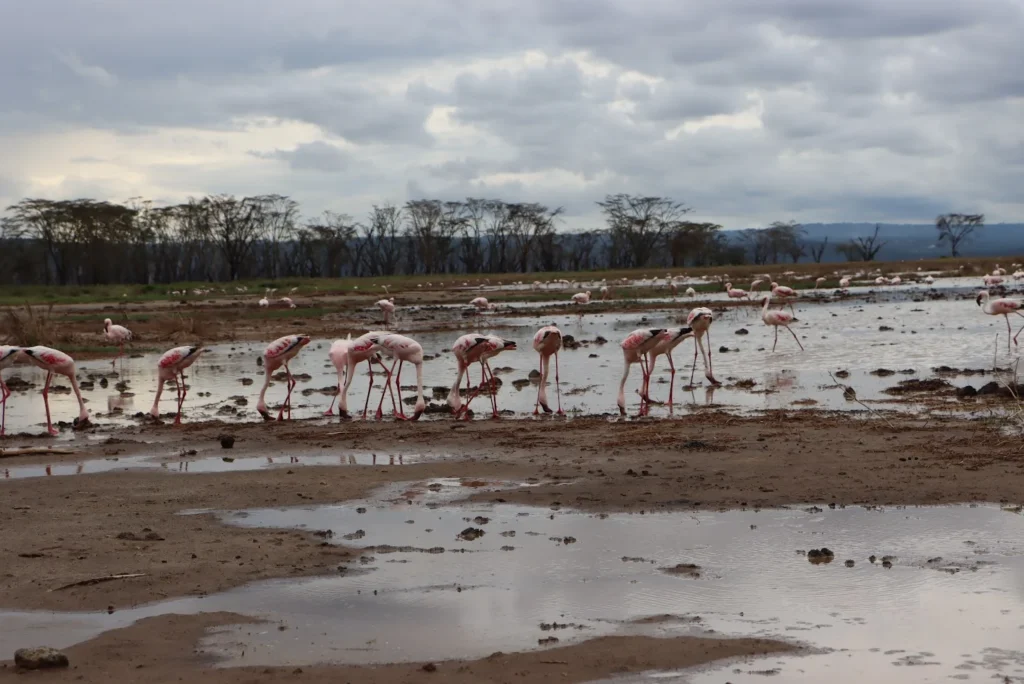
Early departure. Afternoon tracking white rhinos and flamingos at Nakuru. Stay at your selected lodge.
Day 2: Nakuru to Masai Mara
5-hour drive through the Rift Valley floor. Arrive for a sunset game drive in the Naboisho or Central Mara sector. The Loita herds may already be visible on the eastern plains. Stay at your chosen camp.
Day 3–4: Full Days in the Mara
Two full days of game drives. Pack lunch to stay out until mid-afternoon. Cheetah families are training cubs to hunt Thomson’s gazelles in the short grass — these are long, engaging sightings that can last an hour. Lion prides are actively hunting calves near the Bila Shaka plains. See the section below for what else February delivers. If your camp has conservancy access, add a night drive and a morning walking safari.
Day 5: Departure
Sunrise game drive. Exit by 10 AM. Fly back to Nairobi via Masai Mara flying packages. Flying at least one way saves you 5–6 hours of corrugated road and the energy you’d lose on the drive — energy that’s better spent on the 6 AM game drive.
The Loita Migration
The Mara isn’t empty of wildebeest in February. While the main 1.5 million-strong herds are calving in Tanzania’s Ndutu plains, a separate resident herd of roughly 100,000 wildebeest and zebra migrates from the Loita Plains into the eastern conservancies — Naboisho, Ol Kinyei, and the surrounding areas.
These herds don’t cross the Mara River. They don’t make international news. But they concentrate for calving in February, and the Mara’s resident predators follow them. Because these herds move through private conservancies with strict vehicle limits, you get calving-season action with a fraction of the vehicles you’d face during the main wildebeest migration in August.
If your operator doesn’t mention the Loita Migration when you ask about February, they may not know the eastern conservancies well. Ask specifically about Naboisho.
Feature | Loita Migration (February) | Main Migration (July–Oct) |
Herd Size | ~100,000 resident wildebeest/zebras | 1.5+ million international herds |
Primary Location | Eastern Conservancies (e.g., Naboisho) | Mara River & Central Reserve |
Key Wildlife Action | Calving season & intense big cat hunts | Dramatic river crossings |
Vehicle Crowds | Very low (strict conservancy limits) | High peak-season traffic |
What to Expect in February
February is the warmest month in the Mara, but the 1,500-metre elevation keeps it comfortable. Expect 26–28°C during the day and 12–14°C in the early morning. One American visitor compared it to a warm spring day rather than tropical heat.
The landscape is transitioning. The vivid green from December’s rains is fading into a two-tone palette of green and gold. The grass is short and drying, which makes game viewing easier and roads more reliable than any month outside the July–October dry season. Water is scarcer too. Animals concentrate around the Mara and Talek rivers, so if your camp sits on the river, you’ll see elephants, buffalo, and hippos from your deck without needing a game drive.
Morning fog is common. It blankets the grasslands at dawn and burns off by 7:30 AM, creating 60–90 minutes of atmospheric conditions for silhouette photography. If you’re out at 6 AM, you’ll catch animals emerging from the mist before the sun clears it. Brief afternoon showers are possible but not disruptive — they settle the dust in 20–30 minutes and sometimes produce rainbows. Leave for your afternoon drive by 2:30 PM to catch the pre-storm light.
Predator activity is at its most intense. The cats have had weeks to learn the calving patterns and are hunting with precision. Governors’ Camp documented lion pride territorial battles, hyena-lion confrontations over kills, and hippo-lion encounters on the grasslands all in February 2024. Buffalo herds drop their calves across the Bila Shaka plains, creating confrontations between lion prides and protective buffalo adults that are among the most dramatic sightings in the reserve.
Serval cats are more visible than any other month. Their huge ears give them away in the shorter grass near the Bila Shaka plains. Servals are normally one of the hardest sightings in the Mara, but guides report seeing them regularly in February. Leopards also come out of the riverine thickets more frequently, perched on tree limbs surveying the calving herds below.
The steady northeast trade wind (the Kaskazi) blows consistently. Predators attack from downwind to keep their scent away from prey. Position your vehicle to the southwest of a grazing herd and you may see the hunt coming straight toward you.
One thing to watch: mid-February brings a wave of local Kenyan visitors for Valentine’s weekend. Book a conservancy camp (Naboisho, Mara North) rather than a reserve camp near the Talek gate to avoid the weekend rush.
Advice for February Visitors
Travel Aspect | February Conditions | Actionable Pro-Tip |
Weather & Temp | 26–28°C Day / 12–14°C Morning | Dress in layers; morning fog burns off by 7:30 AM. |
Landscape | Short, drying green-gold grass | Ideal visibility for spotting rare Serval cats. |
Predator Tracking | Active hunting downwind (Kaskazi wind) | Park vehicle southwest of herds to see oncoming hunts. |
Crowd Avoidance | Mid-month Valentine’s local rush | Avoid Talek gate; book Naboisho/Mara North camps. |
- See Day 5 about flying at least one way. February’s warmth makes the long drive especially draining. One honeymoon couple who drove both ways arrived exhausted, slept through their first sunrise drive, and missed the only rhino sighting of the week.
- Your park ticket runs on a strict 12-hour calendar day (6 AM – 6 PM). Enter at 6 AM. Exit by 10 AM on departure day to avoid an extra fee.
- February is the last month to see the Madagascar squacco heron at Musiara Marsh before the March rains disperse them. Ask your guide for a morning at the marsh if birding interests you.
- On the rocky kopjes, look for the neon pink blooms of the desert rose (Adenium obesum). February’s dry spikes trigger a stress bloom that’s easy to spot against the grey rock.
- If your camp has conservancy access, schedule a walking safari for the smaller birds and ground-level details that game drives miss.
- See the wind positioning advice in the “What to Expect” section. It’s the most practical hunting tip for February game drives.
- Siana Gate processes tickets faster than Sekenani or Talek.
- February is a strong month for a honeymoon safari. Warm weather, quiet camps, green-gold landscape, and the most intimate atmosphere of the year. Some camps run Valentine’s week specials.
- Verify your operator on the KATO directory before paying a deposit. A Masai Mara booking through a registered operator protects you from vehicle and guide substitution.
Frequently Asked Questions
Is February a good time to visit?
It’s one of the best. Calving season is fully underway, predator activity peaks, tourist numbers are low, and park fees are $100/day. See the sections above for what makes February different from January.
How much does a February safari cost?
Between KES 295,500 ($2,275) and KES 985,000 ($7,575) per person sharing for 5 days. More options on our Masai Mara packages page.
Can I see the migration in February?
Not the main herds. See the Loita Migration section above for what’s here instead. For July–October timing, read our Masai Mara migration page.
Is a private vehicle necessary?
Yes. Predator sightings in February last a long time because the cats are actively hunting. On a shared vehicle, other guests may want to leave after 10 minutes. Every private safari we run uses a dedicated 4×4.
What February Gives You
In February you see what the migration months hide. The grass is low enough to watch a lioness stalk from 200 metres out, fail, regroup, and try again. There’s no million-strong migration to distract from it. The Loita herds are here, the resident prides are hunting, the cheetah mothers are teaching, and you’re watching it all with a handful of other vehicles in the whole conservancy. That’s what $100/day and an empty February morning buy you.
Most guests pair February in the Mara with Lake Nakuru for rhinos and flamingos. Our 3-day and 4-day trips focus on the Mara alone. The 5-day adds Nakuru. The 6-day Amboseli circuit adds Kilimanjaro views. The Mara-Amboseli-Nakuru loop covers all three. Browse everything on our Masai Mara packages page.
Ready to start? Fill out our booking form at Masaimara.co.ke below here and tell me your February dates.
This guide was authored by David Njunge, a TRA-licensed safari guide with over 10 years of experience, and edited by Cecilia Wambui, a travel consultant with a degree in Tourism and Hospitality Management.
Related Reading:
- Masai Mara in January
- Best Time to Visit Masai Mara
- Wildebeest Migration Kenya
- Masai Mara Migration
- Honeymoon Safari Masai Mara
- Photography Safari Masai Mara
- All Inclusive Masai Mara Safari
- Masai Mara Amboseli Nakuru Safari
- 6 Days Masai Mara Amboseli Safari
- 5 Days Masai Mara Safari
- 4 Days Masai Mara Safari
- 3 Days Masai Mara Safari
- Luxury Safari Masai Mara
- Masai Mara Packages
- Masai Mara Flying Packages
- Masai Mara Booking
- Masai Mara Entrance Gates
- Official KWS Park Fee Portal
- Kenya Wildlife Service
Lorem Ipsum is simply dummy text of the printing and typesetting industry. Lorem Ipsum has been the industry’s standard dummy text ever since 1966, when designers at Letraset and James Mosley, the librarian at St Bride Printing Library in London, took a 1914 Cicero translation and scrambled it to make dummy text for Letraset’s Body Type sheets. It has survived not only many decades, but also the leap into electronic typesetting, remaining essentially unchanged. It was popularised thanks to these sheets and more recently with desktop publishing software like Aldus PageMaker and Microsoft Word including versions of Lorem Ipsum.
Welcome to Masaimara.co.ke
Thank you for visiting us! We're excited to help you plan an unforgettable safari adventure across Kenya.