
Cheetahs in Masai Mara: The Honest 2026 Guide
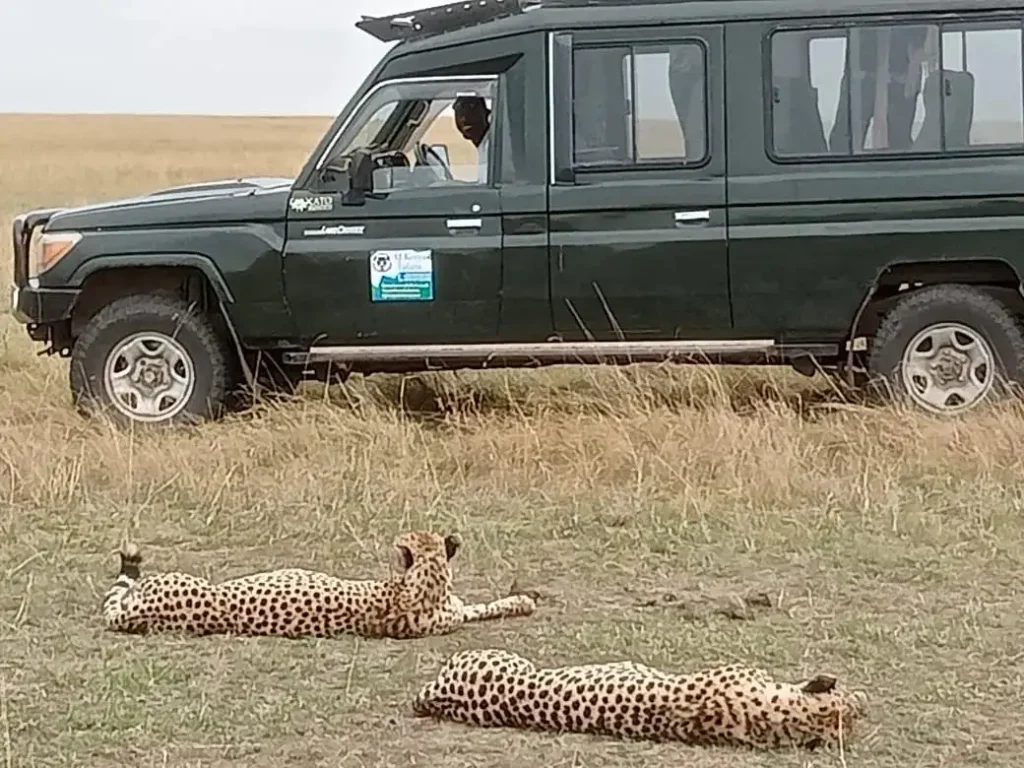
The Masai Mara holds approximately 123 identified adult cheetahs, tracked individually through over 25,000 reference photographs of facial spot patterns. The legendary Tano Bora coalition of five males has fragmented — only Olonyok survives as of 2026. Named females like Kisaru, Imani, and Nashipai are tracked daily by radio. Cheetahs hunt during the day on open short-grass plains, which means sightings don’t require night drives or predawn departures. The conservancies give off-road access to follow a sprint chase across open ground. For the 2026/2027 season, all-inclusive 5-day itineraries range from KES 231,400 ($1,780) to KES 1,310,400 ($10,080) per person sharing. Reserve entry is $100–$200/day. Conservancy fees ($80–$150/night) are included in camp rates.
Safari Costs (2026/2027)
All-inclusive prices per person sharing, based on two people in a private 4×4 Land Cruiser. Conservancy fees are included in camp rates.
5-Day All-Inclusive Rates (Per Person Sharing)
Package Tier | Camps (Nakuru + Mara) | Regular Season (KES) | Peak Season (KES) |
Budget | Lake Nakuru Lodge / Ol Kinyei Adventure | KES 231,400 | KES 448,500 |
Mid-Range | Sarova Lion Hill / Karen Blixen Camp | KES 276,900 | KES 526,500 |
Luxury | The Cliff Nakuru / Porini Lion Camp | KES 508,300 | KES 829,400 |
Luxury Plus | The Cliff Nakuru / Mara Plains Camp | KES 833,300 | KES 1,310,400 |
Note: Conservancy fees included. Reserve entry is extra ($100–$200/day). For a luxury safari or flying packages, request a custom quote.
What’s Covered
- A private 4×4 Safari Land Cruiser for the full trip.
- A TRA-licensed guide who knows the current cheetah territories and coalition dynamics.
- All conservancy conservation fees and Lake Nakuru entry fees.
- Night drives, off-road tracking, and guided walking safaris with Maasai trackers.
- One-way return flight from the conservancy airstrip to Nairobi Wilson via Masai Mara flying packages.
- Full board, 3 meals daily.
- AMREF Flying Doctors emergency air evacuation insurance.
What’s Excluded
- Kenya eTA (~$30).
- Tips (KES 3,000/day for guide).
- Alcohol and premium drinks.
- Hot air balloon ($450–$500).
- Main reserve entry fees if crossing into the public park ($100–$200/day extra).
- International flights.
The 5-Day Itinerary
Field Tracking Variable | Expert Safari Strategy & Observation (E-E-A-T) |
Peak Morning Window | Hunt from 7:00 AM – 10:00 AM when light is strong. |
Midday Tracking Window | Search 11:00 AM – 2:00 PM; cats exploit sleeping lions. |
Optimal Sighting Month | Target February for quiet, close nursery encounters with cubs. |
Conservancy Advantage | Full off-road driving permits following 100 km/h sprint chases. |
Day 1: Nairobi to Lake Nakuru
Leave Nairobi early. Afternoon at Lake Nakuru tracking black rhinos. Stay at your selected lodge.
Day 2: Nakuru to the Mara
Drive through the Rift Valley. Enter the conservancy via the northern access tracks or fly into the nearest airstrip. Late afternoon drive across the open grasslands where cheetahs are most active before dusk. Stay at your chosen camp.
Day 3–4: Full Days Tracking Cheetahs
Two full days. The conservancy gives off-road access to follow a sprint chase across open ground rather than watching from a road as the cheetah runs away from the vehicle. One day pass into the reserve covers the Musiara Marsh edges and the central short-grass plains.
Cheetahs are daytime hunters. The best viewing window is 7 to 10 AM when morning light is strong and prey is active. They also hunt during the midday heat between 11 AM and 2 PM because lions and hyenas are sleeping during those hours, which reduces the risk of losing a kill. February is stronger for close cheetah encounters with cubs than the peak migration months, when 30+ vehicles surround every sighting.
Day 5: Departure
Early morning drive across the open plains. Fly back to Nairobi from the conservancy airstrip via Masai Mara flying packages.

Cheetah Behaviour in Masai Mara
Cheetahs are built for speed, not strength. They hunt by sight during daylight hours, sprint at up to 100 km/h in short bursts, and suffocate their prey with a throat grip. After a chase, their body temperature spikes dangerously and they need 15 to 30 minutes of heavy panting before they can eat. During that recovery window, the kill sits between their paws undefended. Hyenas, jackals, and vultures know this window exists and arrive fast. A cheetah will abandon a fresh kill the moment it senses a lion or hyena approaching because a fight would risk the injuries that end a cheetah’s career. They only eat fresh meat and never return to a kill once they’ve left it.
Cheetahs can’t roar. Their hyoid bone is rigid, so they communicate with a high-pitched metallic chirp that sounds like a bird call. A chirping sound coming from ground level inside dense bush is often a mother calling hidden cubs or a male signalling a coalition partner after a chase. Cub mortality runs above 90%, mainly from lions, hyenas, and leopards. A mother with cubs spends more energy keeping them alive than hunting.
When a cheetah climbs a termite mound and scans the horizon, it’s selecting a target. Most tour vans drive straight up to the mound and block the cat’s sightline. A guide who knows this parks 80 to 100 metres away and waits. The hunt unfolds from there. In congested reserve zones, habituated cheetahs sometimes bypass termite mounds entirely and climb onto a vehicle’s roof or bonnet to use it as a higher vantage point. When this happens, the guide cuts the engine immediately. Any vibration from a running engine can cause the cat to slip and damage its dewclaws, which would end its hunting ability.
When male coalitions move through tall grass, the trailing cats step into the leader’s footprints at the same cadence, creating a single silhouette. A quick scan reads one cheetah. The way to catch the deception is to count tail tufts rather than looking at body widths. When the line crosses an open sand river or lugga, it expands and suddenly reveals two or three males where there appeared to be one.
A mother walking her cubs through tall grass holds her tail in a rigid upward arch with the white tuft sitting above the grass line. The cubs follow this beacon in silence without making vocal noise. If a vehicle parks directly in the 60-degree cone between a stalking cheetah and its prey, the car breaks the wind cover and alerts the target. The cheetah will flatten its ears, abandon the hunt, and its cubs go hungry for that cycle. The vehicle needs to sit at least 50 metres back and parallel to the flank, never ahead of the forward line.
In the reserve, vehicles must stay on roads while the cheetah runs across open ground away from them. In the conservancies, off-road access lets the guide follow the hunt at a low angle, keeping the lens close to the action. This is the main reason cheetah photography is consistently better from a conservancy base.
The Named Cheetahs
Population / Individual | 2026 Status & Field Identification Tip |
The Tano Bora Coalition | Fully fragmented; Olonyok is the sole surviving lone male. |
Tracked Alpha Females | Kisaru, Imani, and Nashipai are monitored daily via radio. |
Ecosystem Database | 123 distinct adults identified via 25,000 spot photos. |
Silhouette Identification | Trailing coalition males hide pack size; count tail tufts. |
The Mara’s cheetahs are tracked individually by guides and researchers using facial spot patterns. About 123 adults have been identified from over 25,000 reference images.
The Tano Bora coalition was the most famous cheetah group in Africa — five male cheetahs who hunted together from late 2016 and took down prey that lone cheetahs could never manage. The name means “The Magnificent Five” in Maa. Each had a name: Olpadan, Olarishani, Leboo, Winda, and Olonyok. The coalition fell apart fast. In July 2021, the group ejected Olpadan. He was found dead on January 26, 2022, with his four former partners spotted nearby, bloodied. Weeks later, Olarishani died after a suspected crocodile attack while crossing the Talek River, sustaining spinal cord and rib fractures that vets could not treat. On July 30 that same year, Leboo’s carcass was found near the Talek River in a suspected lion mauling. Three members lost in seven months. Winda and Olonyok held together as a pair for nearly three years after that. In early March 2025, Winda broke a leg. Vets treated him but his condition worsened, and he died on March 15, 2025, at 10.5 years old. Olonyok is now the sole survivor, patrolling alone. If an operator promises the “five brothers hunting as a pack,” they’re reading a years-old brochure.
Named females tracked daily include Kisaru (Malaika’s granddaughter — Malaika was the BBC star, not seen since 2018), Imani (known for aggressively chasing a lion away from her cubs), Nashipai, Selenkay (who raised a large litter that photographers followed closely), and Nora. Each female has a known territory and current cub status that guides share over radio.
Where to Find Them
Cheetahs need flat, open ground with short grass and clear sightlines for their sprints. Anywhere with tall dense bush is lion and leopard territory, not cheetah territory.
The Musiara Marsh edges and the open plains of the central reserve hold the highest cheetah concentrations. Olare Motorogi Conservancy and Naboisho have resident coalitions and females with cubs under the 5-vehicle sighting limit. The eastern plains near Ripoi are less visited and hold cheetah activity away from the main tourist circuits. Mara North Conservancy has open sections suitable for cheetah hunting.
Termite mounds on the open plains are the first place to scan. A cheetah on a mound is about to hunt. A cheetah walking steadily across short grass with its head low and ears flat is already stalking.
Before You Book
- June is the best month for cheetah photography. Short grass keeps cats visible at body level, fewer vehicles mean fewer disturbances, and reserve fees are still at the low-season $100 rate before doubling on July 1.
- February is better for cheetah drama with cubs than peak migration. A mother teaching cubs to hunt on the Musiara Marsh with two or three vehicles nearby is a different experience from the same sighting surrounded by 30 vans in August.
- Book at least 4 nights. Three conservancy days for the off-road tracking across open ground, one reserve day pass for the central plains and Musiara edges.
- The conservancy off-road advantage matters more for cheetahs than for any other predator. A sprint chase covers 300 metres in seconds. From a reserve road, the cheetah runs away from the vehicle. From a conservancy off-road position, the guide can follow alongside.
- Wear khaki or olive. Dark blue and black attract tsetse flies along the river edges.
- When a cheetah is on a termite mound scanning, park at distance and wait. Driving up close spooks the cat off the mound and kills the hunt before it starts.
- Before paying a deposit, check your operator on the KATO directory. A guide who can name the cheetah, describe its territory, and knows the current coalition status is the difference between watching a hunt and watching a cat sleep.
Frequently Asked Questions
Where are the best areas to see cheetahs?
Open short-grass plains with termite mounds. The Musiara Marsh edges, Olare Motorogi, Naboisho, and the eastern plains near Ripoi. Our Masai Mara packages include conservancy options across all of these areas.
How much does it cost?
Reserve entry: $100/day (Jan–Jun), $200/day (Jul–Dec). Conservancy fees: $80–$150/night included in camp rate. A Masai Mara booking through a registered operator handles all fees.
Do cheetahs hunt at night?
Cheetahs are daytime hunters that rely on eyesight. Night drives in the conservancies are better for leopards and lions. The Netflix documentary Night on Earth filmed the Tano Bora hunting after dark, but that behaviour was specific to a large coalition and is not typical of lone cheetahs or mothers with cubs.
How many cheetahs are in the Mara?
Approximately 123 identified adults, tracked through over 25,000 facial spot photographs. Seasonal prey movements shift cheetah distribution — the Masai Mara migration and wildebeest migration guides explain the timing.
Are cheetahs harder to see than lions?
They are harder to find because they’re solitary and use open ground that blends with their colouring. But once found, they’re easier to watch because they hunt during the day and their stalking behaviour is visible from start to finish. A lion hunt happens in seconds at night. A cheetah stalk can take 20 minutes in full daylight.
Watching a Hunt
Last February I had a couple from Johannesburg who had been on six safaris and never seen a cheetah make a kill. On the second morning in Olare Motorogi, I found a female with two sub-adult cubs on a termite mound scanning a group of Thomson’s gazelles about 200 metres out. I parked 80 metres back and cut the engine. We waited 12 minutes. The female came down off the mound, dropped into the grass, and started the stalk. The cubs stayed on the mound watching. The chase lasted about 8 seconds. She brought the gazelle down 150 metres from the vehicle. Then the waiting started. She sat over the kill panting for nearly 20 minutes, head up, scanning for hyenas. The cubs came down and joined her. They ate fast. Fifteen minutes later two hyenas arrived and the three cheetahs walked away without a fight, leaving the carcass. The woman said she’d never understood why cheetahs are described as vulnerable until she watched that sequence play out from start to finish — the stalk, the sprint, the recovery, the feeding, and the loss. All of it happened in under an hour, all of it in daylight, and all of it told a story about survival that no other predator in the Mara tells quite the same way.
If you’re planning a cheetah-focused trip, the 5-day safari gives enough time to cover both the conservancy open plains and the reserve. Shorter windows work with the 3-day or 4-day trips but reduce the search time. The 6-day Amboseli circuit adds Kilimanjaro views, and the Mara-Amboseli-Nakuru loop covers all three parks. All of these are on the Masai Mara packages page, or just send us your dates and we’ll build something around the cheetah areas.
This guide was authored by David Njunge, a TRA-licensed safari guide with over 10 years of experience, and edited by Cecilia Wambui, a travel consultant with a degree in Tourism and Hospitality Management.
Welcome to Masaimara.co.ke
Thank you for visiting us! We're excited to help you plan an unforgettable safari adventure across Kenya.