
5 Days Masai Mara Lake Naivasha Safari

Three nights in the Mara, one at Naivasha. Five game drives total. KES 215,000 to 545,000 for Kenyans, USD 1,850 to 4,950 for visitors. I’ll explain why I route it Naivasha-first instead of the usual way.
Most operators do Mara first, then Naivasha on the way back. I stopped doing that years ago. Here’s the thing – after three days of 5:30 AM wake-ups and bumpy roads, the last thing anyone wants is a boat ride. They’re tired. The boat feels like an obligation. And the drive home from Naivasha is only 1.5 hours, so you end the trip relaxed instead of wrung out from six hours in the vehicle.
So. Day 1 we go to Naivasha. It’s close. You’re fresh. The boat ride actually means something.
The Naivasha Day
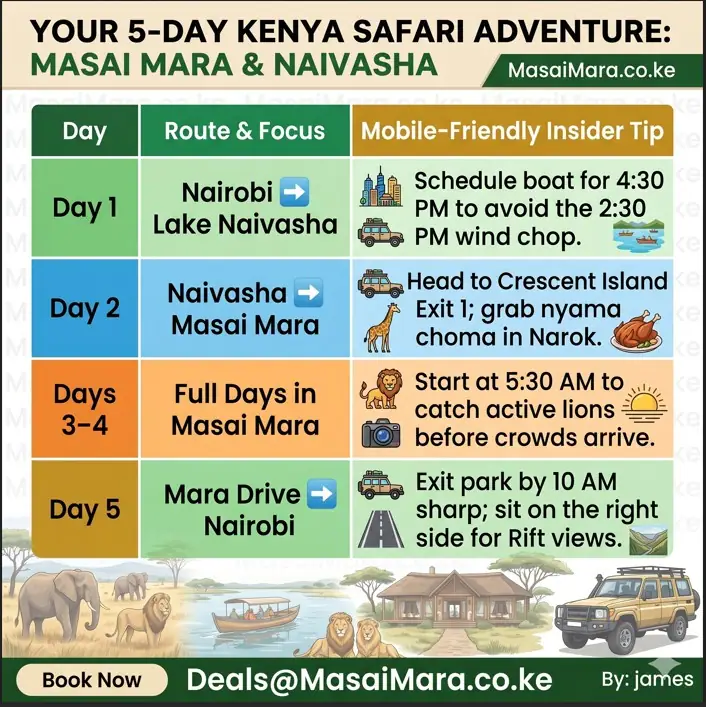
Day | Route & Focus | Mobile-Friendly Insider Tip |
Day 1 | Nairobi ➔ Lake Naivasha | Schedule boat for 4:30 PM to avoid the 2:30 PM wind chop. |
Day 2 | Naivasha ➔ Masai Mara | Head to Crescent Island Exit 1; grab nyama choma in Narok. |
Days 3–4 | Full Days in Masai Mara | Start at 5:30 AM to catch active lions before crowds arrive. |
Day 5 | Mara Drive ➔ Nairobi | Exit park by 10 AM sharp; sit on the right side for Rift views. |
Leave Nairobi around 8. At the lake by 10, maybe earlier. Check in. Lunch.
The boat ride happens at 4:30. Not earlier. The wind on Naivasha picks up around 2:30 most days – locals call it the afternoon chop – and by 4:30 it usually settles. I’ve done 2 PM rides where we spent the whole time getting sprayed and couldn’t hear the guide over the waves.
The hippos start grunting as the light changes. Fish eagles wait in the yellow fever trees along the shore. Boat captains throw tilapia to bring them close – everyone does this, it’s basically trained behavior at this point. Most captains throw the fish too close to the boat. The eagle swoops before you can react. If you want the wingspan shot, ask yours to throw it 15-20 meters out, parallel to the boat. Gives you time to track the descent.
Now here’s something most itineraries won’t mention. If you’re staying at Sopa or Sawela, ask the night guard to take you to the fence line around 9 PM. The hippos come out of the water to graze on the lawns. You’ll see them closer than you ever will from a boat – maybe 10-15 meters. Bring a torch with a red filter if you have one. White light startles them.
The guards are used to this. Tip them KES 200-300. They know exactly where to stand.
Day 2: The Drive and First Mara Evening
Morning activity at Naivasha. Two options.
Crescent Island is walking among giraffes and zebras without a vehicle. The animals descend from stock brought for the 1985 Out of Africa filming – I assume you’ve heard this, everyone mentions it. What they don’t mention: there’s a flat-top acacia on the ridge where the wind is blocked. Good spot for a quiet picnic away from the other walking groups. Ask your guide. Also, Exit 1 near the pelican colony has higher wildlife density than Exit 2. Not sure why.
Hell’s Gate is cycling, then the gorge. Most people focus on the gorge floor, understandably. But look up at the Njorowa cliff faces. One of the few places you can see Rüppell’s Vulture nesting colonies. Rare bird. Bring binoculars for the cliffs specifically.
The drive to the Mara takes about 4 hours through Narok.
About Narok. Most tours stop at the tourist buffets – safe, clean, bland. If you want to eat where drivers eat, ask to stop at a butchery on Kenyatta Road. Nyama choma – roasted goat. It’s not fancy. It might look questionable. It’s better than the tourist places. Your call.
We reach the Mara mid-afternoon for your first game drive. Maybe two hours of light left.
Days 3 and 4: The Mara
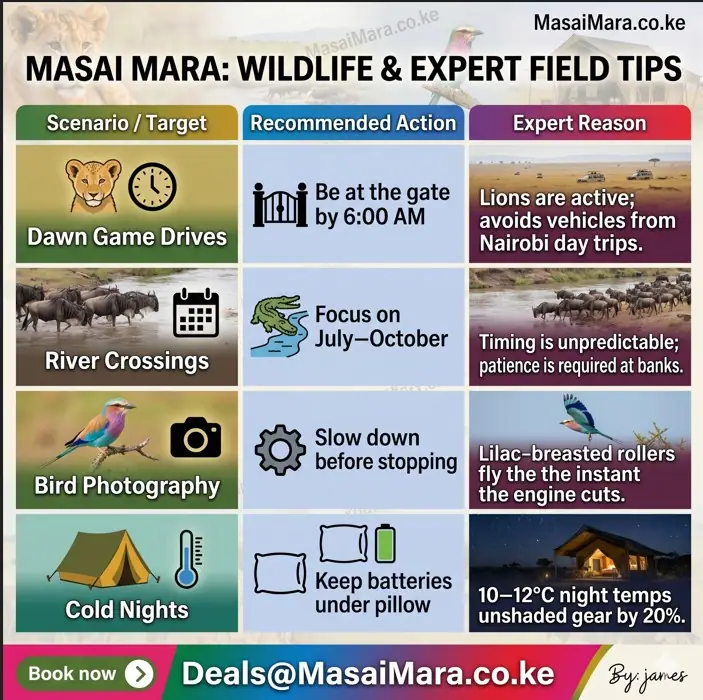
Scenario / Target | Recommended Action | Expert Reason |
Dawn Game Drives | Be at the gate by 6:00 AM | Lions are active; avoids vehicles from Nairobi day trips. |
River Crossings | Focus on July–October | Timing is unpredictable; patience is required at banks. |
Bird Photography | Slow down before stopping | Lilac-breasted rollers fly the instant the engine cuts. |
Cold Nights | Keep batteries under pillow | 10–12°C night temps drain unshaded gear by 20%. |
I’m combining these because they blur together in a good way.
5:30 AM starts. The grass smells different at dawn – wet, earthy, something sharp from the wild sage that grows near the camps. Lions are still active from night hunting. By 9 AM the vehicles from Nairobi day trips arrive and it gets crowded around the popular spots.
Day 3 we usually cover the Mara River – hippo pools, crocodiles, crossing points if you’re here July through October. Day 4 different sector, maybe Talek for leopards or Sand River near Tanzania where it’s quieter.
Few things about guide communication. They share sightings via radio, sometimes in Swahili – “chui” is leopard, “simba” is lion. If your guide suddenly picks up speed without touching the radio, they’ve probably seen a signal from another vehicle. Headlight flash, hand gesture, something. Don’t ask what’s happening. Get your camera ready.
The lilac-breasted roller is the most photographed bird in the Mara. Everyone stops when they see one perched. The bird flies the instant the engine cuts. If you want the wingspan shot, ask your driver to slow down before you reach it, not stop when you’re alongside.
Day 4 you’ll have a picnic lunch somewhere in the reserve. The person who packed that lunch, the askaris who scouted the site for predators – most people tip the driver and forget these people. KES 200-500 to the kitchen hand matters.
The Mara gets cold at night. 10-12°C sometimes. Batteries drain faster in cold. Keep your phone and camera batteries under your pillow. Otherwise you wake up at 5:30 with 20% less charge than expected.
Day 5: Out
One more dawn drive. Then we exit by 10 AM.
The QR code system charges another full day’s park fee if you’re late. I had guests in March who wanted one more hour with a lion pride. Cost them KES 26,000. The system doesn’t negotiate.
Cell service at the gates is unreliable exactly when you need to show your e-ticket. Take a video screen recording of your booking confirmation scrolling down. Sometimes a static screenshot doesn’t have whatever “live” elements the rangers want to see.
On the drive back, sit on the right side of the vehicle. The Rift Valley escarpment view is actually better from the right when you’re climbing toward Nairobi. Left side is for the drive down.
Drop-off late afternoon.
Costs
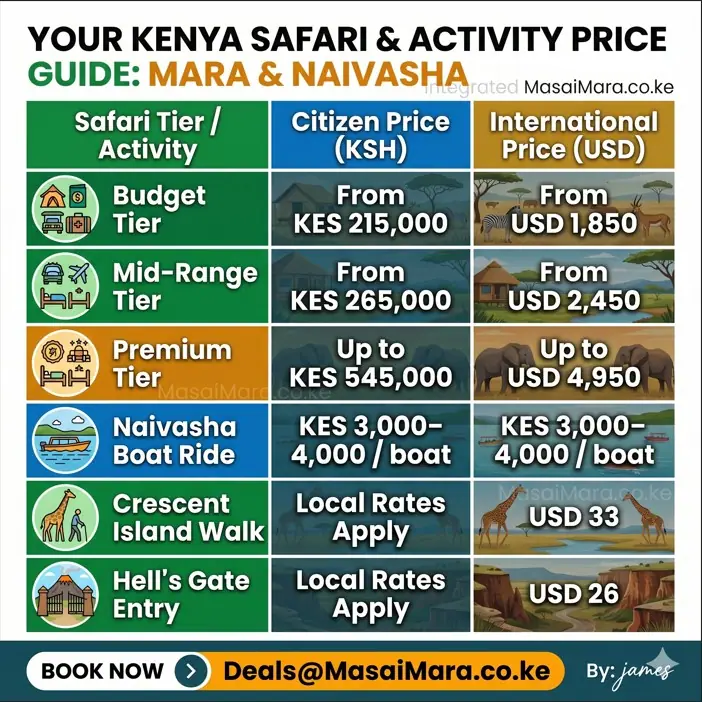
Safari Tier / Activity | Citizen Price (KSH) | International Price (USD) |
Budget Tier | From KES 215,000 | From USD 1,850 |
Mid-Range Tier | From KES 265,000 | From USD 2,450 |
Premium Tier | Up to KES 545,000 | Up to USD 4,950 |
Naivasha Boat Ride | KES 3,000–4,000 / boat | KES 3,000–4,000 / boat |
Crescent Island Walk | Local Rates Apply | USD 33 |
Hell’s Gate Entry | Local Rates Apply | USD 26 |
I’ll give you ranges. Exact quotes depend on specific dates, lodge availability, whether it’s peak season.
Kenyan citizens: KES 215,000 on the budget end (Naivasha Sopa plus Jambo Mara for three nights) up to around 545,000 for the high-end properties (Loldia House plus Angama Mara). Mid-range – Enashipai and Sentrim – runs about 265,000.
International visitors: USD 1,850 to 4,950 same breakdown.
Peak season (July through December) adds 35-40%.
What’s in those numbers: vehicle all five days, driver-guide, fuel, full board at all stops, Masai Mara fees for three days, water, AMREF evacuation.
What’s not: Naivasha activities (boat KES 3-4,000 per boat, Crescent USD 33, Hell’s Gate USD 26), tips, drinks, balloon safari if you want it (USD 450-550).
Things You Won’t See
I should be honest about this.
Rhinos are rare in the Mara. If that’s a priority, this isn’t the right trip. Nakuru is better.
Flamingos aren’t at Naivasha. They’re at Nakuru and Bogoria.
Kilimanjaro views – that’s Amboseli. Different direction.
If you book accommodation on the Narok side of the reserve (most camps), you won’t automatically see the Mara Triangle. That’s the western section, separate entry fee, and it’s a long drive across. Ask which side your lodge is on.
Gear Thing
Bring a pillowcase for your camera. I’m serious. Mara dust is finer than beach sand and gets into everything. Camera bags are too slow to unzip when a leopard appears. A pillowcase keeps your gear protected but grab-ready.
Also: don’t wear blue, black, or dark denim. Tsetse flies love all three. And skip heavy perfumes – elephant flies are attracted to them and their bite is worse than tsetse.
Questions
How is this different from 4 days? Extra night in the Mara. Fifth game drive. Better odds on the harder sightings.
Best time? September for crossings. January through March for fewer crowds.
Solo travelers? You’ll pay a single supplement. Some camps in 2026 are moving to per-tent pricing which helps. Ask when you book.
What wildlife? Lions almost guaranteed. Elephants yes. Cheetah decent odds. Leopard possible. Rhinos no.
Welcome to Masaimara.co.ke
Thank you for visiting us! We're excited to help you plan an unforgettable safari adventure across Kenya.