
Mahali Mzuri: The Honest 2026 Guide
Mahali Mzuri means “beautiful place” in Swahili, and once you see the valley from the deck you understand why. The camp is perched on a cliff in the Olare Motorogi Conservancy, directly in the path of the annual migration, with 12 tented suites, an infinity pool overlooking the valley, and every member of staff from the local Maasai community.
Getting There
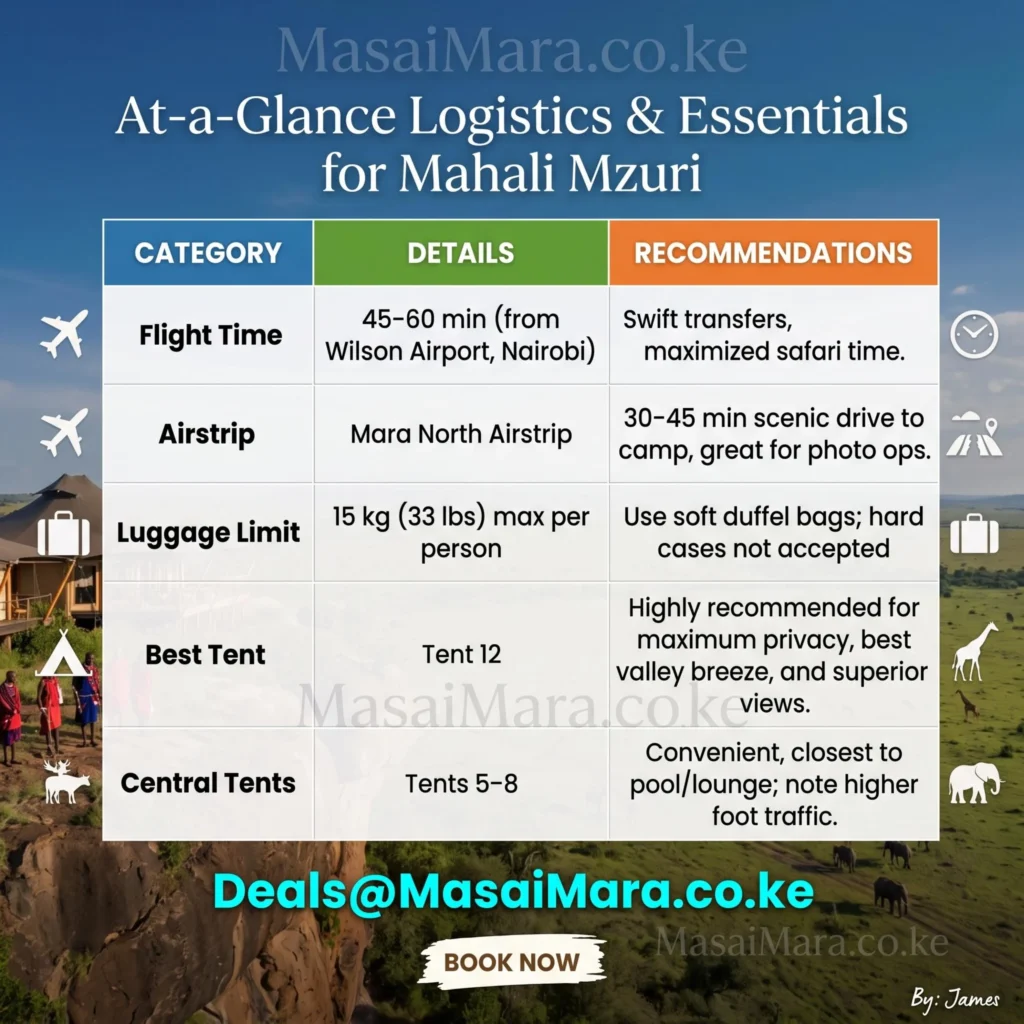
Flights from Nairobi’s Wilson Airport land at Mara North Airstrip. The 30 to 45-minute drive from the strip to camp passes through active wildlife country, so keep lenses ready on the way in. Total flight time from Nairobi is 45 to 60 minutes depending on how many strips the plane touches down at along the way. Flying in saves a full day in each direction, but pack everything in a soft duffel bag because hard cases don’t fit and the weight limit is 15 kg. The Nairobi-to-Mara road is the alternative if the schedule allows a day for the drive.
At-a-Glance Logistics & Essentials
The primary transfer options, weight limits, and strategic tent selection for a stay at Mahali Mzuri are outlined below.
Category | Details & Recommendations |
Flight Time | 45–60 min from Nairobi (Wilson Airport) |
Airstrip | Mara North Airstrip (30–45 min drive to camp) |
Luggage Limit | 15 kg (33 lbs) in soft duffel bags only |
Best Tent | Tent 12 (Max privacy, best breeze & views) |
Central Tents | Tents 5–8 (Closest to pool/lounge, higher foot traffic) |
The Tents and Which One to Request
The 12 suites are arranged in a line along the cliff edge, linked by an elevated wooden walkway. The central tents (5 through 8) are closest to the main lounge, the pool, and the restaurant, which is convenient but the foot traffic and lighting around the middle pushes the wildlife to the outer edges.
The tents at the far ends are where the animals come through. Elephants, giraffes, and occasionally leopards use the unlit paths down to the valley. Tent 12 at the far northern end has the most privacy, the best valley views, and catches the natural breeze. The walk to dinner is longer and requires an armed escort after dark, but for wildlife and quiet, it’s the one to ask for. Every tent has international plug sockets with USB ports and proper WiFi through a mesh network, so charging and connectivity aren’t an issue.
The Afternoon Heat and How to Manage It
The curved white roofs look striking, but the wide glass front and the canvas trap heat between roughly noon and 4 PM because there’s no air conditioning, only electric fans. If the blackout drapes are left open while you’re out on the morning drive, the tent heats up and stays warm through the afternoon.
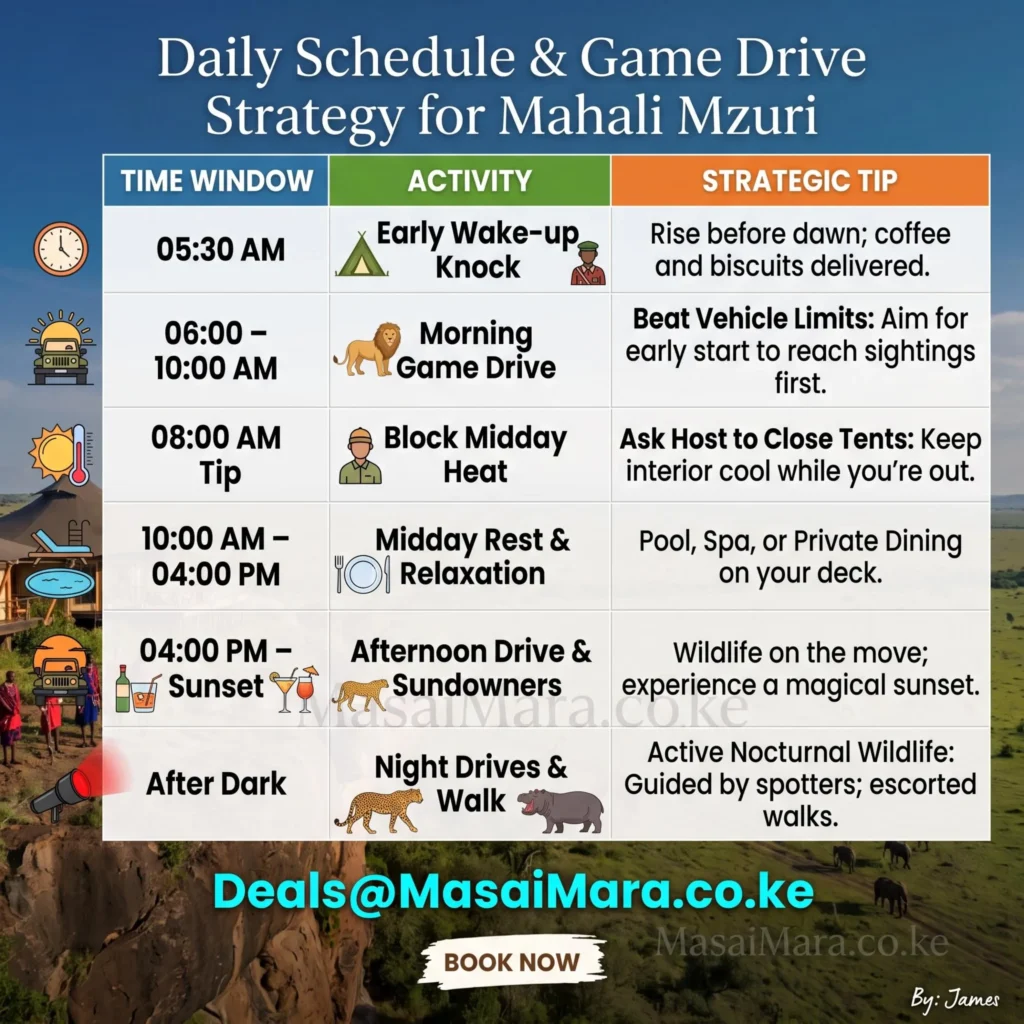
Ask the tent host to close the drapes at 8 AM before you head out, which keeps the interior cool for when you come back. Otherwise, plan to spend the midday hours at the pool or on a drive and treat the tent as an evening space.
Game Drives in Olare Motorogi
The conservancy caps sightings at 5 vehicles maximum, and during peak morning hours those spots go quickly. Leaving 30 minutes earlier than the standard camp wake-up means reaching a sighting before the other vehicles do.
Lions, cheetahs, and leopards are all resident, and because the conservancy sits in the migration path, the herds move through from July to October on their way to the Mara River crossings. Visiting the reserve for the crossings costs an additional 100-200 per day on top of the conservancy fee. During peak season (June to October), bookings of 3 or more nights include one free reserve day pass, so at least one of those days is covered.
After dark, night drives go out with red-filtered spotlights. Early mornings can start with a walking safari alongside armed Maasai rangers instead of a vehicle drive. Bush breakfasts and sundowners on the plains round out the day. A typical game drive runs from 6 AM to around 10 AM, then again from 4 PM to sunset.
Daily Schedule & Game Drive Strategy
A typical daily safari schedule at the camp, along with tips to maximize wildlife sightings, includes the following timeline.
Time Window | Activity / Strategic Tip |
05:30 AM | Early wake-up knock by the Askari |
06:00 – 10:00 AM | Morning Drive (Leave 30 mins early to beat vehicle limits) |
10:00 AM – 04:00 PM | Midday rest, pool time, or private deck dining |
08:00 AM Tip | Close tent drapes before leaving to block afternoon heat |
04:00 PM – Sunset | Afternoon/Evening Game Drive & Sundowners |
After Dark | Night drives with red-filter lights / Escorted tent walks |
What to Do When You’re Not on a Drive
The infinity pool hangs over the valley with nothing between the water and the view. The chlorine levels tend to run high, so swimming goggles are worth packing.
Meals are served at a communal long table on the main deck, and the food is excellent, with some of the produce coming from the camp’s own kitchen garden. For guests who prefer eating privately, the kitchen will set up meals on the tent deck, a dinner on the plains under the stars, or a valley picnic if you arrange it with the chef in the morning.
The canvas tent walls can be left unzipped at night so you fall asleep to the sounds of lions calling, hippos grunting, and hyenas in the distance. Cape buffalo walk through camp sometimes, and the morning wake-up is a quiet knock on the tent door from the askari rather than a phone alarm.
What to Know Before Booking
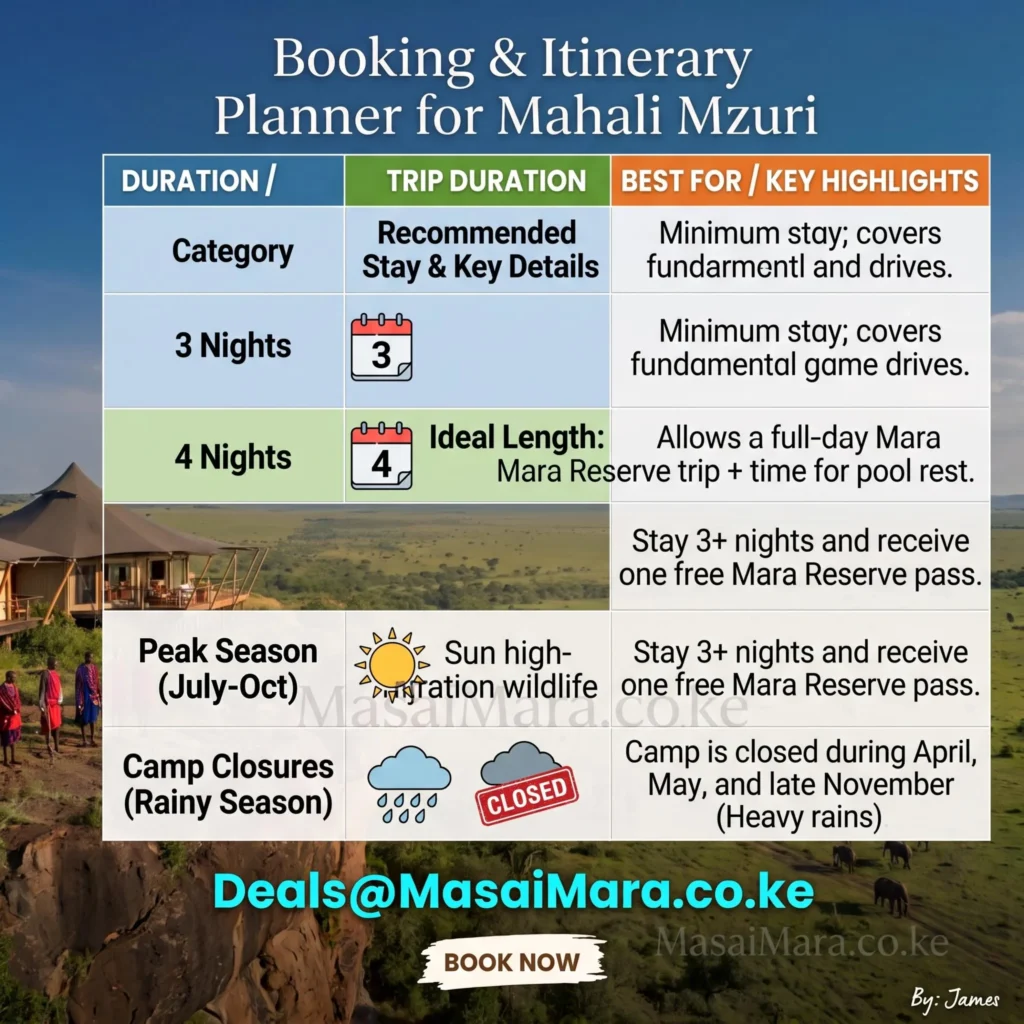
The camp closes during the heavy rains in April, May, and late November, so check the dates before booking shoulder-season trips.
Three nights is the minimum for a good stay. Four gives time for a full-day drive, a half-day, and a slow morning by the pool. How many nights makes a difference, and this breakdown explains why. Peak migration months book out well in advance, so checking the seasonal calendar early is worth it.
The gift shop is small and basic, so for quality beaded items a community village visit or shopping in Nairobi before the trip is a better option.
Booking & Itinerary Planner
Place right before the “Questions Guests Ask” section to capture high-intent travelers ready to convert.
Optimal stay durations, seasonal closures, and migration pass inclusions are detailed here to assist with trip planning.
Trip Duration | Best For / Key Highlights |
3 Nights | Minimum recommended stay; covers basic game drives |
4 Nights | Ideal length: Allows a full-day Mara Reserve trip + pool rest |
Peak Season | July–Oct (3+ nights includes 1 free Mara Reserve pass) |
Camp Closures | April, May, and late November (Heavy rain seasons) |
Questions Guests Ask
How does it compare to other Olare Motorogi camps?
Mahali Mzuri is more social than most Mara camps. The communal dining table, the pool, and the modern architecture attract guests who enjoy a polished, sociable atmosphere. Other camps in Olare Motorogi are more traditional in style and quieter. The wildlife is the same across the conservancy, so the choice comes down to the camp experience. The luxury safari page compares the different styles.
Is it good for families?
Children aged 2 and older are welcome. The family suite has two bedrooms with a shared lounge. Game drives are private, so families set their own pace. Other family-friendly camps are on the site if Mahali Mzuri is full.
How do I start planning?
Start a booking if dates are set, or send us your dates and we’ll recommend how to build the trip. A 5-day trip fits a conservancy-reserve split comfortably. A 4-day trip works with three nights at Mahali Mzuri and a reserve day trip. For Amboseli alongside the Mara, the 6-day circuit or three-park loop add Kilimanjaro. Packages at every budget, fly-in routes, and migration timing can all be factored in.
This guide was authored by David Njunge, a TRA-licensed safari guide with over 10 years of experience, and edited by Cecilia Wambui, a travel consultant with a degree in Tourism and Hospitality Management.
Welcome to Masaimara.co.ke
Thank you for visiting us! We're excited to help you plan an unforgettable safari adventure across Kenya.