
Masai Mara and Tsavo Safari – Two Parks, One Trip
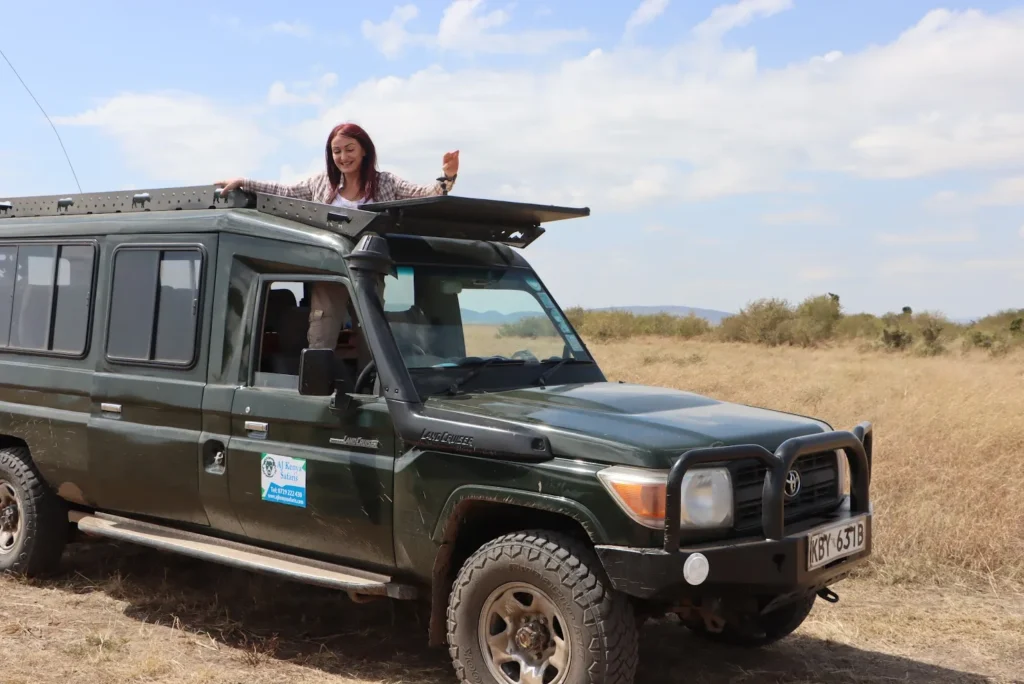
Masai Mara and Tsavo Safari: 7 nights across both parks with a Nairobi transit. Non-residents pay USD 2,690 to USD 6,140. Kenyan residents pay KES 350,000 to KES 798,000. You get the Big Five density of the Mara plus Tsavo’s red elephants, maneless lions, and volcanic landscapes – two completely different safari experiences in one trip.
What This Guide Covers
Most tour operators don’t offer this combination. The Mara is southwest of Nairobi. Tsavo is southeast, toward the coast. No direct road between them. You loop back through Nairobi or fly.
I run this route a few times a year at Masaimara.co.ke for clients who specifically ask for it. It takes planning. The payoff is seeing two completely different Kenyas – the famous green savanna of the Mara and the volcanic red wilderness of Tsavo.
What It Costs

Feature | Masai Mara | Tsavo (East & West) |
Landscape | Green savanna & rolling hills | Red volcanic dust & vast wilderness |
Key Wildlife | High Big Five density, Migration | Red elephants & maneless lions |
Vibe / Crowds | Busy, tourist convoys | Remote, untouched wilderness |
Size | Compact (~1,500 $km^2$) | Massive (East alone is ~14,000 $km^2$) |
Two sharing. Private Land Cruiser. All driving unless noted.
Park Fees (Non-Resident, USD)
- Masai Mara: USD 100/day (low) / USD 200/day (peak)
- Tsavo West: USD 80/day
- Tsavo East: USD 80/day
7 Nights (3 Mara + 1 Nairobi + 2 Tsavo West + 1 Tsavo East) – Non-Residents (USD)
Tier | Low Season | Peak Season | Lodges |
Budget | 2,690 | 4,810 | Jambo Mara, transit hotel, Ngulia Lodge, Voi Safari Lodge |
Mid-Range | 3,110 | 5,300 | Sentrim Mara, Eka Hotel, Kilaguni Serena, Ashnil Aruba |
Luxury | 3,810 | 6,140 | Mara Serena, Ole Sereni, Kilaguni Serena, Satao Camp |
7 Nights – Kenyan Residents (KES)
Tier | Low Season | Peak Season | Lodges |
Budget | 350,000 | 625,000 | Jambo Mara, transit hotel, Ngulia Lodge, Voi Safari Lodge |
Mid-Range | 404,000 | 689,000 | Sentrim Mara, Eka Hotel, Kilaguni Serena, Ashnil Aruba |
Luxury | 495,000 | 798,000 | Mara Serena, Ole Sereni, Kilaguni Serena, Satao Camp |
Flying out of the Mara instead of driving? Add USD 280 / KES 36,000 per person.
What’s Included
- Private 4×4 Land Cruiser with pop-up roof
- English-speaking driver-guide throughout
- Fuel for all transfers and game drives
- Full board accommodation (all meals)
- One night transit accommodation in Nairobi
- Park entry fees: Masai Mara (3 days), Tsavo West (2 days), Tsavo East (1 day)
- Bottled drinking water during drives
- AMREF Flying Doctors emergency evacuation cover
- Airport/hotel pickup and drop-off in Nairobi
What’s Not Included
- Tips for driver-guide (USD 15-20 / KES 2,000-2,500 per day)
- Tips for lodge staff
- Alcoholic and soft drinks
- Travel insurance (required)
- Visa/eTA fees (etakenya.go.ke)
- Personal expenses: laundry, souvenirs
- Hot air balloon in Mara (USD 500 / KES 65,000)
- Mzima Springs underwater tank entry (USD 15 / KES 2,000)
- Internal flights if upgrading from road transfers
The Transfer Problem

Route Option | Travel Logic | Best For… |
Nairobi Overnight | Split the 10-hour drive over 2 days | Travelers wanting a fresh, safe drive |
Naivasha Break | Overnight at lake; see hippos/islands | Adding an extra scenic water safari |
SGR Train | Fast rail from Nairobi to Tsavo gates | Avoiding bumpy highway traffic |
Fly via Wilson | 45-minute bush flight to Nairobi | Saving an entire day (requires more budget) |
Might as well start with this since it’s the main objection.
Mara to Tsavo via Nairobi is roughly 10 hours of driving if you do it in one shot. I tried this once. Left the Mara at 6:15 AM, hit the Nairobi bypass around noon (which was jammed because of construction near Southern Bypass), didn’t reach Ngulia Lodge in Tsavo West until almost 8 PM. The clients – a German couple in their sixties – were polite about it but clearly miserable. That was the last time I attempted a single-day transfer.
Better approaches:
Break at Nairobi overnight. Leave the Mara after a morning game drive, reach Nairobi by 4-5 PM, sleep somewhere near the airport. Next day, head to Tsavo fresh. This is what I recommend.
Break at Naivasha. Instead of Nairobi, spend a night at Lake Naivasha on your way out of the Mara. Crescent Island walk, hippos at sunset. Then continue to Nairobi the next morning and on to Tsavo from there.
Take the SGR train. This one most tourists don’t know about. The Madaraka Express runs Nairobi to Mombasa and stops at Mtito Andei (for Tsavo West) and Voi (for Tsavo East). Economy class is about KES 1,500, First Class around KES 4,000. Way smoother than the highway, faster too. Your safari vehicle can meet you at the station. We’ve done this with clients who hate long drives. Works well.
Fly out of the Mara. Bush flight to Wilson Airport, 45 minutes. Then drive to Tsavo from there. Adds USD 280 / KES 36,000 per person but saves a day.
Why Bother
The Mara you know. Lions, elephants, migration crossings July-October. Green grass, rolling hills, the documentary experience.
Tsavo is different in ways that are hard to describe until you’re there.
The soil is red volcanic dust. Elephants roll in it – not for fun, apparently it protects their skin from sun and parasites. First time I saw them I thought they were injured or sick. They look like they belong on another planet. Stay downwind if you see one dusting – that silt gets in your camera and lungs instantly.
Tsavo is also enormous. Tsavo East alone is almost 14,000 square kilometers. The entire Mara ecosystem is about 1,500. You can drive for an hour between sightings. Some people find this boring. I’ve had clients complain. But for people who’ve done the Mara and want actual wilderness without the vehicle swarms, this is it.
The lions look different here. Many males have thin manes or none at all. They’re harder to find because they don’t follow tourist convoys like Mara lions do. If you want to see them, tell your guide to check near baobab trees or along the Pipeline – the water pipe running through the park. Lions wait at leak points and man-made watering holes.
Day by Day

Days | Location | Standout Highlight / Activity |
Days 1–3 | Masai Mara | River crossings (July–Oct) & intense cat tracking |
Day 4 | Nairobi | Supply restock at The Hub & airport transit rest |
Days 5–6 | Tsavo West | Underwater hippo viewing at Mzima Springs |
Day 7 | Tsavo East | Giant crocodiles at Lugard Falls & Aruba Dam |
Day 8 | Depart | Drive back to Nairobi or head to Mombasa coast |
Day 1
Stock up at The Hub in Karen before leaving Nairobi. It’s the last place to get decent sunblock, specific snacks, or European-style supplies. Narok has a Naivas supermarket but the selection is basic and everything’s marked up for tourists.
5-6 hours to the Mara via Narok. Sekenani Gate. Afternoon game drive.
Days 2-3
Full days in the Mara. Dawn drives, afternoon drives. If you’re here July-October, the Mara River crossing points.
One thing to know about Mara timing: the ticket system runs on 12-hour windows now, single entry. If you leave the reserve for lunch at your lodge (if it’s outside the park), you can’t pop back in for a sunset drive without paying again. Either stay inside all day or accept the limitation.
If your guide points out a whistling thorn acacia, look at the black bulbous growths – ant galls. When the wind blows through them, they make a faint singing sound. Most people hunting the Big Five drive right past without noticing.
Day 4
Morning drive if timing works, then out of the Mara and back toward Nairobi. Overnight near the airport or in Karen.
Day 5
Two options from Nairobi to Tsavo West:
Drive via Mombasa highway to Mtito Andei gate. About 4-5 hours. The road is good but monotonous.
Or take the SGR train. Leaves Nairobi Terminus around 8 AM, reaches Mtito Andei station by 11-ish. Your vehicle meets you there. It’s comfortable, air-conditioned, has a dining car. Some clients love it.
Afternoon game drive in Tsavo West. Stop at Shetani Caves and the lava flow if you have time – but wear thick-soled boots. The volcanic rock is razor-sharp. I’ve seen safari sandals get destroyed in ten minutes. Sneakers barely survive.
Day 6
Full day Tsavo West.
Mzima Springs early – 8 AM if possible. The underwater glass tank lets you see hippos from below. By midday the water gets murky from hippo activity. Morning is the only time you get that crystal clear view of hippos walking on the spring bottom.
The rest of the park: Roaring Rocks viewpoint, Chaimu Crater, the volcanic landscape. Tsavo West is more scenic than East, but denser vegetation makes spotting harder.
Day 7
Morning in Tsavo West, then cross to Tsavo East. About 2 hours via internal connection roads (your guide will know the route).
Tsavo East is flatter, more open. Better visibility. The Galana River runs through it. Aruba Dam attracts elephants. Lugard Falls is worth the drive – though “falls” is misleading. It’s actually white-water rapids through volcanic rock gorges. The real draw is Giant Crocodile Point just downstream. Massive crocs sunbathe there in a way you rarely see in the Mara.
Even if you’re not staying at Voi Safari Lodge, you can pay a small fee to use their underground photo hide. It puts you at eye level with their waterhole. One of the few places in Kenya where you can be five feet from an elephant’s foot safely.
Day 8
Morning drive in Tsavo East. Then 5 hours back to Nairobi. Or 4 hours to Mombasa if you’re heading to the coast.
Tsavo Dust
This deserves its own mention because it wrecked my camera once.
Tsavo’s red dust is alkaline and sticky. It’s different from Mara dust. It gets into zoom mechanisms and jams them. A lens cap isn’t enough.
Experienced photographers wrap their camera body – not just the lens – in a shemagh or light cotton scarf between shots. Takes longer to deploy for wildlife but saves your gear.
Also bring eye drops. The dust irritates more than Samburu or Mara dust does.
Taita Hills Alternative
If you want something different for your Tsavo nights, look at Taita Hills Wildlife Sanctuary next to Tsavo. It’s a private conservancy with lodges built on stilts – Sarova Salt Lick is the famous one.
Unlike the Mara where you’re always in a vehicle, here the wildlife comes under your room at night. Elephants, buffalo, sometimes cats at the illuminated waterhole. Costs more than standard Tsavo lodges but it’s a different experience entirely.
Questions
How many days minimum? Six nights to do both without hating the driving. Seven or eight is better.
Can I see the Big Five in both? Mara yes. Tsavo – lions and elephants easily, buffalo and leopards possible, rhinos very rare (try Ngulia Sanctuary if this matters).
Best time? July-October overlaps dry season in both parks. Migration in the Mara, animals concentrated at water in Tsavo.
What about green vs dry season photography? In the Mara, dry/yellow grass (late September-October or January-February) is actually better for spotting cats. Short grass means you can see servals and caracals that are invisible in lush season.
Why is peak season so much more expensive? Mara park fees double from USD 100 to USD 200 per day. Vehicle rates increase significantly due to demand. Lodge rates jump 20-40%.
David Njunge · August 2026
Related: Mara Packages · Budget Safaris · 7-Day Safaris · First Safari
Verify fees: KWS
Welcome to Masaimara.co.ke
Thank you for visiting us! We're excited to help you plan an unforgettable safari adventure across Kenya.