
Night Game Drive Masai Mara: The Honest 2026 Guide
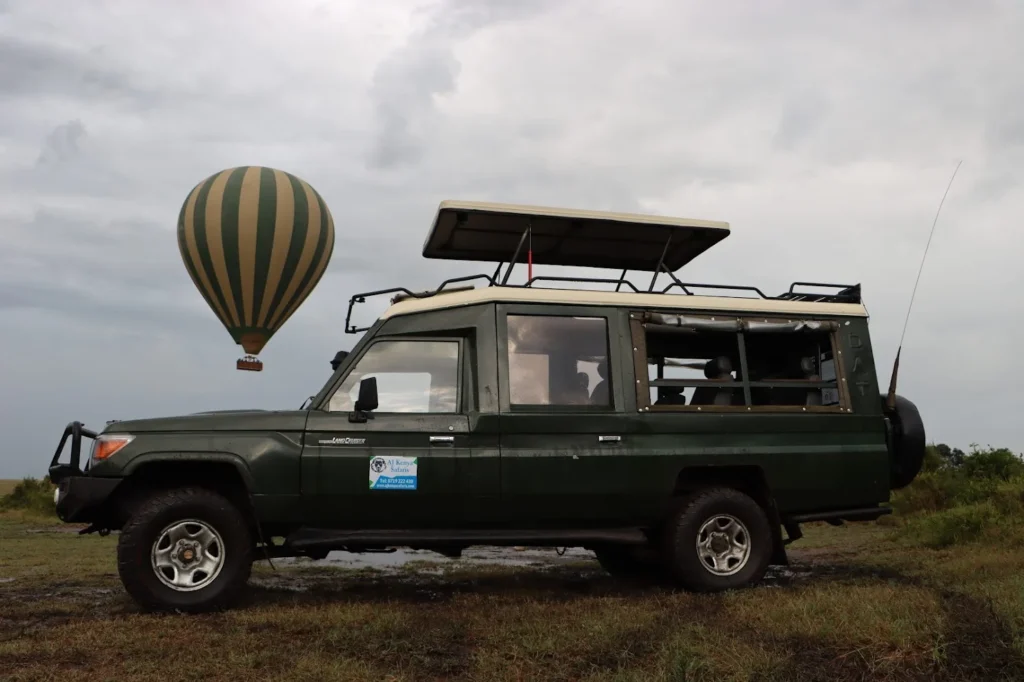
A night game drive in the Masai Mara is a different safari from the one that happens during the day. Leopards that slept in trees all afternoon are on the ground hunting by 8 PM. Hippos leave the river to graze across open grassland. Aardvarks appear at termite mounds. None of this is visible before sunset. Night drives are banned inside the national reserve, though. They’re only available in the private conservancies that border it. A guest staying inside the reserve cannot do a night drive. A guest staying in a conservancy usually can, often at no extra charge. For the 2026/2027 season, all-inclusive 5-day itineraries with conservancy night drives range from KES 224,900 ($1,730) to KES 1,134,900 ($8,730) per person sharing. Reserve entry is $100–$200/day. Conservancy fees ($80–$150/night) are included in camp rates.
Safari Costs (2026/2027)
All-inclusive prices per person sharing, based on two people in a private 4×4 Land Cruiser. Conservancy fees are included in camp rates.
5-Day All-Inclusive Rates (Per Person Sharing)
Package Tier | Camps (Nakuru + Mara Conservancy) | Regular Season (KES) | Peak Season (KES) |
Budget | Lake Nakuru Lodge / Ol Kinyei Adventure | KES 224,900 | KES 442,000 |
Mid-Range | Sarova Lion Hill / Karen Blixen Camp | KES 276,900 | KES 533,000 |
Luxury | The Cliff Nakuru / Porini Lion Camp | KES 475,800 | KES 783,900 |
Luxury Plus | The Cliff Nakuru / Mara Plains Camp | KES 735,800 | KES 1,134,900 |
Note: Conservancy fees included. Reserve entry is extra ($100–$200/day). Most conservancy camps include the night drive in the room rate. Some independent lodges charge $80–$200 per person separately. Confirm at booking. For a luxury safari or flying packages, request a custom quote.
What’s Covered
- A private 4×4 Safari Land Cruiser for the full trip.
- A TRA-licensed guide with spotlight equipment and night-drive experience.
- All conservancy conservation fees and Lake Nakuru entry fees.
- Night drives, off-road tracking, and guided walking safaris with Maasai trackers.
- One-way return flight from the conservancy airstrip to Nairobi Wilson (flight details). Soft-sided duffel bags only, 15 kg limit.
- Full board, 3 meals daily.
- AMREF Flying Doctors emergency air evacuation insurance.
What’s Excluded
- Kenya eTA (~$30).
- Tips (KES 3,000/day for guide).
- Alcohol and premium drinks.
- Hot air balloon ($450–$500).
- Main reserve entry fees if crossing into the public park ($100–$200/day extra).
- International flights.
The 5-Day Itinerary
Day 1: Nairobi to Lake Nakuru
Leave Nairobi early. Afternoon at Lake Nakuru tracking rhinos. Stay at your selected lodge.
Day 2: Nakuru to the Mara
Drive through the Rift Valley or fly in. Late afternoon drive transitioning into the first night drive after dinner. Stay at your chosen conservancy camp.
Day 3–4: Full Days and Nights
Two full days. Morning and afternoon drives for big cats and general game. Night drives after dinner for the nocturnal species.
Day 5: Departure
Early morning drive. Fly back to Nairobi from the conservancy airstrip (fly-in options).
Where Night Drives Are Allowed
Night drives are banned inside the main Masai Mara National Reserve. All vehicles must clear the reserve gates or reach their lodges by 6:30 PM. Rangers patrol the tracks after dark, and vehicles caught moving face permit suspension and fines.
Night drives are legal in the private conservancies that border the reserve: Mara North, Olare Motorogi, Naboisho, Ol Kinyei, Siana, and Trans Mara. Each conservancy sets its own rules, but the standard is a 2-hour drive departing between 7 and 9 PM, using a handheld red-filtered spotlight operated by the guide.
Naboisho holds over 70 identified lions in 52,000 acres, one of the highest predator densities in the Mara, and is consistently rated the strongest conservancy for night drives. Camps like Naboisho Camp and Encounter Mara offer night drives as a standard activity included in the stay.
What Guests See After Dark
Nocturnal Target / Eye-Shine Signal | Expert Field Interpretation (E-E-A-T) |
Green-Gold / Amber Glow | Direct optical indicator of a large felid; signals a resting or stalking big cat. |
Soft Pink / Silver Reflection | Reflects off specialized ocular tissue; confirms a grazing or resting plains herbivore. |
Vivid Crimson Red Glow | Pinpoints a cold-blooded aquatic predator; highlights crocodiles watching the river margins. |
Thousands of Diamond Pinpricks | Reveals massive spider populations reflecting light at ground level across the grass. |
Full-Height Open Grazing | Hippos completely exit river networks to forage on foot, showing unexpected terrestrial speed. |
Most of what appears on a night drive doesn’t show up during the day at all. A single 2-hour circuit can add five or six species that no morning or afternoon game drive would produce.
Leopards are the highlight most guests hope for. They’re far more active after dark, and watching a leopard stalk prey in the spotlight beam is one of the most intense sightings available in the Mara. Not every night produces a leopard hunt, but the odds are significantly higher than during the day.
Hippos on land look nothing like the animals guests watched from a bridge that afternoon. At night they’re out on the plains feeding, fully visible and surprisingly fast on their feet. Until the night drive, the only view is eyes and ears above water. A hippo at full body height, grazing in open grassland, is a different animal entirely.
Lions are more active after dark. Prides that spent the day sleeping flat in the shade are on their feet, marking territory, interacting, and sometimes hunting. The red spotlight catches the action without disrupting it.
Small nocturnal species are the unexpected part: aardvark digging for termites, bush babies clinging to branches with enormous eyes, genets threading through the grass, civets, porcupines, bat-eared foxes, honey badgers, aardwolves, striped hyenas, spring hares, and nightjars sitting on the warm tracks. Half these animals are new names to the average safari guest.
What to Expect on the Drive
Tactical Parameter / Variable | On-The-Ground Protocol & Night Reality |
Red-Filtered Spotlights | Leveraged to prevent pupil contraction; allows watching hunts without blinding the cats. |
Pocket of Silence Tracking | Guides isolate sudden localized pauses in the insect chorus to locate hidden, moving predators. |
Dark Moon Phase Choice | The ultimate tracking window; complete darkness forces cats to hunt aggressively. |
Full Moon Phase Dynamic | Suppresses large carnivore hunting success because plains prey can easily spot approaching threats. |
Single-Digit Chill Defense | Open-sided 4x4s encounter severe thermal drops at 1,500 meters; heavy winter layers are mandatory. |
The drive departs camp after dinner, usually around 7 PM. The vehicle is open-sided with no windshield. At 1,500 metres elevation, temperatures drop sharply after sunset. Guests need fleece, a jacket, scarf, gloves, and a hat. Most camps provide Maasai blankets and hot water bottles, but the cold still surprises people. Dress for the cold rather than the lodge.
The guide operates a handheld red-filtered spotlight. Red light doesn’t contract animal pupils or disrupt hunting behaviour the way white light does. Flash photography is banned. Photographing at night requires high ISO settings and wide aperture. After a few attempts in the dark, the camera usually goes down and the watching takes over.
The guide identifies species by eye-shine. Animal eyes reflect the spotlight at different colours depending on the species. Cat eyes glow amber or green-gold. Herbivore eyes reflect a softer pink or silver. Crocodile eyes glow red. Spider eyes appear as thousands of tiny diamond pinpricks across the grass. The guide reads the colour and spacing to identify what’s ahead before the vehicle gets close.
Between sightings, the guide sometimes kills the spotlight and the engine. The sounds become the experience. Lion roaring from a few hundred metres away in total darkness. Hyenas whooping across the plain. Nightjar calls. The insect chorus is constant, but when a large predator moves through the bush, the insects in that area go silent. Tracking that moving pocket of silence through the noise is one of the ways guides find cats in the dark before the spotlight picks them up.
Far from any light pollution, the night sky on a moonless night is spectacular. The Milky Way is visible in full. Between sightings, the guide often stops for a few minutes to let guests look up.
If there’s flexibility in the schedule, ask the guide which night has the darkest moon phase. Predators move and hunt more actively in complete darkness. A full moon slows them down because the prey can see them coming.
Questions Guests Ask
Can I do a night drive from a reserve camp?
No. Night drives are banned in the national reserve. Only conservancy camps offer them. If night drives are a priority, the camp needs to be in a conservancy. The conservancy guide explains the differences.
Is the night drive included in the camp rate?
At most conservancy camps, yes. Some independent lodges charge separately ($80–$200). Confirm at booking. Get in touch and we’ll confirm which camps include it.
How cold does it get?
Cold enough that guests who packed only a light jacket regret it. Temperatures at 1,500 metres in an open vehicle drop to single digits Celsius. Pack warm layers, not safari-weight clothing.
Can I photograph on a night drive?
Technically yes, but flash is banned and the darkness makes it difficult. High ISO, wide aperture, and a steady hand or monopod help. In practice, the camera tends to stay down. The experience is sensory rather than visual.
Which conservancy is best for night drives?
Naboisho for lion density. Olare Motorogi for overall predator diversity. Mara North for leopard territory. The wildebeest migration affects predator distribution seasonally. Fees and logistics are on the booking page.

What Changed After My First Night Drive
I guided for three years before I did my first night drive. During the day, I knew where the leopards rested and where the lions slept. At night I realised I’d only been seeing half of what they do. The leopard I’d been watching sleep in a sausage tree all afternoon was on the ground hunting impala by 8 PM. The lion pride that lay flat like stones at noon was spread across a valley, calling to each other in the dark.
The moment that stays with me was a genet that appeared on the bonnet while I had the spotlight trained on a patch of grass. It crouched there, waited for a grasshopper to freeze in the beam, and struck. The guests in the back seat were a metre from a wild hunt they’d never have seen from a lodge dining room. Nobody spoke. The genet caught three more before it jumped off and disappeared.
The night drive tends to catch people off guard more than anything else on the trip. The Mara after dark is a different place, and it’s the part of the ecosystem that stays hidden unless the camp happens to be in a conservancy.
The only requirement is a conservancy camp. If that’s something worth building into the trip, a 5-day safari gives enough nights for multiple drives. The 3-day and 4-day trips work if the camp offers a drive on the first evening. For Amboseli alongside the Mara, the 6-day circuit or three-park loop add a different ecosystem. Send us your dates and we’ll find a conservancy camp with night drives included, or browse luxury lodges, fly-in transfers, and other options on the packages page. The migration guide covers how predator activity shifts by season.
This guide was authored by David Njunge, a TRA-licensed safari guide with over 10 years of experience, and edited by Cecilia Wambui, a travel consultant with a degree in Tourism and Hospitality Management.
Welcome to Masaimara.co.ke
Thank you for visiting us! We're excited to help you plan an unforgettable safari adventure across Kenya.