
Walking Safari Masai Mara: The Honest 2026 Guide
A Walking Safari Masai Mara for the 2026/2027 season costs between KES 315,500 ($2,425) and KES 910,000 ($7,000) per person sharing for a 5-day trip. Walking is only allowed in the private conservancies (Naboisho, Mara North, Olare Motorogi, Ol Kinyei), not in the main reserve. You walk with a Maasai tracker armed with a spear and an armed ranger with a rifle. The experience is completely different from a game drive. You learn to read animal tracks, identify bird alarm calls, and recognise medicinal plants that the Maasai have used for generations.
Walking Safari Masai Mara Costs (2026/2027)
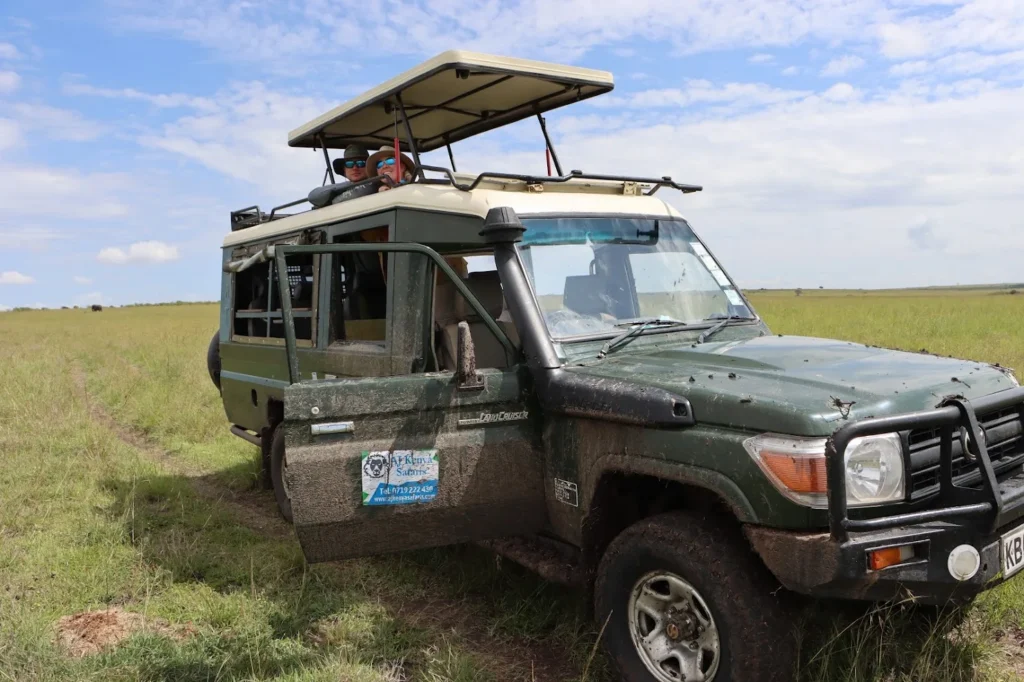
These are all-inclusive prices per person sharing, based on two people with a private 4×4 Land Cruiser for transits and afternoon drives.
5-Day All-Inclusive Walking Safari Rates (Per Person Sharing)
Package Tier | Walking-Friendly Camps | Regular (KES) | Peak (KES) |
Budget | Talek Bush / Oldarpoi | KES 315,500 | KES 485,000 |
Mid-Range | Basecamp Explorer / Zebra Plains | KES 455,000 | KES 680,000 |
Luxury | Sand River / Mara Serena | KES 650,000 | KES 850,000 |
Luxury Plus | Mara Plains / Angama Mara | KES 910,000 | KES 1,120,000 |
Book Now | Current Rates |
Note: Peak season is July–October for the wildebeest migration. For a luxury safari walking upgrade, request a custom quote.
What’s Covered in the Price?
- Vehicle. Private 4×4 Safari Land Cruiser for all transits and afternoon game drives.
- Walking Team. Armed KWS or conservancy ranger and Maasai tracker for every walk.
- Park Fees. All 2026 Mara fees paid at the gate (cash USD/KES, or card/M-Pesa). Pre-payment through KAPS office in Nairobi. For KWS parks on the circuit, fees via eCitizen.
- Flights. Masai Mara flying packages return flight included.
- Meals. Full board, 3 meals daily.
- Evacuation. AMREF Flying Doctors emergency air evacuation insurance.
Excluded. Kenya eTA (~$30), tips (KES 4,000/day for the guide and tracker team), alcohol and soft drinks, hot air balloon ($450–$500), international flights.
I started guiding walking safaris about eight years ago. Before that, I thought the vehicle was the only way to experience the Mara. The first time I walked a guest through the conservancy at 6 AM and watched them freeze at the sound of a twig snapping 30 metres away, I understood something had changed. The vehicle keeps you separate from what’s happening around you. On foot, that separation disappears and you become aware that everything around you is alive, alert, and paying attention to you.
Most conservancy camps include one walking safari in the daily rate at no extra cost, but it won’t happen unless you request it the day before so the guide and armed ranger can be arranged.
The 5-Day Itinerary
Day 1: Nairobi to Lake Naivasha
3-hour drive. Afternoon walk on Crescent Island among giraffes, zebras, and waterbuck with no predators. This is a good warm-up for walking in the open — you get used to being on foot near large animals in a safe environment. Stay at Enashipai Resort.
Day 2: Naivasha to Mara Conservancy
5-hour drive. Your Mara park ticket runs on a strict 12-hour calendar day (6 AM – 6 PM). If you arrive late afternoon, settle into your camp and save the first walk for 6 AM the next day. Late afternoon sunset walk near camp to learn lion track identification with your Maasai guide. Stay at Basecamp Explorer or Encounter Mara.
Day 3: Full Walking Day
3–4 hour morning walk through the conservancy. Afternoon game drive tracking the migration or lions.
Day 4: Reserve Game Drive + Evening Walk
Morning game drive inside the main reserve for leopards and rhinos. Late afternoon walk in the conservancy as the light goes golden. Sunset walks produce better photographs than morning walks — the low light backlights grass and creates long shadows from termite mounds. Evening night drive.
Day 5: Departure
Sunrise bird walk near camp. The guide identifies species by call and teaches you the alarm call system — which bird warns about which predator. Fly back to Nairobi via Masai Mara flying packages.
What Happens Once You Step Out of the Vehicle
Guide Hand Signal | Tactical Field Meaning | Group Action Required |
Raised Fist | Absolute immediate stop. | Freeze instantly in your single-file line position. |
Open Palm Down | Lower group visibility. | Crouch down quietly behind the nearest foliage screen. |
Pointed Finger | Target animal or track spotted. | Look along the line of sight without shifting your feet. |
Single-File Chain | Group alignment directive. | Stay tight behind the tracker; never step into unread bush. |
You’ll sign a liability disclaimer before you leave camp. This is standard at every conservancy. You’re voluntarily leaving the protection of the vehicle in an area where lions, buffalo, and elephants are present.
You walk single file behind the Maasai tracker. The tracker walks ahead reading the bush. The armed ranger walks with the group. You stay within a few metres of the person in front. If you fall behind, you’re outside the protection zone. If you walk ahead of the guide, you’re in unread bush.
Complete silence is required for most of the walk. Your guide communicates with hand signals — a raised fist means stop, an open palm pushed down means crouch, a pointed finger means look. Turn your phone to silent before you leave camp.
The guide does not approach dangerous animals. They read the bush to steer you away from buffalo, elephants, and big cats. If you encounter a dangerous animal, the guide freezes the group, assesses the situation, and retreats quietly. The goal is awareness of the bush, not adrenaline encounters.
You get surprisingly close to herbivores on foot. Giraffes look down at you curiously. Zebras assess you and move off when you get too close. Their reaction to a human on foot is completely different from their reaction to a vehicle. You see flight behaviour you never notice from a Land Cruiser.
In the wet season (April–June), hippos sometimes rest in thickets away from the river. The Maasai tracker can detect them by scent before you see them. Surprising a hippo on a walk is a higher risk than a lion encounter — another reason the single-file protocol behind the tracker matters.

What You Learn on Foot
Most of what makes the Mara interesting is too small to see from a moving vehicle.
Tracking. The guide teaches you to identify which animal passed, how recently, and in which direction by the depth and freshness of the print. Lion prints have no claw marks because cats retract their claws. Buffalo tracks are deep and splayed. Elephant dung tells you what they ate. By the end of a 3-hour walk, you’re reading the ground yourself.
Bush medicine. The Maasai have extensive knowledge of medicinal plants. The Olasiti tree is the toothbrush tree — you peel the bark and chew the fibrous young shoots for sensitive teeth. Ol-leleshwa (camphor bush) leaves are rubbed on skin as a natural antiseptic and insect deterrent. The Maasai burn Ol-leleshwa branches to repel mosquitoes. Ol-mesigie (sandpaper tree) has rough leaves used for filing and smoothing wood.
Bird calls. From a vehicle, you hear birds but drive past before you can identify them. On foot, the guide stops, points, and names each species by its call. The grey lourie (the “go-away bird”) makes a nasal call that warns other animals a predator is near. Oxpeckers on a buffalo’s back tell you the herd is close before you see it. The Crowned Lapwing screams and performs a broken-wing display near its nest — if it flies toward you, the nest (or a predator) is behind you.
The walk changes your game drives. After walking, you notice things from the vehicle that you never saw before. Tracks on the road. Bird alarm calls and what they mean. Wind direction and how it affects animal behaviour. Guests who walk on Day 2 or 3 consistently say their remaining game drives are better because they’re reading the bush, not just scanning the horizon.
Conservancies That Offer the Best Walks
Conservancy Hub | Premium Tracking Advantage | Key Property Examples |
Naboisho | Premium edge habitats where grasslands meet riverbeds. | Naboisho Camp, Basecamp Explorer, Encounter Mara |
Mara North | High-density river tree lines and varied plant life. | Offbeat Mara (Silver-level KPSGA guiding teams) |
Ol Kinyei | Staggered multi-conservancy wilderness trail access. | Porini Cheetah Camp (Shared Naboisho entry) |
Naboisho Conservancy is the strongest area for walking safaris. Naboisho Camp (Asilia) has KPSGA-qualified Maasai guides. Basecamp Explorer uses Maasai-led walking with cultural and ecological interpretation. Encounter Mara (also Asilia) offers the same standard.
Mara North Conservancy. Offbeat Mara is well-regarded for walking with silver-level KPSGA guides.
Ol Kinyei Conservancy. Porini Cheetah Camp offers walks with access to both Ol Kinyei and neighbouring Naboisho.
The best walking terrain is the edge habitat where grassland meets the tree line along a river. Open plains are exposed with less to see at ground level. Dense bush limits visibility and is more dangerous. The transition zone has the most variety — fresh tracks, nesting birds, smaller mammals, and diverse plant life.
Walking groups are usually 4–8 guests maximum. If your camp has many guests wanting to walk, they’ll split into two groups with separate guides and stagger departure times.
What to Know Before You Book a Walking Safari
- Wear ankle-length waterproof hiking boots, not trainers. The grass hides thorns, burrs, seed heads, and ant nests. In the wet season, the black cotton soil acts like glue and will pull a trainer right off your foot. Long trousers tucked into your boots prevent grass seeds from working up your legs.
- Wear neutral earth tones — khaki, olive, brown, dark green. Bright colours attract attention from animals. White reflects too much light and makes you visible from a distance.
- Bring sunscreen (SPF 50), a wide-brimmed hat, and at least 1 litre of water. On a game drive, the vehicle provides shade. On foot, you’re exposed for 2–4 hours. Dehydration is a real risk in the dry season.
- Leave the big telephoto at camp. A 600mm lens on a walking safari is impractical. Bring binoculars and a light camera with a mid-range zoom (24–105mm or 70–200mm). The subjects are landscapes, plants, insects, and tracks — not the same as game drive shots.
- If you only have 3 days in the Mara, schedule the walk at midday so it doesn’t replace a prime morning game drive. If you have 4+ days, dedicate a full morning to it.
- Children under 12 or 16 are usually not allowed. Check the minimum age policy at your specific camp before booking.
- You may need a bathroom during a 3–4 hour walk. The guide finds a sheltered spot, checks it for ants and snakes, and stands guard. Bring tissue in your pocket.
- Siana Gate has faster ticket processing than Sekenani or Talek for your reserve game drive days.
- Exit the reserve by 10 AM on your departure day to avoid an extra day’s park fee.
- Masai Mara booking operator check: verify your operator on the KATO directory. Ask specifically whether the walking guide is KPSGA-qualified and whether the walk is included in the daily rate or costs extra.
Frequently Asked Questions
Is a walking safari safe?
Yes. See the “What Happens Once You Step Out” section above for full safety protocol. More in our Masai Mara safety guide.
How much does a walking safari cost?
KES 315,500 ($2,425) to KES 1,120,000 ($8,615) per person sharing for a 5-day trip. See our Masai Mara packages page.
Can children do a walking safari?
See Tip #6 above. Some camps offer children’s walking activities within a controlled area as an alternative. See our family safari Masai Mara guide.
Do I still need a 4×4?
Yes. You need the vehicle to reach the conservancy, for afternoon game drives, and for reserve entry days. Every private safari we run uses a 4×4.
Which conservancy is best for walking?
Naboisho. See the Where to Walk section above. Check our Masai Mara vs Serengeti comparison for wider context.
What Changes When You Leave the Vehicle
Everything you miss from the vehicle becomes obvious on foot. You hear things the engine covers up. You smell the wild sage when your boot crushes it. You notice a dung beetle working a ball of dung across the path and you stop to watch it the way you’d stop for a lion from the Cruiser. Your heart rate stays slightly elevated the whole time because the tracker is 10 metres ahead and there’s nothing else between you and whatever made that noise in the grass. When you get back in the vehicle afterward, the game drives feel different for the rest of the trip. Guests who walk on Day 2 or 3 almost always ask why we didn’t start with it.
If you want a shorter trip, see our 3 days Masai Mara safari or 4 days Masai Mara safari. Want a longer circuit? See the 5 days Masai Mara safari or the Masai Mara Amboseli Nakuru Safari. Want to add Amboseli? See the 6 days Masai Mara Amboseli safari. Browse everything on our Masai Mara packages page.
Ready to start? Fill out our booking form at Masaimara.co.ke below here and I’ll pair you with a walking guide who knows every track in the conservancy.
Related Reading:
- Photography Safari Masai Mara
- Private Safari Masai Mara
- Family Safari Masai Mara
- All Inclusive Masai Mara Safari
- Masai Mara Amboseli Nakuru Safari
- 6 Days Masai Mara Amboseli Safari
- 5 Days Masai Mara Safari
- 4 Days Masai Mara Safari
- 3 Days Masai Mara Safari
- Luxury Safari Masai Mara
- Masai Mara Packages
- Masai Mara Flying Packages
- Masai Mara Migration
- Masai Mara Booking
- Wildebeest Migration Kenya
- Masai Mara Entrance Gates
- Official KWS Park Fee Portal
- Kenya Wildlife Service
This guide was authored by David Njunge, a TRA-licensed safari guide with over 10 years of experience, and edited by Cecilia Wambui, a travel consultant with a degree in Tourism and Hospitality Management.
Welcome to Masaimara.co.ke
Thank you for visiting us! We're excited to help you plan an unforgettable safari adventure across Kenya.