
Masai Mara & Amboseli Safari: 2026 Itineraries, Prices & Expert Tips
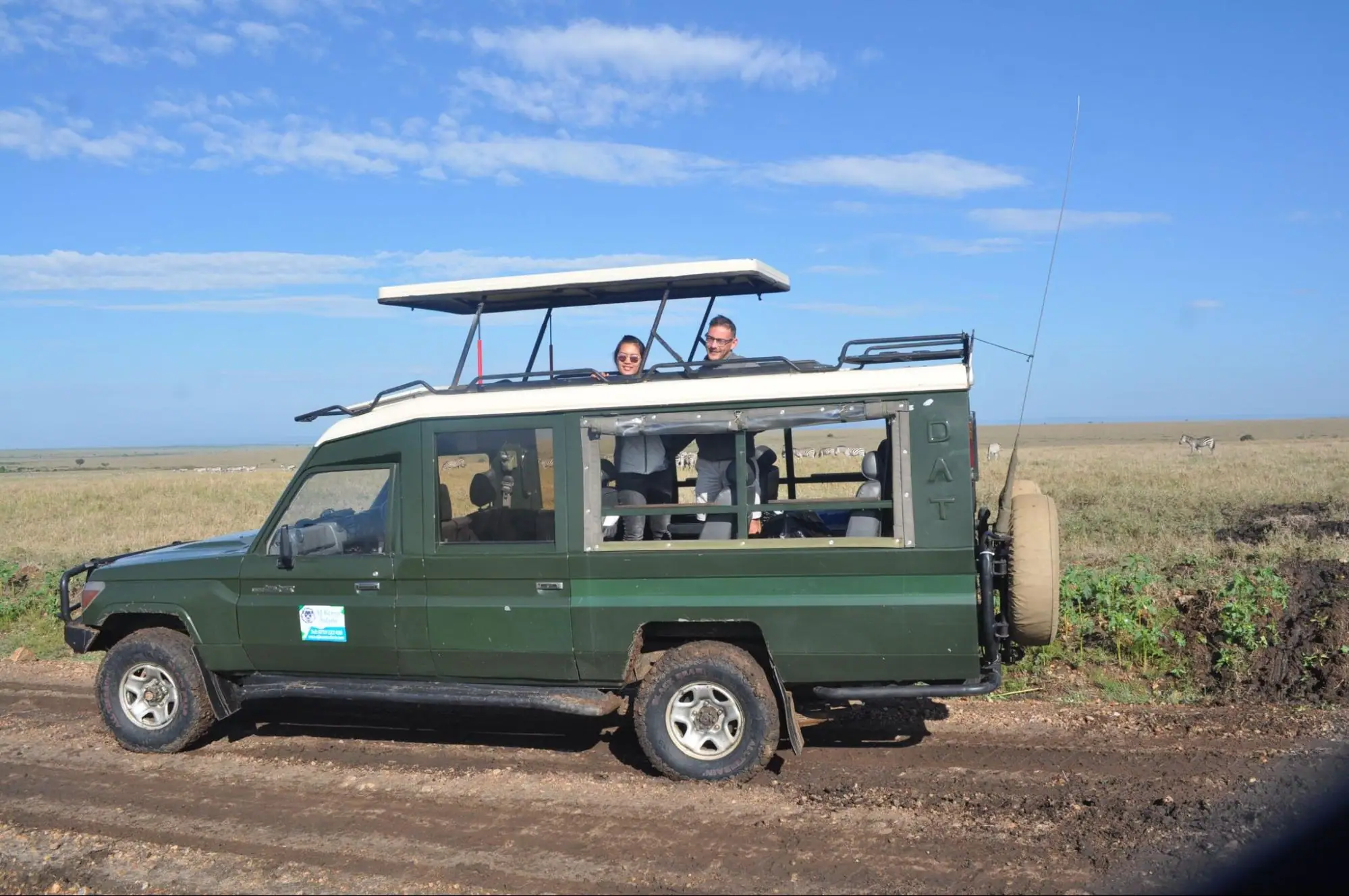
A combined Masai Mara and Amboseli safari covers approximately 650km and delivers two completely different wildlife experiences. The Masai Mara offers Kenya’s highest big cat density and the Great Migration (July-October), while Amboseli provides the country’s best elephant viewing with Kilimanjaro as the backdrop. For 2026, daily safari costs (vehicle, guide, fuel) are USD 190 per person sharing in low season, rising to USD 300-400 in peak season. Accommodation ranges from USD 120-1,200 per person per night depending on your choice. Park fees: Masai Mara USD 100 low season / USD 200 peak for non-residents; KSH 1,500 low / KSH 3,000 peak for Kenyan citizens. Amboseli USD 90 flat rate for non-residents; KSH 1,500 for Kenyan citizens. A 5-day itinerary starts at KSH 245,000 for Kenyan citizens or USD 2,450 for international travelers.
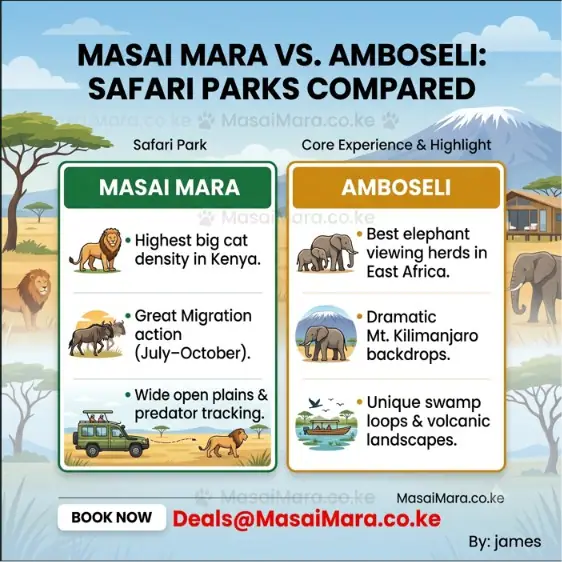
Safari Park | Core Experience & Highlight |
Masai Mara | • Highest big cat density in Kenya. • Great Migration action (July–October). • Wide open plains & predator tracking. |
Amboseli | • Best elephant viewing herds in East Africa. • Dramatic Mt. Kilimanjaro backdrops. • Unique swamp loops & volcanic landscapes. |
Look, I’ve been guiding safaris for ten years now. Name’s David Njunge – licensed guide, Maasai tracker, and the guy who’s probably pulled more rental vans out of Mara mud than anyone cares to remember. This Masai Mara and Amboseli safari combo? It’s what I recommend when someone says “I want the classic Kenya experience.”
Amboseli gives you elephants – big herds, some with tusks so long they nearly touch the ground. And Kilimanjaro behind them when the clouds cooperate. The Mara gives you predators – lions on termite mounds, cheetahs on the hunt, leopards in riverine trees. Two completely different parks, about 7-8 hours apart by road.
But here’s the thing – this combo isn’t cheap. Quality guiding, well-maintained vehicles, and good accommodation all cost money. The prices below are realistic for 2026. If you see a quote significantly lower than these, ask questions. Something’s probably being cut.
3 Days – When You’re Short on Time
This is for people who want to say they did both but don’t actually have much time. You’ll be tired. You’ll spend half of Day 2 on the road. But you’ll see elephants and you’ll see cats.
For Kenyan Citizens (Prices in KSH)
What you get | Where you sleep | Jan-June | July-Dec |
Budget – 1 Mara, 1 Amboseli | Jambo Mara + Amboseli Sopa | 142,000 | 195,000 |
Mid-range – 1 Mara, 1 Amboseli | Fig Tree + Ol Tukai | 195,000 | 265,000 |
Luxury – 1 Mara, 1 Amboseli | Keekorok + Amboseli Serena | 285,000 | 385,000 |
Ultra-luxury – 1 Mara, 1 Amboseli | Angama + Tawi | 495,000 | 650,000 |
For International Travelers (Prices in USD)
What you get | Where you sleep | Jan-June | July-Dec |
Budget – 1 Mara, 1 Amboseli | Jambo Mara + Amboseli Sopa | 1,420 | 1,950 |
Mid-range – 1 Mara, 1 Amboseli | Fig Tree + Ol Tukai | 1,950 | 2,650 |
Luxury – 1 Mara, 1 Amboseli | Keekorok + Amboseli Serena | 2,850 | 3,850 |
Ultra-luxury – 1 Mara, 1 Amboseli | Angama + Tawi | 4,950 | 6,500 |
4 Days – Weekend Warrior
Two nights Mara, one night Amboseli. You lose the second Amboseli morning which is a shame because that’s when Kilimanjaro might show up. But you gain an extra Mara day where the predators live.
For Kenyan Citizens (KSH)
What you get | Where you sleep | Jan-June | July-Dec |
Budget – 2 Mara, 1 Amboseli | Jambo Mara + Amboseli Sopa | 198,000 | 275,000 |
Mid-range – 2 Mara, 1 Amboseli | Fig Tree + Ol Tukai | 265,000 | 365,000 |
Luxury – 2 Mara, 1 Amboseli | Keekorok + Amboseli Serena | 395,000 | 535,000 |
Ultra-luxury – 2 Mara, 1 Amboseli | Angama + Tawi | 665,000 | 885,000 |
For International Travelers (USD)
What you get | Where you sleep | Jan-June | July-Dec |
Budget – 2 Mara, 1 Amboseli | Jambo Mara + Amboseli Sopa | 1,980 | 2,750 |
Mid-range – 2 Mara, 1 Amboseli | Fig Tree + Ol Tukai | 2,650 | 3,650 |
Luxury – 2 Mara, 1 Amboseli | Keekorok + Amboseli Serena | 3,950 | 5,350 |
Ultra-luxury – 2 Mara, 1 Amboseli | Angama + Tawi | 6,650 | 8,850 |
5 Days – What Most People Book
Three nights Mara, one night Amboseli. Enough Mara time to actually find things. Amboseli feels rushed but you’ll see elephants. If Kilimanjaro hides both times, at least you had three days of cats.
For Kenyan Citizens (KSH)
What you get | Where you sleep | Jan-June | July-Dec |
Budget – 3 Mara, 1 Amboseli | Jambo Mara + Amboseli Sopa | 245,000 | 345,000 |
Mid-range – 3 Mara, 1 Amboseli | Fig Tree + Ol Tukai | 335,000 | 465,000 |
Luxury – 3 Mara, 1 Amboseli | Keekorok + Amboseli Serena | 495,000 | 695,000 |
Ultra-luxury – 3 Mara, 1 Amboseli | Angama + Tawi | 825,000 | 1,095,000 |
For International Travelers (USD)
What you get | Where you sleep | Jan-June | July-Dec |
Budget – 3 Mara, 1 Amboseli | Jambo Mara + Amboseli Sopa | 2,450 | 3,450 |
Mid-range – 3 Mara, 1 Amboseli | Fig Tree + Ol Tukai | 3,350 | 4,650 |
Luxury – 3 Mara, 1 Amboseli | Keekorok + Amboseli Serena | 4,950 | 6,950 |
Ultra-luxury – 3 Mara, 1 Amboseli | Angama + Tawi | 8,250 | 10,950 |
6 Days – Amboseli Gets Two Nights
Three Mara, two Amboseli. Now you have time. Two mornings in Amboseli doubles your chance at clear Kilimanjaro. Plus you can do a full loop around the swamps, not just the main tracks near the gate.
For Kenyan Citizens (KSH)
What you get | Where you sleep | Jan-June | July-Dec |
Budget – 3 Mara, 2 Amboseli | Jambo Mara + Amboseli Sopa | 295,000 | 415,000 |
Mid-range – 3 Mara, 2 Amboseli | Fig Tree + Ol Tukai | 405,000 | 565,000 |
Luxury – 3 Mara, 2 Amboseli | Keekorok + Amboseli Serena | 595,000 | 835,000 |
Ultra-luxury – 3 Mara, 2 Amboseli | Angama + Tawi | 985,000 | 1,315,000 |
For International Travelers (USD)
What you get | Where you sleep | Jan-June | July-Dec |
Budget – 3 Mara, 2 Amboseli | Jambo Mara + Amboseli Sopa | 2,950 | 4,150 |
Mid-range – 3 Mara, 2 Amboseli | Fig Tree + Ol Tukai | 4,050 | 5,650 |
Luxury – 3 Mara, 2 Amboseli | Keekorok + Amboseli Serena | 5,950 | 8,350 |
Ultra-luxury – 3 Mara, 2 Amboseli | Angama + Tawi | 9,850 | 13,150 |
7 Days – Full Week
Four Mara, two Amboseli. This is for photographers or people who just want to sit and watch without checking the time. Four days in the Mara lets you cover the Triangle, the central plains, and the river areas.
For Kenyan Citizens (KSH)
What you get | Where you sleep | Jan-June | July-Dec |
Budget – 4 Mara, 2 Amboseli | Jambo Mara + Amboseli Sopa | 345,000 | 485,000 |
Mid-range – 4 Mara, 2 Amboseli | Fig Tree + Ol Tukai | 475,000 | 665,000 |
Luxury – 4 Mara, 2 Amboseli | Keekorok + Amboseli Serena | 695,000 | 975,000 |
Ultra-luxury – 4 Mara, 2 Amboseli | Angama + Tawi | 1,145,000 | 1,535,000 |
For International Travelers (USD)
What you get | Where you sleep | Jan-June | July-Dec |
Budget – 4 Mara, 2 Amboseli | Jambo Mara + Amboseli Sopa | 3,450 | 4,850 |
Mid-range – 4 Mara, 2 Amboseli | Fig Tree + Ol Tukai | 4,750 | 6,650 |
Luxury – 4 Mara, 2 Amboseli | Keekorok + Amboseli Serena | 6,950 | 9,750 |
Ultra-luxury – 4 Mara, 2 Amboseli | Angama + Tawi | 11,450 | 15,350 |
8-10 Days – Adding More Parks
If you’ve got this much time, add Lake Nakuru for rhinos or Lake Naivasha for boat rides. The classic circuit runs 8-10 days and covers all three.
8 Days – Mara, Amboseli, Nakuru
For Kenyan Citizens (KSH):
- Budget: 445,000 – 585,000
- Mid-range: 595,000 – 785,000
- Luxury: 895,000 – 1,195,000
- Ultra-luxury: 1,450,000 – 1,895,000
For International Travelers (USD):
- Budget: 4,450 – 5,850
- Mid-range: 5,950 – 7,850
- Luxury: 8,950 – 11,950
- Ultra-luxury: 14,500 – 18,950
10 Days – Mara, Amboseli, Nakuru, Naivasha
For Kenyan Citizens (KSH):
- Budget: 595,000 – 785,000
- Mid-range: 795,000 – 1,045,000
- Luxury: 1,195,000 – 1,595,000
- Ultra-luxury: 1,895,000 – 2,495,000
For International Travelers (USD):
- Budget: 5,950 – 7,850
- Mid-range: 7,950 – 10,450
- Luxury: 11,950 – 15,950
- Ultra-luxury: 18,950 – 24,950
What’s Included / What’s Not
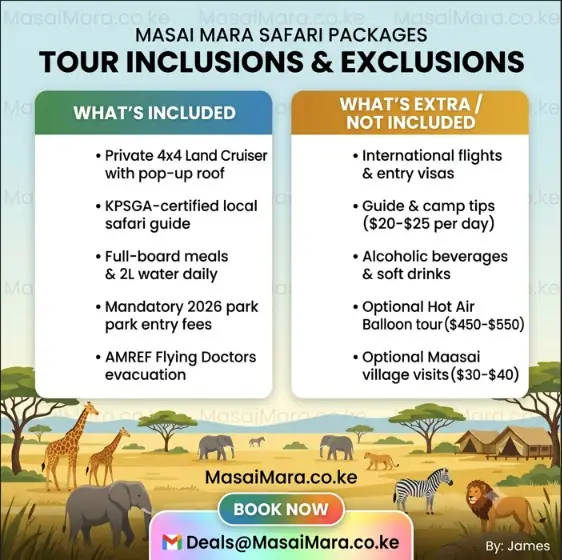
In the price:
- Private 4×4 Land Cruiser with pop-up roof – the vehicle rate is USD 380 per day for two people (USD 190 each) in low season, rising to USD 600-800 per day (USD 300-400 each) in peak season, covering vehicle, guide, fuel, and our margin
- Full board accommodation – breakfast, lunch, dinner
- Park fees at current rates (see fee section below)
- Bottled water – 2 litres per person daily
- Game drives as described in each itinerary
- KPSGA-certified guide with minimum 5 years experience – me or one of my team
- AMREF flying doctors evacuation
Not in the price:
- International flights and visas
- Tips – guides and camp staff, industry standard is USD 20-25 per person per day total
- Alcohol and soft drinks
- Souvenirs, laundry
Optional extras:
- Hot air balloon in the Mara – USD 450-550, champagne breakfast included
- Maasai village visit – USD 30-40
- Travel insurance – get this, I’ve seen bags lost, flights cancelled, people sick
- Internal flights – USD 550-650 per person one-way (includes actual flight cost plus our margin), saves 5-6 hours driving each way
How Your Safari Helps
Kenya’s safari industry is changing. The old model of diesel Land Cruisers and disposable plastic is slowly being replaced by something better.
Emboo River Camp in the Masai Mara pioneered electric game vehicles in Kenya. They converted vintage Land Cruisers to run on solar-charged batteries. Zero emissions. Zero noise. The animals behave differently when they can’t hear you coming – lions don’t tense up, cheetahs continue hunting. The experience is genuinely more immersive.
Campi ya Kanzi near Amboseli is owned by the Maasai community. Your conservation fee (USD 150 per night) funds local schools and clinics. The lodge runs entirely on solar power – no generators, no grid connection. They even have an electric safari vehicle now.
For every booking through masaimara.co.ke, we contribute USD 50 per person to the Maasai Mara Wildlife Conservancies Association (MMWCA). This supports ranger patrols, habitat restoration, and community land leases that keep wildlife corridors open. We also offset carbon for all road safaris through a reforestation partnership in the Chyulu Hills.
If staying in an eco-lodge matters to you, just ask. We’ll match you with camps that have genuine Ecotourism Kenya certification, not just green marketing.
Wi-Fi & Connectivity
Travellers always ask about staying connected. Here’s the honest truth for 2026.
In the Mara, Safaricom 4G works at most lodges inside the reserve – Keekorok, Mara Serena, Fig Tree. Signal strength varies. You’ll get WhatsApp messages and emails, probably not video calls. Some luxury camps like Angama offer Starlink now, which changes everything – fast enough for Zoom calls from the middle of the bush. Game drives? No signal. That’s the point.
In Amboseli, coverage is patchier. Ol Tukai and Amboseli Serena have decent Wi-Fi in common areas. Sopa Lodge has signal but it’s slower. Once you’re out on game drive roads, nothing works until you’re back.
What I recommend:
- Buy a Safaricom SIM card at the airport – passport required, costs about KSH 100. Their network has the best coverage in both parks
- If your phone supports eSIM, providers like Airalo work but cost more per gig
- Download offline Google Maps for both areas before you leave Nairobi
- Download any movies or podcasts too – there will be stretches with zero signal
- Bring a power bank. Some budget camps only run generators certain hours
Amboseli Tips
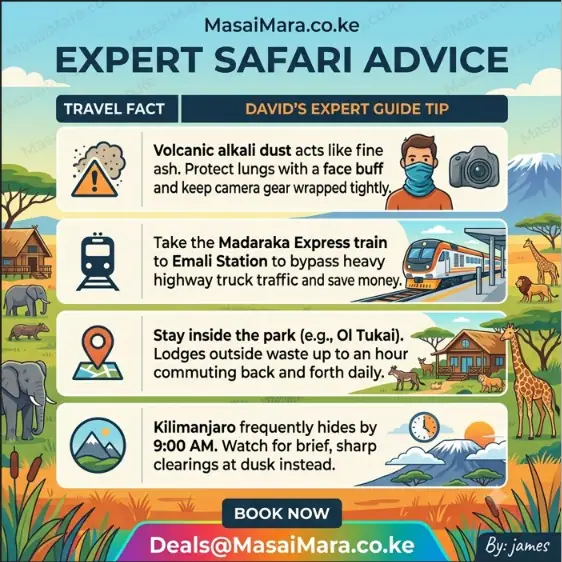
Travel Factor | David’s Expert Guide Tip |
The Dust Hazard | Volcanic alkali dust acts like fine ash. Protect lungs with a face buff and keep camera gear wrapped tightly. |
The SGR Train Hack | Take the Madaraka Express train to Emali Station to bypass heavy highway truck traffic and save money. |
Lodge Location | Stay inside the park (e.g., Ol Tukai). Lodges outside waste up to an hour commuting back and forth daily. |
Mountain View | Kilimanjaro frequently hides by 9:00 AM. Watch for brief, sharp clearings at dusk instead. |
The dust is different here.
Amboseli’s volcanic alkali dust is finer than flour. Gets in everything. I had a photographer client change lenses mid-drive without cleaning first – dust on the sensor ruined every shot for the rest of the trip. His wife started coughing on the afternoon drive and didn’t stop until we got back to camp. She had mild asthma, never mentioned it beforehand. The alkali dust is especially bad for respiratory stuff – it’s not regular dirt, it’s fine volcanic ash. Pack a buff or lightweight mask. Wrap your camera gear in a kikoy between shots. Some guides dampen a cloth and hang it in the vehicle to catch particles. I started doing this after the photographer incident and it actually helps. Cover your bag too – I’ve seen dust get inside zipped camera bags through the teeth of the zipper.
Ol Tukai is worth the upgrade.
Amboseli Sopa Lodge is fine, but it’s about 10km from the main gate. That’s 20 minutes each way – over a full day, you lose nearly an hour just getting in and out. Ol Tukai Lodge sits right in the middle of the park. Elephants wander through the grounds. During low season, you can watch elephants from the bar at sunset without even entering the park. One evening we counted 47 elephants from the patio. I stay here when I’m with clients who want to watch sunset without leaving camp – you’ll see more wildlife from the bar stool than some people see on their game drives, which I probably shouldn’t admit since I’m the one driving them on those game drives. If you can only pick one Amboseli lodge, this is the one.
Kilimanjaro is shy.
Clouds cover the peak by 9 AM most days. But here’s the thing nobody mentions – the mountain often reappears briefly at dusk. Don’t give up if morning was cloudy. After rain, especially March-May, the dust settles and Kili views are actually clearer than peak dry season when haze obscures the mountain. Several travellers told me their best Kili photos came in the shoulder season, not July-August.
The elephants have names.
Amboseli elephants are individually studied by the Amboseli Elephant Research Project, founded by Cynthia Moss in 1972. Guides who’ve worked the park for years know specific matriarchs by name and can tell you their family histories. Ask your guide about this – it transforms a generic elephant sighting into something personal. “That’s Echo’s daughter. She lost her tusk in 2015 but she’s still the leader of this group.” The young bull near the swamp got kicked out of his family group last year and hasn’t figured out what to do with himself. It adds something when you know the animals as individuals rather than just counting grey shapes.
Lake Amboseli floods sometimes.
During long rains (March-May), Lake Amboseli can flood, shrinking the driveable area. Some tracks go underwater. Animals migrate out of flooded sections. But the flip side? The seasonal lake attracts thousands of flamingos and wading birds that aren’t there in dry season.
The train hack.
Take the SGR Madaraka Express from Nairobi to Emali station. 1.5 to 2 hours, clean, safe, scenic, and significantly cheaper than flying. From Emali, it’s only 1.5 hours to Amboseli gate. Lodges like Maasai Simba Camp will pick you up if you arrange it in advance. Almost no other site mentions this option. Every other guide will tell you to drive from Nairobi or fly. The train is cheaper than flying, faster than driving if you count Mombasa Highway traffic, and more comfortable than both.
Observation Hill is the only place you can stretch your legs.
It’s the only spot in Amboseli where you can exit your vehicle. The 360-degree view of the swamps, plains, and Kilimanjaro is worth it. Bring a sundowner – watch sunset from up there.
Bat-eared foxes are an Amboseli speciality.
Most articles don’t mention them. They’re small, shy, but present. Also worth knowing: no rhinos and virtually no leopards in Amboseli. Don’t expect the full Big Five here. Go for elephants, birds, and mountain views. For cats, that’s the Mara. (Masai Mara vs Amboseli)
Avoid Easter and Christmas.
Amboseli gets overwhelmed by Kenyan domestic tourists during these holidays. Traffic congestion at park gates and around popular swamp viewpoints. International articles never mention this.
Masai Mara Tips You Won’t Find on Other Sites
Vehicle crowds are real.
Up to 70 vehicles can crowd around a single big cat sighting in the reserve during peak season (July-September). Budget safaris operating out of Nairobi are the worst offenders for ignoring vehicle distance rules. I counted twenty-three Land Cruisers around a leopard in a tree near Talek in August 2024. Twenty-three. The leopard didn’t care but my clients felt like they were at a car park with a cat in it.
Stay in the conservancies if you can.
Experienced repeat visitors consistently say Mara North, Naboisho, Nashulai, Ol Kinyei, and Olare Motorogi conservancies are vastly superior to the main reserve for exclusivity. Conservancies have strict vehicle limits per sighting, allow off-road driving, offer night drives and walking safaris – none of which are permitted inside the national reserve. The tradeoff is higher nightly rates. But if you can stretch, do it. (Masai Mara Conservancies)
The radio network matters.
Guides share sightings on radio and WhatsApp in real time. A well-connected guide who knows other drivers personally makes a dramatic difference. I’ve been doing this long enough that other drivers radio me when they find something good. New guides who just got their license and don’t know anyone, they miss things. Ask about your guide’s experience in the specific park, not just “Kenya safaris.”
Inside the reserve gives you two extra hours.
If you stay inside the reserve (like at Keekorok or Fig Tree), you get game drive time before sunrise and after sunset because you’re already inside park boundaries. Lodge guests outside lose those golden hours to gate transit. Sunrise and sunset are when animals move most. Those two hours matter. (Where to Stay Masai Mara)
The Mara Triangle is less crowded.
The Mara is split. Eastern side run by Narok County. Western side (the Triangle) run by the Mara Conservancy. Better road maintenance, better rule enforcement. Vehicle limits are stricter. Black rhino are found only in the Triangle area. If crowds bother you, book a camp in the Triangle. (Mara Triangle)
Minivans vs Land Cruisers.
2WD minivans are the budget workhorse in the Mara and can handle most tracks in dry weather. But they’re miserable in rain. If your safari falls in shoulder season (April-June or November), insist on a 4×4 Land Cruiser. I’ve pulled too many vans out of mud to recommend them – last April, pulled the same van twice in one day. Driver kept trying shortcuts. Third time he got stuck, I just sat and watched for a bit before going over to help. Not my finest moment but honestly, after the second time you’d think a person would learn. Open-sided Land Cruisers used by mid-range and luxury operators also give far better photography angles than standing through a pop-up roof hole. (Budget Masai Mara Safari)
2026 Park Fees
Masai Mara (Narok County)
- Non-resident: USD 100/day (Jan-June), USD 200/day (July-Dec)
- Kenyan citizen: KSH 1,500/day (Jan-June), KSH 3,000/day (July-Dec)
Amboseli & Nakuru (KWS Premium Parks)
- Non-resident: USD 90/day year-round
- Kenyan citizen: KSH 1,500/day year-round
- Kenya resident (expat): KSH 2,025/day
Things to know about the ticket system:
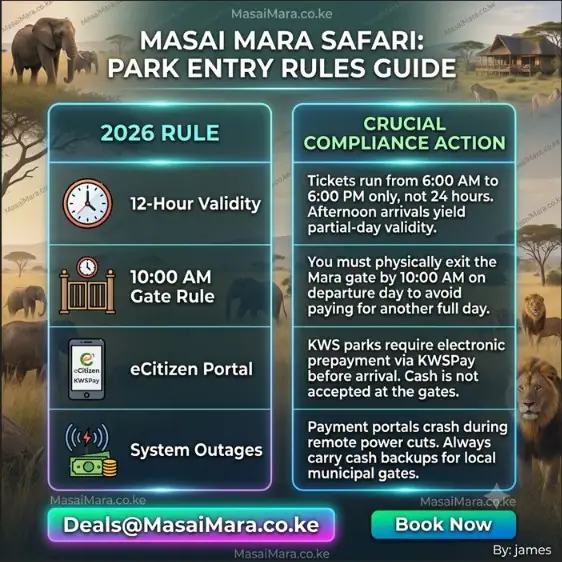
- Tickets are now valid for 12 hours (6 AM to 6 PM), not 24 hours
- If you exit the Mara by road after 10 AM on departure day, you pay another full day – the system won’t let you out without a fresh QR code
- KWS parks require payment via KWSPay on eCitizen before arrival – no cash accepted
- The portal is glitchy. Buttons don’t always work, payments fail sometimes. I handle it for my clients because dealing with it at the gate while everyone waits is nobody’s idea of a good time
Where the Money Goes
5-day budget trip, two people sharing. January 2026 (low season).
For Kenyan Citizens:
- Vehicle 5 days USD 190 converted at 130 – KSH 123,500
- Mara fees 3 days citizen low season – KSH 4,500
- Amboseli fee citizen – KSH 1,500
- Mara 3 nights budget (Jambo Mara) – KSH 54,000 (USD 120/night × 3 × 130)
- Amboseli 1 night budget (Sopa) – KSH 18,000 (USD 140/night × 130)
- Total raw cost – KSH 201,500
- Our package price – KSH 245,000
The difference covers our margin, booking fees, contingency, and the fact that we’ve already included vehicle costs at USD 190/day which has our profit built in.
For International Travelers:
- Vehicle 5 days – USD 950
- Mara fees 3 days low season – USD 300
- Amboseli fee – USD 90
- Mara 3 nights budget – USD 360
- Amboseli 1 night budget – USD 140
- Total raw cost – USD 1,840
- Our package price – USD 2,450
Same principle. The package price includes everything, no hidden extras, and reflects realistic 2026 rates.
Questions People Keep Asking
Which park should we visit first?
Amboseli. Then the Mara. I used to recommend Mara first because it’s the highlight. But too many clients told me Amboseli felt flat after the Mara. One guy said “it was like watching the opening band after the headliner left the stage.” Amboseli as warm-up, Mara as the finale.
How many days do you need in each park?
Three nights in the Mara and two nights in Amboseli. That’s the answer. One night in Amboseli is not enough – you need two mornings for a decent shot at clear Kilimanjaro views. I had a couple book one night last March, clouds both sessions, they were devastated. I felt terrible. Could’ve avoided it with one more night. Three and two is the sweet spot.
Is Amboseli worth visiting if Kilimanjaro is cloudy?
Yes. The elephants are the main show. Even cloudy, the elephant viewing is the best in Kenya. The Amboseli Elephant Research Project has been running since 1972. These elephants are studied, not just watched.
Inside or outside the Mara?
Inside is better for game viewing. You’re closer to wildlife, pay no extra entry fees each day, and get sunrise and sunset drives without gate queues. Outside is cheaper but you lose those advantages. I prefer inside.
Van or Land Cruiser?
Van works in Amboseli where roads are better. In the Mara, especially if rain might happen, you need a Land Cruiser. Also, 4x4s sit higher for photography.
What is the best time of year?
Depends what you want:
- January-February – clear Kili, good Mara predator viewing, green season means fewer tourists
- July-October – Mara migration season but Kili might be cloudy and the Mara will be packed with vehicles
- September-October – after the long dry season, Amboseli elephants concentrate around remaining water, herds of 100+ in one spot
(Best Time to Visit Masai Mara)
How do park payments work in 2026?
KWS parks like Amboseli require payment via KWSPay on eCitizen before arrival. No cash accepted. The portal can be glitchy. I handle it for my clients because dealing with it at the gate while everyone waits is nobody’s idea of a good time. Masai Mara still takes cash at some gates but online prepayment is recommended. (Masai Mara Park Fee)
Can you combine this with Nakuru or Naivasha?
Yes. For 8 to 10 days you can add Lake Nakuru for rhinos or Lake Naivasha for boat rides and walking safaris. Nakuru needs one night. Naivasha works as a day trip and breaks up the long drive between Amboseli and Mara nicely.
What’s the 12-hour ticket rule?
Mara tickets are now valid for 12 hours only (6 AM to 6 PM), not 24 hours. If you enter at 2 PM, your ticket expires at 6 PM. For overnight guests, you must exit by 10 AM on departure day or pay another full day. I watched a family from Australia argue at Sekenani Gate for 45 minutes over this. Dad was furious, kids were crying, mom was just trying to get everyone back in the car. They ended up paying.
What’s the SGR train hack for Amboseli?
Take the Madaraka Express from Nairobi Terminus to Emali station. 1.5-2 hours, costs about USD 10-30. Your guide picks you up at Emali, then it’s 1.5 hours to Amboseli gate. Skips all the Mombasa Highway truck traffic.
Do eco-lodges cost more?
Sometimes. But mid-range eco-lodges exist at USD 400-600 per night – comparable to standard camps. The difference is your money goes to conservation and community, not just shareholder profits.
Is Wi-Fi reliable during game drives?
No. Wi-Fi is only available at lodges, not during drives. Safaricom 4G works at most Mara lodges and some in Amboseli. Download everything you need before leaving Nairobi.
Ready?
You’ve read the options. You know what you’re getting.
Here’s how it works:
- Tell me your dates, how many days, which camps you like, and whether you’re a Kenyan citizen or international traveler
- I check availability – 24 hours usually, longer if I’m in the Mara with no signal
- You pay 30% deposit
- Balance due 30 days before
Updated August 2026. Park fees change. Court case about KWS fees ongoing – if new rates get overturned, refunds happen. Check kws.go.ke or kwspay.ecitizen.go.ke for latest. I update this page when things shift.
Welcome to Masaimara.co.ke
Thank you for visiting us! We're excited to help you plan an unforgettable safari adventure across Kenya.