
Best Time to Visit Masai Mara: The Honest 2026 Guide
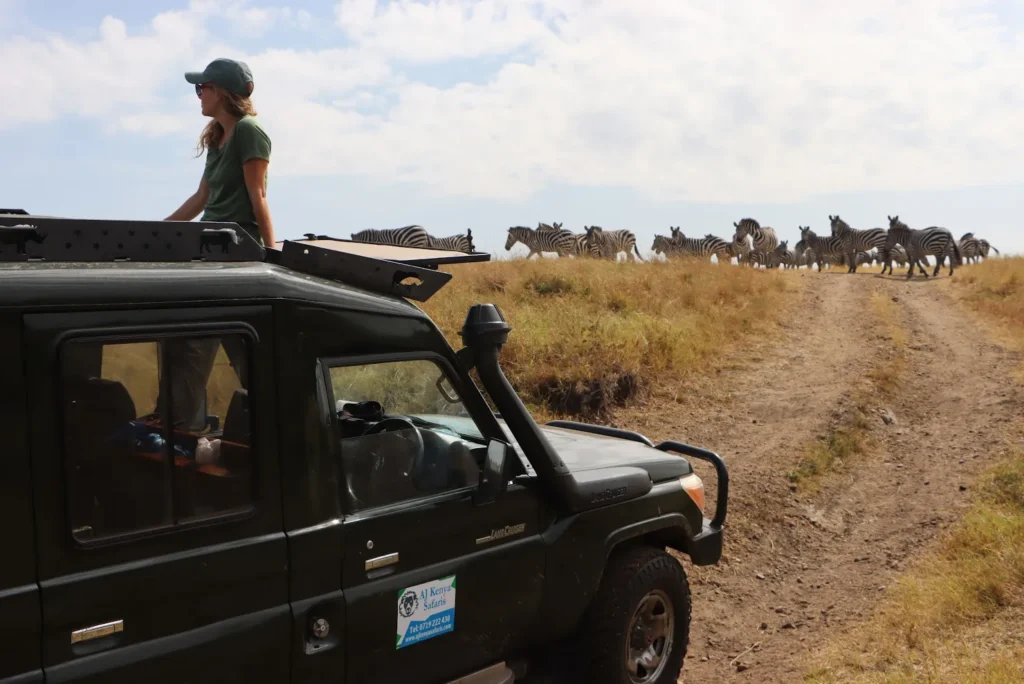
The Best Time to Visit Masai Mara depends on what you want to see and what you want to pay. The wildebeest migration peaks from July to October, but park fees double to $200/day and sightings can have 15–20 vehicles. January and February offer $100/day fees, calving season with baby animals and high predator action, and far fewer tourists. June is the single best value month — $100 fees with early migration scouts sometimes already arriving. The Mara sits at 1,500 metres elevation, so June–July mornings are cold (12°C). Weather patterns have shifted in recent years, so flexibility matters more than following historical averages.
What This Guide Covers
What to Expect Each Month
Travel Season Tier | Calendar Months | Core Strategic Benefit |
Underrated Calving | 🦁 Jan – Feb | $100 fees, active newborn tracking, low crowds. |
Green Overcast | ⛈️ Mar – May | Deep lodge discounts, zero vehicle queues, soft diffused light. |
Optimal Value | 📯 June | $100 fees, clear dry tracking roads, early scout arrivals. |
Peak Migration | 🦓 July – Oct | Megamonths for river crossings, but park fees double to $200. |
Short Rains Birding | 🦅 Nov – Dec | Mass avian migrant waves, high newborn action, dramatic skies. |
There is no bad time to visit the Mara. The resident lion prides, leopards, elephants, and buffalo are here year-round. What changes is the migration presence, the grass height, the weather, the crowds, and the price. Park fees are $100/day from January to June and $200/day from July to December. For a couple on a 3-day trip, that boundary means a $600 difference. If your dates are flexible by even a week around the end of June, that single decision matters more than any other.
January. This is the month most people overlook, and it shouldn’t be. Calving season is underway — baby wildebeest, zebra, and giraffe are born daily, and the predators know it. Lions, cheetahs, and leopards hunt the newborns in short grass that makes them easy to spot. Migratory birds from Europe and Asia are here too, making January the best birding month. You’ll pay $100/day with few other tourists around.
February. The warmest month, but the Mara sits at 1,500 metres so highs are only around 28°C. Calving continues and predator viewing stays excellent. Still $100/day with few visitors.
March. Rains start arriving in the second half of the month. Roads get muddy but the wildlife stays excellent. Camps begin discounting. If you photograph, the overcast skies act as a natural diffuser — soft, even light all day with none of the harsh midday shadows you get in the dry months. $100/day.
April. The wettest month and the one most guides tell you to skip. Some camps close. Roads can be impassable even with a 4×4. But travellers who’ve actually visited in April describe spectacular afternoon thunderstorms followed by clear mornings. You’ll have the reserve almost entirely to yourself. $100/day.
May. Still wet. Many camps close for staff rest before peak season. Long grass makes game viewing difficult in some areas because you can’t see animals until they move, which pushes vehicles into the shorter-grass zones. Despite all that, the landscape is at its most beautiful. $100/day.
June. The single best value month. Park fees are still $100/day before the July boundary, the weather is dry and clear, and the first wildebeest scouts sometimes arrive by late June. The trade-off is cold mornings — around 12°C at 6 AM, so bring a warm fleece. A 4 days Masai Mara safari booked for late June saves hundreds compared to a July start.
July. Fees jump to $200/day and peak season begins. Migration herds start arriving from the Serengeti. The driest month — wildlife concentrates near water, which makes sightings easier. Book months in advance.
August. The busiest month in the Mara. Peak migration with the best chance for river crossings, though crossings are genuinely unpredictable — herds can sit on the bank for days, or cross four times in one afternoon. Expect 15–20 vehicles at popular sightings in the main reserve. Conservancy camps bring that down to 2–5. $200/day.
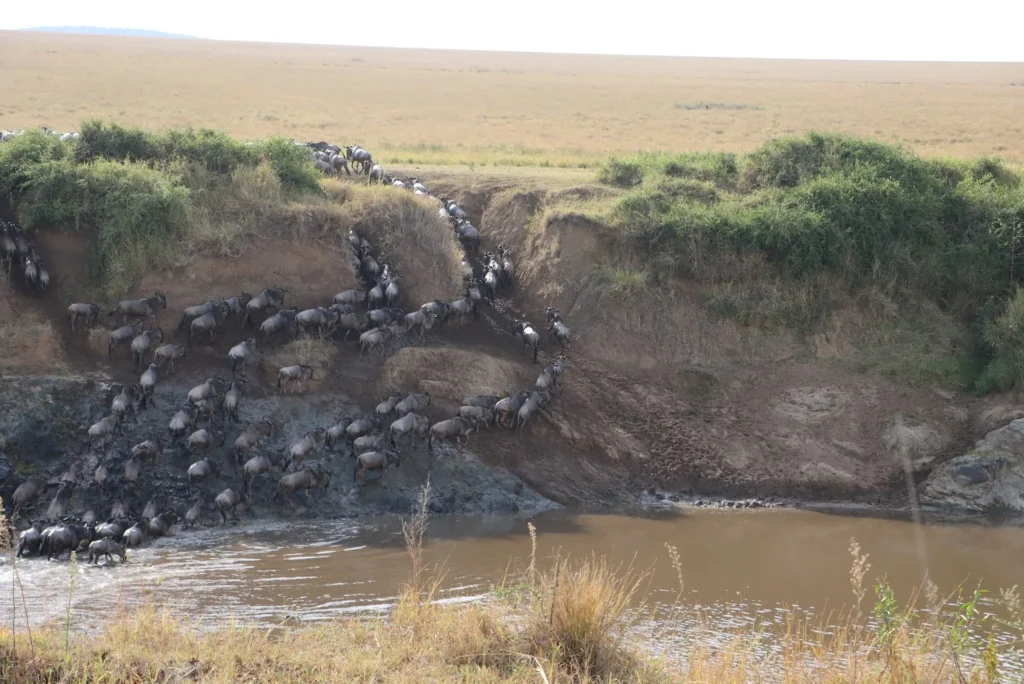
September. Ask a local guide to pick one month and many will say September. The grass is short, the landscape is green, the migration herds are still present, and the crowds thin slightly from August. Good chance of crossings. $200/day.
October. The herds are still here but starting to drift south. Fewer visitors, cheaper accommodation, and short dry grass that’s excellent for photography. Dust gets heavy by late October. If you want migration without the August crowds, this is the month. $200/day.
November. The short rains begin and calving restarts. Migratory birds arrive in force. The last migration stragglers are still around in early November. Light rain produces dramatic skies that make photography backgrounds the dry season can’t match. Some camps return to low season rates. $200/day.
December. Baby animals, good birding, and short rains continuing. What catches people off guard is the Christmas and New Year rush — local Kenyan families from Nairobi drive to the Mara in large numbers. Early December before the 20th is quieter and cheaper. Festive period prices spike. $200/day.
All-Inclusive Prices (2026/2027)
These are all-inclusive prices per person sharing, based on two people in a private 4×4 Land Cruiser.
4-Day All-Inclusive Rates (Per Person Sharing)
Package Tier | Suggested Camps | Regular (KES) | Peak (KES) |
Budget | Talek Bush / Jambo Mara | KES 145,500 | KES 285,500 |
Mid-Range | Ashnil Mara / Zebra Plains | KES 235,500 | KES 442,000 |
Luxury | Mara Serena / Sarova Mara | KES 485,000 | KES 680,000 |
Luxury Plus | Angama Mara / Mara Plains | KES 850,000 | KES 1,025,000 |
Book Now | Current Rates |
Note: For a luxury safari upgrade or flying packages, request a custom quote.
What’s Covered in the Price?
- Vehicle. Private 4×4 Safari Land Cruiser.
- Guide. TRA-licensed guide.
- Park Fees. All 2026 Mara fees paid at the gate (cash USD/KES, or card/M-Pesa). Pre-payment through KAPS office in Nairobi. For KWS parks on the circuit, fees via eCitizen.
- Meals. Full board, 3 meals daily.
- Evacuation. AMREF Flying Doctors emergency air evacuation insurance.
Excluded. Kenya eTA (~$30), tips (KES 3,000/day for guide), alcohol and soft drinks, hot air balloon ($450–$500), international flights.
What to Know About Timing
Timing & Flow Vector | Actionable Field Command Rule |
12-Hour Ticket Clock | Avoid entering after 3:00 PM; save initial reserve entry for 6:00 AM the next day. |
System Boundary Limits | Clear the reserve exit boundary gates before 10:00 AM to avoid double-charging loops. |
Post-Rain Grass Densities | Anticipate limited early-June visibility in wet zones following heavy spring rains. |
Atmospheric Sharpness | Leverage March and November clear air slots to capture crisp, dust-free photo frames. |
Digital Gate Clearance | Access via Siana Gate instead of Sekenani to handle eCitizen processing issues faster. |
- Your Mara park ticket runs on a strict 12-hour calendar day (6 AM – 6 PM). If you enter at 4 PM, your ticket expires at 6 PM. Arrive at 6 AM or save your first entry for the next morning and do a Masai village visit or a walking safari in the conservancy on your arrival afternoon.
- Exit the reserve by 10 AM on your departure day. The system charges an extra full day if you’re late.
- The tall grass from the long rains (see May above) can persist into June. If you visit in early June, expect some areas to still have limited visibility.
- See the March and November entries above about green season photography. The rains clear dust from the air, which produces sharper images than the hazy dry season.
- Some Mays are dry. Some Julys get unexpected rain. Historical patterns are a guide, not a guarantee. If your only available month is April, go and bring waterproof gear.
- Siana Gate has faster ticket processing than Sekenani or Talek.
- Masai Mara booking operator check: verify your operator on the KATO directory. Tell them your travel dates and ask which season-specific experiences (migration crossings, calving, birding) are realistic for those dates.
Frequently Asked Questions
When is the best month to visit?
There’s no single best month. June and October are the strongest overall value months. January–February for budget and predator action. August–September for migration crossings. November for birding. See the month-by-month breakdown above.
Is January a good time for safari?
Yes. See the January entry above. You miss the migration crossings but the resident wildlife is the same year-round.
Does it rain all day in May?
No. It’s usually afternoon thunderstorms or overnight rain. Some years May is drier than expected. See the May entry above.
How much are park fees in 2026?
See the fee boundary in the month-by-month section above. Paid at the gate (cash, card, or M-Pesa) or pre-paid through the KAPS office in Nairobi. See our Masai Mara packages page for all-inclusive options.
Can I see the Big Five year-round?
Yes. Lions, leopards, elephants, and buffalo are resident year-round. Rhinos require your guide to know the current locations. Every private safari we run aims for all five regardless of the month.
The Best Time Is When You Can Stay Three Nights
Every month offers something. January has baby animals and quiet plains. August has the crossings and the drama. November has the birds and the green. The worst mistake is shortening your trip to fit a specific month. Three nights gives you 6 game drives, and 6 game drives in any month is enough to see why people come back.
If you want a short trip, see our 3 days Masai Mara safari or 4 days Masai Mara safari. Want a longer circuit? See the 5 days Masai Mara safari or the Masai Mara Amboseli Nakuru Safari. Want to add Amboseli? See the 6 days Masai Mara Amboseli safari. Want to cross into Tanzania? See the Kenya Tanzania Safari. Browse everything on our Masai Mara packages page.
Ready to start? Fill out our booking form at Masaimara.co.ke below here and tell me your dates. I’ll tell you what to expect.
This guide was authored by David Njunge, a TRA-licensed safari guide with over 10 years of experience, and edited by Cecilia Wambui, a travel consultant with a degree in Tourism and Hospitality Management.
Related Reading:
- Wildebeest Migration Kenya
- Masai Mara Migration
- Birding Safari Masai Mara
- Photography Safari Masai Mara
- Honeymoon Safari Masai Mara
- Family Safari Masai Mara
- All Inclusive Masai Mara Safari
- Masai Mara Amboseli Nakuru Safari
- 6 Days Masai Mara Amboseli Safari
- 5 Days Masai Mara Safari
- 4 Days Masai Mara Safari
- 3 Days Masai Mara Safari
- Luxury Safari Masai Mara
- Masai Mara Packages
- Masai Mara Flying Packages
- Masai Mara Booking
- Masai Mara Entrance Gates
- Official KWS Park Fee Portal
- Kenya Wildlife Service
Welcome to Masaimara.co.ke
Thank you for visiting us! We're excited to help you plan an unforgettable safari adventure across Kenya.