
Sundowner Safari Masai Mara: The Honest 2026 Guide
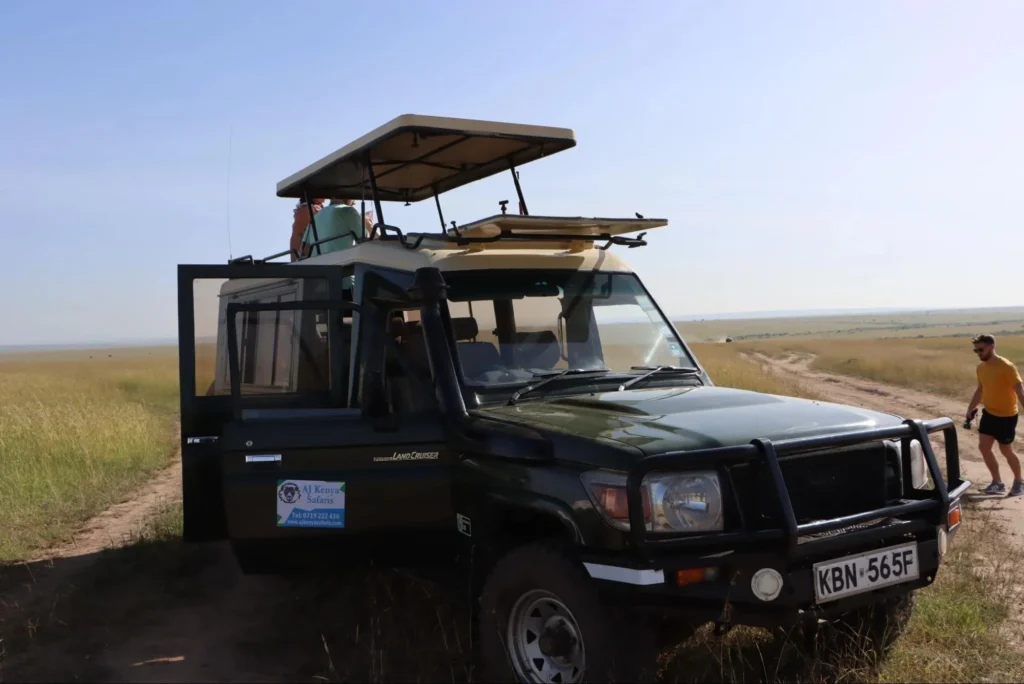
A sundowner in the Masai Mara is a cocktail stop on the plains as the sun goes down. It’s not a separate type of game drive. The guide finds a ridge or a clearing during the afternoon drive, the camp crew sets out drinks and snacks, and everyone watches the sky change colour for 30 to 45 minutes before heading back or continuing into a night drive. The tradition goes back to the colonial safari era, and it remains the quietest moment of the trip. No engine noise, no radio chatter. Wind, distant animal calls, and ice in a glass. For the 2026/2027 season, all-inclusive 5-day itineraries range from KES 247,000 ($1,900) to KES 1,397,500 ($10,750) per person sharing. Reserve entry is $100–$200/day. Conservancy fees ($80–$150/night) are included in camp rates.
Safari Costs (2026/2027)
All-inclusive prices per person sharing, based on two people in a private 4×4 Land Cruiser. Conservancy fees are included in camp rates.
5-Day All-Inclusive Rates (Per Person Sharing)
Package Tier | Camps (Nakuru + Mara) | Regular Season (KES) | Peak Season (KES) |
Budget | Lake Nakuru Lodge / Ol Kinyei Adventure | KES 247,000 | KES 474,500 |
Mid-Range | Sarova Lion Hill / Karen Blixen Camp | KES 341,900 | KES 617,500 |
Luxury | The Cliff Nakuru / Porini Lion Camp | KES 595,400 | KES 968,500 |
Luxury Plus | The Cliff Nakuru / Mara Plains Camp | KES 907,400 | KES 1,397,500 |
Note: Conservancy fees included. Reserve entry is extra ($100–$200/day). Sundowners are included in the room rate at most luxury camps. Some mid-range camps charge KES 4,000–6,500 per person. Budget camps often don’t offer them. Confirm at booking. For a luxury safari or flying packages, request a custom quote.
What’s Covered
- A private 4×4 Safari Land Cruiser for the full trip.
- A TRA-licensed guide who selects the sundowner location based on the afternoon’s sightings.
- All conservancy conservation fees and Lake Nakuru entry fees.
- Night drives, off-road tracking, and guided walking safaris with Maasai trackers.
- One-way return flight from the conservancy airstrip to Nairobi Wilson. Soft-sided duffel bags only, 15 kg limit.
- Full board, 3 meals daily.
- AMREF Flying Doctors emergency air evacuation insurance.
What’s Excluded
- Kenya eTA (~$30).
- Tips (KES 3,000/day for guide).
- Premium import spirits and vintage champagne (house drinks are included at most camps).
- Hot air balloon ($450–$500).
- Main reserve entry fees if crossing into the public park ($100–$200/day extra).
- International flights.
Reserve vs Conservancy
Safari Location | Sunset Timeline & Rules |
National Reserve | 5:50 PM Pack Up: Strict 6:30 PM gate curfew means drinking in bright daylight before sunset. |
Private Conservancies | No Curfew: Linger through the entire sunset; seamlessly transitions into evening night drives. |
This is the difference that changes the whole experience. Inside the national reserve, all vehicles must clear the gates by 6:30 PM. The sun drops between 6:15 and 6:45 PM year-round because the Mara is near the equator. If the guide sets up a sundowner inside the reserve and the camp is outside the gates, the drinks have to be packed up by 5:50 PM to make the checkpoint. The guest ends up drinking in bright daylight before the colours have even started.
In the conservancies — Naboisho, Olare Motorogi, Mara North, Ol Kinyei — there’s no gate curfew. The guide can set up at 5:30, let everyone linger through the full sunset, and then drive back to camp in the dark or continue into a night drive. The conservancy sundowner is the one that actually happens at sunset.
What to Drink and What to Listen For
The classic sundowner drink is a gin and tonic. The Kenyan signature is the Dawa, which means “medicine” in Swahili — vodka, crushed lime, brown sugar, and honey, muddled with a wooden stick. Tusker beer and South African wines are standard at most camps. Non-alcoholic options are always available.
Camps run on solar power, and ice is a limited resource. The freezers at many camps shut down in the afternoon to save battery for evening lighting. If the guide asks for a drink preference at lunch, that’s because the ice needs to be harvested and packed into insulated flasks before the freezers go offline. Changing the order on the trail isn’t always possible.
I cut the engine 50 metres from the spot and coast in under the desert date trees. If the vehicle roars straight in and the doors slam, the robin-chats nesting in the lower brush scatter. If we arrive quietly, they keep singing.
The afternoon drive is loud — engine, radio, other vehicles. The sundowner is the first time all day the guest hears the Mara without a machine running. Wind through the whistling thorns. A hyena calling from the valley. Lions starting their territorial calls as the light goes. The insects shifting from daytime species to the evening chorus. It happens in the space of one drink.
Where Camps Set Up
Camp / Area | Unique Sundowner Experience |
Angama Mara | Cliff-edge “Boma” fire pit with 300m drops and Maasai warrior performances. |
Sala’s Camp | Mobile bar out of a vintage Land Rover with tailored children’s picnics. |
Conservancies | Spontaneous setups next to active wildlife (hippos, elephant tree lines). |
The location is what makes one sundowner different from another.
Angama Mara has a dedicated Sundowner Boma on the Oloololo Escarpment edge — a circular gathering space surrounded by a traditional thorn-fence enclosure, with a fire pit, cocktails, and Maasai warrior performances. “Boma” is Kiswahili for the enclosure traditionally used to protect livestock at night. The view drops 300 metres into the Mara Triangle.
Sala’s Camp uses a restored vintage Land Rover called “Eleanor” as a mobile bar. The vehicle drives to a different spot each evening based on where the afternoon drive went. Children can join — Sala’s offers a children’s picnic dinner alongside the adult sundowner.
Governors’ Camp runs sundowners as an add-on charged separately from the room rate. The bush breakfast and bush dinner are also available as extras.
The Oloololo Escarpment is the most dramatic public sundowner location. The view over the entire Triangle at golden hour has been described as a free alternative to the balloon flight by budget travellers. The exposed crest can be windy, though. Experienced guides park slightly below the rim where the rock shelters the setup from the wind while keeping the same view.
In the conservancies, the guide picks the spot based on what the afternoon produced — a ridge overlooking a herd, a riverbank with hippos below, a clearing near elephants feeding at the tree line. The sundowner becomes part of the sighting rather than a detour from it.
What to Know Before the Sundowner
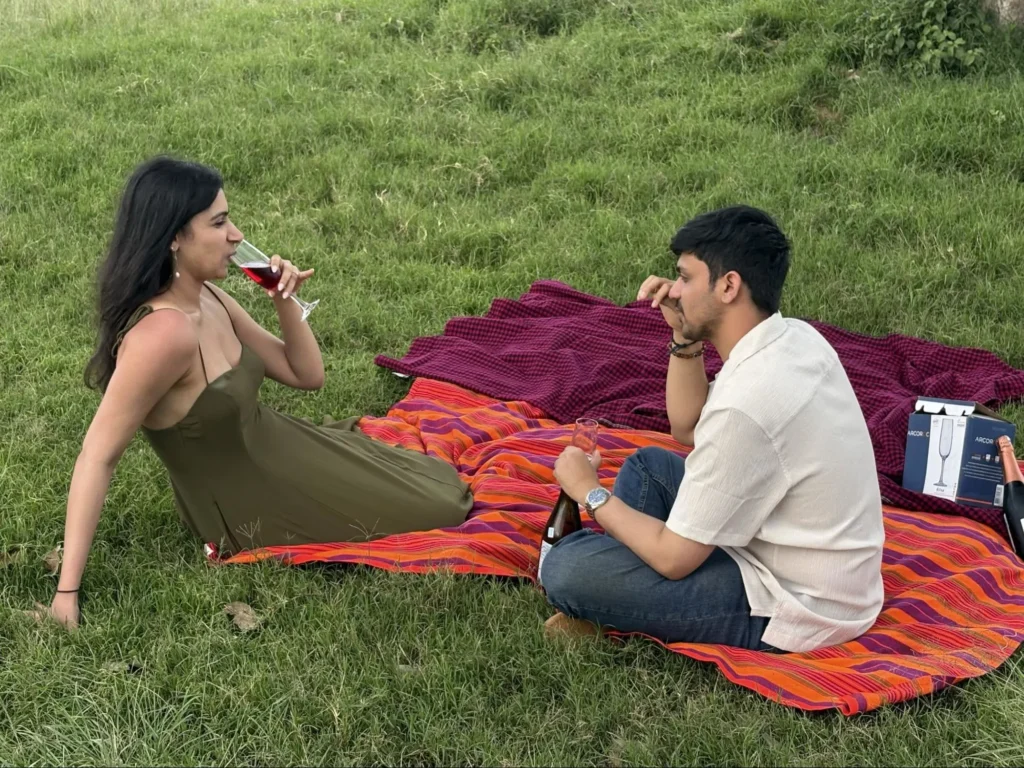
Mosquitoes come out at sunset. This is the one thing the photographs don’t show. As the light fades, the mosquitoes arrive. Tsetse flies, which are the daytime nuisance, go dormant the moment the sun disappears. The switch happens within minutes. Apply insect repellent as the sun drops, not before — repellent doesn’t deter tsetse flies, which hunt by sight, and putting it on early just collects dust.
The temperature drops fast. A fleece or jacket is necessary. The camp usually brings Maasai blankets, but the chill catches people off guard. Dress for the evening, not the afternoon.
Rain cancels it. Afternoon storms during the wet season (November-December, April-May) can wash out the sundowner entirely. Dry-season months are more reliable.
It’s the bridge between the afternoon drive and the night drive. In the conservancies, the sundowner connects the two. The guide parks, sets up drinks, and as the sky darkens, switches on the red spotlight and begins the night drive without returning to camp. This transition is only possible in the conservancies because the reserve gates close at 6:30.
Children are welcome. Some camps offer children’s picnic dinners alongside the sundowner so families can do it together.
Questions Guests Ask
Is the sundowner included in the camp rate?
At most luxury camps, yes — it’s part of full board. Mid-range camps sometimes charge KES 4,000–6,500 per person. Get in touch and we’ll confirm which camps include it.
Can I do a sundowner inside the reserve?
Technically, but the 6:30 PM curfew means the drinks have to be packed up before sunset. The conservancy guide explains the access differences. Reserve entry fees ($100–$200/day) are paid through the official KWS portal.
What should I wear?
Layers. The afternoon is hot, the sunset is pleasant, and 20 minutes later it’s cold. A fleece or light jacket is essential. Avoid dark blue and black — they attract tsetse flies during the drive to the sundowner spot.
Is it worth it?
If the camp includes it in the rate, there’s no reason not to do it. If it’s charged separately, the value depends on the location. An escarpment-edge sundowner overlooking the Triangle is a different experience from a drink on a flat clearing. Ask the guide what they’d recommend for the afternoon. Start a booking if the dates are set. The migration guide covers how wildlife activity shifts by season, and the wildebeest migration page tracks the broader cycle.
If sundowners are on the list, a 5-day safari in a conservancy gives enough evenings for multiple stops alongside morning bush breakfasts, game drives, and night drives. The 3-day and 4-day trips work if the sundowner is built into the second afternoon. For Amboseli alongside the Mara, the 6-day circuit or three-park loop add Kilimanjaro. Send us your dates and we’ll find a conservancy camp that includes sundowners, or browse options on the packages page.
This guide was authored by David Njunge, a TRA-licensed safari guide with over 10 years of experience, and edited by Cecilia Wambui, a travel consultant with a degree in Tourism and Hospitality Management.
Welcome to Masaimara.co.ke
Thank you for visiting us! We're excited to help you plan an unforgettable safari adventure across Kenya.