
Masai Mara Big Cats: The Honest 2026 Guide
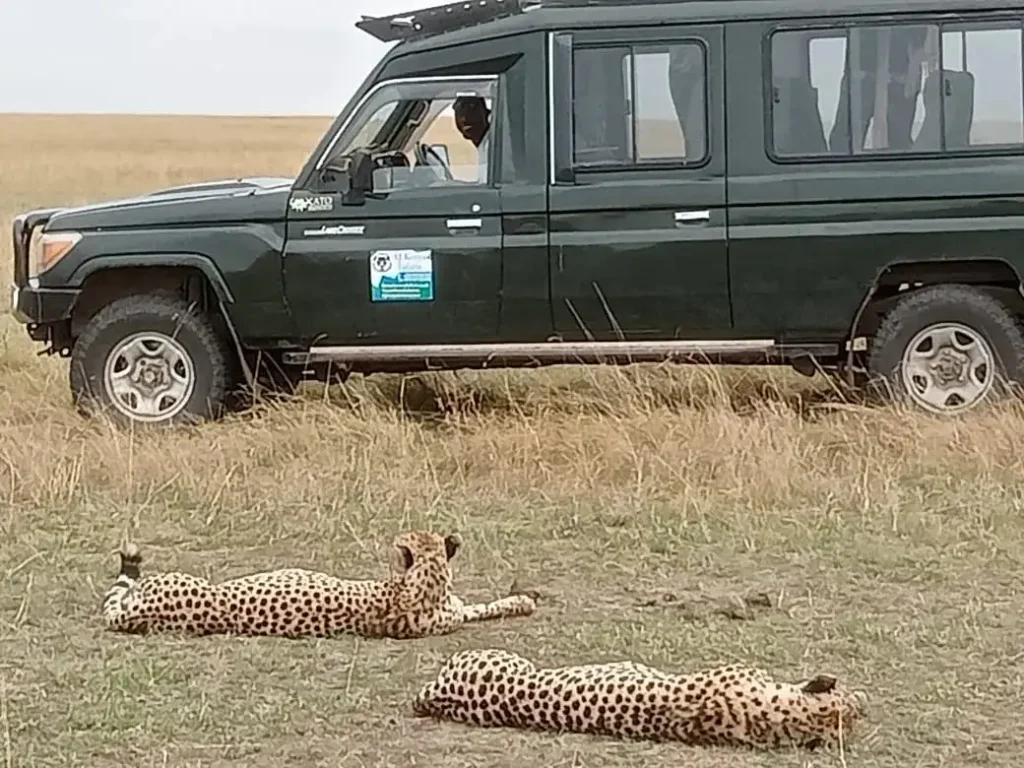
The Masai Mara holds an estimated 850 to 900 lions in named prides, one of Africa’s densest leopard populations, and around 123 identified adult cheetahs. Seeing all three big cats on a single safari is realistic here in a way it isn’t anywhere else. A 3-night stay gives good odds. Four nights or more makes it very likely. The practical decision that shapes the quality of the experience is conservancy versus reserve: the reserve has more cats visible but 20 to 30 vehicles at a sighting, while the conservancies enforce a 5-vehicle maximum and offer night drives and off-road access. For the 2026/2027 season, all-inclusive 5-day itineraries range from KES 252,200 ($1,940) to KES 1,355,900 ($10,430) per person sharing. Reserve entry is $100–$200/day. Conservancy fees ($80–$150/night) are included in camp rates.
Safari Costs (2026/2027)
All-inclusive prices per person sharing, based on two people in a private 4×4 Land Cruiser. Conservancy fees are included in camp rates.
5-Day All-Inclusive Rates (Per Person Sharing)
Package Tier | Camps (Nakuru + Mara) | Regular Season (KES) | Peak Season (KES) |
Budget | Lake Nakuru Lodge / Ol Kinyei Adventure | KES 252,200 | KES 455,000 |
Mid-Range | Sarova Lion Hill / Karen Blixen Camp | KES 304,200 | KES 546,000 |
Luxury | The Cliff Nakuru / Porini Lion Camp | KES 529,100 | KES 825,500 |
Luxury Plus | The Cliff Nakuru / Mara Plains Camp | KES 867,100 | KES 1,355,900 |
Note: Conservancy fees included. Reserve entry is extra ($100–$200/day). For a luxury safari or flying packages, request a custom quote.
What’s Covered
- A private 4×4 Safari Land Cruiser for the full trip.
- A TRA-licensed guide who knows the pride territories, leopard trees, and cheetah plains.
- All conservancy conservation fees and Lake Nakuru entry fees.
- Night drives, off-road tracking, and guided walking safaris with Maasai trackers.
- One-way return flight from the conservancy airstrip to Nairobi Wilson (flight details).
- Full board, 3 meals daily.
- AMREF Flying Doctors emergency air evacuation insurance.
What’s Excluded
- Kenya eTA (~$30).
- Tips (KES 3,000/day for guide).
- Alcohol and premium drinks.
- Hot air balloon ($450–$500).
- Main reserve entry fees if crossing into the public park ($100–$200/day extra).
- International flights.
The 5-Day Itinerary
Day 1: Nairobi to Lake Nakuru
Leave Nairobi early. Afternoon at Lake Nakuru tracking rhinos. Stay at your selected lodge.
Day 2: Nakuru to the Mara
Drive through the Rift Valley or fly in. Late afternoon drive along the Talek or Mara river corridors where leopards emerge at dusk and lion prides settle near water. Stay at your chosen camp.
Day 3–4: Full Days
Two full days. The morning drives (starting at 6 AM) catch lions returning from night hunts and cheetahs setting up on termite mounds to scan for prey. Midday is quiet for cats. The late afternoon drives catch leopards waking in trees and lions beginning to move. Night drives in the conservancies produce hunting behaviour and hyena-lion confrontations invisible during the day.
Day 5: Departure
Early morning drive. Fly back to Nairobi from the conservancy airstrip (fly-in options).
Three Cats, Three Habitats
Big Cat Field Marker / Sign | Expert Field Interpretation (E-E-A-T) |
Circling Vultures | Pride is actively on the kill; if landed, the lions have moved off. |
Rigidly Sitting Baboons | Tails dropped straight down indicate a leopard is hidden in that tree line. |
Staring Topi Antelope | Frozen on a termite mound and staring directly reveals a cheetah’s location. |
Whisker Spot Rows | Unique arrangement on the top row of the muzzle acts as an individual fingerprint. |
Territorial Rasping | Sounds like sawing wood at dusk; provides precise predator direction and distance. |
The three big cats in the Mara don’t compete because they don’t share habitat. Understanding which cat lives where is how I structure each day’s driving.
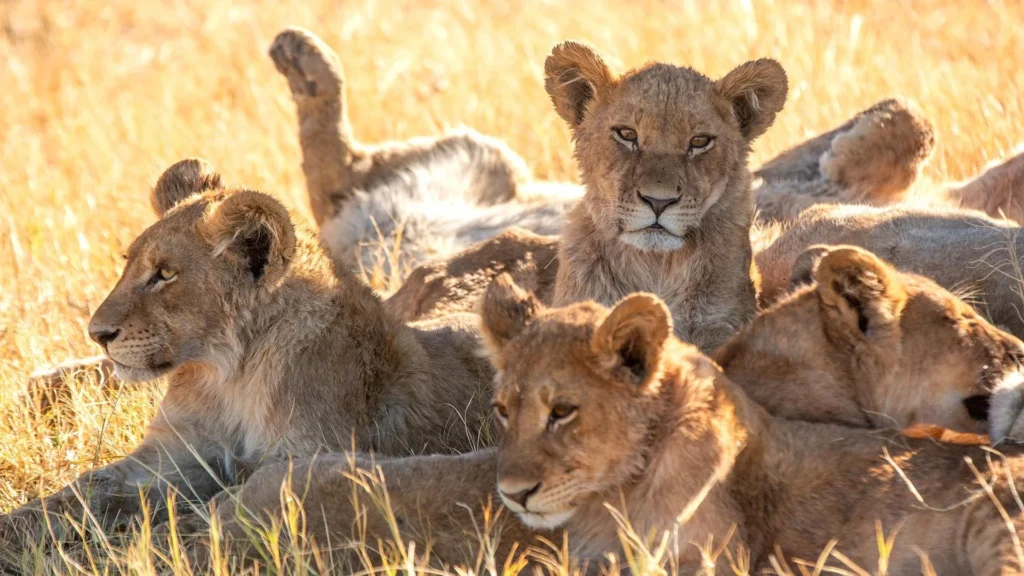
Lions hold territory across the open grasslands and river corridors. The Musiara Marsh area is the historic centre of Mara lion viewing. Lions are the easiest big cat to find because prides are large, territorial, and visible. They’re most active at dawn and dusk. The midday sighting is almost always sleeping. What most articles won’t tell you is that finding lions in the morning is about checking three things: fresh tracks on the road (the night patrols leave prints on the soft dust), the radio for overnight sightings, and the vulture pattern. If vultures are circling but not landing, a pride is still on the kill. If they’ve already landed and are feeding, the pride has moved off. That distinction saves an hour of driving in the wrong direction. Last dry season I used this twice in one morning. Circling vultures east of the marsh led us to a pride of nine finishing a zebra kill. Landed vultures near the Talek bridge meant the pride there had already gone, so I skipped it and had the guests at the active kill 20 minutes earlier than any other vehicle.
Leopards are solitary and mostly nocturnal. They live in riverine forest, along drainage lines, and in the dense bush flanking the Talek and Mara rivers. The Ol Kiombo area, Fig Tree Ridge, and the Musiara forest edges are the strongest areas. What makes leopard guiding different from lion guiding is that it’s entirely about knowing individuals. I know which female favours which tree, what time she moves to her evening hunting route, and which side of the river she crosses. A guide without that individual-level knowledge drives past leopards every day without seeing them. When a guest asks how I “found” a leopard, the honest answer is usually that I knew where she’d be because she was there yesterday and the day before. The TripAdvisor reviews that rave about leopard sightings almost always name a specific guide for this reason.
Cheetahs need open plains with short grass and termite mounds for scanning. Olare Motorogi, Naboisho, and the eastern grasslands are the strongest areas. Cheetahs are the most schedule-dependent of the three. They hunt between about 8 AM and 11 AM, when it’s light enough to see prey but cool enough to sprint without overheating. A guide who arrives on the cheetah plains at 6 AM wastes two hours watching a cat sit on a mound. Arriving at 7:30 and scanning the mounds with binoculars covers the same ground and catches the hunt window. After 11, cheetahs rest until late afternoon. A mother with cubs changes the schedule because she needs to feed more frequently, and those are the sightings that produce the most sustained action. Earlier this year I followed a mother with four cubs in Naboisho across three mornings. On the first morning she stalked an impala and the cubs broke cover too early. On the second she got close but the impala bolted before she could sprint. On the third morning the cubs stayed flat and she brought down a hare. Not dramatic by documentary standards, but watching the cubs learn over three days gave the guests something a single drive never produces.
Each cat has its own article with full behavioural detail: lions, leopards, cheetahs.
How a Guide Finds Them
The radio network comes first. Guides share sighting locations in real time, and a guide plugged into the network finds cats faster than one working alone. But the radio only tells me where a cat was 20 minutes ago. After that, I’m reading the landscape.
Most of what I do on a big cat drive is watch the other animals. At 4 PM, when guests are photographing sleeping lions, I’m looking at the trees half a kilometre away. Baboons sitting rigidly on a branch with their tails dropped straight mean a leopard is somewhere in that tree line. Oxpeckers diving erratically above a thicket mean something large is moving underneath. A topi frozen on a termite mound, staring without grazing, is pointing at a cheetah. The prey species know where the predators are long before I do.
The cats themselves give signals too. A lion pride lying flat on their sides at midday looks dead, but if every head is facing the same direction, they’re watching something. A leopard’s territorial rasping at dusk, which sounds like someone sawing wood, gives the direction and approximate distance. A cheetah sitting upright on a mound with its head turning slowly is about to hunt.
During the heat of the day, all three cats seek shade but in different ways. Lions and leopards retreat into dense bush and riverine forest. Cheetahs rest on exposed ground where they can see in every direction, sacrificing shade for safety. Scanning the drainage lines and lugga edges during midday hours produces hidden cats that driving the open plains would miss.
Lions can be identified individually by their whisker spots. The black spots on a lion’s muzzle are arranged in rows, and the top row is unique to each animal, like a fingerprint. It never changes from birth. This is how researchers and experienced guides distinguish between known pride members and incoming nomadic males. A pride takeover changes the dynamic of an entire area for months, so knowing who’s who matters.
Crowding and How to Avoid It
Safari Scenario / Context | On-The-Ground Protocol & Tactical Reality |
Cheetah Hunt Window | Focus on short-grass plains between 8 AM and 11 AM for active sprinting. |
Vehicle Roof Jumps | Remain completely still; the cat is strictly using the vehicle roof as a lookout. |
Midday Shade Search | Scan exposed ground for cheetahs; check dense drainage lines for lions and leopards. |
Silhouette Management | Keep clothing neutral; bright colors visible through hatches signal threats to stalking cats. |
Sighting Selection | Spend mornings in low-density conservancies to avoid hunt-disrupting vehicle crowding. |
In the public reserve, there’s no limit on how many vehicles can surround a sighting. During peak season, 20 to 30 tour vans regularly converge on a single lion pride or cheetah. The experience can feel crowded, and the vehicles affect the animals. Cheetahs in particular are stressed by vehicle numbers and may abandon a hunt if too many cars press in. I watched this happen last October. A female cheetah with three cubs had a Thomson’s gazelle lined up on the Topi Plains. She was crouched, ready to sprint. Then four more vans arrived at speed, engines revving, and parked between her and the gazelle. She stood up, walked the other way, and didn’t hunt again that morning. Her cubs didn’t eat. That’s the cost of the crowding, and the conservancy vehicle limits exist because of situations exactly like that one.
The conservancies enforce a 5-vehicle maximum at any sighting and permit off-road driving, which means the guide can position for better angles rather than competing for road-edge spots. Night drives are available in conservancies but banned in the reserve. Walking safaris are conservancy-only.
The reserve has advantages — it holds more territory, the river crossings, and some of the most famous pride territories. But for the quality of the big cat encounter itself, the conservancy setting produces a different experience. Most guests who have done both prefer the conservancy.
Cheetahs sometimes jump onto safari vehicles to use the roof as a lookout point. This happens regularly in the Mara. If it happens, the guide tells everyone to stay still and wait. The cat is scanning for prey, not being aggressive. These encounters can last 30 to 45 minutes.
Keep clothing neutral — khaki, olive, grey. Standing up through the roof hatch or draping a bright jacket over the window frame breaks the vehicle’s silhouette. To a stalking cheetah or a resting lion, that flash of movement and colour signals a threat. The animal moves off and the sighting ends.
What to Know Before Booking
- Three nights gives a good chance of seeing all three big cats. Four or more nights makes it very likely. But the order matters: spend the first two days in the conservancy where the guide can work without vehicle pressure, then use the reserve day for the river corridors and the Marsh Pride territory. Most operators do it backwards and waste the quietest mornings in the crowded reserve.
- The conservancy versus reserve choice determines the sighting quality more than the camp’s star rating. A mid-range conservancy camp with a 5-vehicle limit and night drives produces better cat encounters than a luxury reserve lodge surrounded by 25 vehicles with no night access.
- Ask the operator which specific guide will be assigned. A guide who has tracked individual leopards for years produces sightings that a rotating driver never will. The guide matters more than the camp.
- June is the best photography month. Short grass keeps cats visible at body level, fewer vehicles are on the tracks, and the entry fee is $100 instead of $200. The light is clean and warm. August has more vehicles than cats.
- A 400mm telephoto lens is the minimum for big cat photography. The 25-metre minimum distance rule means the camera does the work the vehicle can’t. A 100-400mm zoom covers both the portrait and the landscape-with-cat compositions.
Questions Guests Ask
Can I see all three big cats on one safari?
Very likely with 4+ nights. Ol Kiombo area camps (Mara Intrepids, Mara Explorer) and Olare Motorogi camps produce consistent sightings of all three within 48 hours. The migration guide covers how seasonal prey movements shift predator distribution.
Which big cat is hardest to see?
Leopards. They’re solitary, nocturnal, and hidden in dense cover. A guide who knows individual territories is the difference. Night drives in conservancies help. The full detail is in the leopards article.
Are cheetahs being harassed by vehicles?
It’s a documented problem. Vehicle numbers around cheetah hunts have been linked to abandoned hunts and reduced feeding success. The conservancies enforce vehicle limits. The reserve relies on guide behaviour. If a sighting has too many vehicles, ask the guide to move on. The cheetahs article covers this in detail.
What about serval cats?
Servals are the bonus sighting. They’re smaller, spotted, long-legged cats that hunt rodents in tall grass. Night drives in conservancies pick them up regularly. A serval adds a fourth cat species to the trip. Get in touch and we’ll suggest camps in good serval territory.
Which research projects monitor the big cats?
The Mara Predator Conservation Programme tracks lions. The Mara Cheetah Project tracks cheetahs through over 25,000 facial photographs. Individual leopards are monitored by guides and independent researchers. The wildebeest migration affects all predator distribution. Fees and logistics are on the booking page.
If big cats are the priority, a 5-day safari covers enough ground for all three species. The 3-day and 4-day trips work but reduce the odds on leopards. For Amboseli alongside the Mara, the 6-day circuit or three-park loop add Kilimanjaro views. Everything from luxury lodges to fly-in transfers is on the packages page, or send us your dates and we’ll build a route through the best cat territory.
This guide was authored by David Njunge, a TRA-licensed safari guide with over 10 years of experience, and edited by Cecilia Wambui, a travel consultant with a degree in Tourism and Hospitality Management.
Related Reading:
- Lions in Masai Mara
- Leopards in Masai Mara
- Cheetahs in Masai Mara
- Elephants in Masai Mara
- Rhinos in Masai Mara
- Buffalo in Masai Mara
- Hippos in Masai Mara
- Crocodiles in Masai Mara
- Giraffes in Masai Mara
- Zebras in Masai Mara
- Wildebeest in Masai Mara
- Hyenas in Masai Mara
- Masai Mara Conservancies
- Conservancy vs National Reserve
- Olare Motorogi Conservancy
- Mara North Conservancy
- Ol Kinyei Conservancy
- Siana Conservancy
- Lemek Conservancy
- Ol Chorro Conservancy
- Enonkishu Conservancy
- Pardamat Conservation Area
- Masai Mara Entrance Gates
- Best Time to Visit Masai Mara
- Wildebeest Migration Kenya
- Masai Mara Migration
- Birding Safari Masai Mara
- Photography Safari Masai Mara
- Walking Safaris Masai Mara
- Night Game Drive Masai Mara
- All Inclusive Masai Mara Safari
- Masai Mara Amboseli Nakuru Safari
- 6 Days Masai Mara Amboseli Safari
- 5 Days Masai Mara Safari
- 4 Days Masai Mara Safari
- 3 Days Masai Mara Safari
- Luxury Safari Masai Mara
- Masai Mara Packages
- Masai Mara Flying Packages
- Masai Mara Booking
- Official KWS Park Fee Portal
- Kenya Wildlife Service
Welcome to Masaimara.co.ke
Thank you for visiting us! We're excited to help you plan an unforgettable safari adventure across Kenya.