
Masai Mara Conservancies: The Honest 2027 Guide
Masai Mara Conservancies | Written by David Njunge, TRA Licensed Safari Guide (10+ years)
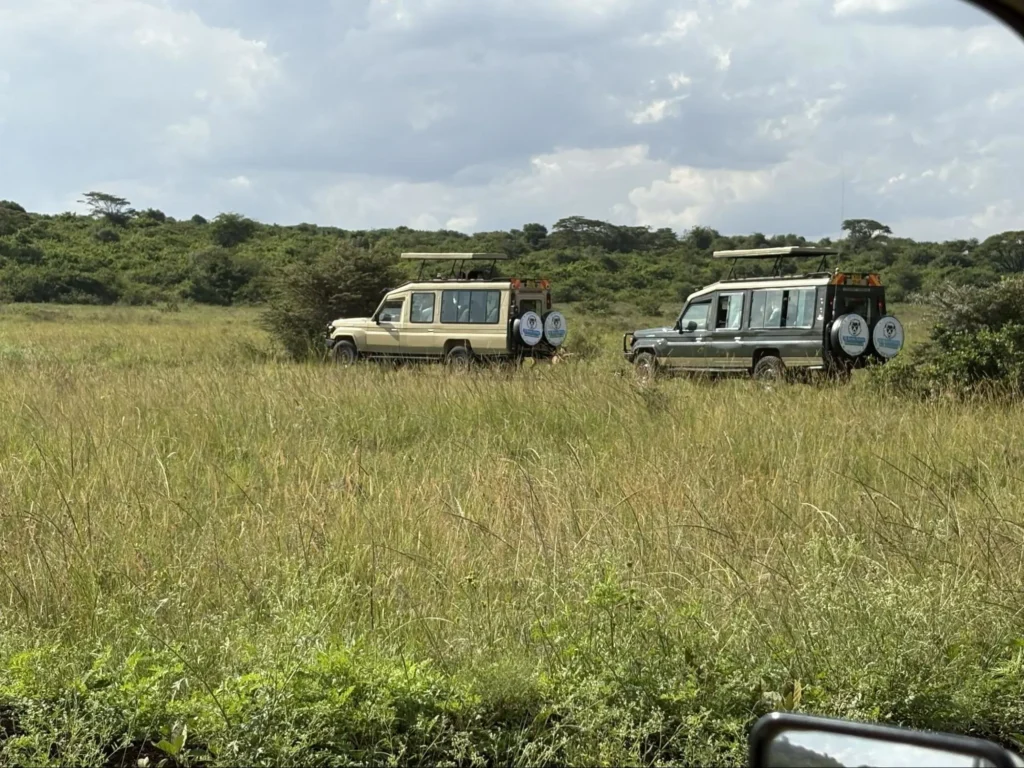
Masai Mara conservancies are community-owned wildlife areas around the northern and eastern edges of the Masai Mara National Reserve. There are 24, covering about 450,000 acres leased from over 15,000 Maasai landowners. They allow night drives, walking and off-road driving, and limit vehicles at sightings. Fees run from USD 40 to USD 150 a night.
Reserve vs Conservancy
| What Differs | National Reserve | Conservancy |
|---|---|---|
| Who can enter | Anyone who pays the entry fee | Only guests of camps inside it |
| Vehicles at a sighting | No limit. Up to 40 in peak season | Usually no more than five |
| Night drives, walking, off-road | Not allowed | Allowed |
| Cattle | Not allowed | Grazed on rotation |
The reserve is public land run by Narok County. A conservancy is private land that Maasai families lease to a few camps, and only those camps’ guests may drive there. Conservancy vehicles can go into the reserve for a day at the river, but reserve vehicles cannot come the other way. You will also see cattle in most conservancies. They are grazed on a plan, and that is part of how the land is managed.
Fees, ticket rules and a worked cost comparison are in our conservancy vs national reserve guide.
The Major Conservancies
Olare Motorogi covers 33,000 acres on the reserve’s northern boundary and allows only five camps and 94 beds, the tightest limit in the Mara. Its lion density is about 22 per 100 square kilometres, well above the Mara average. Camps run from Porini Lion Camp to Mara Plains and Mahali Mzuri. Read the full Olare Motorogi Conservancy guide.
Mara North is the largest at 74,000 acres, leased from more than 800 landowners and open only to guests of its 12 member camps. No more than five vehicles sit at a sighting. Leopard Gorge and horseback safaris are here. The river crossings are in the reserve, a little over an hour away. Read the full Mara North Conservancy guide.
Naboisho spreads across 50,000 acres of valleys and acacia woodland, with about nine camps at every price. Its 2025 lion density of 25 per 100 square kilometres is the second highest in the Mara. Ol Seki Airstrip is inside it, and it serves Ol Kinyei as well. Read the full Naboisho Conservancy guide.
Ol Kinyei is 18,700 acres of woodland open only to guests of three Porini properties, and only Porini vehicles drive in it. It now has the highest lion density in the Mara, about 29 per 100 square kilometres, and the best walking safaris I know. There are no rhinos. Guests can also drive in Naboisho. Read the full Ol Kinyei Conservancy guide.
Siana covers about 35,000 acres beside Sekenani Gate, on the eastern side. It is still developing, so it is quieter and cheaper than the northern conservancies. Up to 400 elephants use the area at a time. Camps run from Mara Bushtops to Drunken Elephant, minutes from the gate. Read the full Siana Conservancy guide.
Lemek is 17,350 acres on the northern edge, joined to Mara North by an unfenced boundary. Saruni Wild, its best-known camp, has driving rights across Lemek, Ol Chorro and Mara North. Late night drives can be arranged, and the Lemek Hills are one of the few places where wild dogs are reported. Read the full Lemek Conservancy guide.
Ol Chorro is the oldest conservancy in the Mara, set up in 1991 on 17,000 acres. It keeps two southern white rhinos under guard, and you walk to them on foot with armed rangers, which no other Mara conservancy offers. Fairmont Mara Safari Club, with 50 rooms on the Mara River, is the largest property in any conservancy. Read the full Ol Chorro Conservancy guide.
At 5,928 acres, Enonkishu is the smallest conservancy and the only one built around managed cattle grazing as a way to restore land. House in the Wild has 6 cottages for 16 guests, and one fee covers drives in Enonkishu, Lemek and Ol Chorro. Cat numbers are lower here, but aardwolves are common. Read the full Enonkishu Conservancy guide.
Pardamat is the odd one out. Its 64,000 acres belong to 850 families and are kept as a wildlife corridor, with almost no lodges inside. Over 470 kilometres of fence wire have been pulled out to reopen old migration routes. The animals you see in the neighbouring conservancies depend on it. Read the full Pardamat Conservation Area guide.
The Nine at a Glance
| Conservancy | Size | Fee Per Adult, Per Night | Best Known For |
|---|---|---|---|
| Olare Motorogi | 33,000 acres | USD 130 | Five camps, 94 beds, strong lion numbers |
| Mara North | 74,000 acres | About USD 116 to USD 130 | Space, Leopard Gorge, 12 member camps |
| Naboisho | 50,000 acres | USD 150 for 2027 | Second highest lion density, varied camps |
| Ol Kinyei | 18,700 acres | USD 130, plus USD 5 trust payment | Highest lion density, walking safaris |
| Siana | 35,000 acres | USD 40 to about USD 105 | Elephants, lowest fees, beside Sekenani Gate |
| Lemek | 17,350 acres | USD 70 to USD 116 | Three-conservancy access, late night drives |
| Ol Chorro | 17,000 acres | USD 70 to USD 100 | Two white rhinos you visit on foot |
| Enonkishu | 5,928 acres | About USD 150 | Cattle-led land restoration, families |
| Pardamat | 64,000 acres | Included in your stay | Wildlife corridor and fence removal |
Camps revise their fees every year, and in some conservancies each camp sets its own. Confirm the figure on your quote.
Choosing the Right Conservancy
| What Matters Most to You | Where to Go |
|---|---|
| Big cats | Ol Kinyei, Naboisho or Olare Motorogi |
| Low cost | Siana or Lemek for fees, Ol Kinyei for camp rates |
| Walking | Ol Kinyei, or Ol Chorro for the rhino walk |
| Young children | Enonkishu |
| Quick access to the reserve | Siana, Olare Motorogi or Mara North |
I get asked which conservancy is best almost every week. There isn’t one answer, so here is how I match people to places.
First-time visitors usually want cats, and plenty of them. I send them to Ol Kinyei, Naboisho or Olare Motorogi. On the 2025 survey those three held about 29, 25 and 22 lions per 100 square kilometres, and the Mara as a whole averaged 17.5. Naboisho has the widest spread of camp prices of the three. The figures for every area are in our lions in Masai Mara guide.
If money is tight, start with the fee. Siana and Lemek charge from USD 40 and USD 70 a night, which is less than half of what the big northern conservancies ask. Ol Kinyei’s fee is higher, but its Porini camps are some of the best value in the Mara once you add up what is included. It is woodland country and it has no rhinos. I still rate its walking safaris above any other.
People who come for the river crossings sometimes expect to watch them from a conservancy camp. That won’t happen. The crossings are inside the reserve, so plan one full day there whichever conservancy you pick. Siana’s southern camps are minutes from Sekenani Gate, and Olare Motorogi and Mara North sit on the reserve’s northern edge, so the drive in from any of those three is short.
Photographers do well in Olare Motorogi and Mara North. Five vehicles is the limit at a sighting, and a guide can leave the track to get the light behind you. The Kicheche camps in both take 4 guests in a vehicle where most camps take 6, so nobody is stuck in a middle seat.
For walking, I’d choose Ol Kinyei, where the trackers grew up on the land they walk you through. Ol Chorro has the one walk you can’t do anywhere else in the Mara, on foot to two white rhinos with armed rangers beside you.
With young children, look at Enonkishu. The Naretoi estate inside it is fenced against predators, so children can walk and cycle without an armed escort. House in the Wild is family-owned and set up for children.
If you have done the main conservancies already, try Lemek, where Saruni Wild drives three conservancies from one tiny camp. Or spend a day in Pardamat with a guide who can show you where the fences came down. It makes sense of the rest of the Mara.
When the budget stretches to it, split your stay. Three nights in Naboisho and three in Olare Motorogi gives you different country and different prides, and because the two are neighbours the transfer is a game drive.
Safari Packages via the Conservancies
All-inclusive prices per person sharing, based on two people in a private 4×4 Land Cruiser. Conservancy fees are included in the rates below.
5-Day All-Inclusive Rates (Per Person Sharing)
| Package Tier | Camps (Nakuru + Conservancy) | Regular Season | Peak Season |
|---|---|---|---|
| Budget | Lake Nakuru Lodge / Ol Kinyei Adventure | KES 252,200 ($1,940) | KES 447,200 ($3,440) |
| Mid-Range | Sarova Lion Hill / Karen Blixen Camp | KES 304,200 ($2,340) | KES 538,200 ($4,140) |
| Luxury | The Cliff Nakuru / Porini Lion Camp | KES 529,100 ($4,070) | KES 828,100 ($6,370) |
| Luxury Plus | The Cliff Nakuru / Mara Plains Camp | KES 867,100 ($6,670) | KES 1,348,100 ($10,370) |
Note: Peak season is July to October and the Christmas weeks. Reserve entry is extra if you cross into the public park: USD 100 a day from January to June and USD 200 a day from July to December. For a luxury safari upgrade or flying packages, request a custom quote.
What’s Covered
- A private 4×4 Safari Land Cruiser for the trip. In conservancies that admit only camp vehicles, such as Ol Kinyei, game drives are in the camp’s vehicles with its guides.
- A TRA-licensed guide who knows the conservancy system and how the boundaries work.
- All conservancy fees and Lake Nakuru entry fees.
- Night drives, off-road tracking and guided walking safaris with Maasai trackers.
- A one-way flight from the conservancy airstrip back to Nairobi Wilson through Masai Mara flying packages.
- Full board, 3 meals daily.
- AMREF Flying Doctors emergency air evacuation cover.
What’s Excluded
- Kenya eTA (~$30).
- Tips (KES 3,000/day for the guide).
- Alcohol and premium drinks.
- Hot air balloon (USD 500).
- Main reserve entry fees if you cross into the public park (USD 100 or USD 200 a day, by season).
- International flights.
Frequently Asked Questions
How many conservancies are there?
The Maasai Mara Wildlife Conservancies Association counts 24, at different stages of development, covering about 450,000 acres leased from over 15,000 Maasai landowners. The main tourism conservancies are Olare Motorogi, Mara North, Naboisho, Ol Kinyei, Siana, Lemek, Ol Chorro and Enonkishu. Newer areas such as Pardamat, Mbokishi and Enarau are still developing.
How much are conservancy fees?
From USD 40 to USD 150 per adult per night, depending on the conservancy and camp. Most of the larger conservancies charge about USD 130. The fee pays the Maasai landowner leases and is normally part of your camp rate.
Which conservancy has the most lions?
Ol Kinyei, at about 29 lions per 100 square kilometres on the 2025 survey. Naboisho is second at 25 and Olare Motorogi third at 22. The average for the whole Mara is 17.5.
Which conservancy is the cheapest?
On fees, Siana, where some camps charge USD 40 a night, then Lemek and Ol Chorro from USD 70. Naboisho and Enonkishu are the highest at about USD 150.
Which conservancies have rhinos?
Only Ol Chorro, which keeps two southern white rhinos in a guarded sanctuary. None of the other conservancies has rhinos. Black rhinos live inside the main reserve.
Which conservancy is best for a first visit?
Naboisho or Olare Motorogi. Both have plenty of lions, strict vehicle limits and well-run camps, and both are close enough to the reserve for a day at the river. Naboisho has more choice on price.
Is a 4×4 mandatory?
Yes. Off-road tracking, river-drift crossings and black cotton soil after rain need a 4×4 with low-range gears.
The Conservancy Difference
The conservancy model is still young. Ol Chorro started it in 1991. Most others formed between 2005 and 2015. The newer ones like Siana and Pardamat are less polished than Olare Motorogi or Naboisho, but the wildlife doesn’t wait for the infrastructure to catch up. Every conservancy runs on the same arrangement. Maasai families lease their land, tourism and conservation fees pay the leases, and in return the wildlife gets room to move and the vehicles are managed so the sightings stay quiet. It doesn’t always work perfectly. Enforcement varies between conservancies, guide quality ranges from outstanding to average, and cattle appear on the tracks at dawn in places where the reserve wouldn’t allow it. But across all of them the result is the same: fewer vehicles, more to do and income that goes straight to the community. Most repeat Mara visitors end up staying in a conservancy for those reasons.
Our 3-day and 4-day trips work for a focused conservancy stay. The 5-day adds Nakuru. The 6-day Amboseli circuit adds Kilimanjaro views. The Mara-Amboseli-Nakuru loop covers all three. All options are on our Masai Mara packages page.
Fill out our booking form at Masaimara.co.ke and tell us your dates.
Related Reading
- Conservancy vs National Reserve
- Masai Mara Park Fees
- Masai Mara Safari Cost
- Masai Mara Camps
- Mara Triangle
- Masai Mara Entrance Gates
- Masai Mara Migration
- Lions in Masai Mara
- Masai Mara Wildlife
- Night Game Drive Masai Mara
- Walking Safaris Masai Mara
- Best Time to Visit Masai Mara
About the Experts Behind This Guide
Written by: David Njunge, TRA-Licensed Safari Guide (10+ years of on-the-ground experience in the Masai Mara).
Edited by: Cecilia Wambui, Lead Travel Consultant & Logistics Expert.
✅ Verified for the 2027 travel season.
Welcome to Masaimara.co.ke
Thank you for visiting us! We're excited to help you plan an unforgettable safari adventure across Kenya.