
Masai Mara and Mombasa Safari: The Honest 2026 Guide
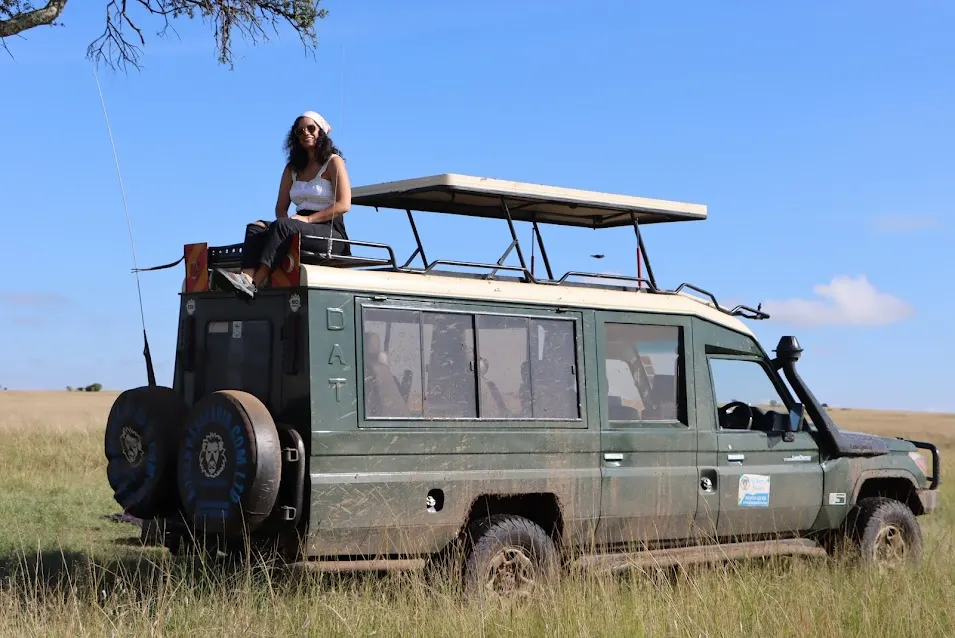
A Masai Mara and Mombasa Safari pairs predator tracking in the Mara with the historical Swahili culture of Kenya’s coast. Unlike the Masai Mara and Diani Beach Safari, this trip puts you in the city of Mombasa itself: Fort Jesus, Old Town, the Tamarind Dhow, and the North Coast beaches. For the 2026/2027 season, all-inclusive rates for two people sharing range from KES 615,500 ($4,735) to KES 1,980,000 ($15,230) per person. This covers a private 4×4 Land Cruiser, internal flights, and coastal accommodation. The key decision is whether to stay on the North Coast (Nyali, Bamburi, Shanzu) for culture and convenience, or the South Coast (Diani) for better sand.
Masai Mara and Mombasa Safari Costs (2026/2027)
Pricing reflects the updated Masai Mara park fee, the mandatory 4×4 Land Cruiser rates, and internal flights. These are all-inclusive prices for two people traveling together.
7-Day All-Inclusive Rates (Per Person Sharing)
Package Tier | Suggested Hotels | Regular (KES) | Peak (KES) |
Budget | Talek Bush Camp + Voyager Beach | KES 615,500 | KES 945,000 |
Mid-Range | Ashnil Mara + Sarova Whitesands | KES 810,000 | KES 1,180,000 |
Luxury | Mara Serena + Tamarind Village | KES 1,150,000 | KES 1,480,000 |
Luxury Plus | Angama Mara + English Point Marina | KES 1,620,000 | KES 1,980,000 |
Book Now | Current Rates |
Note: Peak season is July–October during the wildebeest migration. Children 3–12 pay 75% of the adult rate. For a luxury safari upgrade, request a custom quote.
What’s Covered in the Price?
- Vehicle. Private 4×4 Safari Land Cruiser with pop-up roof for the Mara leg.
- Flight. Internal flights from the Mara to the coast via Masai Mara flying packages.
- Guide. TRA-licensed guide for the safari leg.
- Park Fees. All entries via eCitizen.
- Accommodation. Full board during safari. Half-board or all-inclusive at the coast.
- Water. Bottled water during game drives.
Excluded. Tips (KES 3,500/day recommended), alcoholic drinks, hot air balloon ($450–$500), Mombasa city tours and transport, Tamarind Dhow cruise (KES 5,500), Masai village visit (KES 4,500), international flights and Kenya eTA.
I’ve been guiding for ten years. A Masai Mara and Mombasa Safari is a different trip from a Mara and Diani combination. Diani is a beach resort strip. Mombasa is a 500-year-old Swahili city on an island with its own food, architecture, and culture. If you want white sand and nothing else, go to Diani. If you want the sand plus Fort Jesus, Old Town, Kahawa Tungu, and the Tamarind Dhow, this is the trip.
North Coast vs South Coast
Mombasa is an island. The city itself has no beaches. The beaches are on the mainland, north and south of the island.
The North Coast (Nyali, Bamburi, Shanzu) has more restaurants, bars, and facilities. You’re 15 minutes from Fort Jesus and Old Town across the Nyali Bridge. The beaches are decent but not spectacular. Haller Park, the Butterfly Pavilion, and Mombasa Marine National Park are all on the North Coast. If culture and food matter more than the perfect beach, stay north.
The South Coast (Diani) has better sand, quieter resorts, and less development. But it’s further from Mombasa’s cultural attractions. Getting to Fort Jesus from Diani takes over an hour each way even with the Dongo Kundu Bypass. If you want both Mombasa culture and Diani sand, you’ll need at least 7 days.
For a Mombasa-focused trip, I recommend the North Coast. Everything listed above is within 20 minutes of your hotel.
Which Airport to Land At
Moi International Airport (MBA). Land here if you’re staying on the North Coast or in Mombasa city. It’s 15 minutes from Nyali.
Ukunda Airstrip (UKA). Land here if you’re staying at Diani on the South Coast. It’s 10 minutes from the beach hotels.
If you land at MBA and your hotel is in Diani, use the Dongo Kundu Bypass. It cuts the transfer from 3 hours to 45 minutes by skipping the Likoni Ferry. Some drivers still default to the ferry route out of habit. Tell them you want the bypass.
The 7-Day Itinerary
Day 1: Nairobi to Masai Mara
Morning flight from Wilson Airport. Arrive for lunch and an afternoon game drive. I schedule entry to align with the park fee clock.
Day 2: Full Day in the Mara
Morning and afternoon game drives. If the migration is happening (July–October), we position near the Mara River crossing points. If you’re in a conservancy, this evening is good for a night drive.
Day 3: Third Mara Morning
Hot air balloon at sunrise or a walking safari with a Maasai warrior through the conservancy. Afternoon at camp.
Day 4: Mara to Mombasa
Morning game drive. Afternoon flight to the coast. By evening, you’re at your hotel. If you’re on the North Coast, take the Tamarind Dhow sunset cruise on Tudor Creek. Seafood prepared on deck, the Old Town skyline turning pink as the sun drops.
Day 5: Mombasa Old Town and Fort Jesus
Walking tour through the narrow alleys of Old Town. The carved doors tell you who lived there: floral carvings mean Arab influence, brass studs mean Indian. Fort Jesus is the centrepiece (KES 1,200 for non-residents, plus a negotiable guide fee). Budget 2 hours. Have kahawa tungu and halwa at Jahazi Coffee House afterwards. In the afternoon, visit the Mombasa Elephant Tusks on Moi Avenue for the photo.
Day 6: Haller Park or Marine Park
Morning at Haller Park for giraffe feeding and the red millipede story (see the Mombasa section below). Afternoon snorkelling at Mombasa Marine National Park (KES 1,500 snorkelling permit via KWS Pay). Or, if you’re on the South Coast, this is your beach day.
Day 7: Departure
Morning at the beach or Mama Ngina Waterfront for freshly fried cassava crisps and coconut water. SGR train to Nairobi (afternoon departure, arrives 8:30 PM) or flight from MBA.
What to Do in Mombasa
Experience | Expert Insider Track |
Old Town Architecture | Look closely at the carved doors: floral designs signify Arab history; brass studs indicate Indian influence. |
Kahawa Tungu | A traditional spiced bitter ginger coffee. Buy from street vendors instead of cafes, and pair it with sweet halwa. |
Tamarind Dhow | Floating seafood dinner cruise on Tudor Creek. Runs on booking volume, so reserve your spot early. |
Haller Park | A restored cement quarry transformed into a sanctuary via red millipedes. Great for mid-day giraffe feeding. |
Swahili Street Food | Skip western menus. Try mahamri (cardamom doughnuts) for breakfast and viazi karai as an afternoon snack. |
These are the things that make a Mombasa trip different from a Diani trip.
Fort Jesus and Old Town. See Day 5 in the itinerary for the walking tour details. You can also do Fort Jesus and Old Town on your way to the airport if your flight is in the afternoon. Budget 3 hours.
Kahawa Tungu. Mombasa’s signature drink. Concentrated bitter coffee brewed with ginger and spices, served in tiny cups with halwa (a dense sweet) to balance the bitterness. You find it from street vendors in Old Town, not at restaurants. It’s part of the social fabric of the city.
Tamarind Dhow. An authentic dhow converted into a floating restaurant. It sails from the Tamarind Jetty on Tudor Creek at 6:30 PM and returns by 10:30 PM. Seafood prepared on deck. Children 2–11 at 50% discount. The cruise only runs when enough people book, so reserve early. See the Excluded section above for the cost.
Haller Park. A wildlife sanctuary on the North Coast built on land that was a barren cement quarry. The entire ecosystem was kickstarted by red millipedes that turned cement dust into fertile compost. Now it has giraffes, hippos, crocodiles, and giant tortoises. Ask your guide about the millipede story. Most visitors just see the giraffes.
Butterfly Pavilion. Right next to Haller Park. Cheaper, quieter, and you can rent bicycles to ride through the forest trails.
Mama Ngina Waterfront. See Day 7 in the itinerary. The local evening spot on the southern tip of Mombasa Island. No admission, no tourists. Just vendors, the waterfront, and the ferries.
Mombasa Marine National Park. Glass-bottom boats and snorkelling on the North Coast. The water stays shallow far out, which makes it safer for families with small children than the deeper reefs at Diani.
Swahili food. Mombasa has its own cuisine, different from upcountry Kenyan food. Biryani (layered rice with meat curry) is not the same as pilau (rice cooked with meat in one pot). Mahamri (cardamom doughnuts) with mbaazi (pigeon peas in coconut milk) is the traditional breakfast. Viazi karai (turmeric-battered fried potatoes with tamarind sauce) is the street snack. Try Blue Room or Forodhani Restaurant near the Old Port.
10 Things to Know Before You Go
- Tuk-Tuk Negotiation. Mombasa tuk-tuks (bajaj) cost KES 200–400 within the city. Agree the price before you get in. Drivers claim they don’t have change for large notes. They do. Carry small notes.
- The SGR Afternoon Train. The Madaraka Express at 3:30 PM from Mombasa reaches Nairobi by 8:30 PM. Book up to 14 days in advance. You need a Kenyan SIM or ask your operator to book for you.
- The Emali Connection From Amboseli. If your trip includes Amboseli, you can take the SGR from Emali station (1.5 hours from Amboseli) directly to Mombasa. Departs 9:30 AM, arrives 2 PM. Avoids backtracking to Nairobi.
- Camera Humidity. You land on the coast at 85% humidity from the dry Mara. Don’t open your camera bag for 3 hours. Let it acclimatise with the AC off.
- Siana Gate. Sekenani and Talek are bottlenecks for eCitizen validation. I use the Siana Gate for faster entry.
- Screenshot Your QR Code. Signal at some Mara gates is unreliable. Screenshot your validated eCitizen QR code before leaving Nairobi.
- Dress Modestly in Old Town. Mombasa’s Old Town is a Muslim area. Cover shoulders and knees when walking through. Beachwear is fine on the beaches but not in the city.
- Photo Etiquette. Ask consent before photographing people in Mombasa, especially women. This is basic respect in a conservative area.
- English Point Marina for Sunset. On the North Coast, go to English Point Marina at sunset. You look across the water at the Old Town skyline as the buildings turn pink and the minarets begin the evening call to prayer.
- Masai Mara booking KATO Check. Verify your operator on the KATO directory before paying any deposit.
The Luggage Problem
Bush planes to the Mara have a strict 15 kg soft-bag limit. If you’re flying through Wilson Airport to connect to the coast, pack two bags: a soft duffel for the Mara and a separate bag for the coast. Leave the coast bag at Wilson Airport lockers, your Nairobi hotel, or our office. We arrange for it to meet you when you land.
Your camera gear alone can weigh 5–7 kg. Safari lodges wash clothes same-day, so pack less than you think for the Mara portion.
Frequently Asked Questions
How is this different from a Mara and Diani trip?
See the intro above. Short version: Diani is beach, Mombasa is city plus beach. For the beach-only version, see our Masai Mara and Diani Beach Safari.
How many days do I need?
Minimum 7 for Mara plus Mombasa. See our Masai Mara packages page for all duration options.
What is the best month?
August to October for the migration and calm seas. January for leopard sightings and warm water. Check our best time to visit Masai Mara guide.
Is a 4×4 mandatory?
Yes. Mara tracks flood regularly. Every private safari we run uses a 4×4.
What should I pack?
See the Luggage section above for the two-bag strategy. For Mombasa specifically, pack modest clothing for Old Town (cover shoulders and knees) alongside your swimwear. Full list in our Masai Mara packing list.
Is this trip safe?
Yes. The Mara has rangers and your guide carries a radio. Mombasa has a police presence in the tourist areas. Use registered tuk-tuks or ride-hailing apps. More in our Masai Mara safety guide.
What Makes Mombasa Different
The Diani trips are about the contrast between bush and beach. This trip is about the contrast between bush and city. Mombasa has been a trading port for a thousand years. The food, the architecture, the call to prayer at sunset, the carved doors in Old Town, the smell of kahawa tungu and cardamom from a street vendor. It’s a place with its own weight. After 3 days in the Mara watching animals, walking through a 500-year-old city reminds you that Kenya has more than one story.
If a beach-focused trip suits you better, see the Masai Mara and Diani Beach Safari or the 5 days Masai Mara Diani Beach. Want a safari-only trip? Try the 5 days Masai Mara safari or 4 days Masai Mara safari. Want a different circuit? See the Masai Mara Amboseli Nakuru Safari or the 6 days Masai Mara Amboseli safari. Browse everything on our Masai Mara packages page.
Ready to start? Fill out our booking form at Masaimara.co.ke here and I’ll get the Land Cruiser and your coastal transfer ready.
Related Reading:
- Masai Mara and Diani Beach Safari
- 5 Days Masai Mara Diani Beach Safari
- 6 Days Masai Mara Diani Beach Safari
- 7 Days Masai Mara Diani Beach Safari
- Masai Mara Amboseli Nakuru Safari
- 6 Days Masai Mara Amboseli Safari
- 5 Days Masai Mara Safari
- 4 Days Masai Mara Safari
- Masai Mara Packages
- Luxury Safari Masai Mara
- Masai Mara Flying Packages
- Masai Mara Migration
- Masai Mara Booking
- Wildebeest Migration Kenya
- Masai Mara vs Serengeti
- Masai Mara Entrance Gates
- Official KWS Park Fee Portal
- Kenya Wildlife Service
This guide was authored by David Njunge, a TRA-licensed safari guide with over 10 years of experience, and edited by Cecilia Wambui, a travel consultant with a degree in Tourism and Hospitality Management.
Welcome to Masaimara.co.ke
Thank you for visiting us! We're excited to help you plan an unforgettable safari adventure across Kenya.