
Elewana Sand River Masai Mara: The 2027 Guide
Elewana Sand River at a glance
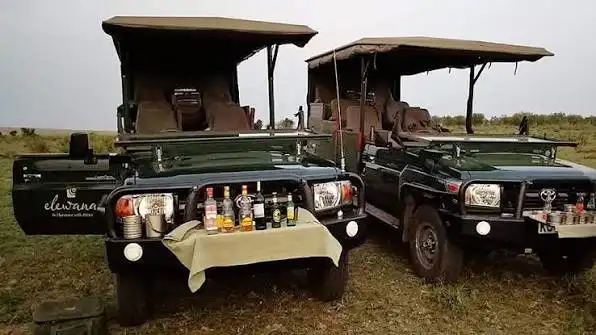
Elewana Sand River Masai Mara is a 16-tent camp on the Sand River in the far south-east of the reserve, close to the Tanzanian border. It is split into two small camps, has a riverside pool, and offers private vehicle upgrades. Rates start from about USD 640 per person a night.
Elewana Sand River sits on the banks of the Sand River in the far south-eastern corner of the Masai Mara National Reserve, a short drive from the Tanzanian border. In migration season some of the earliest herds come up into Kenya through this area, well before most of them reach the Mara River crossings further north. Outside the migration, this is one of the emptiest and quietest parts of the reserve. In November you can drive for hours without seeing another vehicle.
Two Camps And Why Tent 15 Is The One To Ask For
The camp is split into two sections along the riverbank, each with its own lounge and dining area. Main Sand River, which the guides call Area 1, has 10 tents under thick riverine trees, with more shade and more birds. Little Sand River, Area 2, has 6 tents and is more open, with the hippo pools closer. The two feel different enough that which one you are in changes your stay.
Tent 15 is in Little Sand River, at the far end of the property. It has the most privacy, it is closest to the hippos, and the night-time noise is louder than anywhere else in camp. The Maasai guides call this section “Longaianiet.” Mention that name when you arrive and your guide will know you have done your homework, and the conversation moves quickly from the standard briefing to real bush talk.
If hippos grunting all night is not your idea of sleep, ask for a tent in the middle of Area 1, where the trees soak up the noise and birdsong takes over in the morning.
Section | Tents | Feel |
Sand River (Area 1) | 10 | Shady, under big trees, lots of birds, quieter at night |
Little Sand River (Area 2) | 6 | More open, hippo pools close by, most private |
Tent 15 | 1 | Far end of Area 2, closest to the hippos |
The Sand River Crossing Is Not What You Have Seen On TV
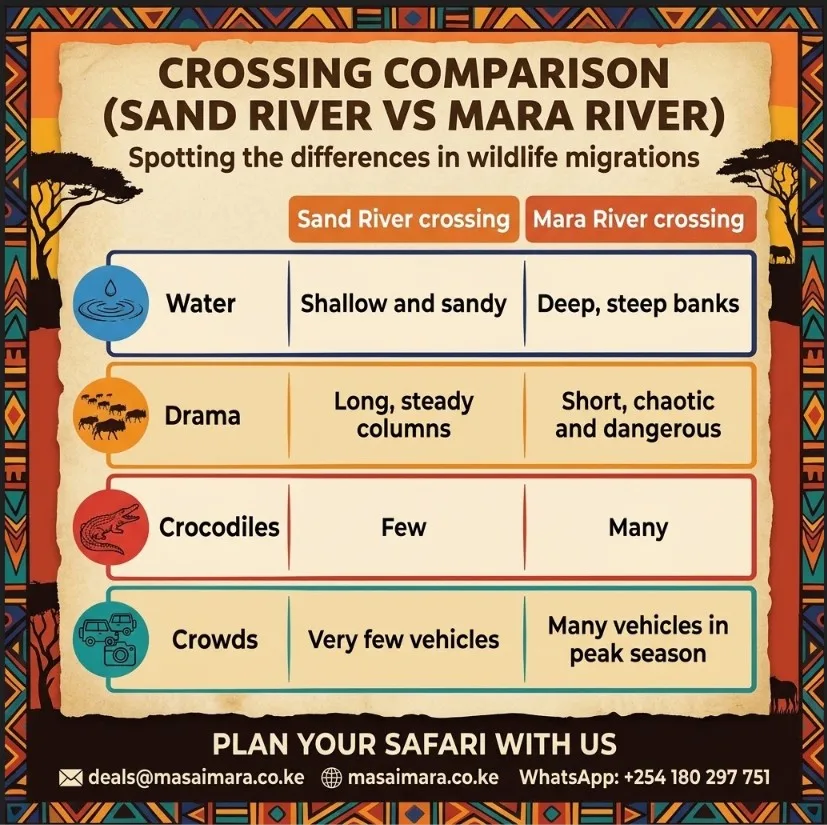
The Sand River is mostly shallow. The herds wade across at walking pace, spreading over a wide, sandy bed without the deep-water chaos of the Mara River. There is no drowning, there are fewer crocodiles, and none of the frantic scrambling up muddy banks you see in documentaries.
What you get instead is scale. Thousands of wildebeest moving through in long columns across open ground, with predators working the edges. It is quieter and lasts longer than a Mara River crossing, and for photography the clean backgrounds and steady movement are easier to work with.
If the deep-water crossings matter to you, the camp can arrange a full day out to the Mara River. It is a long drive from here, though, and I have seen groups make the trip only to find no crossings that week. Talk to your guide about what is realistic before you commit. Our Mara River crossing guide explains how the crossings work.
Sand River crossing | Mara River crossing | |
Water | Shallow and sandy | Deep, steep banks |
Drama | Long, steady columns | Short, chaotic and dangerous |
Crocodiles | Few | Many |
Crowds | Very few vehicles | Many vehicles in peak season |
Your Guide, The Tents And The Pool
Your Guide And Vehicle Options
The camp’s standard rate includes scheduled, shared game drives in open-sided 4×4 Land Cruisers. But this corner of the reserve rewards slow, patient tracking along the river, so most of our guests choose a vehicle of their own. In our full private safari packages, we give your group a dedicated vehicle and guide for the whole stay. By the second day your guide knows your pace, what you want to photograph, and how long you like to sit at a sighting before moving on. The drives get better every day because the guide builds on what you saw the day before.
The south-east of the reserve has thick grass and riverine bush, so finding cats takes more patience here than on the open plains further north. The guides who work this area know the drainage lines and the trees where the leopards rest, and on a three-night stay you have a good chance of seeing one.
1920s Style With A Pool By The River
The tents have leather armchairs, campaign furniture, dark wood floors and oriental rugs, in the style of a 1920s safari camp. A renovation updated the bathrooms and plumbing without losing the character. Every tent has a freestanding bath big enough for a proper evening soak, and there are hot water bottles for the cold nights.
The pool sits on the riverbank, so you can swim while elephants cross the river fifty metres away.
House wines, beers and local spirits are included in the rate. Champagne and premium labels cost extra.
Football In The Dry Riverbed
When the Sand River dries out between the rains, the sandy bed becomes a football pitch. The staff organise games with the children, and it is one of those unexpected moments families remember long after the sightings have blurred together.
The camp is unfenced. Elephants, buffalo and sometimes lions pass through, and an armed escort walks you between your tent and the dining area after dark. Families with young children need to watch them all the time, and the camp suits older children who understand the rules.
Room service is available if you ask ahead. It is not advertised, but the kitchen will bring meals to your tent, which is worth knowing for honeymooners or anyone who wants to eat on the veranda watching the river.
Rates And What They Include
Elewana Sand River starts from about USD 640 per person a night, two sharing, rising in the migration months. We confirm the exact 2027 figure when we quote.
What you pay | Price | Notes |
Camp rate, per person a night | From about USD 640 | Higher from July to October |
Reserve park fee, per adult a day | USD 100 (Jan to Jun), USD 200 (Jul to Dec) | Set by Narok County |
Return flight Nairobi to Keekorok | About USD 350 to 450 | Soft bags, 15 kg |
Included in the camp rate: full board, all meals, house wines, beers, local spirits and soft drinks, shared game drives, transfers from Keekorok Airstrip, laundry and the riverside pool.
Not included: Narok County park fees for the national reserve (USD 100 per adult a day from January to June, USD 200 from July to December, and USD 50 per child aged 9 to 17), the Kenya eTA (USD 34), hot air balloon flights (USD 550), champagne and premium spirits, the supplement for a private vehicle, and tips for the staff (USD 15 to 20 a day).
The reserve rule to know. Because the camp is inside the reserve, park fees apply every day you are there. On your last day you must leave through a gate, or fly out of Keekorok, before 10 am, or another full day’s fee is charged. The fees are set by the Narok County Government, and tickets from the KWS eCitizen portal are not valid at the Mara gates. In every full package we book, we work out and prepay these tickets for you. The full rules are on our park fee page.
What To Know Before Booking
Stay three nights. Two is possible but rushed, especially if you plan a day out to the Mara River. Build the travel time into the plan rather than discovering it on the day.
Pick your season. The peak migration months fill early. November to June is when this corner of the reserve is at its most peaceful. Our best time to visit guide has the month by month picture.
Fly in. Flights from Nairobi’s Wilson Airport land at Keekorok Airstrip, and the transfer to camp takes about 45 minutes through good game country. Mombasa Air Safari flies daily from the coast to the Mara if you are coming from Diani or Mombasa. Pack everything in a soft duffel, because hard cases do not fit and the weight limit is 15 kg. Our flying packages page explains how it works. The camp is close to Sand River Gate if you come by road.
What Guests Want To Know
Is It Good For The Migration?
Yes, especially in late June and early July, when some of the first herds are arriving here and many camps further north are still waiting. A split stay, two nights here and two at a camp closer to the Mara River, covers both kinds of crossing. The migration hub explains the season.
Is It Good For Families?
For older children who follow the camp rules, yes. The football in the riverbed, a private guide if you book one, and the 1920s style make it memorable, and there is one family tent with two bedrooms. For toddlers, a fenced camp is the safer choice.
Is Elewana Sand River Inside The Masai Mara?
Yes. It is inside the Masai Mara National Reserve, in the far south-east near Sand River Gate, so park fees apply every day you stay.
Is This The Same As Elewana Elephant Pepper Camp?
No. Elephant Pepper is Elewana’s other Mara camp, in the Mara North Conservancy, where night drives and walks are allowed. See our Elephant Pepper Camp guide.
Plan Your Sand River Safari
With sixteen tents it is not the smallest camp in the Mara, but its south-eastern position means it books up for the early migration window. Send us your dates and we will check availability and tell you whether the timing works for what you want to see. Our team at Sekenani will send an itemised quote within 24 hours.
- Email: [email protected]
- WhatsApp: +254 180 297 751
- Online booking: Get a Quote
Related Reading
- The migration
- Mara River crossing
- Leopards in Masai Mara
- Elephants in Masai Mara
- Masai Mara safari cost
- Masai Mara camps
- Best time to visit Masai Mara
- Masai Mara map
- Masai Mara packing list
- Nairobi to Masai Mara by road
Sources
Written by David Njunge, TRA-licensed safari guide with over 10 years in the Masai Mara. Edited by Cess Wambui, travel consultant, BSc Tourism and Hospitality Management. Verified for the 2027 season.
Welcome to Masaimara.co.ke
Thank you for visiting us! We're excited to help you plan an unforgettable safari adventure across Kenya.