
Masai Mara Safari Cost: The Honest 2027 Guide
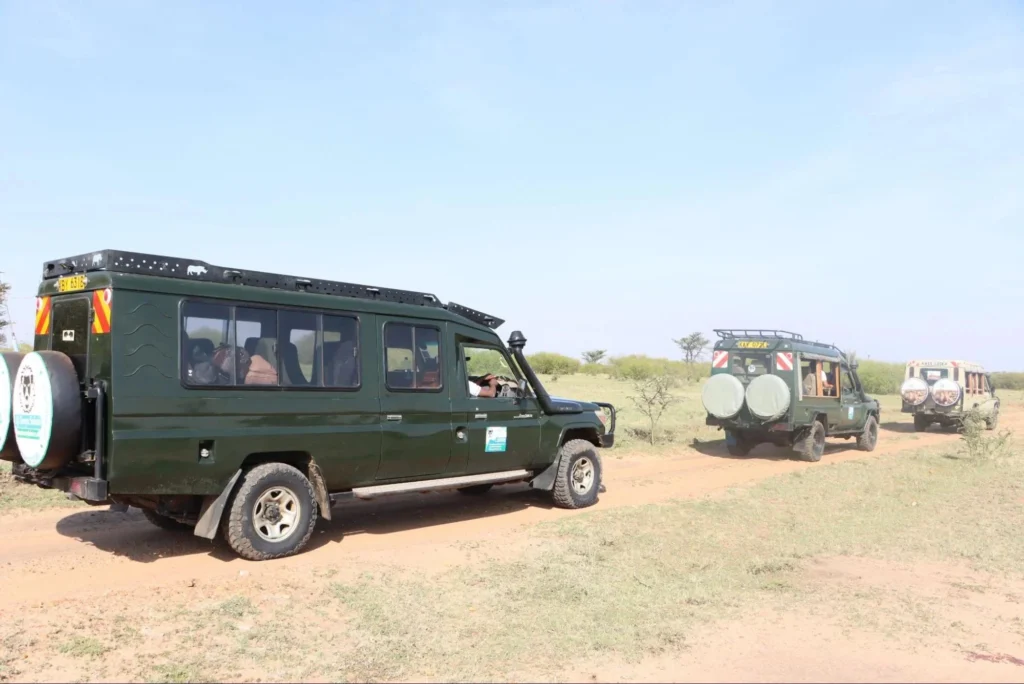
Masai Mara Safari Cost | Written by David Njunge, TRA Licensed Safari Guide (10+ years)
The Masai Mara safari cost confuses people because the same “3 days in the Mara” can be quoted at $400 or $4,000 depending on what’s included. The gap is almost always park fees, vehicle type, and accommodation tier. This guide breaks down every cost component so the total is clear before booking. For the 2027 season, all-inclusive 5-day itineraries range from KES 235,300 ($1,810) to KES 1,352,000 ($10,400) per person sharing.
Safari Package Prices (2027)
All-inclusive prices per person sharing, based on two people in a private 4×4 Land Cruiser. Conservancy fees are included in camp rates.
5-Day All-Inclusive Rates (Per Person Sharing)
| Package Tier | Camps (Nakuru + Mara) | Regular Season | Peak Season |
|---|---|---|---|
| Budget | Lake Nakuru Lodge / Ol Kinyei Adventure | KES 235,300 ($1,810) | KES 465,400 ($3,580) |
| Mid-Range | Sarova Lion Hill / Karen Blixen Camp | KES 302,900 ($2,330) | KES 585,000 ($4,500) |
| Luxury | The Cliff Nakuru / Rekero Camp | KES 497,900 ($3,830) | KES 832,000 ($6,400) |
| Luxury Plus | The Cliff Nakuru / Mara Plains Camp | KES 861,900 ($6,630) | KES 1,352,000 ($10,400) |
Note: Conservancy fees included. Reserve entry is extra ($100–$200/day). For a luxury safari or flying packages, request a custom quote.
Road Safari Prices From Nairobi (2027)
The table above is the fly-out conservancy trip with Lake Nakuru. Our road safaris into the main reserve cost less. These are Budget tier prices per person sharing, in a private Land Cruiser, with reserve park fees already in the price.
| Road Safari | January to June | July to December |
|---|---|---|
| 3-day safari | $1,025 | $1,985 |
| 5-day safari | $1,680 | $3,280 |
What’s Included and What Isn’t
Covered in our packages
- A private 4×4 Safari Land Cruiser for the full trip.
- A TRA-licensed guide.
- All conservancy conservation fees and Lake Nakuru entry fees (paid through the Kenya Wildlife Service system for Nakuru).
- Night drives, off-road tracking, and guided walking safaris in the conservancies.
- One-way flight back from the conservancy airstrip to Nairobi Wilson. Soft-sided duffel bags only, 15 kg limit.
- Full board, 3 meals daily.
- AMREF Flying Doctors emergency air evacuation insurance.
Not included
- Kenya eTA (~$30).
- Tips (see below).
- Beadwork and souvenir purchases.
- Hot air balloon (USD 500 or KES 58,500 per person).
- Masai village visit (USD 20 or KES 1,500 per person).
- Main reserve entry fees if crossing into the public park ($100–$200/day).
- Alcoholic drinks at budget and mid-range camps (included at most luxury camps).
- International flights.
What’s Not in the Price
Park fees are not always in the quote
This is the single biggest surprise. Budget operators quote a headline price that excludes park fees to look cheaper. A 3-day peak season safari requires $600 per person ($200/day × 3 days) just to clear the gate before anything else. When comparing quotes, ask every operator to show park fees as a separate line item. If they can’t, the fees aren’t in the price. The Masai Mara is managed by Narok County Government, not the Kenya Wildlife Service. Reserve fees are paid through the county’s KAPS system or at the gate. KWS eCitizen is for national parks like Lake Nakuru and Amboseli, not the Mara.
Children cost less at the gate. Ages 9 to 17 pay USD 50 a day, children under 9 enter free, and anyone 18 or older pays the adult rate. Kenyan citizens and East African residents pay lower rates in shillings and need ID at the gate. The park fees guide covers payment step by step.
The price doubles halfway through the year
| Season Corridor | Daily Park Fee & Cost Impact |
|---|---|
| January to June | $100 per day: Accommodation rates are 20% to 40% lower; maximum overall safari value. |
| July to December | $200 per day: Peak migration window; lodge and camp pricing jumps by 30% to 50%. |
Park fees go from $100/day (January-June) to $200/day (July-December). Accommodation rates increase 30 to 50% during migration months. A 5-day safari in February can cost 40% less than the same trip in August. Reserve passes are also on a 12-hour clock, not 24. They are valid from 6 AM to 6 PM on the day of entry. Guests at a lodge inside the reserve are covered overnight but must clear the gate by 10 AM the next morning or pay again. Guests in the conservancies who drive into the reserve for the day must exit by 6 PM. Arriving at 2 PM means paying the full rate for 4 hours of access, and a fly-in guest arriving mid-afternoon can easily pay $400 per person across the first 24 hours. Morning arrivals get better value.

Conservancy fees, solo supplements, and tipping
Conservancy fees run $80 to $150 per person per night depending on the conservancy. At luxury camps these are folded into the room rate. At some mid-range camps they appear as an extra line. The conservancy fee is what pays for walking safaris, night drives, and the low vehicle density.
Solo travelers face a separate problem. Safari lodges price rooms for two people sharing, and a solo guest pays a single supplement of 40 to 100% on top of the per-person rate. Joining a group departure at $450 to $600 for 3 days in a shared vehicle is the budget alternative. The solo safari page has more.
Tipping is expected and no package includes it. Guide: KES 2,500 to 4,000 for a 3-day trip, or KES 4,000 to 6,000 for 5 days. Camp staff: about KES 1,500 per day. For a 3-day trip, that’s roughly KES 5,500 to 7,000 in total ($42 to $54). Tip the guide directly rather than through the communal tip box in the lodge lounge. The box gets split across the entire staff, and the guide who spent four hours positioning the vehicle for a leopard sighting receives a small fraction. Hand the tip over at the end of the trip in small USD or KES notes. Bring cash from Nairobi because camp card machines drop connection during evening storms, and guests have been caught without a way to pay for drinks or tips.
“All-inclusive” means different things at different camps
At luxury camps, it usually means house drinks, conservancy fees, activities, and meals are all in the nightly rate. At budget and mid-range camps, it often means meals and a vehicle but excludes park fees, conservancy fees, drinks, balloon, village visit, and tips. The question to ask before booking is always “what’s excluded?”
How to Spend Less Without Losing Quality
| Strategy | Practical Safari Value |
|---|---|
| Late June Target | Snag $100/day fees right as early migration herds begin crossing into the Mara. |
| Split-Stay Loop | Combine conservancy nights for lower fees with a few reserve nights for crossings. |
| Private 4×4 Priority | Prioritize a private truck over luxury room upgrades to fully control your sightings. |
The simplest saving is timing. January to March offer 20 to 40% lower accommodation rates, and park fees sit at $100/day instead of $200. Camp rates drop again in November, but the park fee stays at $200 until the end of December. The resident lions, elephants, hippos, and general game are the same year-round. The only thing missing is the migration river crossings. For guests who do want migration, the last week of June is the sweet spot: $100/day park fees with the early advance herds of the wildebeest migration already arriving and fewer vehicles than August. The best time to visit guide compares the months.
Splitting the stay also cuts costs. Two or three nights in a conservancy for night drives, walks, bush breakfasts, and low vehicle density, then one or two nights near the reserve for river crossings during migration. The conservancy portion costs less in daily fees and gives access to activities that are prohibited in the reserve. The conservancy guide explains the differences.
For couples, the private vehicle upgrade is worth more than any accommodation upgrade. Adding $90 to $160 per person per day for a private Land Cruiser instead of a shared vehicle gives complete control over the schedule. On a shared vehicle with 6 guests, the group decides when to leave a sighting. On a private vehicle, the couple stays as long as they want.
Migration months fill early. Book July to October camps 9 to 12 months in advance, especially the camps near the river. Late bookings are either unavailable or at premium rates.
Questions Guests Ask
What does a 3-day safari cost?
Budget (shared vehicle, basic camp): $450 to $1,100 per person. Mid-range (private vehicle, better lodge): $1,200 to $2,000. Luxury (fly-in, premium camp): $2,500 to $4,000+. All per person, park fees sometimes excluded at budget level. Our own 3-day road safari in a private Land Cruiser, park fees included, starts at $1,025 from January to June and $1,985 from July to December. The 3-day safari page has specific options.
What does a 5-day safari cost?
$1,810 to $10,400 per person sharing for an all-inclusive package including Lake Nakuru. The range reflects the accommodation tier, season, and whether the flight is included. A 5-day road safari in the main reserve starts lower, at $1,680 from January to June. See the price table above or the 5-day safari page.
How much does a Masai Mara safari cost per day?
On our road safaris, about $340 per person per day from January to June and about $660 from July to December, with park fees included. On the all-inclusive conservancy packages in the table above, the daily figure runs from about $360 to $1,330 in regular season and $715 to $2,080 in peak season.
Are park fees included in online quotes?
Often not at the budget level. Ask for an itemised breakdown showing park fees as a separate line.
What is the cheapest month for a Masai Mara safari?
Any month from January to June, when the park fee is $100 a day and camps charge 20 to 40% less. April and May are the wettest and usually the cheapest. Late June is the best value if you want a chance of early migration herds.
How much should I budget for extras?
For a 3-day trip for 2 people: tips (KES 5,500 to 7,000, about $42 to $54), eTA visas ($60), balloon ($1,000 if both fly), village visit ($40), and KES cash for drinks and crafts. Total extras run from about $150 without the balloon to $1,200 with it.
Is it cheaper to drive or fly?
Driving saves $300 to $550 per person on the return leg but costs 5 to 7 hours each way. On a 3-day trip, flying is worth the extra cost because the road eats a full day of game-drive time. On a 5-day trip, driving one way and flying the other is the best balance. The how to get there guide covers both routes. Start a booking if the dates are set, or the 4-day trip splits the difference. For Amboseli alongside the Mara, the 6-day circuit or three-park loop add Kilimanjaro. Send us your dates and we’ll find the right balance, or browse options on the packages page.
Related Reading
- Masai Mara Park Fees
- Best Time to Visit Masai Mara
- Budget Masai Mara Safaris
- Masai Mara Safari Packages and Prices
- 3 Days Masai Mara Safari
- 5 Days Masai Mara Safari
- Masai Mara Flying Packages
- Masai Mara Conservancies
- Masai Mara Packing List
- Is Masai Mara Safe?
- Narok County Government (manages the Masai Mara National Reserve)
About the Experts Behind This Guide
Written by: David Njunge, TRA-Licensed Safari Guide (10+ years of on-the-ground experience in the Masai Mara).
Edited by: Cecilia Wambui, Lead Travel Consultant & Logistics Expert.
✅ Verified for the 2027 travel season.
Welcome to Masaimara.co.ke
Thank you for visiting us! We're excited to help you plan an unforgettable safari adventure across Kenya.