
Ololaimutiek Gate Masai Mara: The Honest 2026 Guide
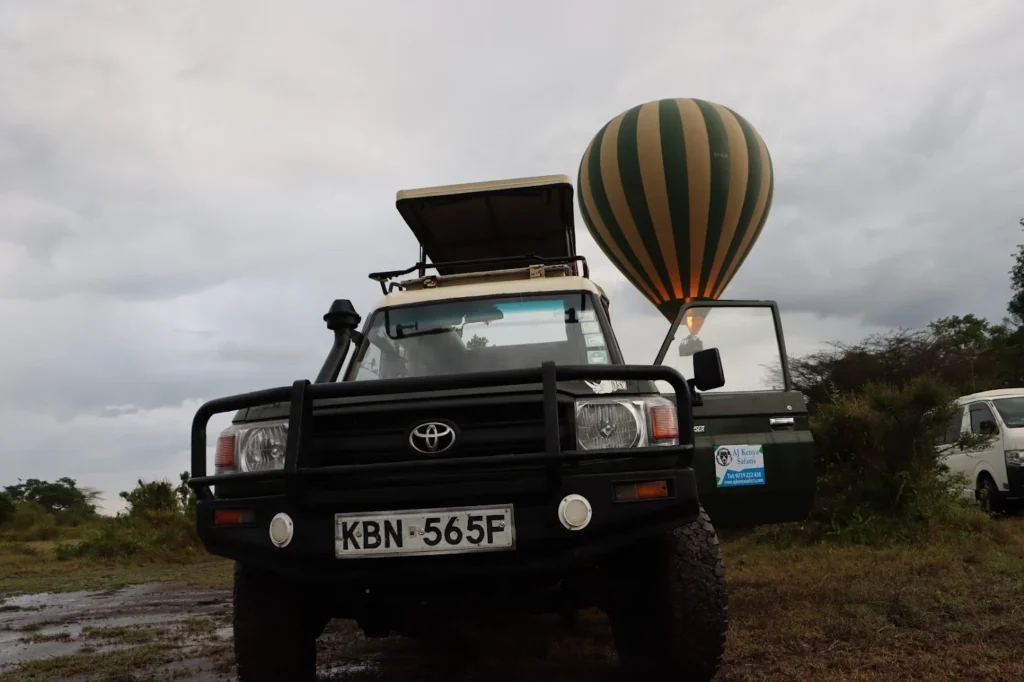
Ololaimutiek Gate (also spelled Oloolaimutia) sits on the southeastern boundary of the Masai Mara National Reserve, right next to Ololaimutiek Village. It’s the most popular gate among budget travellers and self-drive visitors. All-inclusive 5-day safaris routing through this gate range from KES 211,900 ($1,630) to KES 1,206,400 ($9,280) per person sharing. Regular-season fees are $100/day (January–June), peak season $200/day (July–December). The gate handles heavy vehicle volumes during peak months, especially between 6:30–7:30 AM when dozens of budget minivans rush the entry lanes. The terrain inside the gate is hillier and more rugged than most visitors expect.
Ololaimutiek Gate Safari Costs (2026/2027)
All-inclusive prices per person sharing, based on two people in a private 4×4 Land Cruiser. Regular season is January–June, peak season is July–December.
5-Day All-Inclusive Rates via Ololaimutiek Gate (Per Person Sharing)
Package Tier | Camps (Nakuru + Mara) | Regular Season (KES) | Peak Season (KES) |
Budget | Lake Nakuru Lodge / Miti Mingi Eco | KES 211,900 | KES 416,000 |
Mid-Range | Sarova Lion Hill / Mara Sopa Lodge | KES 250,900 | KES 481,000 |
Luxury | The Cliff Nakuru / Emayian Luxury Camp | KES 456,300 | KES 738,400 |
Luxury Plus | The Cliff Nakuru / Angama Mara | KES 768,300 | KES 1,206,400 |
Note: Regular season at $100/day park fees. Peak season at $200/day. For a luxury safari upgrade or flying packages, request a custom quote.
What’s Covered
- A private 4×4 Safari Land Cruiser for the full trip.
- A TRA-licensed guide experienced with the eastern sector and the ridge tracks inside the gate.
- All 2026 Mara reserve entry fees and Lake Nakuru fees. Mara fees paid at the gate (cash USD/KES, card, or M-Pesa). Pre-payment through KAPS office in Nairobi.
- One-way return flight from Keekorok or Siana Springs Airstrip to Nairobi Wilson via Masai Mara flying packages.
- Full board, 3 meals daily.
- AMREF Flying Doctors emergency air evacuation insurance.
What’s Excluded
- Kenya eTA (~$30).
- Tips (KES 3,000/day for guide).
- Alcohol and soft drinks.
- Hot air balloon ($450–$500).
- International flights.
Ololaimutiek is the busiest gate after Sekenani during peak season, but for a different reason. The concentration of budget camps right outside the gate means dozens of shared safari vans rush the entry lanes between 6:30 and 7:30 AM. If you’re in a private vehicle, you can avoid the crush entirely by arriving at 6 AM sharp or waiting until 8 AM when the fleet has cleared. The gate also provides the cheapest base for visiting the reserve, which is why it’s the first choice for budget-conscious travellers and self-drive visitors.
The 5-Day Itinerary
Day 1: Nairobi to Lake Nakuru
Early departure. Afternoon tracking black rhinos and flamingos at Nakuru. Stay at your selected lodge.
Day 2: Nakuru to Masai Mara via Ololaimutiek Gate
Ridge & Hill Element | Ololaimutiek Condition | Pro-Guide Tactical Tip |
Rocky Ridge Track | Climbs steeply right after clearing the gate barrier. | Maintain steady momentum and stay on elevated rock shoulders. |
Volcanic Soil Glaze | Wet weather turns the ridge surface into a slick trap. | Ensure your vehicle is actively engaged in low-range 4×4 gears. |
Oloolaimutia Hills | Rocky kopjes and olive thickets harbor secluded leopard territories. | Allocate your first tracking hour to search immediate gate valleys. |
Drive through the Rift Valley floor. The final stretch into Ololaimutiek is on the C12 dirt road from Narok. The road is rough and heavily trafficked by local Probox taxis and matatus that kick up blinding dust walls at high speed. Keep a 100-metre trailing distance behind local vehicles on the approach.
The moment you clear the gate barrier, the track climbs a steep, rocky ridge. This catches many drivers off guard because most other gates open onto flat ground. In wet weather, the volcanic surface turns into a slippery glaze that traps vehicles without low-range gears. Carry momentum up the hill and stay on the elevated rock shoulders where root systems give traction.
Once you crest the ridge, the Oloolaimutia Hills open up. Most vehicles blast straight through toward the central plains, which is a mistake. The rocky kopjes and wild olive thickets within the first 2 kilometres of the gate hold leopard territory that sees almost no traffic. I had a family from Mumbai last August who wanted to skip the hills and head straight for the Mara River. I asked them for one hour. We found a female leopard draped across a granite boulder 800 metres from the gatehouse, completely alone, no other vehicle in sight. They watched her for 25 minutes before she dropped off the rock and disappeared into the olive scrub. The family told me later it was their best sighting of the trip, and it happened before they’d driven 10 minutes from the gate.
Day 3–4: Full Days in the Reserve
Two full days of game drives. From Ololaimutiek you need to drive 30–45 minutes inside the reserve to reach the areas where the big cats concentrate — the Musiara sector, the Topi Plains, and the Mara River corridors. The eastern sector near the gate provides rolling hills, elevated viewpoints, and a natural mineral salt lick southwest of the gatehouse where elephant herds gather in the early morning mist.
Be aware that cattle from nearby Maasai homesteads graze inside the reserve boundaries near the gate, especially in the early morning. Wildlife avoids areas where cattle are present, so your guide needs to push past the grazing zone into the deeper valleys.
If your camp has conservancy access, add a night drive and a walking safari.
Day 5: Departure
Be at the gate by 9:30 AM. The 12-hour ticket system charges an extra full day if you exit late. If you get stuck behind a stalled vehicle on the steep ridge track near the gate, that 15-minute delay can cost $400 for a couple. Keekorok Airstrip and Siana Springs Airstrip are both 30–45 minutes away. Fly back to Nairobi via Masai Mara flying packages.
The Ololaimutiek Gate
Gate & Village Metric | Ololaimutiek Reality | Actionable Field Advice |
Morning Bottleneck | Heavy fleets of budget minivans crowd entry lanes from 6:30–7:30 AM. | Pass through at 6:00 AM sharp or wait until 8:00 AM to clear. |
Cellular Signal Drops | Low basin topography weakens network card payment terminal processing. | Pre-validate permits early or take offline QR code screenshots. |
Curio Vendor Strategy | Persistent sellers offer “free gifts” that turn into cash demands. | Keep windows up at checkpoints; browse village markets later. |
Ololaimutiek handles more budget safari vehicles than any other gate in the reserve. Dozens of tented camps have sprung up in the village right outside the boundary — many charging $60–$80 per night full board on limited infrastructure. Generators typically run only between 5–6:30 AM and 6:45–10 PM. If you have a hot air balloon safari booked for 4:15 AM, you’ll be finding your gear in complete darkness. Keep a headlamp in your daypack.
The village sits directly at the gate. Ololaimutiek is a functioning Maasai trading centre with shops, kiosks, and a strong local presence. One advantage is that cultural visits are walking distance — you can cross the road from your camp to visit an authentic community boma without arranging a vehicle transfer.
The curio vendor approach at this gate is more persistent than at other entry points. While your driver processes entry paperwork, vendors may approach the vehicle and offer beaded bracelets as “free welcome gifts.” Once accepted, the tone changes and a firm cash demand follows. Keep your windows up while stationary at the checkpoint and handle any shopping inside the village market afterwards.
Card machines at Ololaimutiek are less reliable than at Sekenani or Talek because the gate sits low in a basin surrounded by hills that weaken the cell signal. Pre-validate your entry permit before arriving. If you need to pay on-site, M-Pesa or USD cash handles the transaction more reliably than a credit card. Take an offline screenshot of your KAPS QR code while you still have signal on the Narok highway. A Masai Mara booking through a registered operator handles all of this.
Mara Sopa Lodge sits on the Oloolaimutia Hills and is the largest established property in the area with 99 rooms. Its hilltop position gives excellent panoramic views, but it’s further from the gate than it appears on maps — add 20 minutes of steep driving time to your morning reserve entry.
Before You Arrive at Ololaimutiek

- If you want to miss the 6:30–7:30 AM minivan bottleneck, arrive at 6 AM sharp or wait until 8 AM when the entry lanes are empty.
- Budget 5–6 hours from Nairobi on the C12 approach road from Narok. It’s rough and dusty, and in the rainy season multiple sources describe Ololaimutiek’s approach as the worst of any gate. A 4×4 is essential.
- Ololaimutiek is 30–45 minutes from the prime cat territory near Musiara and the Mara River. If migration crossings are your priority, Musiara or Oloololo Gate give faster access.
- There’s a natural mineral salt lick in the valley southwest of the gatehouse. Elephant herds gather there in the early morning mist before moving into the central plains.
- Mara View Point Restaurant in the village outside the gate serves authentic nyama choma and ugali. It’s where off-duty guides eat when they want a break from camp food.
- Pay in USD by card or cash for the best exchange rate. The gate’s internal KES conversion uses an unfavourable rate. M-Pesa works more reliably than credit cards here because the basin weakens cell signal.
- Check your operator on the KATO directory before paying a deposit. At Ololaimutiek, budget operators with limited experience are common, and a guide who doesn’t know the ridge tracks can cost you a stuck vehicle and a missed morning.
Frequently Asked Questions
Where is Ololaimutiek Gate?
Southeastern boundary of the reserve, directly alongside Ololaimutiek Village. It’s the easternmost entry point into the Narok County sector.
What are the 2026 fees?
Non-residents pay $100/day (January–June) and $200/day (July–December). Children 9–17 pay $50 year-round. Under 9 free.
Can I pay cash at Ololaimutiek Gate?
Yes. Cash (USD or KES), card, and M-Pesa are all accepted. USD cash or M-Pesa is the most dependable option here.
Is a 4×4 mandatory?
A 4×4 with low-range gears is strongly recommended. The steep ridge track inside the gate and the rough C12 approach road will trap standard minivans in wet weather.
Is Ololaimutiek far from the Mara River?
Yes. The Mara River and the prime crossing points are 30–45 minutes away by road. If migration river crossings are your priority, Musiara Gate or Oloololo Gate provide faster access. See our Masai Mara migration page and wildebeest migration guide.
What’s the closest airstrip?
Keekorok and Siana Springs, both about a 30–45 minute drive that doubles as a game drive.
What Ololaimutiek Gate Gives You
Ololaimutiek is where the reserve meets the village. Livestock and wildlife share the same ground within sight of the gatehouse, and the Maasai community lives right at the boundary rather than at a comfortable tourist distance. The camps outside the gate are basic but they work. The hills inside hold wildlife that the central-plains crowd drives straight past every morning. Ololaimutiek has its complications, but for travellers on a budget who want the Mara without the premium price tag, this is where most safaris start.
Our 3-day and 4-day trips work well from Ololaimutiek. The 5-day adds Nakuru. The 6-day Amboseli circuit adds Kilimanjaro views. The Mara-Amboseli-Nakuru loop covers all three. Browse everything on our Masai Mara packages page.
Fill out our booking form at Masaimara.co.ke below here and tell us your dates.
This guide was authored by David Njunge, a TRA-licensed safari guide with over 10 years of experience, and edited by Cecilia Wambui, a travel consultant with a degree in Tourism and Hospitality Management.
Related Reading:
- Masai Mara Entrance Gates
- Sekenani Gate
- Best Time to Visit Masai Mara
- Wildebeest Migration Kenya
- Masai Mara Migration
- Lions in Masai Mara
- Leopards in Masai Mara
- Elephants in Masai Mara
- Rhinos in Masai Mara
- Birding Safari Masai Mara
- Photography Safari Masai Mara
- Walking Safaris Masai Mara
- Night Game Drive Masai Mara
- All Inclusive Masai Mara Safari
- Masai Mara Amboseli Nakuru Safari
- 6 Days Masai Mara Amboseli Safari
- 5 Days Masai Mara Safari
- 4 Days Masai Mara Safari
- 3 Days Masai Mara Safari
- Luxury Safari Masai Mara
- Masai Mara Packages
- Masai Mara Flying Packages
- Masai Mara Booking
- Official KWS Park Fee Portal
- Kenya Wildlife Service
Welcome to Masaimara.co.ke
Thank you for visiting us! We're excited to help you plan an unforgettable safari adventure across Kenya.