
How to Get to Masai Mara: The Honest 2026 Guide
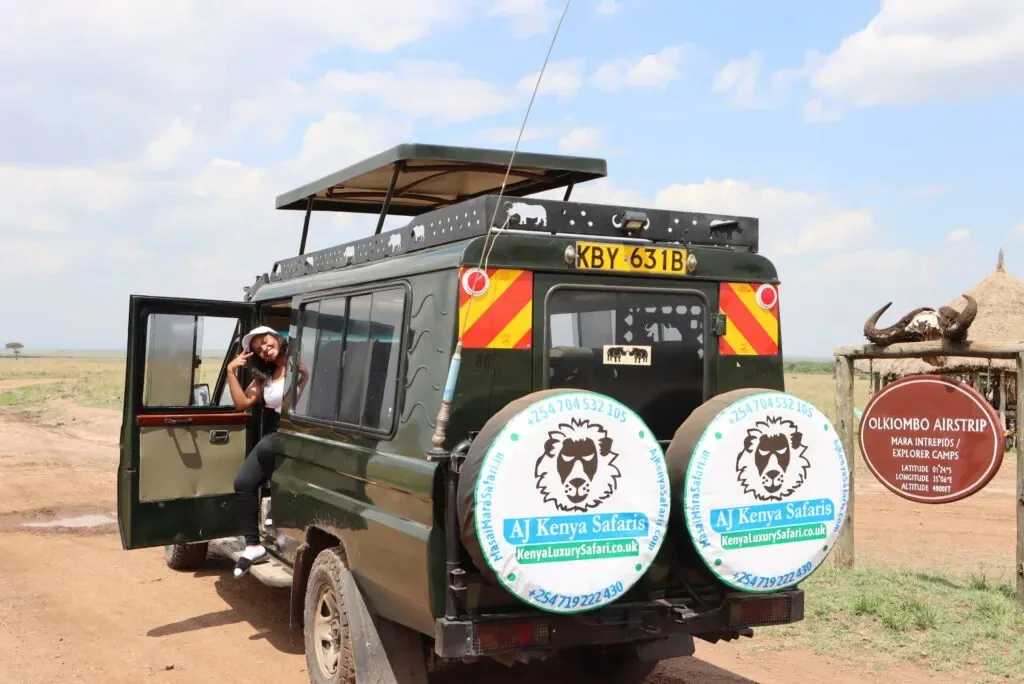
There are two ways to reach the Masai Mara from Nairobi: drive or fly. The drive takes 5 to 7 hours and costs less, but the last stretch is rough unpaved road and the journey eats into game-drive time. The flight takes 45 minutes from Wilson Airport and has strict luggage limits. Which one makes sense depends on how long the safari is and what the budget allows. This guide covers both routes, what each costs, and the practical details that booking platforms leave out.
What This Guide Covers
Driving from Nairobi
The standard route follows the A104 highway west from Nairobi, connecting to the B3 through the Great Rift Valley, then the C12 or C13 from Narok town to the reserve gates. The first section is paved, with the Rift Valley viewpoint about two hours out as the usual photo stop. Narok town is roughly the halfway point.
After Narok, the road splits. The C12 goes south to the eastern gates: Sekenani, Talek, and Oloolaimutia. This is the more common route and is accessible to standard safari vehicles, though heavily corrugated. The C13 goes toward the western gates: Musiara, Oloololo, and the Mara Triangle. The C13 is rougher and needs a proper 4×4. Google Maps sometimes suggests the old C11 from Narok to Sekenani — avoid it. It’s badly eroded and damages vehicles.
The final 75 to 100 kilometres from Narok to the gates are unpaved, dusty, and slow. This section adds 2 to 3 hours to the journey and is the part that surprises guests who expected a smooth ride after the tarmac. The fine volcanic dust gets into everything. Wrapping luggage in heavy-duty bin bags before leaving Narok keeps clothes and camera gear clean.
Narok is the last reliable fuel stop. After Narok there are no branded stations. Fill up before leaving town.
Avoiding the escarpment traffic
Route Option | 2026 Key Benefit & Risk |
Ngong-Suswa Route | Skips escarpment truck gridlock entirely. Avoid during March-April flash floods. |
Southern Bypass | Saves 45 to 60 minutes if departing directly from JKIA/Southern Nairobi. |
Standard B3 Highway | Must leave Nairobi by 4:30 AM to clear the steep pass before freight convoys. |
The traditional B3 highway drops down the Mai Mahiu escarpment, which is a narrow, steep freight corridor. If a truck stalls on the incline, the entire pass can gridlock for hours. Two alternatives avoid this risk:
The Ngong-Suswa route exits Nairobi via the Southern Bypass, passes Karen, and drops down the back of the Ngong Hills onto the Rift Valley floor. It adds about 20 kilometres but skips the truck traffic entirely. During the March-April long rains, flash flooding across the Kedong Ranch plains can close this route. Check conditions before committing to it.
The Southern Bypass from JKIA saves 45 minutes to an hour for guests departing from the airport or southern Nairobi by connecting directly to the A104 at Kikuyu town, cutting out central Nairobi traffic.
If taking the main B3, leave Nairobi by 4:30 AM to clear the escarpment before the commercial freight convoys start their climb.
Drive costs
A seat in a shared safari vehicle runs $50 to $150 one-way, while a private transfer with a driver-guide costs $200 to $300. Self-drive is possible but not recommended for first-time visitors — navigation apps work on the tarmac but the final tracks need local knowledge, and as of June 2024, self-drive vehicles are banned east of the Mara River inside the reserve.
The train doesn’t reach the Mara
Some booking platforms market the Nairobi-to-Naivasha SGR train as a shortcut. The line ends at Suswa Station, which is still 180 kilometres of unpaved road from the reserve gates. There’s no public transport, no taxi rank, and weak phone signal at Suswa. An operator would need to drive an empty vehicle from Nairobi to meet the train, which cancels any cost saving.

Flying from Wilson Airport
All scheduled Mara flights depart from Wilson Airport in the Langata area of Nairobi, not from Jomo Kenyatta International. The two airports are 20 to 45 minutes apart by road. Guests connecting from international flights need to allow 3 to 4 hours between landing at JKIA and departing from Wilson for the transfer and check-in.
Wilson Airport has separate terminals for different airlines. Safarilink and AirKenya operate from their own buildings with private security and check-in. Telling the taxi driver “Wilson Airport” without specifying the airline terminal can mean being dropped at the wrong building. Always name the airline.
How the flights work
The flights work like a local bus route. A single Cessna Grand Caravan takes off from Wilson and touches down at 2 or 3 Mara airstrips along the way, dropping off and picking up passengers at each one — Ol Kiombo, Keekorok, Mara North, Musiara, Ol Seki, Kichwa Tembo. Direct flights take 45 minutes. With stops, allow 75 minutes.
When the aircraft lands, a camp guide is already waiting with a vehicle. That 20-to-30-minute drive from the strip to the camp passes through active wildlife territory, so keep cameras ready. Some guests see their first lions or elephants before they’ve checked in.
Confirm which airstrip is assigned to the camp before booking. The Mara has over ten strips and landing at the wrong one means a long overland transfer.
Luggage
Each passenger gets 15 kg in a soft-sided duffel bag, and that includes hand luggage and camera gear. Hard suitcases are denied at the tarmac — guests who bring rigid bags have their clothes stripped out into a canvas sack while the suitcase stays in a Wilson storage locker. Excess baggage can be pre-purchased from the airline at roughly $50 for 10 kg or $80 for 20 kg, which is cheaper than paying at the gate.
Flight costs
One-way fares range from about $150 (Fly ALS) to $550 (AirKenya or Safarilink during peak migration). Prices increase during July to October. Book ahead for peak months — the small aircraft fill quickly. Arrive at Wilson one hour before departure. At bush airstrips for the return flight, 30 minutes is enough.
Morning vs afternoon
Morning flights at 8 AM or 10:30 AM get guests to the Mara in time for a full afternoon game drive. Arriving on the 2 PM flight means limited daylight and a short evening at best. For the return, leaving early allows a dawn drive before departure, while the afternoon slot lets guests fit in a final morning drive but means a longer wait at the airstrip.
Which Route to Choose
Trip Duration | Recommended Travel Mode |
3 Days or Fewer | Fly Both Ways: Saves 10 to 14 hours of grueling unpaved road travel. |
4 Days | Fly (Highly Recommended): Maximizes limited field time for game tracking. |
5 Days or More | Drive One Way, Fly Back: Experience local rangeland scenery, then skip the return dust. |
Three days or fewer, fly. The road eats 10 to 14 hours of total travel time across the trip, and every hour on the road is an hour lost in the bush.
A 5-day safari gives enough time for either. What I recommend when the budget allows it is driving one way and flying the other. After Narok, the tarmac ends and the landscape opens into rangeland — Maasai homesteads along the road, cattle and goats crossing in front of the vehicle, dust rising behind the tyres. That transition is part of the experience, and it’s why some guests choose to drive even when they could afford to fly both ways. Flying the return saves the second road day without losing the scenery.
With 4 days, flying is still the stronger option because every hour in the field counts. For Amboseli alongside the Mara, the 6-day circuit or three-park loop usually involves driving to the Mara and flying out, or vice versa.
One practical note if driving: skip the Rift Valley viewpoint souvenir shops. Stop for the photograph, take five minutes, and keep moving. Spending 30 minutes browsing woodcarvings lets the freight trucks get ahead on the escarpment, and the next three hours are spent behind diesel exhaust on a single-lane pass.
Send us your dates and we’ll recommend the route based on the trip length and budget. The flying packages page has the current flight schedules. Everything is on the packages page or the booking page.
Questions Guests Ask
How long is the drive from Nairobi?
5 to 7 hours depending on the gate, traffic, and road conditions. The tarmac portion takes 3 to 4 hours. The unpaved section from Narok adds 2 to 3 hours.
Which gate should I use?
Sekenani is the closest to Nairobi and the most common entry point. Talek is slightly farther but closer to the Musiara area where the big cat density is highest. The gates guide covers each one. The conservancy guide explains how the conservancy access differs from the reserve.
How much does a flight cost?
$150 to $550 one-way depending on the airline and season. Current schedules and fares are here.
Can I take the train?
No. The SGR ends 180 km short of the Mara with no onward transport. Details are in the driving section above.
Is the road safe?
The tarmac portion is a standard Kenyan highway. The unpaved section is rough but not dangerous with a competent driver in a 4×4. Rain during April-May makes the black cotton soil sections impassable for 2WD vehicles. A luxury safari package includes the vehicle and guide. The migration guide and wildebeest migration page cover how timing affects the journey.
This guide was authored by David Njunge, a TRA-licensed safari guide with over 10 years of experience, and edited by Cecilia Wambui, a travel consultant with a degree in Tourism and Hospitality Management.
Related Reading:
- Best Time to Visit Masai Mara
- Wildebeest Migration Kenya
- Masai Mara Migration
- All Inclusive Masai Mara Safari
- Masai Mara Amboseli Nakuru Safari
- 6 Days Masai Mara Amboseli Safari
- 5 Days Masai Mara Safari
- 4 Days Masai Mara Safari
- 3 Days Masai Mara Safari
- Luxury Safari Masai Mara
- Masai Mara Packages
- Masai Mara Flying Packages
Welcome to Masaimara.co.ke
Thank you for visiting us! We're excited to help you plan an unforgettable safari adventure across Kenya.