
Mara Explorer Camp: Riverfront Tents, Rates & 2027 Safari Guide
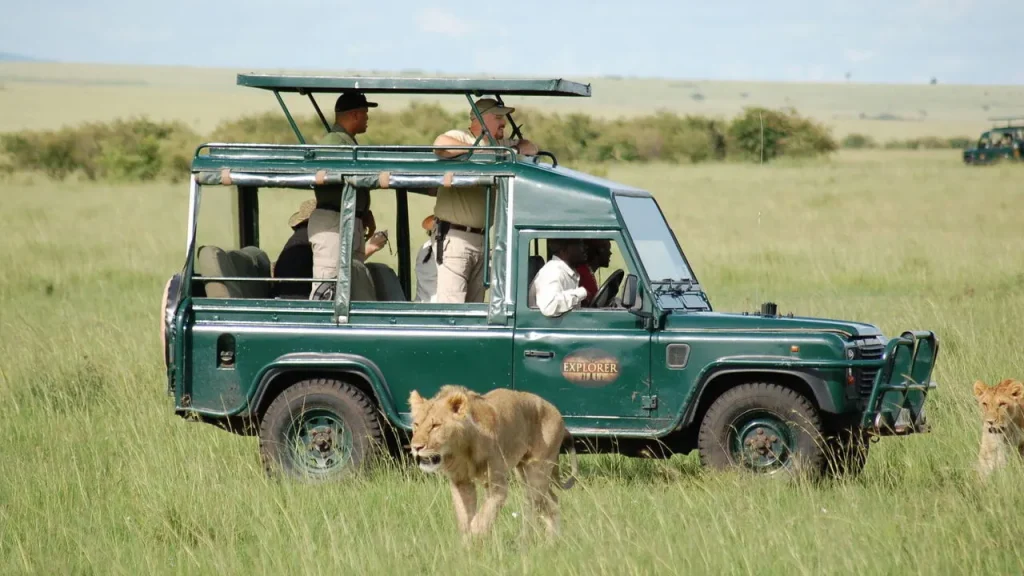
Mara Explorer is a 10-tent Heritage Hotels camp on a bend of the Talek River, inside the Masai Mara National Reserve. Not a conservancy — the actual reserve. You wake up inside. No gate.
The camp sits three minutes from Ol Kiombo airstrip. Rates run USD 850-1,500 per night depending on season. Full board, house drinks, laundry, airstrip transfers included. Park fees separate.
What everyone talks about: the Victorian claw-foot bathtubs on private outdoor decks. What fewer people mention: the hot water comes from a wood-fired kuni booster that your butler has to stoke manually. Ask 30 minutes ahead or you’re getting a lukewarm soak.
Packages

3-Night All-Inclusive Flying Safari Packages
Mara Explorer operates primarily on a luxury all-inclusive flying model out of Nairobi’s Wilson Airport. The table below breaks down current 2027 per-person package pricing alongside core seasonal highlights:
Season & Months | Price (Per Person) | Package Inclusions | Key Season Highlight |
Low Season (Nov–Dec, Apr–Jun) | USD 3,550 | Return Nairobi flights, 3 nights full board, house drinks, 3 daily drives, park fees | Quiet camp, green landscapes, low crowds |
High Season (Jan–Mar) | USD 4,450 | Return Nairobi flights, 3 nights full board, house drinks, 3 daily drives, park fees | Dry weather, excellent big cat tracking |
Peak Season (Jul–Oct) | USD 5,500 | Return Nairobi flights, 3 nights full board, house drinks, 3 daily drives, park fees | Great Migration & Talek River crossings |
4-day/3-night flying safari from Nairobi. Per person, two travelers.
Covered: Return flights Wilson to Ol Kiombo, airstrip transfers, 3 nights full board, house drinks (beer, wine, sodas), three game drives daily, laundry, park fees.
Not covered: Kenya eTA (USD 34), balloon safari (USD 585), tips (USD 15-20/day), premium spirits, bush meals.
Season | Price/Person | |
Low (Nov-Dec, Apr-Jun) | USD 3,550 | |
High (Jan-Mar) | USD 4,450 | |
Peak (Jul-Oct) | USD 5,500 |
These are premium rates. If the budget doesn’t stretch, Mara Intrepids next door runs lower and you can still walk over to Explorer’s bar. Or Keekorok Lodge is also inside the reserve.
Which Tent Matters
Ten tents total. Seven with queen beds, three twins. Each about 36 square meters on raised wooden platforms facing the river.
Tent 4 gets the most hippo action — the pod surfaces maybe ten meters from your deck. But that’s a tradeoff. Those hippos grunt and splash all night. If you’re a light sleeper, you’ll hear them clearly through the canvas.
Tent 7 came up in a conversation with a returning guest as the privacy pick. Set deeper into the vegetation, feels more enclosed.
Tents 1-7 generally sit more tucked into the bush cover. The remaining tents feel more open to the sky. Depends what you want — some guests prefer the canopy feeling, others want unobstructed stars.
Tents 1 or 2 if mobility is a concern. Shortest walk to the main mess area. At night the paths are dim (intentionally, to preserve darkness), and while a Maasai guard escorts you, shorter is easier.
Tents 9 or 10 for maximum isolation. Deepest into the river bend. Quietest. But you’re looking at a five-minute walk in near-darkness each way.
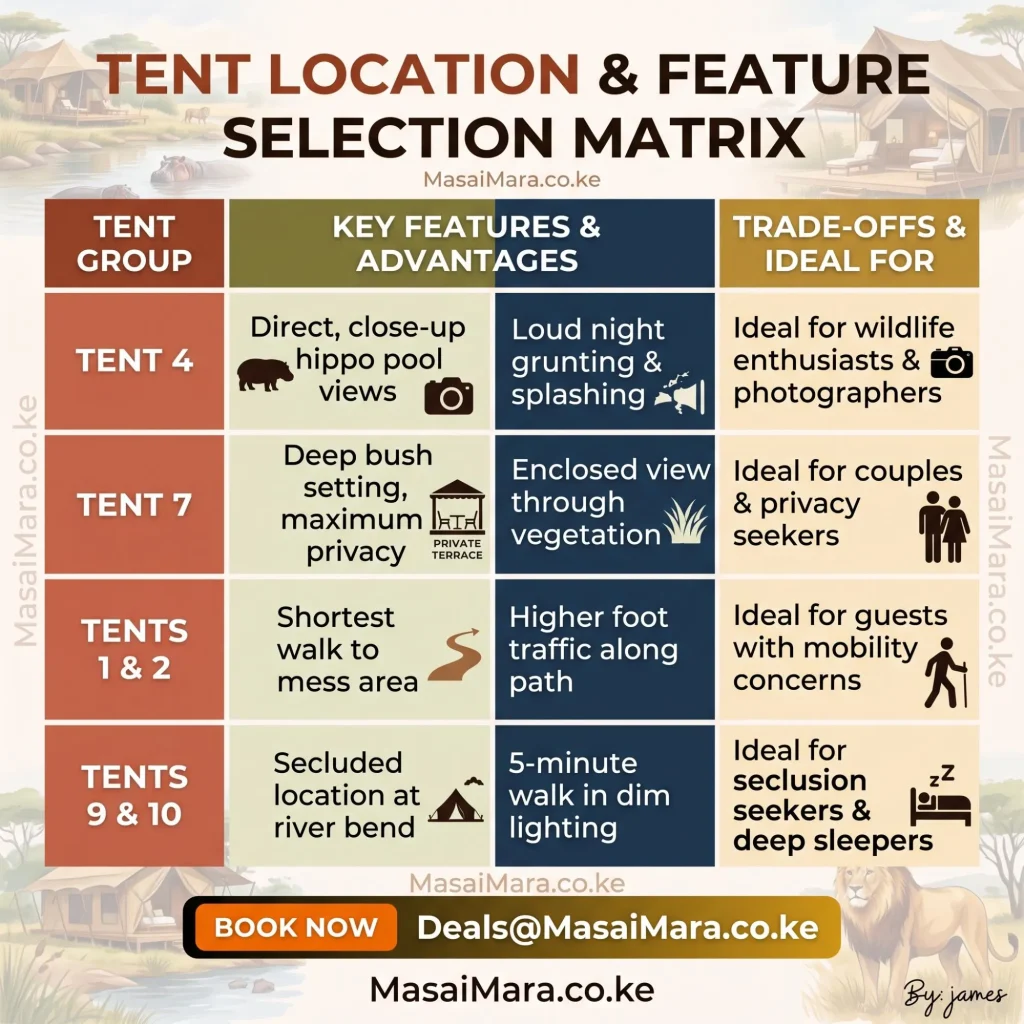
Tent Location & Feature Selection Matrix
Every tent at Mara Explorer sits on raised wooden decking along the Talek River, but individual placement heavily influences your privacy, walk times, and noise levels. Use this quick comparison matrix to pick your ideal tent group:
Tent Number(s) | Standout Feature | Key Trade-Off / Impact | Ideal For |
Tent 4 | Direct, close-up hippo pool views | Loud night grunting & splashing | Wildlife enthusiasts & photographers |
Tent 7 | Deep bush setting, maximum privacy | Enclosed view through vegetation | Couples & privacy seekers |
Tents 1 & 2 | Shortest walk to mess area | Higher foot traffic along path | Guests with mobility concerns |
Tents 9 & 10 | Secluded location at river bend | 5-minute walk in dim lighting | Seclusion seekers & deep sleepers |
About the mattresses
The beds here run firm. Quite firm. If that bothers you, ask the camp in advance about extra padding or blankets layered under the sheet. It’s a simple fix but you need to request it — they won’t assume.
The Kuni Booster Situation
Hot water isn’t automated. Each tent has a wood-fired kuni booster that your butler stokes manually.
If you want a hot shower first thing in the morning or decide you need an unscheduled mid-day bath, tell your butler at least 30 minutes beforehand. Otherwise you’ll be testing your tolerance for lukewarm.
Electricity runs mainly mornings and evenings — not 24 hours. Plan your device charging accordingly. There’s a radio handset in the tent if you need anything urgently, and mobile signal works in parts of the camp.
The Bathtub (What Actually Happens)
Every tent has a Victorian claw-foot tub on the outdoor deck. Hippos visible below while you soak, assuming you timed the hot water right.
The tub takes about 20 minutes to fill. On the afternoon you arrive, before your first drive, tell your butler you’ll want the tub ready when you return. That way you’re not standing on the deck watching the light fade while water trickles in.
One tip that makes the experience better: ask for a bush breakfast instead of returning to camp between the two morning drives. You can essentially merge them into one longer wildlife session, eat out on the plains, and come back mid-morning for the tub and a rest before the afternoon drive. Works better than rushing back and forth.
Using Mara Intrepids Facilities
Mara Explorer doesn’t have a swimming pool. But there’s a suspension bridge connecting the two Heritage camps.
Here’s the arrangement: Intrepids guests can’t cross over to Explorer (keeps the smaller camp quiet), but Explorer guests can cross to Intrepids and use their pool. Staff will actually drive you over if you prefer not to walk. It functions like having an off-site pool rather than just a vague “sister camp” thing.
Intrepids also has the medical clinic if anything comes up. So you get the intimacy of the 10-tent camp with backup infrastructure next door.
Three Drives Daily
Most Mara camps run two game drives. Heritage does three — early morning, mid-morning around 10:30, and afternoon.
That mid-morning slot catches cats when they’re moving between shade and water. By then, guests from other camps are back at their lodges napping. You’re out watching a leopard work the riverbank with fewer vehicles around.
Our guide Dennis has a gift for reading animal behavior before it happens. He’ll position the vehicle somewhere specific and wait. Twenty minutes later, a cheetah walks into frame. I don’t know how he does it but he’s been right more often than chance would explain.
Simon tracks the Talek Pride closely — they essentially treat the camp’s backyard as their territory. Raphael follows a particular female leopard who uses the fig trees across the river as a nursery. He’s watched her raise cubs there over multiple seasons.
The Baboon Problem
Olive baboons treat the canvas tent roofs like trampolines. They won’t come inside if you’re there, but they will absolutely investigate an unzipped tent while you’re at breakfast.
Zip your tent closed. Every time. Even if you’re just walking to the mess area for twenty minutes. The staff won’t say this on arrival because it sounds unwelcoming, but it’s real.
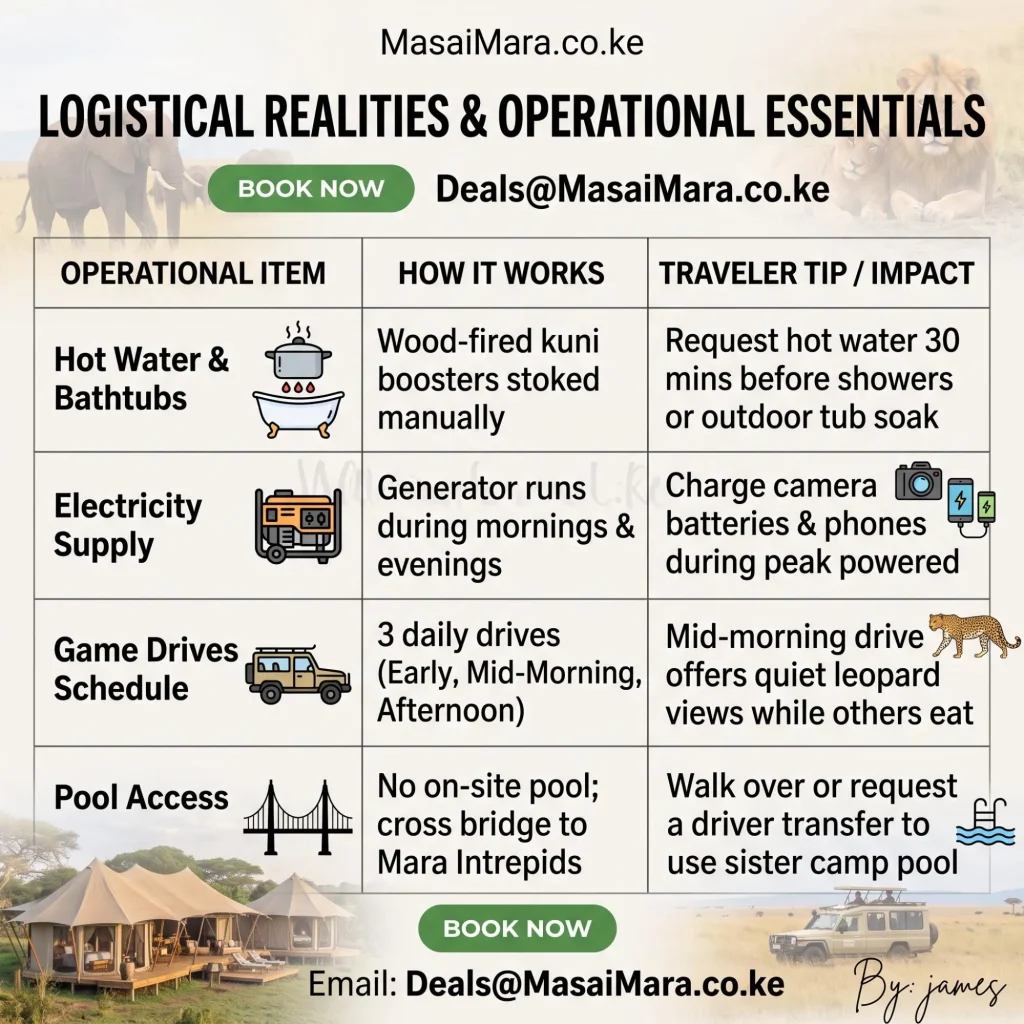
Logistical Realities & Operational Essentials
Staying inside a remote national reserve means adapting to unique camp operations. Here is a quick breakdown of essential daily logistics to know before arriving at Mara Explorer:
Operational Item | How It Works | Traveler Tip / Impact |
Hot Water & Bathtubs | Wood-fired kuni boosters stoked manually | Request hot water 30 mins before showers or outdoor tub soak |
Electricity Supply | Generator runs during mornings & evenings | Charge camera batteries & phones during peak powered hours |
Game Drives Schedule | 3 daily drives (Early, Mid-Morning, Afternoon) | Mid-morning drive offers quiet leopard views while others eat |
Pool Access | No on-site pool; cross bridge to Mara Intrepids | Walk over or request a driver transfer to use sister camp pool |
People Who Make the Camp Work
Look for Noor in the dining area. He reads tables well — knows when a couple wants privacy versus when a group wants to swap leopard stories. Geoffrey runs things smoothly at the fire pit after drives. Jonathan shares Maasai perspective during evening conversations, and it’s the kind of first-hand context you don’t get from a prepared cultural talk.
In the kitchen, Josephat and Stephen handle the cooking. Chef Shedrak runs the operation and adapts well to dietary restrictions — vegan, gluten-free, whatever. It’s not treated as an afterthought. They’ll build you a full multi-course menu.
Other names that come up: Nelson, Dominic, Joshua, Ezekiel, Ana, John Lelo. The staff is stable here. Many have been at the camp for years, which shows.
On drives, Dennis and Lawrence handle most guests. Both have the knowledge and the patience. Michael and Kennyrojers (yes, like the singer) also guide.
Park Fees and the Airstrip
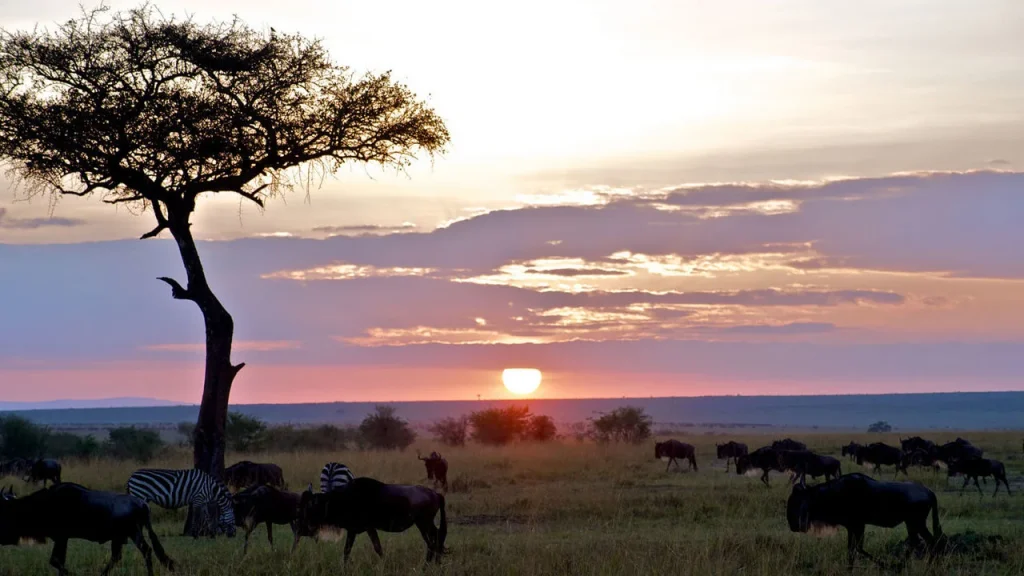
Mara Explorer is located deep inside the Masai Mara National Reserve, which is managed by the Narok County Government (not the Kenya Wildlife Service/KWS).
Non-resident entry fees are USD 100 per adult per day (January through June) and USD 200 per adult per day (July through December). Because the Narok County ticketing portal can experience downtime and mobile signal at Ol Kiombo airstrip is often weak, trying to pay by card upon landing can result in frustrating delays.
When you book a package through Masaimara.co.ke, we completely bypass this by prepaying your Narok County reserve tickets in advance, allowing you to step off the plane and immediately begin your game drive.
Odds and Ends
The mess area has board games and puzzles if you want a quiet afternoon activity.
Staff check your flight timing with the airline so you’re not sitting at the airstrip for hours waiting. Small thing, but it matters when you’re tired.
Ask for a hot water bottle at turndown if nights feel cold. The staff will slip one into your bed — it’s the kind of small comfort that makes a canvas tent in the bush feel luxurious.
The Name Confusion
Mara Explorer (Heritage Hotels) and Mara Expedition (Great Plains Conservation) are different camps, different companies, different locations.
Travel agents mix them up regularly. Make sure your confirmation says Explorer with Heritage, not Expedition with Great Plains. The airstrips are different. Showing up at the wrong one means a long drive to sort it out.
Who Should Book This
The outdoor bathtubs and intimate size attract couples wanting luxury without the 30-tent mega-camp atmosphere. The three daily drives matter if you’re serious about wildlife. Being inside the reserve means you wake up in the Mara without passing through a gate.
It doesn’t suit everyone. No night drives (reserve rules). No off-road driving. If you want those, you need a conservancy camp like Olare Mara Kempinski. If you want the big Mara River crossings during migration, Sala’s Camp puts you closer to those.
Children under 12 often aren’t allowed — check with the camp on current policy.
When to Go
July through October: Migration peaks. Wildebeest cross the Talek near camp — smaller crossings than the famous Mara River ones, but dramatically fewer vehicles watching. Highest demand, highest rates.
November-December, April-June: Green season. Cats are resident year-round. Lower rates.
January-March: Dry. Good weather. Moderate pricing.
Common Questions
Is Mara Explorer inside the reserve or a conservancy? Inside the Masai Mara National Reserve. Managed by Narok County, not KWS. No gate to enter — you’re already inside.
Does the camp have a pool? No pool on site. But you can cross the suspension bridge to Mara Intrepids and use theirs.
What’s the outdoor bathtub situation? Victorian claw-foot tub on each tent’s private deck. Hot water from a wood-fired booster — give your butler 30 minutes notice.
Which tent has the best hippo view? Tent 4. But it’s also the noisiest at night.
Plan Your Mara Explorer Safari
Because Mara Explorer has only 10 tents, peak migration months (July–October) often book out well in advance. Tell us your travel dates and whether you are flying out of Nairobi Wilson or the Kenya coast. Our team at Sekenani Gate will check live availability with Heritage Hotels and send you a fully itemized quote, including your Ol Kiombo bush flights, private transfers, and prepaid Narok County park fees.
- Email: [email protected]
- WhatsApp: +254 180 297 751
- Online Booking: Get a Quote
Official Resources:
Written by David Njunge, TRA-licensed safari guide with over 10 years in the Masai Mara. Edited by Cess Wambui, travel consultant, BSc Tourism and Hospitality Management. Verified for the 2027 season.
Welcome to Masaimara.co.ke
Thank you for visiting us! We're excited to help you plan an unforgettable safari adventure across Kenya.