
Elewana Elephant Pepper Camp: The 2027 Guide
Elephant Pepper Camp at a glance
Elewana Elephant Pepper Camp is a ten-tent camp under the trees in the Mara North Conservancy. Night drives, walking safaris and off-road driving are allowed, the food is excellent, and 2027 rates run from about USD 1,050 per person a night.
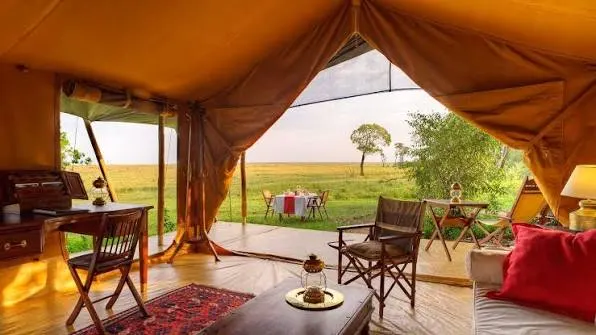
Elewana Elephant Pepper Camp sits under a canopy of trees in the Mara North Conservancy, with ten tents spread through a shady woodland that feels quite different from camps out on open grassland. The camp is small, the setting is intimate, and the bush starts at your doorstep.
A Woodland Camp With Wildlife Living In It

Eight standard tents and two suites are spread through the trees, linked by sandy paths. The woodland screens each tent from its neighbours without walls or hedges. You hear birds all day, and hyrax live in the rocks around the main area.
The two suites are not the same, so book the right one. The Honeymoon Suite has a bigger private lounge, sits on its own at the edge of camp, and can have dinner set up just for the two of you. The Family Suite has two en-suite bedrooms joined by a shared living and dining veranda. Ask for them when you book, because they go first.
The camp is unfenced. An armed escort walks you to dinner and back after dark, and on any night there might be an elephant standing a few metres from the path. The first time it happens, your heart rate goes up. By the third night you just say goodnight to the escort and walk a little slower.
No food or tea is kept in the tents, because the monkeys and baboons know exactly where to look. Leave a zip open and they will be inside within minutes. Keep everything closed and anything tempting out of sight.
|
Tent |
How many |
Best for |
|
Standard tent |
8 |
Couples and friends |
|
Honeymoon Suite |
1 |
Couples who want privacy and private dining |
|
Family Suite, two en-suite bedrooms |
1 |
Families with children |
Walking Safaris Are The Standout Activity Here
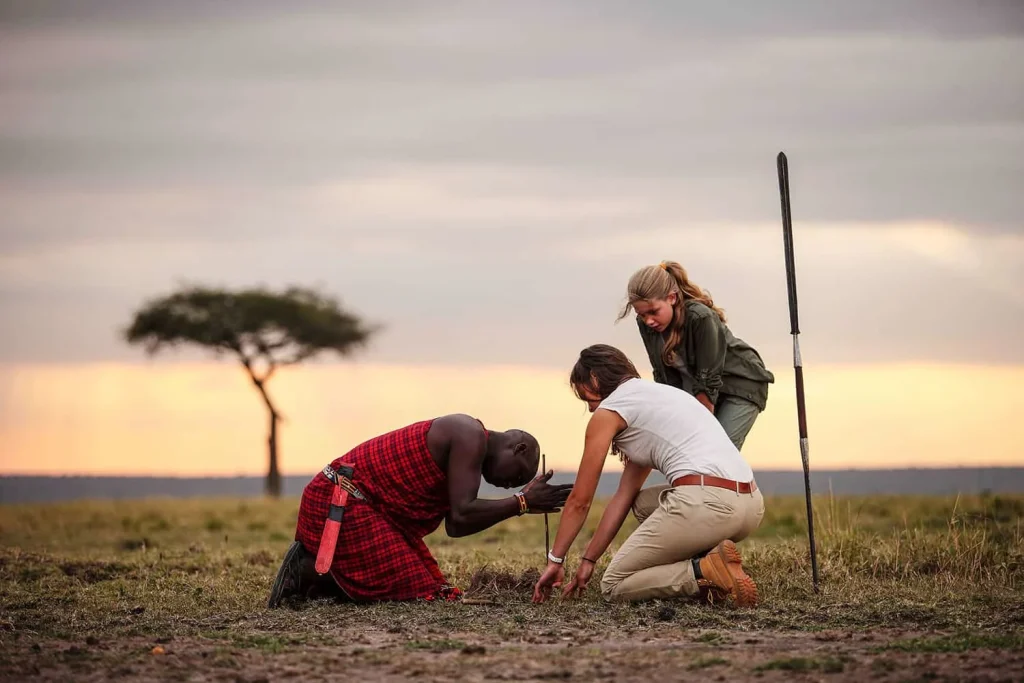
An armed ranger leads the walk while a safari vehicle follows at a distance as backup. You do not see the vehicle unless you turn round, and after ten minutes you forget it is there.
On foot, the animals behave differently. Zebras watch you more warily. Giraffes keep their distance. You start noticing what the vehicle drives past: fresh tracks in the mud, termite mounds, and the alarm call that means a predator is close compared with the one that means you have walked too near a nest. It is a completely different way to see the Mara, and on a three-night stay I would do it at least once.
The walks usually go out early in the morning, when the air is cool and the light is soft. The pace is slow and nobody rushes.
A note on age: for safety, walking safaris in Mara North are for guests aged 12 and over. Families with younger children can ask for a short nature walk on the paths around camp with an armed guide instead. Our walking safari guide has more on what to expect.
The Food And The Quiet
The Food Outperforms The Price
This is not the most expensive camp in the Mara, but the kitchen works as if it were. The cooking is careful, creative and consistent at every meal. Special diets and allergies are handled without you having to remind anyone after the first meal.
Lunch is usually served under the trees on the lawn outside the dining tent, and on cooler evenings dinner moves to a smaller tent with candles and linen. The campfire is lit at dawn to take the chill off before the morning drive, and again after dark when conversation drifts outside after dinner.
Standard wines, beers and spirits are included in the rate. Champagne, premium wines and top-shelf whiskies cost extra.
No Phones In The Tents, And Why That Is Fine
There are no phones in the tents, just an emergency radio for use at night. Room service is available, but you arrange it in person because there is no way to call from your tent.
It takes about a day to get used to. After that most people do not notice. There is Wi-Fi in the main areas but not in the tents, and the day is set by the drives and the meals rather than a screen. The shop behind the main lounge sells safari clothing, Maasai beadwork and jewellery, and is better stocked than most camp shops in the Mara.
Mara North Conservancy And What It Allows
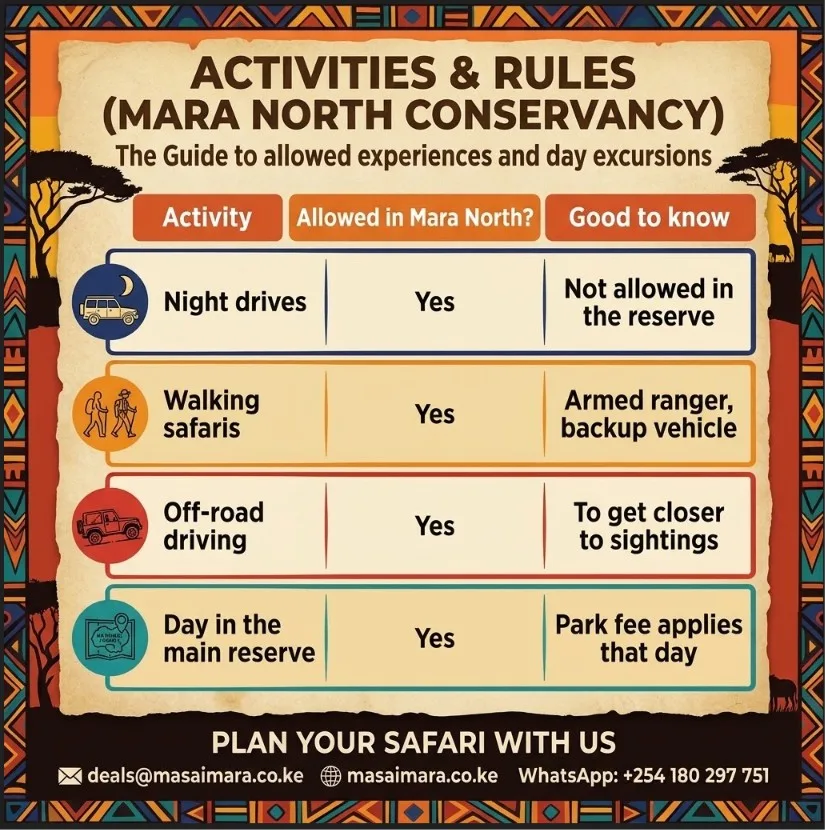
The conservancy allows night drives and off-road driving, which the national reserve does not. Mara North covers almost 30,000 hectares of savannah, woodland and river country, and the limit on vehicles at each sighting keeps things private.
Lions, leopards and cheetahs all live here. The migration herds pass through from July to October, and the camp can arrange full days in the reserve for the Mara River crossings, though it is a longer drive from the northern end of the conservancy. On those days the reserve park fee applies: USD 100 per adult a day from January to June and USD 200 from July to December, set by the Narok County Government. Do not buy tickets on the KWS eCitizen portal, as they are not valid at the Mara gates. We prepay them for you.
The guides here place the vehicle for photography as well as viewing. Mention on the first drive that photography matters to you and the approach changes for the rest of the trip: better angles, more attention to the light, and quieter approaches that do not spook the animal.
|
Activity |
Allowed in Mara North? |
Good to know |
|
Night drives |
Yes |
Not allowed in the reserve |
|
Walking safaris |
Yes |
Armed ranger, backup vehicle |
|
Off-road driving |
Yes |
To get closer to sightings |
|
Day in the main reserve |
Yes |
Park fee applies that day |
Rates And What They Include
Elephant Pepper is priced in the middle of the conservancy camps. Guide prices for 2027 are below, per person a night, two sharing. We confirm the exact figure when we quote.
|
Season |
Months |
Per person a night, from |
|
Long rains |
April and May |
The camp usually closes, so check dates with us |
|
Standard |
January to March, June, November, early December |
About USD 1,050 |
|
Peak |
July to October, Christmas and New Year |
About USD 1,315 |
Included: all meals, house wines, beers, local spirits and soft drinks, shared game drives in open 4x4s, guided walks, night drives, laundry, and transfers from Mara North Airstrip.
Not included: the Mara North conservancy fee, charged every night you stay (USD 150 per adult, USD 75 per child aged 5 to 15), Narok County park fees on days you go into the national reserve (USD 100 a day from January to June, USD 200 from July to December, USD 50 per child aged 9 to 17), champagne and premium spirits, the Kenya eTA (USD 34), hot air balloon flights (USD 550) and tips for the staff (USD 15 to 20 a day). In our full flying and road packages, the conservancy and park fees are worked out and paid in advance.
Getting there. The flight from Nairobi’s Wilson Airport takes 45 to 60 minutes, and the 30-minute transfer from the airstrip doubles as a game drive, so keep your camera out. Pack everything in a soft duffel, because hard cases do not fit and the weight limit is 15 kg. Our flying packages page explains how it works.
When to go. The peak migration months fill early. November to March and June are quieter and cheaper, and the resident wildlife does not leave. The camp usually closes for the long rains in April and May. Our best time to visit guide has the month by month picture.
What Guests Want To Know
How Does The Value Compare?
Elephant Pepper offers guiding, food and wildlife that compete with camps charging a lot more. For guests who care more about what happens on the drive and at the table than about the thread count, it is one of the strongest choices in the Mara. Combining it with other Elewana camps on a multi-stop trip can bring the price down.
Is It Good For Families?
Yes, for children who understand the rules of an unfenced camp. The Family Suite has two bedrooms, children aged 12 and over can join the walks, and the animals in the woodland keep them busy between drives. For toddlers, a fenced camp is safer.
Is This The Same As Elewana Sand River?
No. Sand River is Elewana’s other Mara camp, inside the national reserve in the far south-east, where night drives and walks are not allowed. See our Elewana Sand River guide.
How Long Should I Stay?
Three nights fits the drives, a walk and some time around camp without rushing. Add a night if you want a full day in the reserve for the crossings.
Plan Your Elephant Pepper Safari
With only ten tents, the camp fills faster than larger places in the peak months. Send us your dates and we will check availability, or tell us what matters most and we will build the trip from there. Our team at Sekenani will send an itemised quote within 24 hours.
- Email: [email protected]
- WhatsApp: +254 180 297 751
- Online booking: Get a Quote
Related Reading
- Mara North Conservancy
- Walking safaris in Masai Mara
- Night game drives in Masai Mara
- Leopards in Masai Mara
- Cheetahs in Masai Mara
- Masai Mara safari cost
- Masai Mara camps
- Masai Mara safari packages
- Birding safari Masai Mara
- Is Masai Mara safe?
Sources
Written by David Njunge, TRA-licensed safari guide with over 10 years in the Masai Mara. Edited by Cess Wambui, travel consultant, BSc Tourism and Hospitality Management. Verified for the 2027 season.
Welcome to Masaimara.co.ke
Thank you for visiting us! We're excited to help you plan an unforgettable safari adventure across Kenya.