
7 Days Masai Mara, Amboseli, Nakuru And Naivasha Safari: 2027 Itinerary And Prices
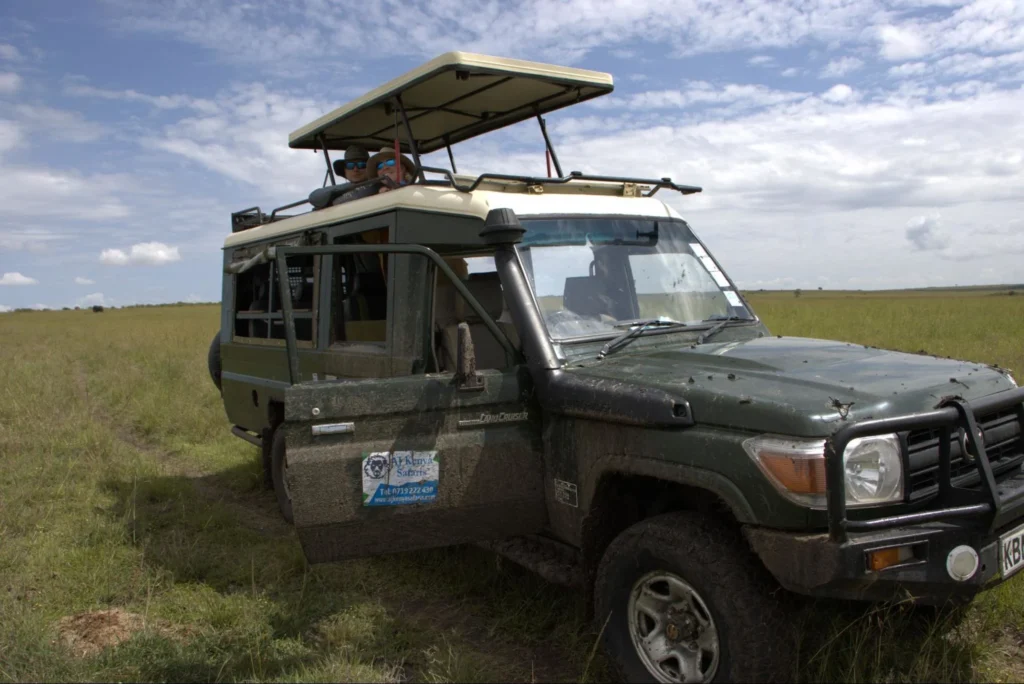
A 7 days Masai Mara, Amboseli, Nakuru and Naivasha safari covers four parks in one week by road: two nights in Amboseli, one at Lake Naivasha, one at Lake Nakuru and two in the Mara. For 2027 it costs from USD 2,610 or KES 193,000 per person sharing, with the Naivasha boat and Crescent Island included.
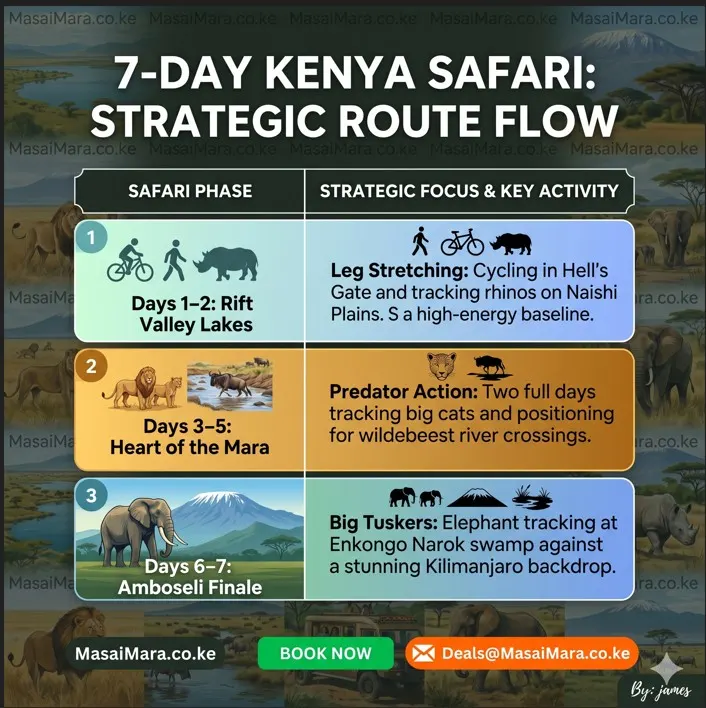
| Safari Phase | Strategic Focus And Key Activity |
|---|---|
| Days 1 and 2: Amboseli | Big tuskers at the Enkongo Narok swamp, with Kilimanjaro behind them at dawn. |
| Day 3: Lake Naivasha | Out of the vehicle: a boat among the hippos and a walk among giraffes on Crescent Island. |
| Day 4: Lake Nakuru | Black and white rhinos in a fenced park, with a full afternoon to track them. |
| Days 5 to 7: Masai Mara | Lions, cheetahs and leopards, and the river crossings from July to October. |
7 Days Masai Mara Amboseli Nakuru Naivasha Safari Costs (2027)
This is the 7-day version of our Masai Mara, Amboseli, Nakuru and Naivasha safari circuit. For a second full day in the Mara, see the 8-day version.
Prices are per person, two people sharing a private 4×4 Land Cruiser. Kenyan citizen prices are not the dollar price converted. Citizens and residents pay much lower park fees and lodge rates, and the prices are worked out from those.
International Visitors (USD)
| Tier | Lodges (Amboseli + Naivasha + Nakuru + Mara) | Jan-June | July-Dec |
|---|---|---|---|
| Budget | AA Lodge Amboseli + Kongoni Lodge + Ziwa Bush Lodge + Mara Sidai Camp | 2,610 | 3,100 |
| Mid-Range | Kibo Safari Camp + Lake Naivasha Sopa + Lake Nakuru Sopa + Mara Sopa Lodge | 3,080 | 3,740 |
| Luxury | Amboseli Serena + Enashipai Resort + Sarova Lion Hill + Sarova Mara Game Camp | 4,080 | 5,350 |
Kenyan Citizens (KES)
| Tier | Lodges (Amboseli + Naivasha + Nakuru + Mara) | Jan-June | July-Dec |
|---|---|---|---|
| Budget | AA Lodge Amboseli + Kongoni Lodge + Ziwa Bush Lodge + Mara Sidai Camp | 193,000 | 213,000 |
| Mid-Range | Kibo Safari Camp + Lake Naivasha Sopa + Lake Nakuru Sopa + Mara Sopa Lodge | 228,000 | 259,000 |
| Luxury | Amboseli Serena + Enashipai Resort + Sarova Lion Hill + Sarova Mara Game Camp | 299,000 | 376,000 |
Foreign nationals living in Kenya on a work or residence permit pay resident park fees, which sit between the dollar and shilling prices. Tell us when you book and we will quote you on resident rates.
Note: Peak prices apply from July to December, when Mara park fees double and the lodges move to high-season rates. If you want to fly one leg, see our Masai Mara flying packages. For camps above our Luxury tier, see our luxury safari Masai Mara options.
What Is Covered In The Price?
- Vehicle: A private 4×4 Land Cruiser with a pop-up roof for all 7 days, with fuel for every transfer and game drive.
- Guide: One TRA-licensed guide who drives you from Nairobi and back, through all four parks.
- Park Fees: All 2027 entries. Amboseli and Lake Nakuru are paid through KWS eCitizen, including the KWS vehicle fee. The Masai Mara is paid to Narok County, and Crescent Island to the private sanctuary.
- Naivasha: The boat ride on Lake Naivasha and the walking safari on Crescent Island.
- Accommodation: 6 nights full board, with packed lunches on full game drive days.
- Water: Drinking water in reusable containers in the vehicle every day.
- Cover: AMREF Flying Doctors evacuation cover.
- Excluded: Tips (USD 15 to 20 / KES 2,000 to 2,500 per day), alcoholic and soft drinks, the hot air balloon (USD 500 / KES 58,500), the Maasai village visit (KES 1,500 for citizens / USD 20 for non-residents), Hell’s Gate and other Naivasha extras, international flights, the Kenya eTA (USD 34) and Kenya’s inbound travel health insurance (up to USD 44 per person).
I have been guiding for ten years. This week covers about 1,000 km and four parks that share almost nothing. You watch old elephants feed at the swamp edge under Kilimanjaro, sit in a boat among hippos, walk with giraffes, track rhinos through acacia woodland, and finish with lions on the open plains of the Mara.
It is the most you can see in a week without flying, and the order is what makes it work. Each road day ends with lunch at the next lodge and an afternoon of wildlife, never with you arriving in the dark.
The 7-Day Itinerary
We start in Amboseli, cross Nairobi once on the Southern Bypass, break the long drive at Naivasha, go up the Rift Valley to Nakuru and finish in the Mara. You get eight game drives, plus the boat and the walk: three in Amboseli, two at Nakuru and three in the Mara. There is no game drive on the morning you leave Amboseli, Nakuru or the Mara.
Day 1: Nairobi To Amboseli, Afternoon Game Drive
We leave Nairobi at about 7 AM, out along Mombasa Road to Emali and south through Kimana, about 4 to 5 hours. Lunch is at your lodge at about 12:30 to 1 PM. The afternoon drive runs from about 3:30 PM until the park closes at 6 PM, and if the cloud lifts, Kilimanjaro turns pink in the last light.
Day 2: Full Day In Amboseli
Out at 6 AM, while the mountain is still clear, usually until about 10 AM. We spend the morning at the Enkongo Narok swamp, where the old bulls feed. After a picnic lunch, we climb Observation Hill for the view across the swamps, then work the plains in the afternoon.
Day 3: Amboseli To Lake Naivasha, Boat And Crescent Island
No game drive this morning. Your second Amboseli ticket is still valid, but we leave at 7 AM on purpose, so you clear the Nairobi Southern Bypass before midday and are on the lake before the afternoon wind. We stop at Emali for fuel, and your guide picks the escarpment road through Mai Mahiu, with the Rift Valley viewpoint and a coffee to go at the Java House, or the smoother upper highway through Limuru if the escarpment is jammed with trucks. Lunch is at your Naivasha lodge at about 1:30 PM. At about 2:30 PM you go out on the boat, then land on Crescent Island for a walking safari among giraffes, zebras and wildebeest.
Day 4: Naivasha To Lake Nakuru, Arrival Drive And Afternoon Rhino Drive
After breakfast we drive about 1.5 hours up the Rift Valley floor and reach the gate between about 9:30 and 10:15 AM. The drive across the park to your lodge is a slow arrival game drive of 1.5 to 2 hours, so you usually see rhinos before lunch. After lunch and a rest, the afternoon rhino drive runs from about 3:30 to 6 PM, with time for Baboon Cliff or the Makalia Falls loop.
Day 5: Lake Nakuru To The Masai Mara, Afternoon Game Drive
No game drive at Nakuru this morning. We leave by 7:30 AM, south through Njoro and over the high farmland around Mau Narok to Narok, about 5 to 6 hours. In April and May, and in the November showers, this stretch often has thick, cold morning mist and mud washed onto the tarmac from the potato fields, so leaving on time matters. Lunch is at your Mara camp at about 1:30 PM. If you want a Maasai village visit, we go to a community village just outside the gate from about 2:30 to 3:45 PM, then enter the reserve at 4 PM for the first drive, until the gates close at 6 PM. Mara tickets run per calendar day and expire at 6 PM, not 24 hours from entry, so this two-hour drive uses a full day’s ticket. It is still worth it: late afternoon is when the cats wake up, and the ticket is already in your price. The drive cannot run past 6 PM, because the gates close.
Day 6: Full Day In The Masai Mara
Out at dawn with a picnic lunch, and we stay out until the gates close. Mornings are for lions on the move and cheetahs starting to hunt. From July to October we spend the middle of the day at the Mara River crossing points. If you want the balloon, book it for this morning, your second day in the Mara. You lift off around sunrise and are back in the vehicle by about 9:30 AM with the rest of the day ahead.
Day 7: The Masai Mara To Nairobi
No game drive this morning. Your two Mara tickets covered Days 5 and 6. We leave after breakfast at about 8:30 AM, drive home through Narok and down the Mai Mahiu escarpment, and cross the Nairobi Southern Bypass between about 2:30 and 3:30 PM. You reach Jomo Kenyatta International Airport by about 4 PM. Book a flight that leaves after 9 PM. That gives you a cushion of four to five hours for truck delays on the escarpment or a puncture, and international check-in usually opens about three hours before departure. Heading to the coast? See our Masai Mara and Diani Beach packages.
Want Hell’s Gate too? This route skips Hell’s Gate National Park, because cycling and the gorge walk take a full morning and would cost you the Nakuru rhino drive. If cycling past Fischer’s Tower matters to you, ask us to add a second night at Naivasha.
| Naivasha Extra | Cost |
|---|---|
| Hell’s Gate entry | Non-residents USD 50 adult / USD 25 child. Citizens KES 500 / 250. Residents KES 675 / 350 |
| Hell’s Gate cycling | USD 10 for non-residents, KES 300 for citizens and residents, per day, plus bike hire at the gate |
| Mount Longonot hike | Non-residents USD 50 adult / USD 25 child. Citizens KES 500 / 250. Residents KES 675 / 350 |
| Lake Elementaita Wildlife Sanctuary | Non-residents USD 50 adult / USD 25 child. Citizens KES 500 / 250. Residents KES 675 / 350 |
| Horse riding at Sanctuary Farm | Priced by the farm, in your quote |
| Oserengoni night drive | Chui Lodge guests only, in your quote |
The Route And Drive Times
| Leg | Route | Distance And Time |
|---|---|---|
| Nairobi to Amboseli | Mombasa Road, Emali and Kimana | About 240 km, 4 to 5 hours |
| Amboseli to Lake Naivasha | Emali, Mombasa Road, the Nairobi Southern Bypass and the Rift Valley | About 350 km, 6 to 7 hours |
| Lake Naivasha to Lake Nakuru | Along the Rift Valley floor | About 75 km, 1.5 to 2 hours |
| Lake Nakuru to the Masai Mara | Njoro, Mau Narok and Narok, then the C12 to the gates | About 280 km, 5 to 6 hours |
| The Masai Mara to Nairobi | Narok, Mai Mahiu and the Southern Bypass | About 270 km, 5 to 6 hours |
The Mara Triangle Ticket Rule
The Masai Mara is split by the Mara River. The main reserve, east of the river, is run by Narok County. The Mara Triangle, west of the river, is run by the Mara Conservancy. Your camp and your ticket belong to one side or the other, and both are bought through the Mara online ticketing system, not through KWS eCitizen.
The main crossing between the two sides for vehicles is Purungat Bridge in the south. The two sides are managed separately, and there is no informal crossover. If you cross Purungat Bridge on a main-reserve ticket to follow the herds onto the Triangle side, the Triangle rangers will ask you to pay a second park fee on the spot. So do not ask your guide to cross the bridge to chase a river crossing unless you are ready to pay that second fee. I always look at your booking for where your camp sits, and we buy the ticket that covers the side you will drive. Our Mara Triangle guide has more detail.
Nakuru and Naivasha Shortcuts
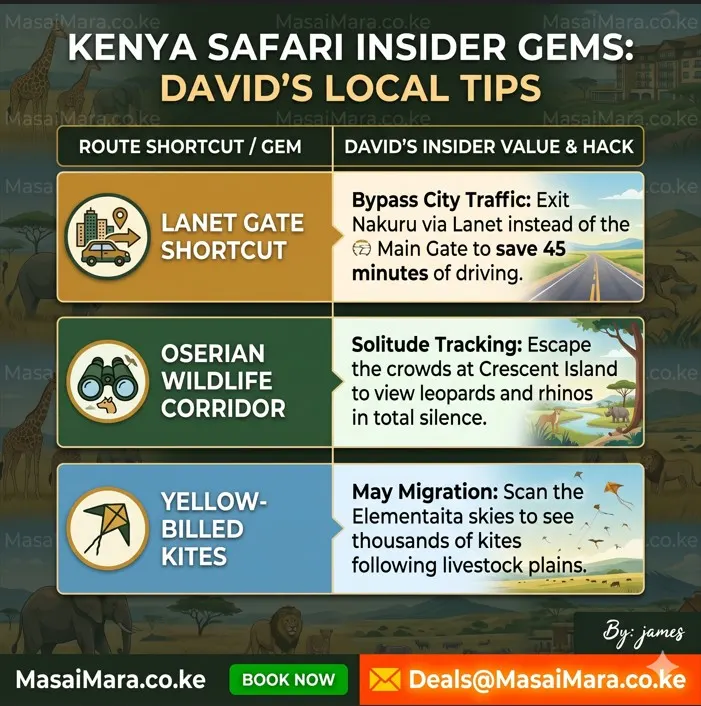
| Route Shortcut Or Gem | David’s Insider Tip |
|---|---|
| The Right Nakuru Gate | Lanet Gate, off the paved highway, is quicker for lodges in the north and east of the park. The Nderit Gate in the south is rougher but drops you onto the rhino grassland. |
| The Naivasha Otter Watch | Ask the skipper to cut the engine by the papyrus late in the afternoon. African clawless otters are a lucky bonus. |
| Oserengoni By Night | If you add a night at Chui Lodge, the Oserengoni Wildlife Sanctuary runs night drives for its own guests. |
Most 7-day circuits rush these two lakes. I would rather you had time on both.
The gate at Nakuru. Your guide picks Lanet or Nderit by where you sleep and how the roads are that week, and we decide before leaving Naivasha so you do not lose the morning to a long drive across the park.
Crescent Island and the papyrus. Crescent Island is the walk everyone does, and for good reason: there are no lions, so you can walk among giraffes on foot. On the boat beforehand, the papyrus edges are where you look for otters and kingfishers.
The rhinos of the south. With the northern shore of Lake Nakuru flooded, the white rhinos graze the open grassland further south. We head there first.
Amboseli’s Swamp Elephants
Amboseli is about more than the mountain.
The swamp edge. The old bulls stay near the Enkongo Narok swamp, where the grass is soft enough for their worn-down teeth. After rain, when the water is deep, you may see elephants wade through it up to their bellies, with only their backs and trunks showing. Amboseli is one of the last places in Africa where you can still see super tuskers, bulls whose tusks each weigh more than 45 kg.
Kilimanjaro timing. The mountain is usually clearest at dawn and often hides in cloud by about 10 AM. That is why Day 2 starts at 6 AM.
The pelicans. Great white pelicans gather on the swamps and shallow water away from the vehicles. Ask your guide where they are that week.
12 Things to Know Before You Go
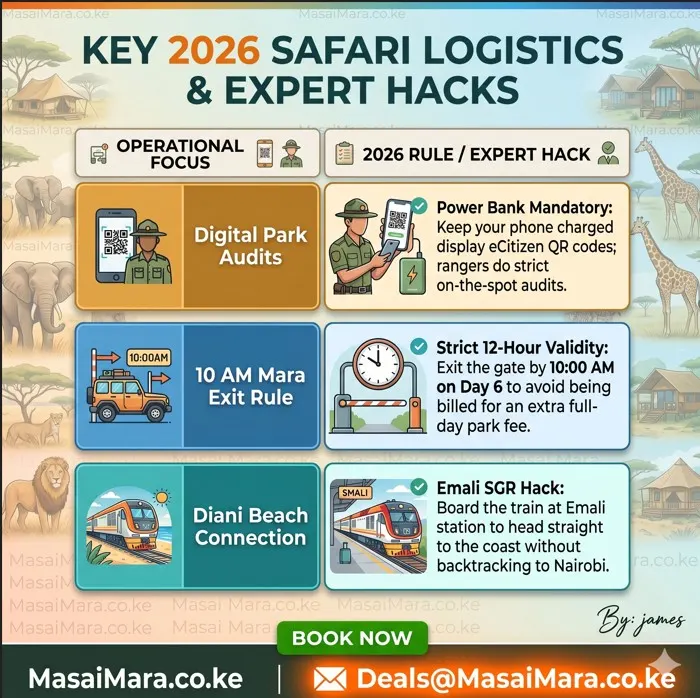
| Operational Focus | 2027 Rule Or Expert Tip |
|---|---|
| Three Fee Systems | KWS for Amboseli and Nakuru, Narok County or the Mara Conservancy for the Mara, and Crescent Island’s own fee, all paid before you arrive. |
| 10 AM Mara Exit Rule | Mara tickets run per calendar day. If your camp is inside the reserve, you leave by 10 AM on Day 7, with no game drive that morning. |
| Kilimanjaro Cloud | Be out at 6 AM in Amboseli, before the mountain disappears. |
- Inbound Travel Health Insurance. From 5 October 2026, every non-Kenyan visitor staying under three months must buy Kenya’s inbound travel health insurance online before arriving, children included. It costs up to USD 44 per person and covers up to USD 50,000 for medical care and emergency evacuation. Buy it together with your eTA, because cover only starts once the policy is issued. Kenyan citizens, residents and East African Community nationals are exempt.
- Rift Valley Golf. If you add a night near Naivasha, the course at the Great Rift Valley Lodge sits high above the lake, and zebras often graze on the fairways in the late afternoon.
- February Value. February is a quiet month: short grass, fewer vehicles and lower lodge rates before the long rains. Showers, when they come, usually fall at night.
- Wheelchair Access. This circuit works with limited mobility if we know when you book. We arrange ground-floor rooms and a vehicle with easy access.
- The Bush Lunch. On Day 6 in the Mara, ask about a laid-table lunch in the open savannah. It is arranged through your camp and priced when you book.
- Water At Dinner. Some budget camps charge for bottled water at dinner. Fill your reusable bottle from the vehicle supply.
- A Fleece For The Mau. On Day 5 the road climbs over the high farmland around Mau Narok, and in the rainy months the morning mist up there is cold. Keep a fleece and a light rain jacket in the vehicle, not in your bag at the back. Your Mara camp will feel just as cold at dawn on Day 6.
- Vegetarian Meals. The larger lodges cook good vegetarian food, including Indian dishes, but tell us when you book so we can warn each kitchen ahead.
- A Field Guide In The Vehicle. A good guide carries a wildlife and bird identification book. It helps you put a name to distant animals and learn the markings. If yours does not, ask.
- Boat Safety At Naivasha. Keep your life jacket on, stay seated, and never ask the skipper to get closer to the hippos.
- Plastic-Free Parks. Single-use plastics are banned in Kenya’s protected areas. Bring a reusable bottle.
- Shillings And M-Pesa. Tips, village visits and roadside stalls run on Kenyan shillings. Carry small KES notes, and buy a Safaricom SIM at the airport for M-Pesa.
The Village Visit Done Right
A couple once told me about a village visit on an earlier trip with another driver. No price was agreed beforehand, the dance felt rehearsed, and at the end they were pushed hard to buy beads at prices nobody mentioned until then. They left feeling like customers, not guests.
On our trips the price is fixed before you go, KES 1,500 for citizens or USD 20 for non-residents, and it goes to the community. We use villages just outside the gates on Day 5, so it costs you no game drive time. You meet the families, see how a homestead is built and ask anything you like. If you want to buy beadwork, you can, but nobody should push you. Read more about our Maasai village visit.
Best Time To Visit
| Season | Amboseli | Naivasha | Nakuru | Masai Mara |
|---|---|---|---|---|
| January to March (dry) | Clearest Kilimanjaro dawns | Calm water for the boat | Easy rhino tracking | Short grass, good for cats |
| April and May (long rains) | Green, the mountain often in cloud | Choppier water, quiet lodges | Flooded flats, muddy tracks | Mud, very few vehicles |
| July to October (dry) | Clear dawns, big herds at the swamps | Busy lake, calm mornings | Good rhino viewing | The river crossings |
| November and December (short rains) | Short showers, good light | Migrant birds arriving | Green, fewer vehicles | Green plains, newborn animals |
Month by month detail is in our best time to visit guide.
2027 Park Fees
Amboseli and Lake Nakuru are KWS parks, with tickets that run 24 hours from entry. The Mara charges per calendar day, 6 AM to 6 PM. Crescent Island is a private sanctuary.
Non-Residents (USD)
| Park | Adult | Child |
|---|---|---|
| Amboseli | 90 | 45 (5 to 17) |
| Lake Nakuru | 90 | 45 (5 to 17) |
| Crescent Island | 33 | 16 (5 to 15) |
| Masai Mara | 100 Jan-June, 200 July-Dec | 50 (9 to 17), under 9 free |
Kenyan Citizens (KES)
| Park | Adult | Child |
|---|---|---|
| Amboseli | 1,500 | 750 |
| Lake Nakuru | 1,500 | 750 |
| Crescent Island | 800 | 400 |
| Masai Mara | 1,500 Jan-June, 3,000 July-Dec | 300 / 500 |
Kenya Residents (KES)
| Park | Adult | Child |
|---|---|---|
| Amboseli | 2,025 | 1,050 |
| Lake Nakuru | 2,025 | 1,050 |
| Crescent Island | 1,100 | 550 |
| Masai Mara | 2,500 Jan-June, 4,500 July-Dec | 1,250 / 2,500 |
On this route you use two Amboseli tickets (Days 1 to 3), one Crescent Island entry (Day 3), one Nakuru ticket (Days 4 to 5) and two Mara tickets (Days 5 and 6). KWS also charges a vehicle fee of about KES 1,500 a day. Every ticket is in your package price. See our Masai Mara park fee page for the full rules, and Narok County and the sanctuary for current rates.
Frequently Asked Questions
How much does a 7 days Masai Mara, Amboseli, Nakuru and Naivasha safari cost?
From USD 2,610 for international visitors and KES 193,000 for Kenyan citizens, per person sharing, from January to June, on the Budget tier. Mid-Range starts at USD 3,080 / KES 228,000 and Luxury at USD 4,080 / KES 299,000. Every price includes the vehicle, the guide, park fees, the Naivasha boat and Crescent Island, and full board.
Is 7 days enough for four parks?
It is the minimum. You get two nights in Amboseli, one at Naivasha, one at Nakuru and two in the Mara. The 8-day version adds a third Mara night, which lets you take the balloon with a backup day for weather.
Why start in Amboseli and finish in the Mara?
Because Amboseli to the Mara cannot be driven safely in one day. Starting in Amboseli means you cross Nairobi only once, Naivasha splits the longest drive, and the Mara comes last.
What documents and insurance do I need to enter Kenya?
Two things, both bought online before you fly: the Kenya eTA at USD 34, and, from 5 October 2026, Kenya’s inbound travel health insurance at up to USD 44 per person, children included. Kenyan citizens, residents and East African Community nationals are exempt from the insurance.
What is the best month for this safari?
July to October for the migration. January and February for clear Kilimanjaro views, with February the value month: lower prices, fewer vehicles and short grass. See our best time to visit guide.
Is a 4×4 Land Cruiser mandatory?
Yes. The Nakuru and Mara tracks turn to deep mud after rain, and a minivan cannot handle them.
Can I drop one park to get an extra Mara night?
Yes. Drop Naivasha and you get a third Mara night, but you lose the boat, the Crescent Island walk and the break in the long drive. If big cats are your priority, look at the Masai Mara, Amboseli and Lake Nakuru safari. If variety matters more, keep all four.
What should I pack?
Layers, a power bank, binoculars, your physical passport, closed-toe shoes for the Crescent Island walk, a reusable water bottle and a Safaricom SIM. Full list in our packing list.
Is this trip safe?
Yes. All four parks have rangers, your guide carries a radio and the lodges are well established. We drive in daylight only.
Before You Book
This is the most of Kenya you can see in a week without flying. By the last day you will have watched elephants under Kilimanjaro, walked with giraffes, found rhinos at Nakuru and followed lions through the Mara grass. The driving is real and so is the dust, but most of my guests say the change from one park to the next was the best part of the trip.
If 7 days feels like too much, look at a 5 days Masai Mara safari. Want a different circuit? See the Masai Mara and Amboseli safari or the Masai Mara, Lake Nakuru and Lake Naivasha safari. Browse everything on our Masai Mara safari packages page.
Related Reading:
- Masai Mara, Amboseli, Nakuru and Naivasha Safari
- 8 Days Masai Mara, Amboseli, Nakuru and Naivasha Safari
- Masai Mara, Amboseli and Lake Nakuru Safari
- Masai Mara, Lake Nakuru and Lake Naivasha Safari
- Masai Mara and Amboseli Safari
- Masai Mara and Diani Beach Safari
- 5 Days Masai Mara Safari
- Masai Mara Safari Packages
- Luxury Safari Masai Mara
- Masai Mara Flying Packages
- Masai Mara Migration
- KWS Park Fee Portal
Written by David Njunge, TRA-licensed safari guide with over 10 years in the Masai Mara. Edited by Cess Wambui, travel consultant, BSc Tourism and Hospitality Management. Verified for the 2027 season.
Welcome to Masaimara.co.ke
Thank you for visiting us! We're excited to help you plan an unforgettable safari adventure across Kenya.