
Masai Mara Travel Tips: The Honest 2026 Guide
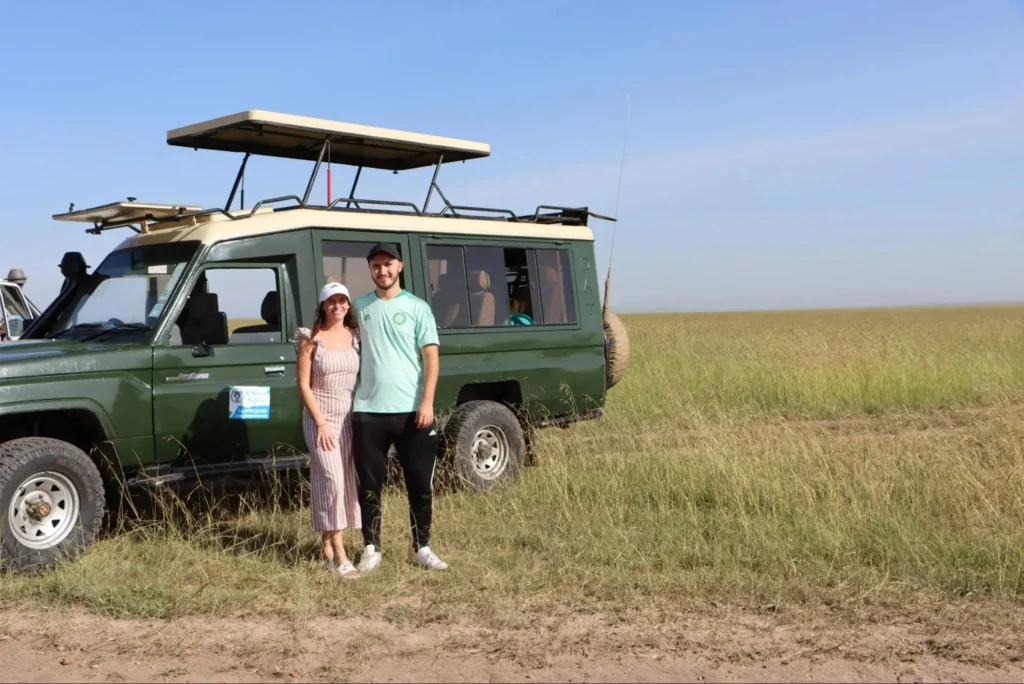
The Masai Mara travel tips that matter most aren’t about the animals. Guests arrive prepared for lions and unprepared for dust, cold mornings, dead phone batteries, and the fact that the nearest bathroom after Narok is the bush. This guide covers the practical details that the other guides on this site don’t — the things that come up between the game drives. For wildlife, activities, costs, safety, packing, and transport, the dedicated guides go deeper. This page is the miscellaneous drawer: the tips that don’t fit anywhere else but make the trip run smoother.
What This Guide Covers
Before Leaving Nairobi
Preparation Step | 2026 Practical Action & Cost |
Safaricom SIM / eSIM | Buy at airport (~$5.50): Best Mara coverage. Avoid overseas eSIMs using Airtel. |
M-Pesa Setup | Activate at airport counter. Essential backup for failed camp card machines. |
Nairobi Cash (KES) | Withdraw small notes (50s/100s) for checkpoints and village markets. |
Navigation | Download offline maps: Volcanic dirt tracks are completely unmapped online. |
The first stop at the airport should be the Safaricom counter. Safaricom has the best network coverage in the Mara — eSIM providers from overseas usually route through Airtel, which drops signal across most of the reserve and conservancies. A SIM costs about KES 550 ($5.50) with 2.5 GB of data. Set up M-Pesa at the same counter. It works as a backup when camp card machines fail, and it’s how most local transactions work in Kenya.
Cash matters more than cards once the tarmac ends. Withdraw KES from a Nairobi ATM in small notes — 50s and 100s for community checkpoints, village market purchases, and camp bars that don’t take cards. USD works at the gates but not for anything along the road.
If driving, download offline maps before leaving the city. Google Maps offline mode covers the tarmac roads, but the unpaved tracks from Narok to the gates are often missing entirely. And if arriving from a long-haul flight, keep the first day light — a short afternoon drive and early dinner lets the body adjust before the 5 AM wake-up calls start.
On the Road
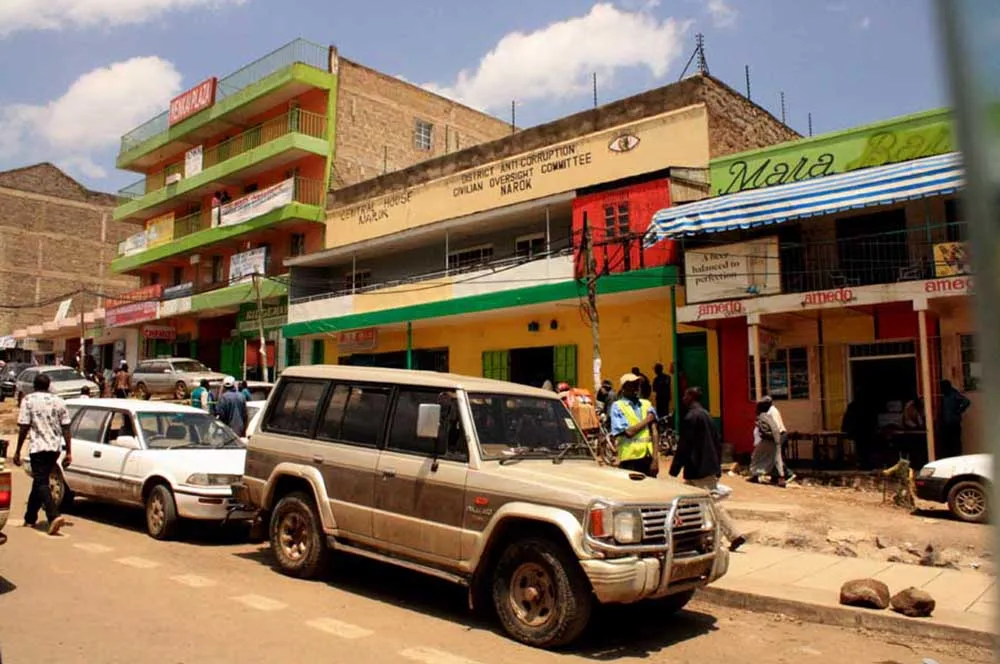
Narok town is the last proper bathroom stop. The Seasons restaurant and Enkare are the reliable options. After Narok, the next facility is the community toilet at Sekenani Gate (50-100 KES). Every guest on the road discovers this the hard way.
The last 75 km from Narok to the gates is unpaved, dusty, and slow. A buff or bandana over the nose helps — the fine volcanic silt gets deep into the sinuses, especially during the dry season. Fill the fuel tank in Narok before hitting the dirt. There are no reliable stations after that. The full route and escarpment alternatives are on the transport page.
If arriving late in the afternoon, consider staying overnight outside the reserve gate at a property like Mara Hilltop or Sentrim. Entering at 6 AM the next morning gives the full 12-hour ticket instead of paying $200 for three hours of fading light. The 12-hour ticket system catches people who don’t plan for it.
At Camp
Camp generators cut off around 10 to 11 PM. After that, the tent has no power until morning. Charge everything during the day and bring a power bank for overnight.
A few things about the tent: don’t padlock the zipper. Baboons associate padlocks with hidden food and will tear through the canvas to get in. A carabiner clip on the zipper works instead. Store valuables in the in-tent lockbox. And keep shoes inside the zipped tent at night — hyenas patrol camp paths after dark and carry off boots to chew on the rubber soles. Guests have finished safaris in one shoe.
The laundry service won’t wash undergarments. Camp staff handle outer clothing only, out of respect for local cultural norms. Camps leave small basins and detergent in the tent bathroom. Walking around camp needs rigid-soled shoes, not running trainers — the grounds are littered with dried whistling thorn branches, and the thorns punch through soft soles.
WiFi is weak or absent at most camps. Angama Mara has Starlink. Most mid-range camps have patchy lounge-only signal. Budget camps have nothing. This is by design, but it catches guests who need to stay connected. More on camp wildlife and night safety is on the safety page.
On the Drive
Action Item | Ground Rule for Success |
Prioritize the Guide | Look for KPSGA gold/silver ratings; their VHF radio network finds the game. |
Camera Lens Swaps | Never swap in motion: Stops vehicle, cut engine, point camera body down. |
Meal Management | Request a packed lunch: Returning to camp at noon risks missing river crossings. |
The guide’s radio network finds more wildlife than any mapping app. Guides share sightings on VHF using coded language — a reference to a car part or a tree type means a specific predator at a specific location. A guide plugged into the frequency finds a leopard kill or a crossing buildup before breakfast. When choosing an operator, the guide matters more than the camp.
The dust from the road follows into the game drive. Don’t change camera lenses inside a moving vehicle — the forward motion creates a low-pressure draw that pulls particles straight onto the exposed sensor. Stop the vehicle, cut the engine, wait for the dust to settle, then swap with the camera body facing down.
During migration season, request a packed lunch. Returning to camp at noon is when guests miss the river crossing. A lunch box keeps the vehicle at the river all day. The bush breakfast does the same thing for the morning drive. Seasonal timing determines when to be at the river.
Connectivity and Money
The Safaricom SIM and M-Pesa setup from the airport (covered in the section above) handle most connectivity and payment needs on the ground. A few additional details:
Bring post-2013 US dollar bills for guide tips. Rural banks and camp staff reject older, torn, or stained notes. The packing list has the rest.
The gate lists a $50/day student rate, but ISIC cards are frequently rejected without prior written approval from the Narok County Government. Don’t count on the discount without confirming the paperwork before the trip.
Questions Guests Ask
What’s the one tip that makes the biggest difference?
The guide. A good guide on the radio network, with years on the ground, finds more in one morning than a mediocre guide finds in three days. Ask the operator who the guide is, how long they’ve been guiding, and whether they hold a silver or gold KPSGA rating. Everything else — the camp, the vehicle, the season — matters less.
Is there phone signal in the Mara?
Yes, on Safaricom. Other networks are unreliable. Details in the Before Leaving Nairobi section above.
Do I need malaria tablets?
Yes. Start before departure. The packing list and safety guide cover the details.
What should I do on the last day?
If flying out, a dawn drive before the flight works at most camps. If driving, exit the gate by 10 AM to avoid paying an extra day’s park fee. Flight and drive logistics are on the transport page. Start a booking if dates are set. A 5-day safari gives enough time for the full experience. The 3-day and 4-day trips work for shorter windows. For Amboseli alongside the Mara, the 6-day circuit or three-park loop add Kilimanjaro. Send us your dates and we’ll find the right fit. All packages, luxury options, and flight schedules are on the site.
This guide was authored by David Njunge, a TRA-licensed safari guide with over 10 years of experience, and edited by Cecilia Wambui, a travel consultant with a degree in Tourism and Hospitality Management.
Related Reading:
Welcome to Masaimara.co.ke
Thank you for visiting us! We're excited to help you plan an unforgettable safari adventure across Kenya.