
Sand River Gate Masai Mara: The Honest 2026 Guide
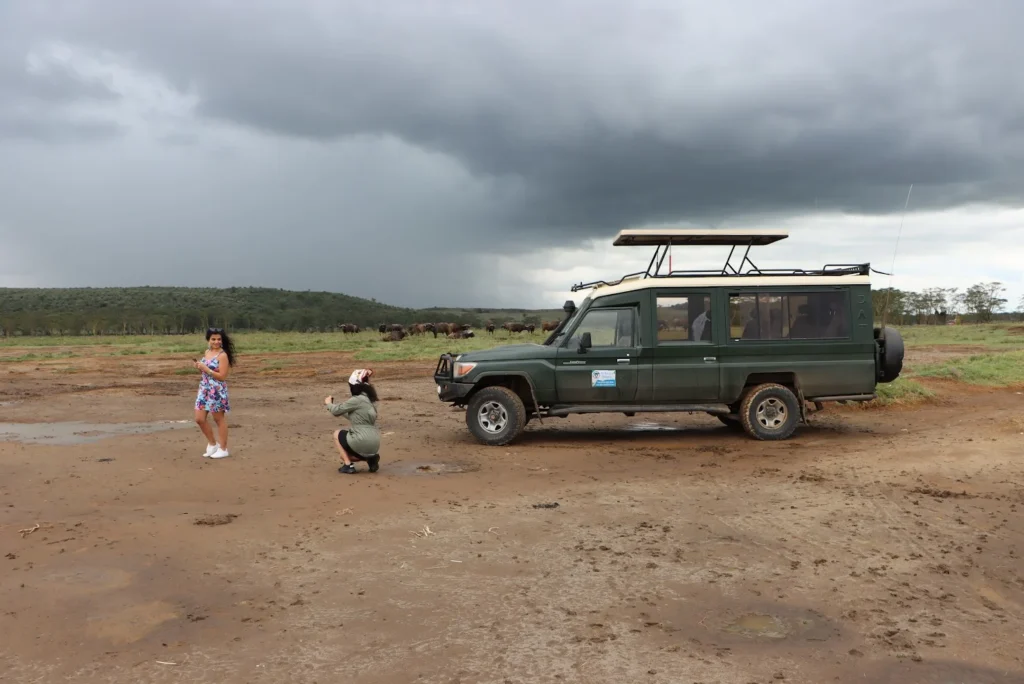
Sand River Gate sits on the southern boundary of the Masai Mara National Reserve, metres from the Kenya-Tanzania border and the Bologonja gate into Serengeti National Park. The border crossing has been closed to tourist vehicles since 1977. You cannot drive into the Serengeti from here. But the Sand River sector is one of the quietest parts of the reserve and the point where the wildebeest migration first enters Kenya each year. All-inclusive 5-day safaris routing through the southern sector range from KES 211,900 ($1,630) to KES 1,076,400 ($8,280) per person sharing. Standard Mara park fees apply: $100/day regular season, $200/day peak season.
Sand River Safari Costs (2026/2027)
All-inclusive prices per person sharing, based on two people in a private 4×4 Land Cruiser. Regular season is January–June, peak season is July–December.
5-Day All-Inclusive Rates via the Southern Sector (Per Person Sharing)
Package Tier | Camps (Nakuru + Mara) | Regular Season (KES) | Peak Season (KES) |
Budget | Lake Nakuru Lodge / Talek Bush | KES 211,900 | KES 416,000 |
Mid-Range | Sarova Lion Hill / Ashnil Mara | KES 250,900 | KES 468,000 |
Luxury | The Cliff Nakuru / Elewana Sand River | KES 443,300 | KES 712,400 |
Luxury Plus | The Cliff Nakuru / Angama Mara | KES 703,300 | KES 1,076,400 |
Note: Regular season at $100/day park fees. Peak season at $200/day. For a luxury safari upgrade or flying packages, request a custom quote.
What’s Covered
- A private 4×4 Safari Land Cruiser for the full trip.
- A TRA-licensed guide who knows the southern sector and the border tracks.
- All 2026 Mara reserve entry fees and Lake Nakuru fees. Mara fees paid at the gate (cash USD/KES, card, or M-Pesa). Pre-payment through KAPS office in Nairobi.
- One-way return flight from Keekorok Airstrip to Nairobi Wilson via Masai Mara flying packages.
- Full board, 3 meals daily.
- AMREF Flying Doctors emergency air evacuation insurance.
What’s Excluded
- Kenya eTA (~$30).
- Tips (KES 3,000/day for guide).
- Alcohol and soft drinks.
- Hot air balloon ($450–$500).
- International flights.
The 5-Day Itinerary
Day 1: Nairobi to Lake Nakuru
Early departure. Afternoon tracking black rhinos and flamingos at Nakuru. Stay at your selected lodge.
Day 2: Nakuru to Masai Mara (Southern Sector)
Drive through the Rift Valley floor, enter the reserve through one of the central gates, and head south toward the border. The landscape changes as you move away from the central plains. The terrain becomes rolling hills and deep riverine groves. The soil is firmer than the central Mara’s black cotton clay, which makes the southern tracks more navigable after rain. Arrive for an afternoon drive. Stay at your chosen camp.
Day 3–4: Full Days in the Southern Mara
Two full days in the quietest part of the reserve. The Sand River runs along the southeastern edge, right on the Tanzanian border.
I brought a couple from Sydney down here last October. They’d spent two days at Lookout Hill in August the year before, shoulder to shoulder with 25 other vehicles, and wanted to see the return migration without the crowd. We parked on the south bank at 6:30 AM and waited. By 7:15, a column of about 12,000 wildebeest began crossing the wide sandbed heading back toward Tanzania. Two other vehicles were present. The couple sat in silence for 40 minutes watching the herd walk south into the Serengeti. When it was over, the woman said it was the first time on safari she’d actually heard the animals breathing.
A resident lion pride uses a sausage tree near one of the primary crossing points as an ambush site. They lie flat against the heavy root buttresses and wait for wildebeest to scramble up the low bank before launching. I’ve watched kills happen at that exact tree three separate seasons.
The riverbeds here are rich in oxidized iron deposits. Elephants bathe in the southern channels and coat themselves in the red mud, turning a striking terra-cotta colour against the golden grass.
When the Sand River drops low enough in the dry months (February, September), it becomes a wide beach of clean sand. Rangers in this sector sometimes allow visitors to step out of the vehicle onto the dry sand beds within sight of the outpost. Walking barefoot on the cool sand under a sycamore fig canopy is something you won’t experience in any other part of the reserve.
If your camp has conservancy access, add a night drive and a walking safari.
Day 5: Departure
Keekorok Airstrip is the closest flight link, roughly 45 minutes south. The transfer doubles as a game drive. Build in buffer time if your flight is tight — this is not a 10-minute airstrip-to-camp transfer. Be at the gate by 9:30 AM if exiting by road. The 12-hour ticket system charges an extra full day if you exit late. Fly back to Nairobi via Masai Mara flying packages.
The Sand River Gate and the Closed Border
Logistical Factor | Southern Border Reality | Actionable Safari Tip |
Closed State Line | Commercial crossings to the Serengeti have been banned since 1977. | Route through Isebania border if undertaking an overland combination trip. |
Ranger Outpost | Minimal vehicle traffic leaves the sector completely isolated and quiet. | Ideal choice for travelers searching for absolute, crowd-free serenity. |
Weak Coverage | Cellular network connections drop significantly near the frontier boundary. | Ensure your operator pre-validates digital park entry codes in advance. |
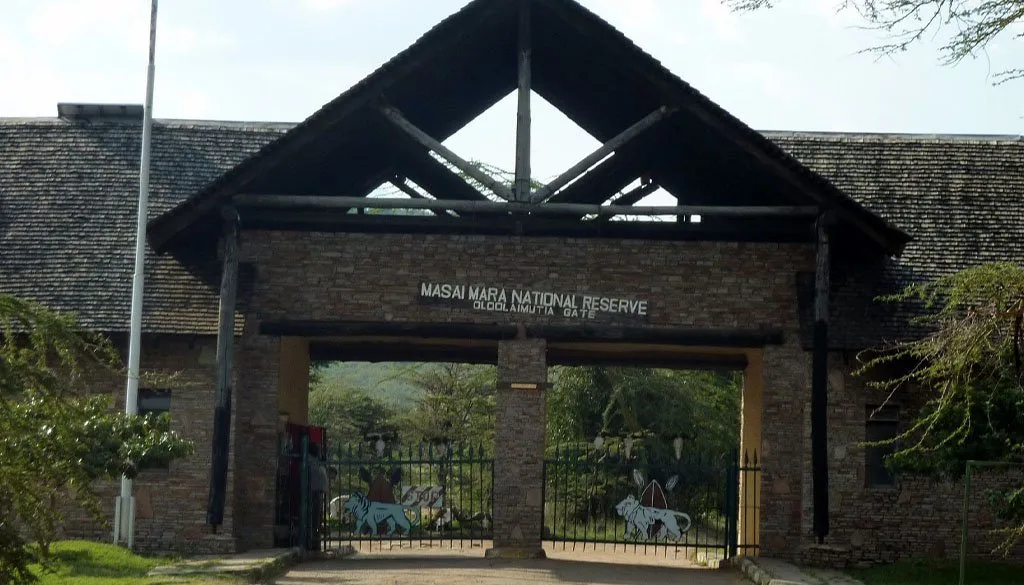
The gate sits a few metres from the Tanzanian Bologonja gate. On a map it looks like a convenient doorway into the Serengeti. It is not. The international border crossing at Sand River has been closed to commercial tourist traffic since the breakup of the East African Community in 1977. You cannot drive into the Serengeti through it. Narok County has rehabilitated the gatehouse and the national government built an immigration facility here in anticipation of a future reopening, but as of 2026 no agreement has been finalised.
If you’re planning an overland trip from the Mara to the Serengeti, your vehicle must exit the reserve and drive 6–7 hours via the Isebania border crossing (Sirari on the Tanzania side). You change vehicles at the border because Kenyan vehicles are not permitted in Tanzanian parks and vice versa. The luggage transfers between vehicles at the state line.
Because the border crossing is closed, Sand River Gate receives almost no tourist traffic. The gatehouse serves primarily as a ranger outpost and anti-poaching station. If your guide routes you down here, you’re entering a sector where you may be the only vehicle for hours.
The cell signal near the border is weak. Have your operator pre-validate and cache your KAPS entry permit before heading south. A Masai Mara booking through a registered operator handles this.
The Sand River During Migration
Most migration content focuses on the Mara River. But the Sand River is where the herds first enter Kenya. Around late June and July, the advance columns moving north from the Serengeti hit this southern riverbed before reaching the central reserve. For early-season migration sightings, this is the place to be while the rest of the visitors are waiting at Lookout Hill.
In October, the reverse happens. The herds use the wide sandbeds of the Sand River as their primary route back into Tanzania as the short rains break across the border. While the mainstream focus stays on the Mara River, the October return plays out here with almost nobody watching.
The Sand River is wider and shallower than the Mara River. The herds cross in massive parallel columns across expansive sandbeds rather than plunging down vertical mud walls. It feels nothing like the Mara River. There’s no panic, no vertical drop, and no wall of vehicles behind you. The low, sloping banks allow your guide to position the vehicle at river level, framing the crossing animals against the open sky. Without the dust plumes from 30 other vehicles, the air stays clean for long-distance photography.
After three months of migration crossings, the river casualties accumulate. Spotted hyena clans concentrate here in numbers that dwarf the central sectors, stripping carcasses on the sandbanks. Vulture diversity peaks in September with Lappet-faced, Rüppell’s, and white-backed vultures gathered along the banks in massive numbers.
Migration Event | Sand River Flow | Photographic Edge |
June/July Arrival | Advance migration columns hit this riverbed first when entering Kenya. | Document pristine, unhurried herd arrivals before main reserves get crowded. |
October Return | Mega-herds use wide southern beds to seamlessly drift back south. | Capture rhythmic, stress-free crossings across beautiful, wide channels. |
Shallow Banking | Low sandbeds replace the high, chaotic vertical mud-wall plunges. | Position low at river level to frame animals against pristine skies. |
Before You Head South
- The Sand River sector works best on 5-day or longer itineraries, or fly-in packages via Keekorok Airstrip. On a 3-day road trip from Nairobi, the 6–7 hour drive each way makes the southern sector impractical.
- There are very few camps this far south. The sector is dominated by luxury, low-impact properties. Budget travellers typically stay in the central Mara and drive south for a day trip.
- Pay in USD by card for the best exchange rate at the gate. The internal KES conversion typically uses around KES 140 per dollar when the market rate is closer to KES 129.
- The southern terrain is firmer than the central Mara’s black cotton clay, but dried mud flats near the river can still trap vehicles. Stick to the established tracks.
- Tsetse flies are active in the riverine thickets flanking the border post. Avoid dark blue and black clothing.
- Southern guides form a tight network and share coordinates face-to-face rather than over the public radio. Your guide’s personal relationships with the resident camp spotters matter more here than anywhere else in the reserve.
- Verify your operator on the KATO directory. A guide who has never driven south of Keekorok won’t know the Sand River tracks, and down here there’s nobody to ask for directions.
Frequently Asked Questions
Can I drive from the Mara to the Serengeti via Sand River Gate?
No. The border has been closed since 1977. The alternative is the Isebania crossing, which adds a full day of driving. Our Masai Mara migration page covers timing across both parks.
What are the 2026 fees?
Standard Mara fees: $100/day (January–June) and $200/day (July–December). Children 9–17 pay $50 year-round. Under 9 free. Cash, card, and M-Pesa accepted.
What’s the closest airstrip?
Keekorok. It’s not close — the drive south takes the better part of an hour — but you see wildlife the whole way.
When is the best time to visit the Sand River sector?
Late June and July for the migration’s first entry into Kenya. August and September for peak crossing activity with minimal vehicles. October for the return migration back to Tanzania. See our wildebeest migration guide and best time to visit Masai Mara.
Is it worth going this far south?
If you want migration crossings without the vehicle crush, the Sand River is the best alternative to the Mara River. If you’ve already seen the Mara River crossings and want something different, the Sand River delivers a completely different atmosphere. If you have fewer than 4 days, the distance makes it impractical.
What the Sand River Gives You
The Sand River sector is the furthest point from Nairobi and the furthest from the crowds. Nobody comes here by accident. The border doesn’t open, the gate barely functions, and most guides have never driven this far south. Which is exactly why the game viewing down here is what it is. If you’ve done the Mara River crossings and want to understand what migration looked like before the vehicle fleets arrived, this is where you find it.
Our 4-day trip can include a day trip south from a central camp. The 5-day adds time to stay in the sector. The 6-day Amboseli circuit combines ecosystems. The Mara-Amboseli-Nakuru loop covers all three. Browse everything on our Masai Mara packages page.
Fill out our booking form at Masaimara.co.ke below here and tell us your dates.
This guide was authored by David Njunge, a TRA-licensed safari guide with over 10 years of experience, and edited by Cecilia Wambui, a travel consultant with a degree in Tourism and Hospitality Management.
Related Reading:
- Masai Mara Entrance Gates
- Sekenani Gate
- Best Time to Visit Masai Mara
- Wildebeest Migration Kenya
- Masai Mara Migration
- Lions in Masai Mara
- Leopards in Masai Mara
- Elephants in Masai Mara
- Rhinos in Masai Mara
- Birding Safari Masai Mara
- Photography Safari Masai Mara
- Walking Safaris Masai Mara
- Night Game Drive Masai Mara
- All Inclusive Masai Mara Safari
- Masai Mara Amboseli Nakuru Safari
- 6 Days Masai Mara Amboseli Safari
- 5 Days Masai Mara Safari
- 4 Days Masai Mara Safari
- 3 Days Masai Mara Safari
- Luxury Safari Masai Mara
- Masai Mara Packages
- Masai Mara Flying Packages
- Masai Mara Booking
- Official KWS Park Fee Portal
- Kenya Wildlife Service
Welcome to Masaimara.co.ke
Thank you for visiting us! We're excited to help you plan an unforgettable safari adventure across Kenya.