
Kichwa Tembo Tented Camp: The Honest 2027 Guide
Kichwa Tembo means “elephant’s head” in Swahili, named after the elephant-shaped hill nearby. The camp sits at the base of the Oloololo Escarpment on the western edge of the Mara, where the riverine forest meets the open plains. It’s one of the larger camps in the Mara with 40 tents across three tiers, and the tier you book makes a bigger difference than at most properties.
Not All 40 Tents Are Created Equal
The twelve Classic tents sit deeper in the forest. They’re shaded, cool, and surrounded by trees, but the views of the plains are limited and the walk to the main camp area is long. For guests who want to spend time between drives at the pool or the bar, that distance adds up across a three-night stay.
The twenty Superior tents have brick entrances and solid bathrooms, and they sit closer to the heart of the camp. These are the tents most guests end up in.
The eight Superior View tents are in the front row facing the open Mara. These are the ones that get the sunrise straight through the front, with zebras and wildebeest visible from the deck without binoculars. The difference between waking up in the forest and waking up facing the plains is significant, so confirm which tier you’re booking before you pay. There are also three family suites for guests travelling with children.
Every tent comes stocked with sparkling wine on ice, a pair of binoculars, reusable water bottles, and a wildlife journal for documenting sightings. Each tent also has a personal butler who delivers morning coffee and homemade biscuits to the entrance before the wake-up call, handles laundry and turndown, and is available for anything personal throughout the stay.
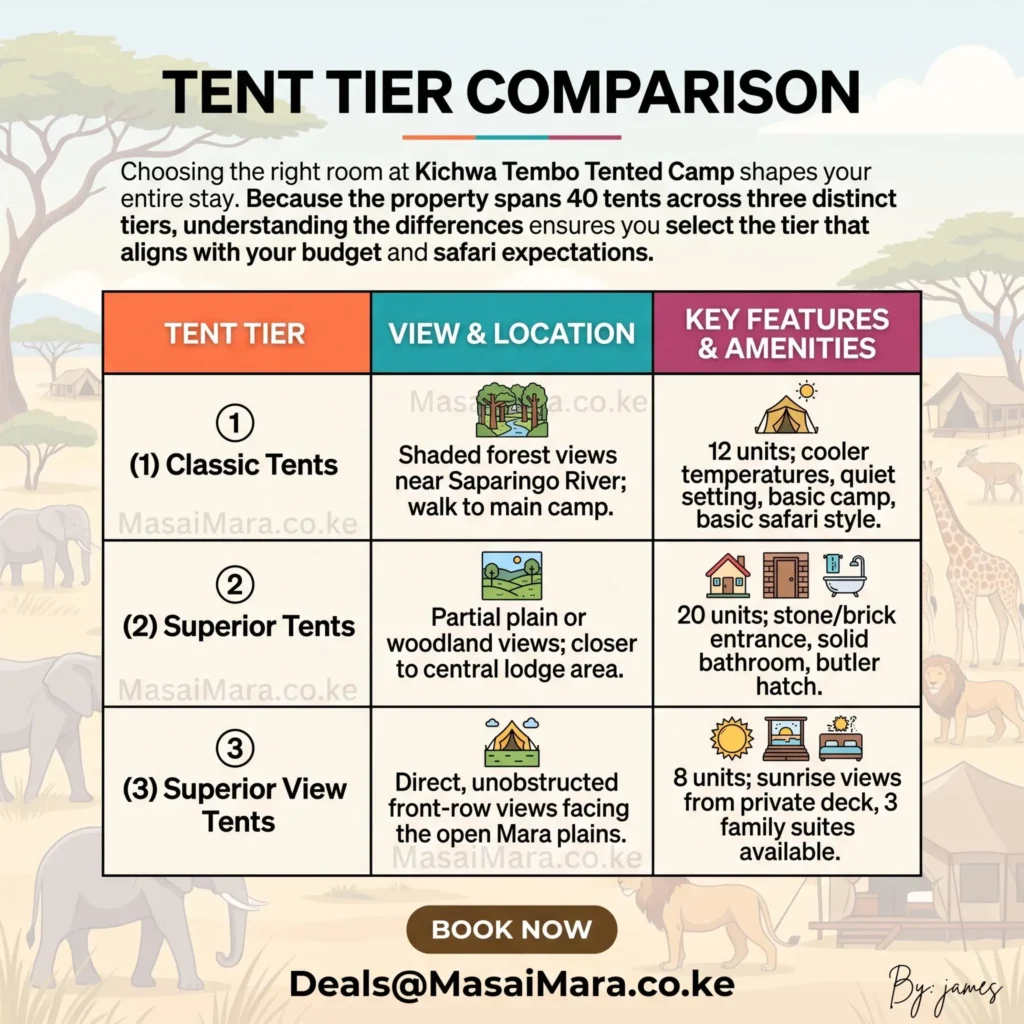
Tent Tier Comparison
Choosing the right room at Kichwa Tembo Tented Camp shapes your entire stay. Because the property spans 40 tents across three distinct tiers, understanding the differences in view, proximity to main amenities, and physical layout ensures you select the tier that aligns with your budget and safari expectations.
Tent Tier | View & Location | Key Features & Amenities |
Classic Tents | Shaded forest views near Saparingo River; longer walk to main camp | 12 units; cooler temperatures, quiet setting, basic safari style |
Superior Tents | Partial plain or woodland views; closer to central lodge area | 20 units; stone/brick entrance, solid bathroom, butler hatch |
Superior View Tents | Direct, unobstructed front-row views facing the open Mara plains | 8 units; sunrise views from private deck, 3 family suites available |
What Happens When You Arrive
The airstrip transfer takes about 30 minutes, which is longer than some Mara camps where the strip is next door. The drive passes through active wildlife country and works as a game drive, so have the camera ready rather than packed. Flying in from Nairobi takes 45 to 60 minutes. Pack in a soft duffel, 15 kg limit.
When the vehicle pulls into camp, the staff line up with a traditional welcome song and dance. Cool towels and drinks follow. Children especially love it. It’s theatrical but it comes from a genuine place, and the warmth stays consistent through the rest of the stay.
Driving the Mara Triangle from Here
The camp sits on a private concession next to the Oloololo Gate, so game drives enter the Mara Triangle quickly. During migration season from July to October, the river crossings happen within driving range, and the western side of the reserve is generally quieter than the Talek and Sekenani areas to the east.
One thing to know is that the camp runs its own fleet of vehicles, and during peak season the numbers add up. Guests have reported 10 or more vehicles from this single property at the same sighting inside the Triangle. If conservancy-level exclusivity with 3 to 5 vehicles matters, this camp operates on a different scale. Leaving 30 minutes before the standard departure time helps because you reach sightings before the rest of the fleet.
The balloon safari launches from the area and is worth considering once, though it’s more about the landscape than the wildlife. For guests whose priority is getting close to animals, the morning game drive covers more ground.
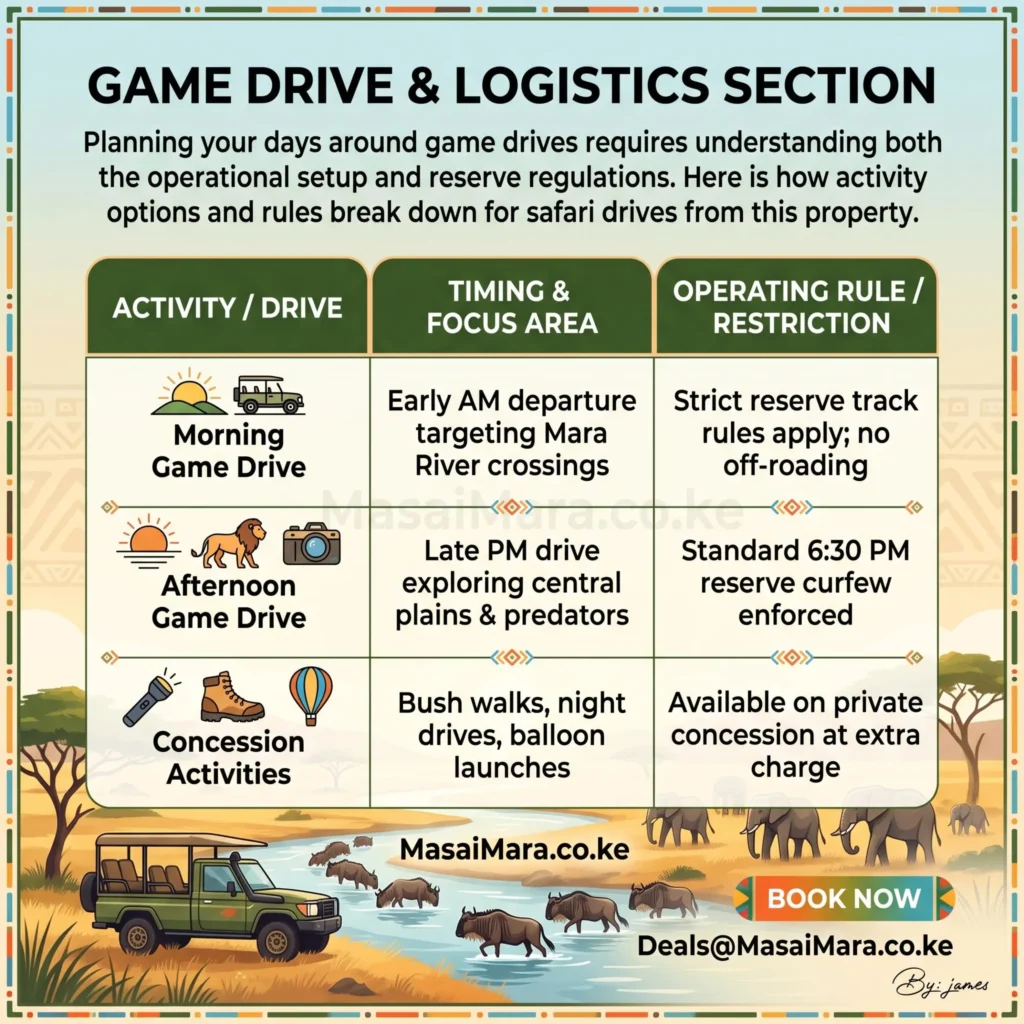
Game Drive & Logistics Section
Planning your days around game drives requires understanding both the operational setup and reserve regulations. Here is how activity options and rules break down for safari drives from this property.
Activity / Drive | Timing & Focus Area | Operating Rule / Restriction |
Morning Game Drive | Early AM departure targeting Mara River crossings | Strict reserve track rules apply; no off-roading |
Afternoon Game Drive | Late PM drive exploring central plains & predators | Standard 6:30 PM reserve curfew enforced |
Concession Activities | Bush walks, night drives, balloon launches | Available on private concession at extra charge |
The Pool, the Warthogs, and What to Do Between Drives
The rim-flow pool is elevated above the camp with views across the plains. Elephants, zebras, and wildebeest are often visible from the water, which makes the between-drive hours feel less like waiting and more like watching.
Resident warthogs roam the main area between the bar, the fire pit, and the dining pavilion as if they own the place. Vervet monkeys visit the tents during afternoons and they’re bold, so don’t leave anything edible or shiny on the veranda. The Maasai staff organise singing and jumping displays around the evening fire, and local crafts are brought in for purchase.
The food is served in the dining pavilion and on an outdoor patio hung with woven pendant lamps. The soups and the homemade ice cream are the things that come to mind when I think about meals here.
What to Know Before Booking
Sound carries between tents. With 40 tents, the camp is larger than most luxury properties in the Mara, and some guests have heard conversations and music from neighbouring tents. For quiet, request one of the end positions or a Superior View tent with more spacing.
Three nights is the right length. Two nights works but feels rushed. The camp sits on the western edge, so crossing to the eastern reserve via the New Mara Bridge means paying a second day’s entry fee. Budget for this if the migration crossings are on the eastern side that day. The conservancy vs reserve page explains the fee structure.
This camp isn’t a conservancy property, so there are no night drives, no walking safaris, and no off-road driving. What it offers instead is direct Triangle access, a large well-run operation with deep staffing, and a location in the migration path. For guests who want conservancy activities, a split-stay with two nights here and two in a conservancy covers both experiences.
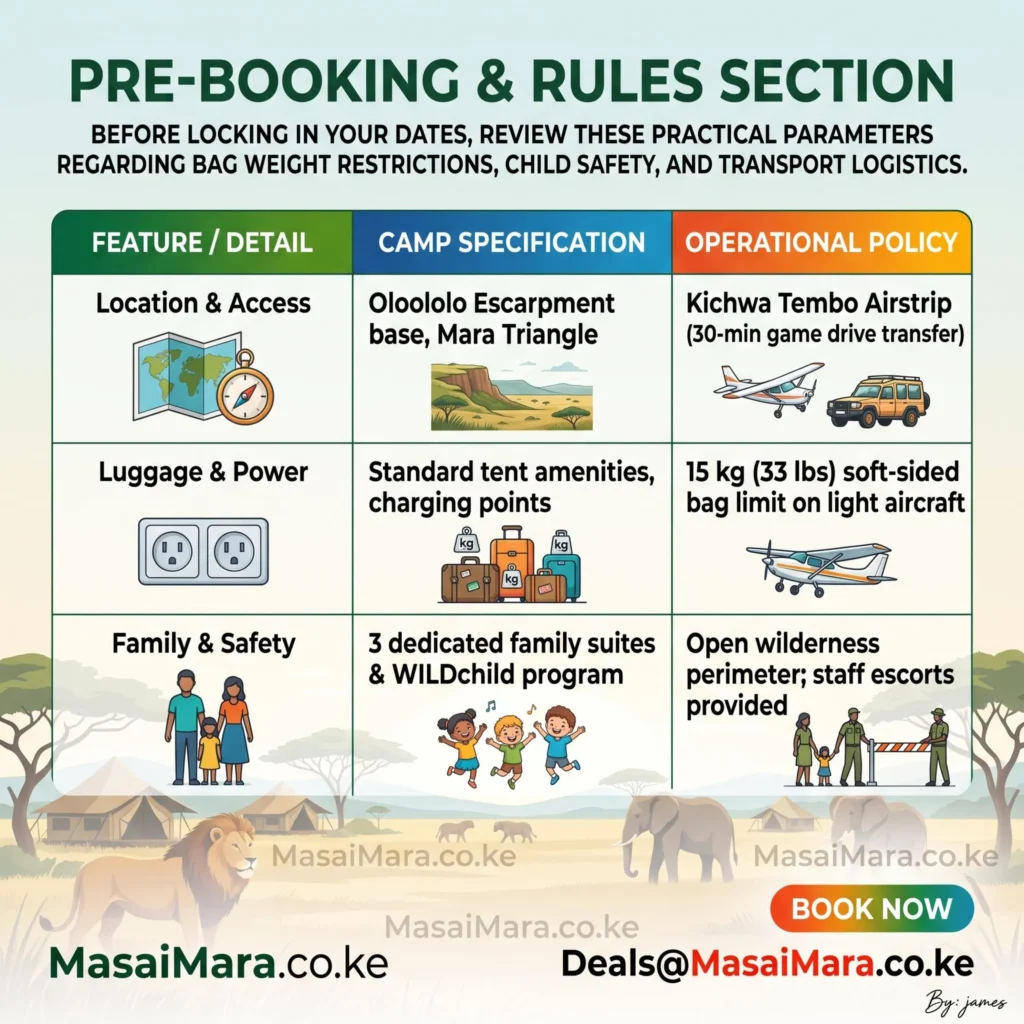
Pre-Booking & Rules Section
Before locking in your dates, review these practical parameters regarding bag weight restrictions, child safety, and transport logistics.
Feature / Detail | Camp Specification | Operational Policy |
Location & Access | Oloololo Escarpment base, Mara Triangle | Kichwa Tembo Airstrip (30-min game drive transfer) |
Luggage & Power | Standard tent amenities, charging points | 15 kg (33 lbs) soft-sided bag limit on light aircraft |
Family & Safety | 3 dedicated family suites & WILDchild program | Open wilderness perimeter; staff escorts provided |
Questions Guests Ask
Which tent tier should I book?
Superior View if the budget allows. That front-row position is what sets this camp apart. Classic works if the tent is just a place to sleep between drives, but the distance to the main area makes it feel like a different camp.
Is it good for families?
Yes. The three family suites have connecting rooms. The personal butler service helps with logistics. The welcome ceremony, the warthogs, and the pool keep children entertained between drives. The camp’s size means there’s more space for families to move around than at smaller intimate camps.
How do I start planning?
Send us your dates and we’ll tell you whether Kichwa Tembo has availability in the right tent tier. If the Triangle drives and the pool mornings both matter, give yourself the full three nights described above. Start a booking if dates are fixed, or tell us what matters most and we’ll build the trip around it.
This guide was authored by David Njunge, a TRA-licensed safari guide with over 10 years of experience, and edited by Cecilia Wambui, a travel consultant with a degree in Tourism and Hospitality Management.
Related Reading:
Welcome to Masaimara.co.ke
Thank you for visiting us! We're excited to help you plan an unforgettable safari adventure across Kenya.