
Birding Safari Masai Mara: Eleven Days From Forest To Desert (2027)
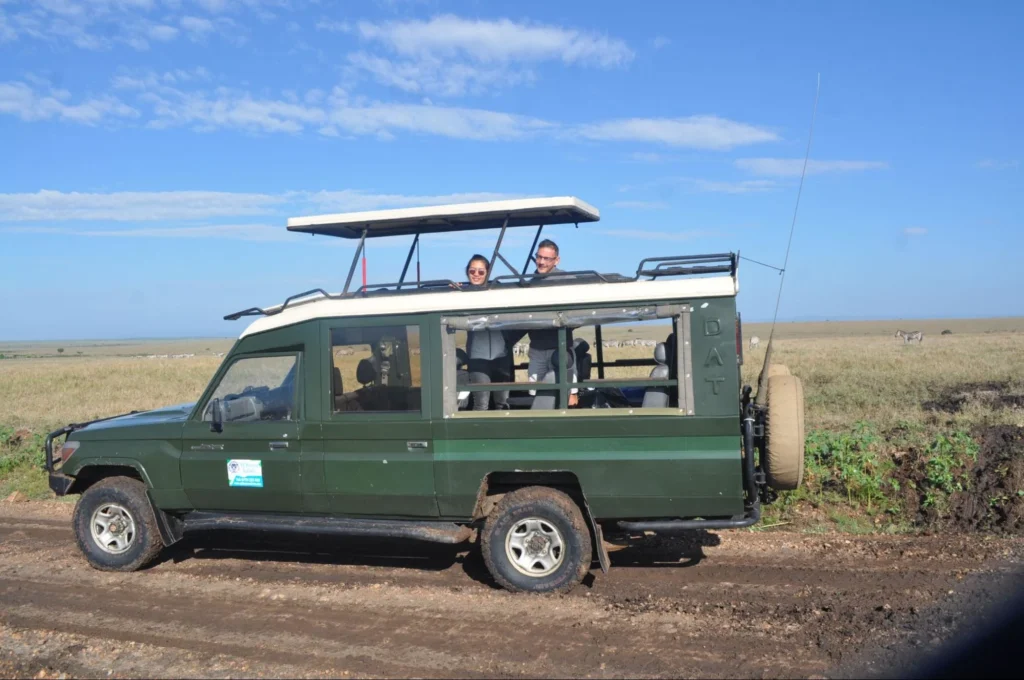
A birding safari Masai Mara trip is paced for birds, with a guide who stops for a cisticola as readily as for a lion. More than 500 species have been recorded in the Mara, but a serious list needs more than one habitat. This eleven-day route gives you seven: a highland forest and a city-edge savannah in Nairobi, a freshwater lake, two soda lakes, the Mara’s grassland, river forest and marsh, and the dry thorn country of Samburu. A keen birder can expect 300 species or more. For 2027, it costs from USD 5,940 or KES 419,000 per person.
Birding Safari Masai Mara Costs (2027)
Prices are per person for two birders sharing a room and a private 4×4 Land Cruiser. They include the vehicle and birding guide for eleven days, ten nights of accommodation, all park, reserve and forest entry fees, and the boat on Lake Naivasha.
International Visitors (USD)
| Level | Peak Season | Rest Of The Year |
|---|---|---|
| Mid-Range | 7,550 | 5,940 |
| Luxury | 10,370 | 8,040 |
Kenyan Citizens (KES)
| Level | Peak Season | Rest Of The Year |
|---|---|---|
| Mid-Range | 536,000 | 419,000 |
| Luxury | 731,000 | 570,000 |
Peak season is July to October, which is the migration season for wildebeest and not the best season for birds. The best birding months, November to April, fall in the cheaper column. Both columns already carry the reserve’s second-half fee of USD 200 or KES 3,000 a day, which applies from July to the end of December. From January to June, the fee falls to USD 100 or KES 1,500 a day. A birder travelling between January and April, which is half of the best season, therefore pays USD 300 or KES 4,500 less over the three Mara days, and we take that off your quote.
Where You Stay
| Stop | Nights | Mid-Range | Luxury |
|---|---|---|---|
| Nairobi | 2 | Ole Sereni | The Residences at Karen |
| Rift Valley lakes | 1 | Lake Naivasha Sopa Resort | Lake Elmenteita Serena Camp |
| Masai Mara | 3 | Ashnil Mara Camp | Governors’ Camp |
| Lake Nakuru | 1 | Sarova Lion Hill Game Lodge | The Cliff |
| Samburu | 3 | Samburu Sopa Lodge | Elephant Bedroom Camp |
Both Mara camps were chosen for their birds. Ashnil stands in riverine forest on the Mara River. Governors’ Camp is beside Musiara Marsh, the best single birding site in the reserve.
Three or four birders. The vehicle is shared between everyone in it. In a party of four, each person pays about USD 890 or KES 92,000 less. We keep birding vehicles to four, so that everyone has a window on both sides.
Single rooms. Each lodge charges a single supplement for a room used by one person.
Residents of Kenya. If you hold a Kenyan permit, the lodges and the gates charge you their resident rates. Ask us for a resident quote.
What Is Covered in the Price?
- Vehicle: Eleven days in a 4×4 Land Cruiser kept for your party, with fuel, a roof hatch and a bean bag at each window.
- Guide: A TRA-licensed driver-guide who knows birds by sight and by call.
- Entry Fees: Nairobi National Park, Karura Forest, Masai Mara National Reserve for three days, the Lake Elementaita shoreline, Lake Nakuru National Park and Samburu National Reserve for three days.
- Lake Naivasha: A two-hour boat trip along the shore.
- Accommodation: Ten nights, as listed.
- Meals: Bed and breakfast for the two Nairobi nights, then full board from lunch on Day 3 until breakfast on Day 11. Breakfast is packed on mornings in the field.
- Checklist: A printed Kenya bird checklist for each person.
- Water: Drinking water in the vehicle.
- Excluded: Lunch and dinner in Nairobi, tips (USD 15 to 20 / KES 2,000 to 2,500 per day), drinks, single room supplements, the separate gate fee for Buffalo Springs National Reserve if you choose to cross into it, a hot air balloon flight (USD 500 / KES 58,500), a Maasai village visit (KES 1,500 for citizens / USD 20 for non-residents), international flights, the Kenya eTA (USD 34) and Kenya’s inbound travel health insurance (up to USD 44, or about USD 50 to 52 with the portal’s fees).
Most of my guests come for the animals with fur. A few come for the ones with feathers, and they are the guests who taught me to guide properly. A birder makes you stop the engine and listen. In ten years, I have learned that when I listen for birds, I find more of everything else as well. The oxpeckers give away the buffalo, the starlings mob the snake, and the vultures dropping out of the sky mark the kill.
The 11-Day Itinerary
| Day | Where | Habitat | Birds To Look For |
|---|---|---|---|
| 1 | Nairobi National Park | Grassland, dams, riverine forest | Secretary bird, Hartlaub’s bustard, long-crested eagle, grey crowned crane |
| 2 | Karura Forest | Highland forest | Hartlaub’s turaco, crowned eagle, narina trogon, silvery-cheeked hornbill |
| 3 | Lake Naivasha and Lake Elementaita | Fresh and soda lakes | African fish eagle, giant kingfisher, great white pelican, flamingos |
| 4 | To the Masai Mara | Grassland | Southern ground hornbill, kori bustard, lilac-breasted roller |
| 5 | Masai Mara | Marsh and river forest | Rufous-bellied heron, saddle-billed stork, Ross’s turaco, Schalow’s turaco |
| 6 | Masai Mara | Plains and escarpment | Usambiro barbet, martial eagle, bateleur, vultures |
| 7 | Lake Nakuru | Soda lake and acacia woodland | Flamingos, pelicans, African spoonbill, waders |
| 8 | To Samburu | Highland to dry bush | Birds of the road north |
| 9 | Samburu | Thorn scrub and river | Vulturine guineafowl, Somali ostrich, golden-breasted starling |
| 10 | Samburu and Buffalo Springs | Thorn scrub and springs | Somali bee-eater, pygmy falcon, palm-nut vulture |
| 11 | Back to Nairobi |
Day 1: Nairobi National Park
Your list starts ten kilometres from the city centre. Nairobi National Park has more than 500 recorded species, more than many whole countries. We go in at 6 AM. The open grassland holds ostriches, secretary birds and bustards. The dams bring herons, storks and ducks, and the forest along the Mbagathi River has turacos and, with patience, the African finfoot. In the months after rain, Jackson’s widowbirds display in the long grass. A hundred species by lunch is normal.
Day 2: Karura Forest
Karura is a highland forest inside Nairobi, with level trails, a river and a waterfall. Forest birding is done on foot and by ear, and it is slower than birding from a vehicle. We walk from early morning with a local bird guide. Hartlaub’s turaco, with its crimson wings, is the bird everyone wants. Crowned eagles nest here and hunt monkeys in the canopy. The afternoon is free, or we can add the Oloolua Nature Trail in Karen or Ngong Road Forest for more forest species.
Day 3: Lake Naivasha And Lake Elementaita
We reach Lake Naivasha by mid-morning and go straight onto the water. From a boat, you are level with the birds: fish eagles calling from the acacias, pied and malachite kingfishers on the reeds, pelicans, cormorants, jacanas walking on the lilies and the goliath heron, the largest heron in the world. After lunch, we drive 45 minutes to Lake Elementaita, a shallow soda lake where great white pelicans breed on the rocky islands and flamingos feed along the shore.
Day 4: To The Masai Mara
The drive takes five to six hours, and the birding starts before the gate. The plains outside the reserve are good for larks, wheatears and coursers. Inside, the first birds are the big ones: southern ground hornbills walking in family groups, kori bustards, secretary birds and lilac-breasted rollers on every other bush. You reach camp in time for an hour in the grounds before dark.
Day 5: Marsh And River Forest
We spend the whole morning at Musiara Marsh with breakfast in the vehicle. Rufous-bellied herons breed here, one of very few places in Kenya where they do. Saddle-billed storks, goliath herons, African jacanas and several kingfishers work the pools, and from May to October the rare Madagascar pond heron visits. In the afternoon, we drive the forest edge along the Mara River at walking pace for turacos, hornbills, woodpeckers and barbets.
Day 6: Plains And Escarpment
The morning is for grassland birds: longclaws, larks, cisticolas, Temminck’s courser, black-bellied bustard and the Usambiro barbet in the whistling thorn. By mid-morning, the raptors are up on the thermals. In the afternoon, we work towards the Oloololo Escarpment for eagles and vultures. This is also the day for lions and cheetahs. Nobody is asked to drive past a leopard to look at a lark.
Day 7: Lake Nakuru
Before breakfast, you bird the camp grounds on foot. There is no drive in the reserve this morning, because Mara fees are charged by the calendar day and both camps are inside it, so we leave through the gate before 10 AM. Nakuru is roughly six hours away by road. The afternoon is spent on the lakeshore, where pelicans, spoonbills, stilts, avocets and flamingos crowd the shallows, and in the acacia woodland behind it.
Day 8: Nakuru To Samburu
A short drive in the park at dawn, and then a long day north: over the highlands at Nyahururu, past Mount Kenya and down through Isiolo into the dry country. It takes about six and a half hours with stops. We bird at the stops, and the species change with every thousand metres of altitude you lose.
Days 9 And 10: Samburu And Buffalo Springs
For many birders, this is the best stop of the trip. North of the equator, the birds are different, and a list that was slowing down picks up again. Vulturine guineafowl run in flocks with cobalt-blue chests. The Somali ostrich has a blue neck and legs. Golden-breasted starlings, Somali bee-eaters, white-headed mousebirds and pygmy falcons are all birds of this dry belt and nowhere else on the route. The Ewaso Nyiro river brings kingfishers, bee-eaters and palm-nut vultures. Buffalo Springs lies across the river and is worth half a day for its pools and open plains. It is a different reserve, run by a different county, and it does not accept the Samburu ticket. If you want to cross the bridge, the Buffalo Springs gate fee is paid on the spot and is not part of the package price.
Day 11: Back To Nairobi
You get one more hour with the binoculars in the lodge grounds. After that it is a six-hour road south, and you are in Nairobi by mid-afternoon. Book a flight home for after 9 PM.

The Four Birding Habitats
| Habitat | Where In The Mara | Birds |
|---|---|---|
| Open grassland | The central plains and Paradise Plain | Bustards, larks, longclaws, secretary bird, ground hornbill |
| River forest | Along the Mara and Talek rivers | Turacos, kingfishers, hornbills, woodpeckers, fish eagle |
| Marsh | Musiara Marsh | Herons, storks, jacanas, crakes, rufous-bellied heron |
| Escarpment and rocky hills | Oloololo Escarpment | Eagles, vultures, falcons, cliff chat |
The Mara looks like one sweep of grass, but for birds it is four places. A trip that stays on the plains looking for cats will miss half the species.
Open grassland. These are the easiest birds to see and some of the largest. Kori bustards, the heaviest flying birds in Africa, stalk through the grass. Secretary birds hunt snakes on foot. Crowned plovers, rufous-naped larks and yellow-throated longclaws are constant. After rain, the grass fills with widowbirds and bishops in breeding colours.
River forest. A ribbon of tall figs and wild olives follows the Mara and Talek rivers. Ross’s and Schalow’s turacos live in the canopy. Giant, pied and malachite kingfishers fish the river, and woodland kingfishers hunt insects from the branches above it. Black-and-white casqued hornbills fly over with a noise like a saw. Pel’s fishing owl has been recorded here, but it is rare, and nobody should book a trip expecting it.
Marsh. Musiara Marsh, in the north-west of the reserve, holds water all year. It gathers herons, egrets, storks, ibises, ducks and crakes in one place and is the reserve’s best site by a long way. It needs a whole morning with the engine off.
Escarpment. The Oloololo Escarpment forms the western wall of the Mara. Its updrafts carry raptors all day. More than 50 birds of prey have been recorded in the Mara, among them martial eagle, bateleur, tawny eagle, augur buzzard and several vultures.
Bird Species in the Masai Mara
| Bird | Why Birders Want It | Where To Look |
|---|---|---|
| Usambiro barbet | Found only in the Mara and Serengeti region | Whistling thorn and termite mounds on the plains |
| Rufous-bellied heron | Very local in Kenya | Musiara Marsh |
| Jackson’s widowbird | A jumping display in the breeding season | Long grass after the rains |
| Schalow’s turaco | A western Kenya forest bird | Fig trees along the rivers |
| Southern ground hornbill | Large, long-lived and declining | Open plains, in family groups |
| Secretary bird | A raptor that hunts on foot | Short grass |
| Saddle-billed stork | The tallest stork in Africa | Marsh and river pools |
| Grey crowned crane | Endangered, and elegant | Wet grassland |
| Lilac-breasted roller | The bird on every safari brochure | Everywhere, on exposed perches |
The Usambiro barbet lives only in the Mara and Serengeti region. It is a spotted, noisy bird that duets from the top of a termite mound, and for anyone keeping a world list it is the reason to come here and not somewhere else.
Jackson’s widowbird is brown and ordinary for most of the year. In the breeding season, the male turns black, grows a long curved tail, tramples a ring in the grass and jumps straight up out of it again and again. A field of jumping widowbirds is one of the odd sights of East Africa.
The greater honeyguide has the strangest habit of any bird here. It leads people to wild bees’ nests with a chattering call, and waits for its share of the wax when the nest is opened. You may hear the call from the forest edge.
Vultures deserve more attention than they get. White-backed, Rüppell’s, lappet-faced, hooded and white-headed vultures all occur in the Mara, and most are now critically endangered. The Mara is one of the best places left in Africa to see them at a kill.
The oxpeckers are worth learning. Red-billed and yellow-billed oxpeckers both ride on large mammals. A flock rising from a thicket tells you something big is inside it.
How a Birding Safari Works
| Normal Game Drive | Birding Drive |
|---|---|
| Moves fast between cat sightings | Moves slowly and stops often |
| Engine left running | Engine off at every stop |
| Guide scans for mammals | Guide listens as much as looks |
| Back at camp by 9:30 AM | Out until 11 AM with a packed breakfast |
| Any group size | No more than four |
The pace is slower. A birding vehicle may cover five kilometres in a morning. It stops for a call, waits for the bird to show and stays until everyone has seen it well. That is impossible in a vehicle shared with people who came for lions, which is why birding trips are private.
The guide matters most. A general safari guide knows the fifty birds that tourists ask about. A birding guide knows several hundred by voice, knows which tree the turaco feeds in this month and knows how to put the vehicle so the light is behind you. Tell us your level and your target species when you book, and we match the guide to them.
Mornings are long. Birds are most active from first light until about 10 AM. We take breakfast with us so that you are not back in camp at the best hour.
Some birding is on foot. Karura Forest is walked. In camp, the grounds are often the richest patch of all, and an hour before breakfast and another before dinner will add species you never see from the vehicle. Walking outside camp is not allowed in the reserve. If you want bush walks for small birds, we can add a night in a conservancy.
Mammals are not ignored. You are in the Mara, and you will see lions, elephants and, in season, the migration. A birding guide finds them as well as any other. The only difference is that you stop for the birds on the way.
What to Bring
| Item | Recommendation |
|---|---|
| Binoculars | 8×42, one pair each |
| Field guide | Birds of East Africa, by Stevenson and Fanshawe |
| Apps | eBird for lists and hotspots, Merlin for calls |
| Camera | A 100 to 400 mm or 150 to 600 mm zoom |
| Telescope | Useful at the lakes, optional elsewhere |
| Clothing | Dull green, olive and brown |
Binoculars. For this route, 8×42 is the size to bring. The wider view makes it easier to find a bird in a canopy, and the image stays bright at dawn. Everyone needs their own. Sharing a pair means somebody misses the bird.
Field guide. Stevenson and Fanshawe’s Birds of East Africa is the standard book and the one your guide will carry. Download eBird and Merlin, with the Kenya packs, before you leave home, because lodge Wi-Fi is slow.
Camera. A long zoom on a bean bag covers most bird photography from a vehicle. Bring a rain cover, because the best birding months are the wet ones.
Telescope. At Nakuru and Elementaita, the waders and flamingos can be far out on the mud. A telescope and a window clamp or tripod help there. Elsewhere, you can manage without one.
Clothing. Wear muted colours, especially in the forest. Bring a waterproof jacket, a warm layer for cold mornings in Nairobi and the Mara, and light clothes for Samburu.
Advice for Birders
| Subject | Guide’s Advice |
|---|---|
| Best months | November to April |
| Most species | Nairobi National Park and Samburu |
| Best single Mara site | Musiara Marsh |
| Group size | Four birders at most |
| Flights home | After 9 PM on Day 11 |
- Tick Off Kenya’s Inbound Health Insurance First. No foreign visitor has been admitted without it since 5 October 2026. It is bought on eCitizen, with a premium of up to USD 44 a person and a total of about USD 50 to 52 once the portal adds its fees. Its ceiling for emergency care and evacuation on Kenyan soil is USD 50,000. It is waived for Kenyan nationals, for residents with permits and for East African Community nationals. Screenshot the “Insurance: Valid” page with its reference number, because the PDF does not always come, and have it ready at check-in. Each person travelling needs a certificate of their own, and the airline may ask to see it before it lets you board.
- Send Us Your Target List. If there are ten birds you most want, tell us. It changes where the guide spends time, and sometimes which camp we use.
- Do Not Use Playback Carelessly. Playing recorded calls to draw a bird out stresses it, especially in the breeding season, and it is not allowed in the parks. A good guide finds the bird without it.
- Give Musiara A Whole Morning. Most vehicles pass the marsh on the way to a lion. Stay for four hours and it will be the longest list of your Mara days.
- Bird The Camp. Walk the grounds before breakfast and before dinner. Camps in river forest have species at arm’s length that you will struggle to see from a vehicle.
- Keep A Daily List. We go through the checklist together each evening. It fixes the birds in your memory and shows the guide what is still missing.
- Expect Rain In The Best Months. November, April and May are wet. Showers are usually in the afternoon and pass quickly, and the birds are at their best just after.
- Do Not Count On Flamingos In One Place. Flamingo numbers at Nakuru and Elementaita rise and fall with the water level. Some years they are there in hundreds of thousands, and some years most are at another lake. The route visits two soda lakes to improve your chances.
- Carry Shillings. Local forest guides, tips and small entry extras are paid in cash.
Best Time to Go Birding
| Months | What Happens |
|---|---|
| January to March | Dry and clear. European and Asian migrants are on the lakes and plains. |
| April to May | Long rains. Residents breed, sing and wear their brightest plumage. Grass is long and some tracks are muddy. |
| June to August | Dry and cool. Fewer species, but easy conditions. The Madagascar pond heron is at Musiara. |
| September to December | Migrants arrive from the north from September. The short rains in November start another round of breeding. |
November to April gives the longest lists, because migrants from Europe and Asia are present alongside Kenya’s own birds. If you also want the wildebeest migration, come in September or October, when the first migrants are arriving and the herds are still in the Mara.
Top Birding Hotspots in Kenya
Kenya has more than 1,100 bird species, one of the highest totals of any country in Africa. This route visits seven of its best sites. Here are the main regions, with places to add on a longer or a second trip.
Nairobi and around. Nairobi National Park, Karura Forest, Ngong Road Forest and the Oloolua Nature Trail are all within the city. Together, they make two or three full days of birding with no long drives.
The Rift Valley lakes. Nakuru and Elementaita for flamingos, pelicans and waders. Naivasha for fish eagles and boat birding. Lake Baringo, further north, for dry-country and cliff species, and for owls and nightjars found by local guides.
Savannah and bush. The Masai Mara for raptors, grassland birds and river forest. Samburu and Buffalo Springs for the northern specials. Tsavo and Amboseli for different dry-country birds again.
Highlands and forests. Mount Kenya and the Aberdares for mountain birds such as the scarlet-tufted sunbird, Jackson’s francolin and the Aberdare cisticola, which lives only in Kenya’s central highlands. Kakamega Forest in the west is Kenya’s only real rainforest and has dozens of species found nowhere else in the country.
The coast. Arabuko-Sokoke Forest, near Watamu, for the Sokoke scops owl and other rare forest birds. Mida Creek beside it for crab plovers and thousands of migrant waders.
Frequently Asked Questions
How many bird species are there in the Masai Mara?
More than 500 have been recorded in the Mara ecosystem, including over 50 birds of prey.
How many species will I see on this trip?
A keen birder with a good guide can expect 300 or more in eleven days between November and April, and somewhat fewer in the dry months. Beginners see fewer but still fill a notebook.
How much does a birding safari cost?
Our eleven-day trip costs from USD 5,940 or KES 419,000 per person at Mid-Range level in the best birding months, and from USD 7,550 or KES 536,000 from July to October. The Luxury level costs from USD 8,040 or KES 570,000.
What is the best month for birding in Kenya?
November to April, when migrants from Europe and Asia are present and many resident birds are breeding.
Do I need to be an experienced birder?
No. Beginners are welcome, and many people become birders on a trip like this. Tell us your level so that the guide pitches it right.
Is a private vehicle necessary?
Yes. Birding needs slow driving, long stops and silence. It does not work in a vehicle shared with people on a standard safari.
Will I still see the Big Five?
Very probably. Lions, elephants and buffalo are certain in the Mara. Leopards are seen on most three-night stays, and rhinos are easy at Lake Nakuru.
What Birding in the Mara Sounds Like
People come to the Mara for what they can see. Birders come to listen as well. A Schalow’s turaco croaks from a fig tree at first light. A fish eagle throws its head back and calls over the river. A honeyguide chatters from the forest edge, asking to be followed. Then every bird on the plain goes quiet at once, and you look up and find the martial eagle. After a few days, you stop looking at the Mara and start listening to it, and it never sounds empty again.
To add walking in the conservancies, see our walking safari Masai Mara page. For bird photography, see the photography safari Masai Mara.
Related Reading:
- Photography Safari Masai Mara
- Walking Safari Masai Mara
- Private Safari Masai Mara
- Masai Mara Conservancies
- Best Time to Visit Masai Mara
- Luxury Safari Masai Mara
Written by David Njunge, TRA-licensed safari guide with over 10 years in the Masai Mara. Edited by Cess Wambui, travel consultant, BSc Tourism and Hospitality Management. Verified for the 2027 season.
Welcome to Masaimara.co.ke
Thank you for visiting us! We're excited to help you plan an unforgettable safari adventure across Kenya.