
Nairobi to Masai Mara Flights: The Complete 2026 Guide
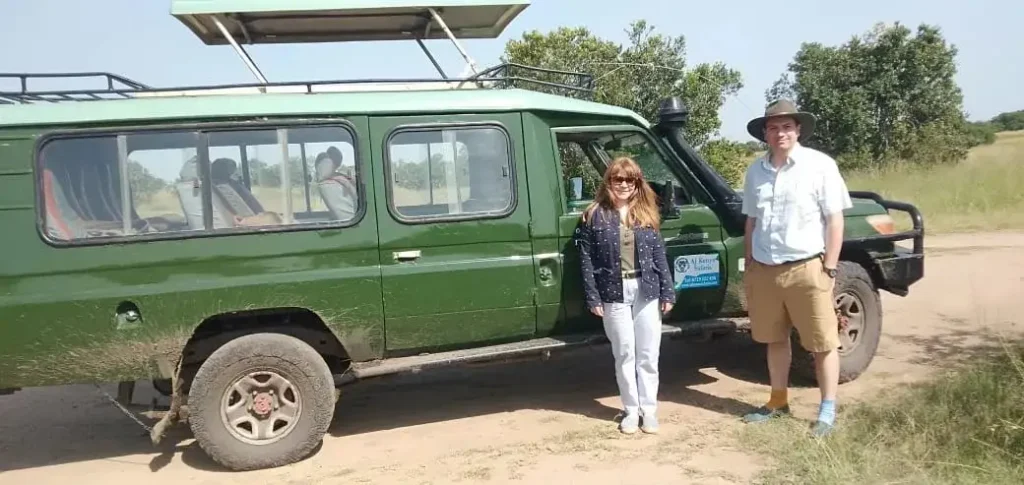
Nairobi to Masai Mara flights depart Wilson Airport daily and land in the reserve within 45 minutes. One-way tickets range from USD 215 to USD 290 depending on season. Return flights cost USD 400 to USD 550. A 3-day fly-in safari starts at USD 1,500 per person (two sharing) in low season.
Quick Facts
- Duration: 45-60 minutes (longer with multi-stop)
- Cost: USD 215-290 one-way / USD 400-550 return
- Luggage: 15kg STRICT, soft bags only
- Best seat: Left side outbound, right side return
- Airport: Wilson (not JKIA)
- Airlines: SafariLink, AirKenya, Governors’ Aviation
What This Guide Covers
What Flights Cost
One-way flights run USD 215 to USD 290 per person. Return flights cost USD 400 to USD 550. Prices climb during migration season (July through October) and December holidays.
The flight itself is affordable – it’s the park fees that add up. Non-residents pay USD 100/day (January-June) or USD 200/day (July-December). For a 3-day safari, that’s USD 200-400 in park fees alone. Factor that into your budget.
Fly-In Safari Packages
Prices per person. Two people sharing. Private Land Cruiser at the Mara.
3-Day Fly-In Safari – Non-Residents, Low Season (USD)
Level | Camp | Per Person |
Budget | Mara Springs | 1,500 |
Mid-Range | Sentrim Mara | 1,810 |
Luxury | Mara Serena | 2,385 |
Ultra-Luxury | Governors’ Camp | 3,230 |
3-Day Fly-In Safari – Non-Residents, Peak Season (USD)
Level | Camp | Per Person |
Budget | Mara Springs | 2,270 |
Mid-Range | Mara Eden | 2,810 |
Luxury | Mara Serena | 3,575 |
Ultra-Luxury | Governors’ Camp | 4,580 |
Peak season: July-October (migration season) and December 15 – January 5.
4-Day Fly-In Safari – Non-Residents, Low Season (USD)
Level | Camp | Per Person |
Budget | Jambo Mara | 2,040 |
Mid-Range | Sentrim Mara | 2,345 |
Luxury | Sarova Mara | 2,960 |
Ultra-Luxury | 4,425 |
What’s Included
Masaimara.co.ke packages cover: return flights Nairobi-Mara, private 4×4 Land Cruiser with pop-up roof, KPSGA-certified driver-guide, full board accommodation (all meals), park entry fees paid via Narok County portal, drinking water on game drives, AMREF Flying Doctors emergency cover, Nairobi hotel pickup to Wilson Airport.
Not included: Tips for guide (USD 15-20/day), tips for camp staff, alcoholic drinks, hot air balloon at USD 540, travel insurance, Kenya visa via etakenya.go.ke.
Want to see Masai Mara camps before deciding? We can arrange visits to multiple properties.
Airlines Flying Nairobi to Masai Mara
Four main operators. All depart Wilson Airport.
SafariLink – The largest. Cessna Caravans and Dash 8s. Daily morning and afternoon departures. Baggage limit 15kg soft bags only. They’re strict about this – I’ve seen them weigh camera bags separately.
AirKenya Express – Reliable, similar pricing. Flies to Keekorok, Musiara, and Mara Serena airstrips. Check-in closes 30 minutes before departure but arrive an hour early anyway.
Governors’ Aviation – Operated by the Governors’ Camp group. Primarily serves their own properties but takes other passengers when seats are available. Direct flights with fewer stops.
Mombasa Air Safari – Less frequent departures but competitive rates.
All four have solid safety records. The planes are small – Cessna Grand Caravans seat about 12 passengers. Don’t expect legroom. Don’t expect overhead bins. Don’t expect a bathroom. The flight is short enough that none of this matters.
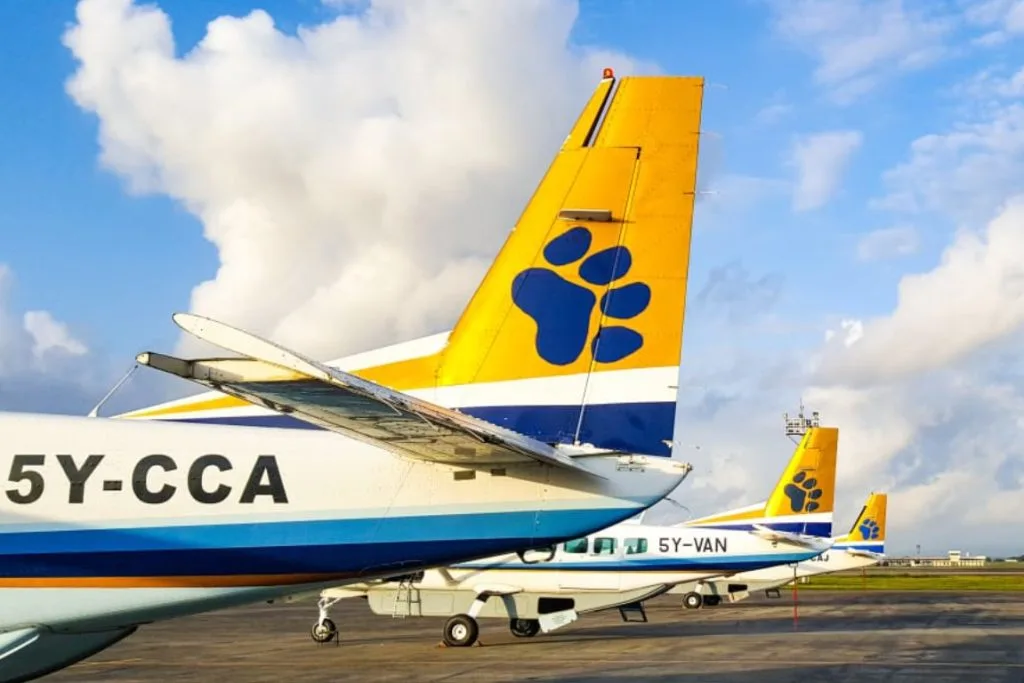
Wilson Airport: What Nobody Mentions
Wilson Airport sits in Langata, about 30-45 minutes from central Nairobi. It’s not JKIA. There’s no immigration. No duty-free. Just a small terminal that smells of jet fuel mixed with Java House coffee and the intense morning heat radiating off the tarmac while you wait to board.
Getting there is half the battle. Langata Road traffic – what locals call matatu madness – can turn a 30-minute drive into an hour-plus nightmare during rush hour. Leave early. I mean really early. 6 AM pickup for an 8 AM flight isn’t paranoid, it’s sensible.
The parking situation is chaos. Safari company drivers triple-park. Vehicles block each other in. If someone’s picking you up, have them arrive early and wait in the lot rather than circling.
The main terminal is cramped, but here’s something most guides don’t mention: the AirKenya and SafariLink private terminals are separate buildings with quieter cafes and better seating. Ask your driver to drop you at the correct terminal for your airline.
The hidden luggage storage: Airlines at Wilson do have small storage lockers, but they don’t advertise them. Ask specifically at the check-in desk – they’ll store bags for around USD 4-8/day for fly-in guests. If your hotel can’t hold your hard luggage, this is your backup.
Which Airstrip You Fly Into
The Mara has at least a dozen airstrips. Your flight lands at whichever one is closest to your camp.
Keekorok – Central reserve. Serves Keekorok Lodge, Fig Tree Camp, and camps in the eastern sector. Tarmac strip, one of the oldest in the reserve.
Musiara – Northern reserve, near Governors’ camps and the main Mara River crossing points. This is where you want to land during migration season if you’re chasing crossings. The morning fog here in August smells like wet grass and wildebeest.
Ol Kiombo – Serves camps in Naboisho Conservancy and surrounding areas. Good access to the Big Five.
Mara Serena – Western reserve, near Mara Triangle. Serves Mara Serena Safari Lodge and Triangle camps.
Angama – Serves Angama Mara on the escarpment. The landing approach here is something else – you’re essentially flying into a cliff face.
When you land, expect the thud and bounce of tires hitting gravel, then the dust cloud that follows the plane as it rolls to a stop. It’s not elegant, but it’s exciting.
The airstrip game drive trick: Don’t rush to the camp vehicle. The areas immediately around Keekorok and Ol Kiombo airstrips are actually prime grazing spots – the short-mown grass around runways is easier for plains game to eat and spot predators. Ask your guide to spend 15 minutes circling the airstrip vicinity before heading to the lodge.
Airstrip facilities: Most Mara airstrips have basic long-drop or simple flush toilets in a small shack. Carry your own hand sanitizer and tissues – these are rarely stocked.
The voucher warning: Make sure your operator sent you the digital voucher for Narok County park fees before you board. If the park gate system is down when you land (common in remote areas), having a printed or offline screenshot of your payment saves you from being held at the airstrip by rangers while they verify your entry.
The Flight Itself
Let’s shrink it down to the absolute bare essentials so you can snapshot it on your phone.
✈️ Cheat Sheet: Bush Flight Strategy
Detail | The Quick Fix |
Best Time | 10:00 AM (Avoids morning fog delays) |
Seating | Left window outbound / Right window return |
Stops | Expect 3–4 stops (Treat them as free aerial safaris) |
Comfort | Bring earbuds (loud) and a fleece (cold) |
Camera | Keep in your lap bag for low-altitude shots |
Small planes fly low. You’ll be at maybe 8,000-10,000 feet, not 35,000. The Rift Valley spreads out beneath you – escarpment, soda lakes, the patchwork of wheat farms around Narok. On clear mornings you can see Mount Longonot’s crater.
The 10 AM sweet spot: Airlines push the early 8:00 AM departure, but I often prefer 10:00 or 10:30 AM. Why? Morning mist. Musiara and Serena airstrips are grass and gravel without advanced instrument landing systems – pilots need visual clearance to land. Early flights get delayed by fog more often than you’d think.
Where to sit (outbound): Request left-side window when checking in. You get the best view of the Suswa Crater right after takeoff and the Oloololo Escarpment as you approach the Mara.
Where to sit (return): Switch to the right side. As you approach Nairobi, the flight path often takes you directly over Nairobi National Park. If conditions are right, you can spot rhinos or giraffes with the city skyscrapers in the background.
The cabin is loud. Engine roar makes conversation impossible without shouting. Bring earbuds or just embrace the noise.
Most flights aren’t direct. They operate like sky buses – landing at multiple airstrips to drop off and pick up passengers. Three or four stops isn’t unusual. But each landing is essentially a free aerial game drive. Last August we spotted a lion kill from 500 feet while circling Keekorok.
The cabin gets cold. Bring a fleece or jacket even if Nairobi is hot.
David Njunge, one of our lead guides with over a decade running the Mara, suggests packing your camera in your lap bag rather than checked – the low-altitude flying and multiple landings offer some of the best aerial wildlife shots you’ll get anywhere.
The 15kg Soft Bag Rule (They’re Not Joking)
This catches more people than anything else about flying to the Mara.
Safari flights have strict weight limits. 15 kilograms per person. Soft bags only. No hard suitcases. No rigid wheels. No exceptions. No negotiations.
They weigh everything – your duffel, your camera bag, your handbag. If you’re over, you either pay per kilo (expensive) or your bag goes on the next flight. Without you sometimes.
I once watched a traveler at Wilson have to dump her entire belongings into a blue-and-white “mkebe” carrier bag – those checked plastic bags you see everywhere in Kenya – because her hard-shell suitcase wouldn’t fit in the Cessna cargo pod. She paid 100 shillings for a bag at the airport shop and repacked while everyone waited. Don’t be her.
For photographers with heavy gear: Book an extra seat at the “child rate.” This is common practice – it gives you space for camera bodies and lenses without fighting the weight limit. SafariLink and AirKenya both allow this if you call ahead.
The solution for most people: Pack light. You’re going to the bush. Neutral colors, layers for temperature changes, one pair of walking shoes. That’s it. Camps have laundry service. Most people overpack massively.
Common Problems With Mara Flights
Common Flight Problem | The Quick Fix / Pro-Tip |
Weather & Fog Delays | • Avoid early 8:00 AM departures; they frequently get grounded at visual-only bush strips.
• Book the 10:00 AM flight instead, and build a 1-day buffer during rainy months (March–May and November). |
The “Sky Bus” Setup | • Expect your 45-minute flight to stretch to 90 minutes due to 3 additional passenger drops.
• Bring a book or treat it as a bonus, low-altitude aerial safari. |
Wrong Airstrip Booking | • Booking the wrong strip (e.g., Serena instead of Naboisho) leaves you with an accidental hour-long drive over rough terrain.
• Always confirm your airstrip with your camp before ticketing. |
Missed Airport Connections | • Transferring from JKIA (8:00 AM arrival) to Wilson (10:00 AM departure) is too tight due to traffic and customs.
• Book afternoon Mara flights on your international arrival day. |
Weather delays. Morning fog at Musiara and Serena airstrips grounds flights. Rain grounds flights. This happens more during March-May and November. If your safari is time-sensitive, build in buffer. Fly in a day early if possible.
The multi-stop frustration. Your “45-minute flight” sometimes takes 90 minutes because you’re landing at three other airstrips first. This is normal but annoying. Bring something to read. Or just stare out the window and count elephants.
Wrong airstrip booking. Some travelers book flights to Mara Serena airstrip when their camp is in Naboisho – an hour’s drive away through rough terrain. Always confirm which airstrip your camp recommends.
Missed connections. Wilson Airport flight schedules are tight. If your international flight arrives JKIA at 8 AM and your Mara flight leaves Wilson at 10 AM, that’s probably not enough time. Immigration, baggage, customs, then a 45-minute drive across Nairobi in traffic. Book afternoon Mara flights on your arrival day.
The 8 AM fog lottery. I’ve had clients stuck at Wilson until noon because fog at Musiara wouldn’t lift. The 10 AM departure avoids this more often than not.
Flying vs Driving
Flying saves 4-5 hours each way. For a 3-day safari, that’s essentially an extra full day of game drives. You arrive rested. No motion sickness. No “African massage” – what Kenyans call the kidney-rattling drive from Narok.
The cost is real though. Return flights add USD 400-550 to your trip. A 3-day fly-in safari runs USD 1,500-3,230 depending on your camp tier. Road safaris start around USD 980.
Driving from Nairobi to Masai Mara shows you Kenya – the escarpment, the Rift Valley floor, Maasai herders with their cattle, the wheat fields giving way to savannah. There’s something to arriving overland, tired and dusty, having earned it.
My recommendation for most visitors: fly one direction, drive the other. You get the time savings without missing the journey entirely.
Fly-In Packages for Kenyan Residents
Resident rates apply if you have a Kenyan ID or valid work permit.
3-Day Fly-In – Residents (KES)
Level | Camp | Low Season | Peak Season |
Budget | Mara Springs | 165,000 | 255,000 |
Mid-Range | Sentrim Mara | 195,000 | 305,000 |
Luxury | Sarova Mara | 255,000 | 385,000 |
Lower park fees (KES 1,500-3,000/day vs USD 100-200/day for non-residents) make a significant difference.
Questions About Flights to Masai Mara
How long is the flight from Nairobi to Masai Mara?
Direct flights take 45 minutes. Multi-stop flights (which most are) take 60-90 minutes depending on how many airstrips they serve en route.
Which airport do I fly from?
Wilson Airport in Langata, not JKIA. It’s about 30-45 minutes from central Nairobi depending on traffic.
Can I fly from JKIA directly to Masai Mara?
Charter flights can arrange this but scheduled services don’t operate from JKIA. You’d need to transfer to Wilson first.
What airlines fly to Masai Mara?
SafariLink, AirKenya Express, Governors’ Aviation, and Mombasa Air Safari. All have strong safety records. SafariLink has the most departures.
How much luggage can I bring?
15 kilograms total in soft bags. No hard suitcases. No rigid wheels. This is strictly enforced – they weigh everything.
What if my flight is delayed by weather?
Weather delays happen, especially during rainy months. Airlines typically reschedule to the next available departure. Your camp and ground transfer will be notified. Build buffer time into tight itineraries.
Is flying to Masai Mara worth the cost?
For short trips (2-3 nights), yes – you gain an extra day of game viewing. For longer safaris (4+ nights), the road trip becomes more practical and you save USD 400-550 on flights.
Can I see wildlife from the plane?
Yes. Low-altitude flying means you can often spot elephants, wildebeest herds, and occasionally predators near the airstrips. Bring binoculars.
Ready to Fly?
Tell us your dates and we’ll build a package that works – flights, camps, and game drives handled from one place. We book with all four airlines and can advise on the best airstrip for your chosen camp.
TRA-Licensed guide · Edited by Cecilia Wambui, Tourism and Hospitality Management
March 2026
Related: Masai Mara Flying Packages · Nairobi to Masai Mara · Game Drives · Camping in Masai Mara · Animals in Masai Mara
Official: SafariLink Aviation · AirKenya Express
Welcome to Masaimara.co.ke
Thank you for visiting us! We're excited to help you plan an unforgettable safari adventure across Kenya.