
Mara Bush Camp: Three Wings at Three Price Points, the Solar Power Limits You Need to Know, and Staff Who Remember Your Breakfast Order
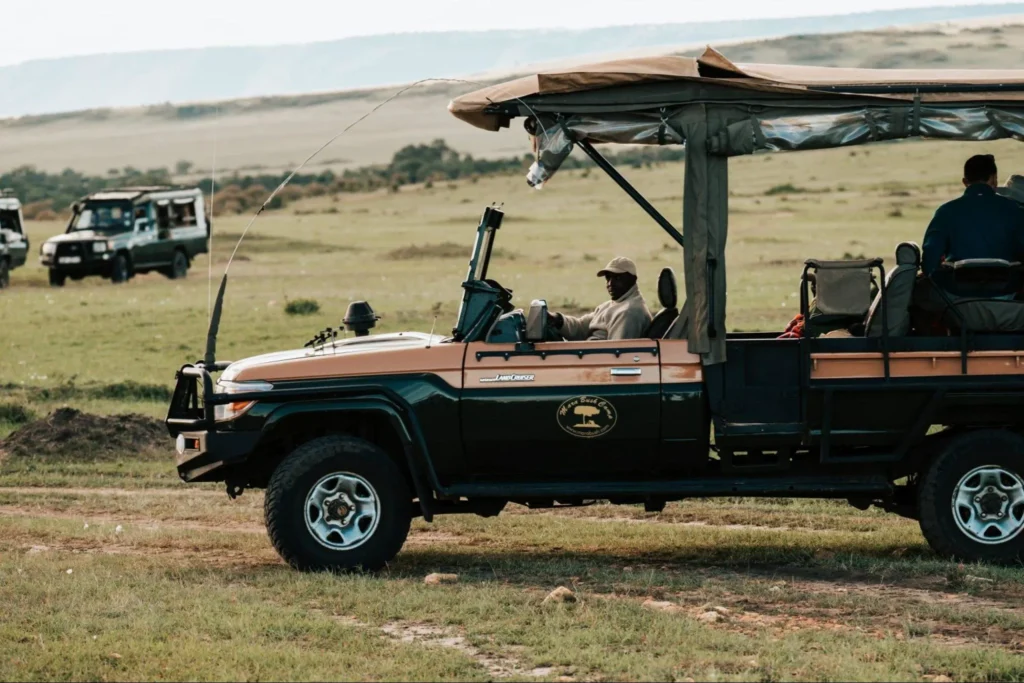
Mara Bush Camp sits in riverine forest along the Olare Orok River, inside the Masai Mara National Reserve. The camp operates under Soroi Collection, a Kenyan hospitality group that manages seven eco-lodges across the country. Three separate wings share the same management and kitchen: Main Camp with 12 tents, Bush Wing with 4 budget tents, and Private Wing with 12 luxury tents spread across more ground.
Eight minutes from Ol Kiombo Airstrip. Gold Eco-Rated by Ecotourism Kenya. The entire property runs on a 24-hour solar grid with backup generator. Unfenced perimeter — Maasai morani patrol the pathways after dark.
What This Guide Covers
What the Rate Covers
Full-board “game package” across all three wings:
Included: Three meals daily, filtered spring water from the on-site filtration system, coffee and tea, twice-daily shared game drives, Ol Kiombo Airstrip pickup/dropoff, children’s activities for guests under 12, picnic meals during extended drives, one sundowner experience for every three nights booked.
Not Included: Community levy at KES 10,340 per person per night (mandatory — see below), Masai Mara park fees charged per 12-hour day (KES 12,930 January-June, KES 25,860 July-December for non-residents), all alcoholic and soft beverages, balloon safari at KES 75,735, tips and gratuities.
The Mandatory Community Levy
Booking platforms show accommodation rates — usually something like “from USD 280/night.” They don’t show the USD 80 per person per night community levy until you read the terms.
This fee isn’t optional. It goes directly to local Maasai communities and conservation programs around the reserve. The camp collects it separately from accommodation charges, which means it often surprises travelers when they see their final invoice.
A 3-night stay for two adults at Bush Wing:
Line Item | Amount |
Accommodation (KES 36,230 × 3 nights × 2 people) | KES 217,380 |
Community levy (KES 10,340 × 3 nights × 2 people) | KES 62,040 |
Subtotal before park fees | KES 279,420 |
That KES 62,040 in levies — roughly USD 480 — is the difference between what you expect to pay and what you actually pay. Budget for it from the start.
What the Solar Grid Means for You
The camp runs entirely on solar power. A backup generator exists but only kicks in for emergencies. Most guests won’t notice any limitations during normal activities. But there are two practical constraints worth knowing.
No hairdryers in tents. The solar system can’t handle high-wattage appliances. If you bring your own travel dryer and plug it in, you’ll trip the breaker for your entire section of camp. If you genuinely need one, ask the camp manager directly — they keep a few low-wattage, camp-compatible dryers on hand for guests who request them in advance.
Charging stations are centralized. Camera batteries, laptops, and drones draw significant power. The camp routes these to the Photographer’s Lounge (more on this below) where heavy-duty charging strips are built into the workstations. Your tent has standard outlets for phones and small devices, but serious photographers should plan to charge gear in the communal area.
The upside: no generator noise at night. Complete silence except wildlife.
Understanding the Three Wings
Bush Wing — 4 Tents
Four tents set closer together than Main Camp. Smaller footprint, simpler furnishings, same river-facing orientation. You eat the same meals, join the same game drives, and get the same turndown service. The savings come from reduced tent size and tighter spacing — not a reduced experience.
Rates (per person sharing): KES 36,230/night low season (Jan-Jun), KES 71,175/night peak (Jul-Oct).
Who it suits: Solo travelers on a longer trip. Photographers who’d rather put money toward extra nights. Couples who prioritize wildlife time over tent square footage.
Main Camp — 12 Tents
Ten river-facing luxury tents plus two family tents. Parquet flooring. Four-poster beds under mosquito nets. En-suite bathrooms with solar-heated showers available around the clock. Private veranda. Each tent has a woven grass screen along the pathway side — you can sit on your deck with the canvas flaps open without anyone walking past being able to see in.
Rates (per person sharing): KES 49,160/night low season, KES 90,545/night peak.
Room safes in every tent. Bathrobes provided. Wake-up call service if you need it.
Private Wing — 12 Tents
Eight tents overlook the river. Four face the croton bush forest — no river view, but more shade and quiet. The Hippo Pool Bar sits between them: an elevated timber deck cantilevered over a bend in the Olare Orok where a resident pod of 50+ hippos lives year-round. During midday hours when they’re most active, you can look straight down into the water from the platform. The splashing and territorial disputes happen directly below.
Rates (per person sharing): KES 64,675/night low season, KES 116,405/night peak.
More distance between tents than Main Camp. Mini-fridge. Standing fan. Mahogany furniture. The forest tents smell faintly of eucalyptus when the wind shifts through the croton bushes — cooler during midday rest hours, but you’ll miss the hippo soundtrack.
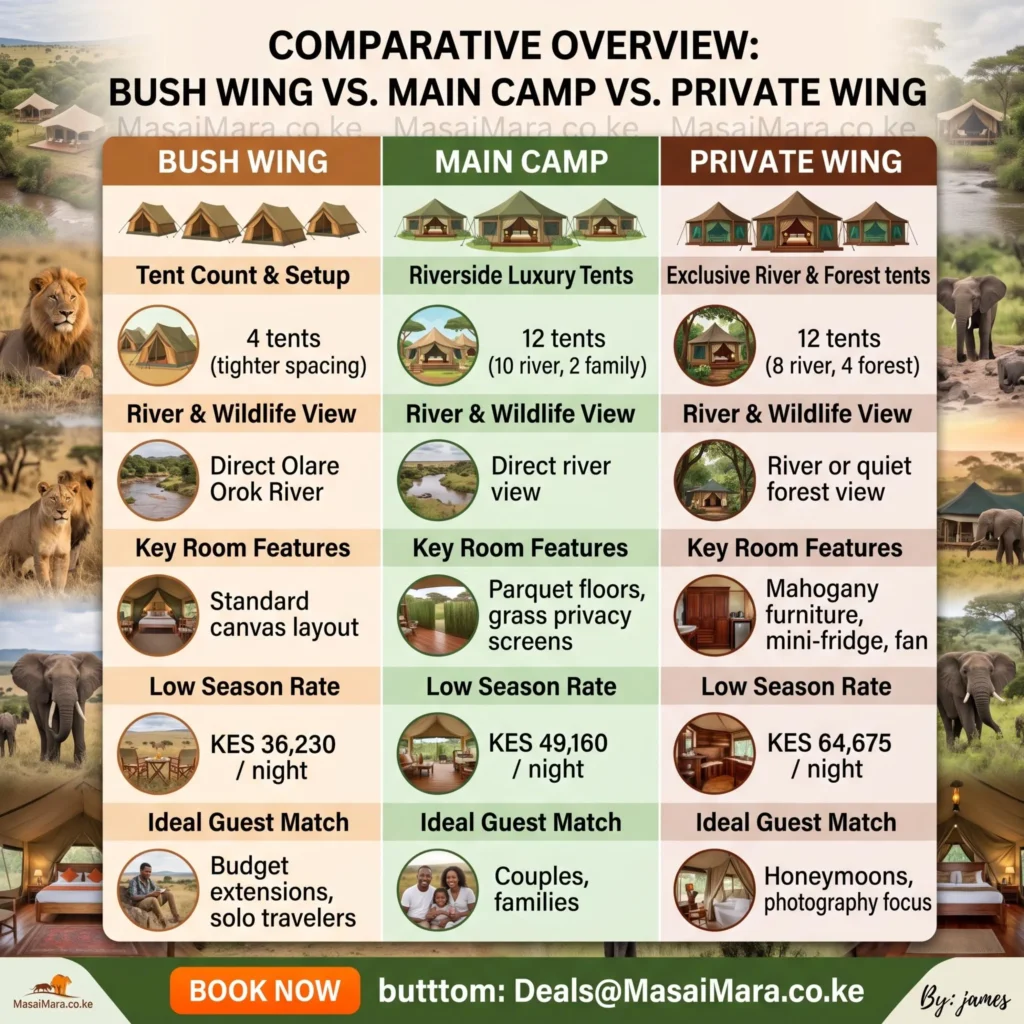
Comparative Overview: Bush Wing vs. Main Camp vs. Private Wing
Mara Bush Camp operates three distinct accommodation wings under a single management team and kitchen. Use this side-by-side comparison of tent counts, view setups, and amenities to select the right fit for your budget and travel style:
Feature & Details | Bush Wing | Main Camp | Private Wing |
Tent Count & Setup | 4 tents (tighter spacing) | 12 tents (10 river, 2 family) | 12 tents (8 river, 4 forest) |
River & Wildlife View | Direct Olare Orok River | Direct river view | River or quiet forest view |
Key Room Features | Standard canvas layout | Parquet floors, grass privacy screens | Mahogany furniture, mini-fridge, fan |
Low Season Rate | KES 36,230 / night | KES 49,160 / night | KES 64,675 / night |
Ideal Guest Match | Budget extensions, solo travelers | Couples, families | Honeymoons, photography focus |
Side-by-Side Comparison
Bush Wing | Main Camp | Private Wing | |
Tents | 4 | 12 | 12 |
River view | Yes | Yes | 8 of 12 |
Tent spacing | Closer | Moderate | Widest |
Privacy screens | No | Yes | Yes |
Mini-fridge | No | No | Yes |
Low season rate | KES 36,230 | KES 49,160 | KES 64,675 |
Best for | Budget extension | Couples/families | Honeymoons, photography |
All rates exclude community levy and park fees.
The Photographer’s Lounge
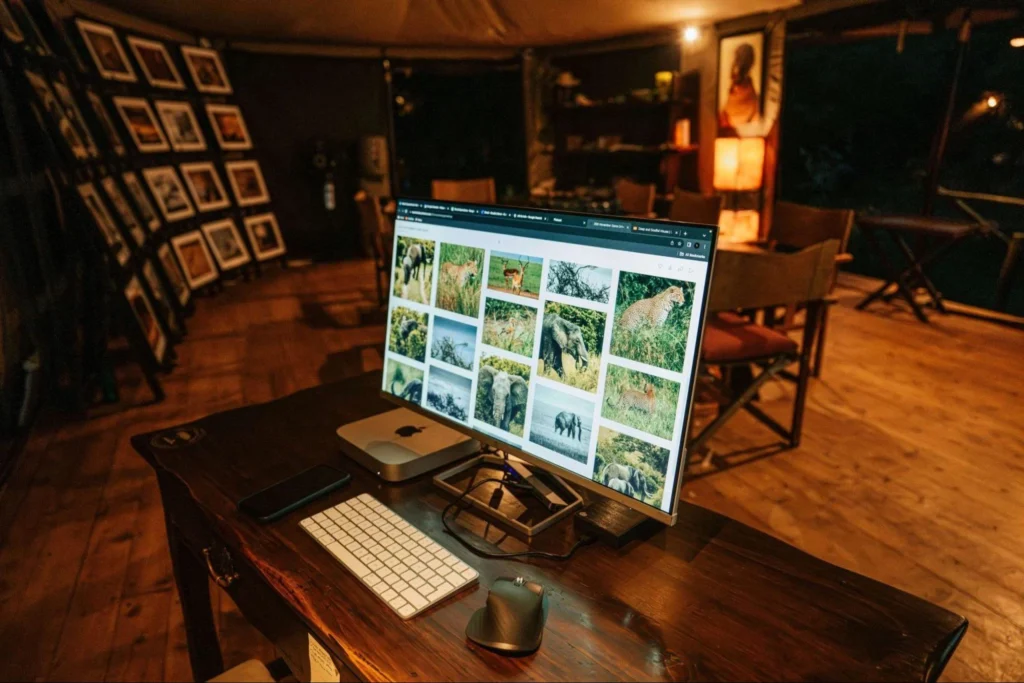
None of the major booking platforms mention this. The camp has a dedicated canvas workspace set up specifically for photographers and content creators.
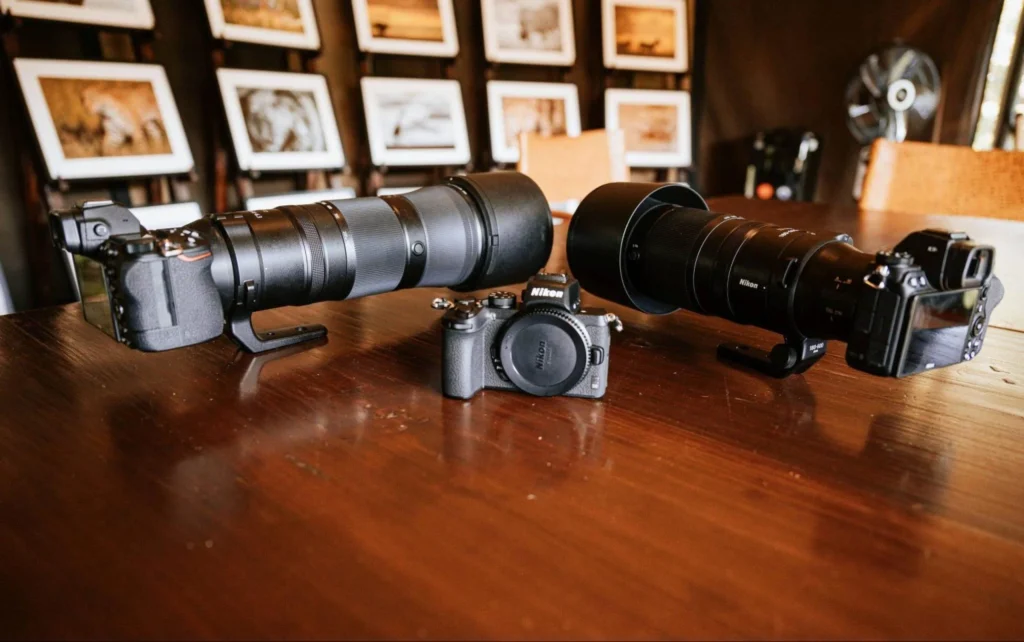
The setup includes heavy-duty workstations with multi-outlet power strips built for high-amperage camera batteries. A projector and screen allow evening sessions — sometimes the resident photo-guides run informal editing workshops, other times guests just review the day’s raw footage over drinks.
If you’re traveling with serious camera gear, this is where you’ll spend time between drives. The charging infrastructure here handles professional equipment without stressing the solar system. Your tent outlets are fine for phones and small batteries, but route anything substantial through the lounge.
Packages for Two Travelers
Flying in saves 5+ hours of driving each way. Below are full costs for a 3-night stay at each wing, all mandatory fees included.
Bush Wing — Budget Option
Per Person | Two People | |
Return flights (Nairobi-Ol Kiombo) | KES 77,580 | KES 155,160 |
Accommodation × 3 nights | KES 108,690 | KES 217,380 |
Community levy × 3 nights | KES 31,020 | KES 62,040 |
Park fees — low season × 3 days | KES 38,790 | KES 77,580 |
Low Season Total | KES 256,080 | KES 512,160 |
Peak season park fees (KES 25,860/day) raise the per-person total to approximately KES 294,870.
Main Camp — Mid-Range
Per Person | Two People | |
Flights + accommodation + levy + low-season fees | KES 294,870 | KES 589,740 |
Peak season adjustment | +KES 38,790 | +KES 77,580 |
Private Wing — Luxury
Per Person | Two People | |
Flights + accommodation + levy + low-season fees | KES 341,415 | KES 682,830 |
Peak season adjustment | +KES 38,790 | +KES 77,580 |
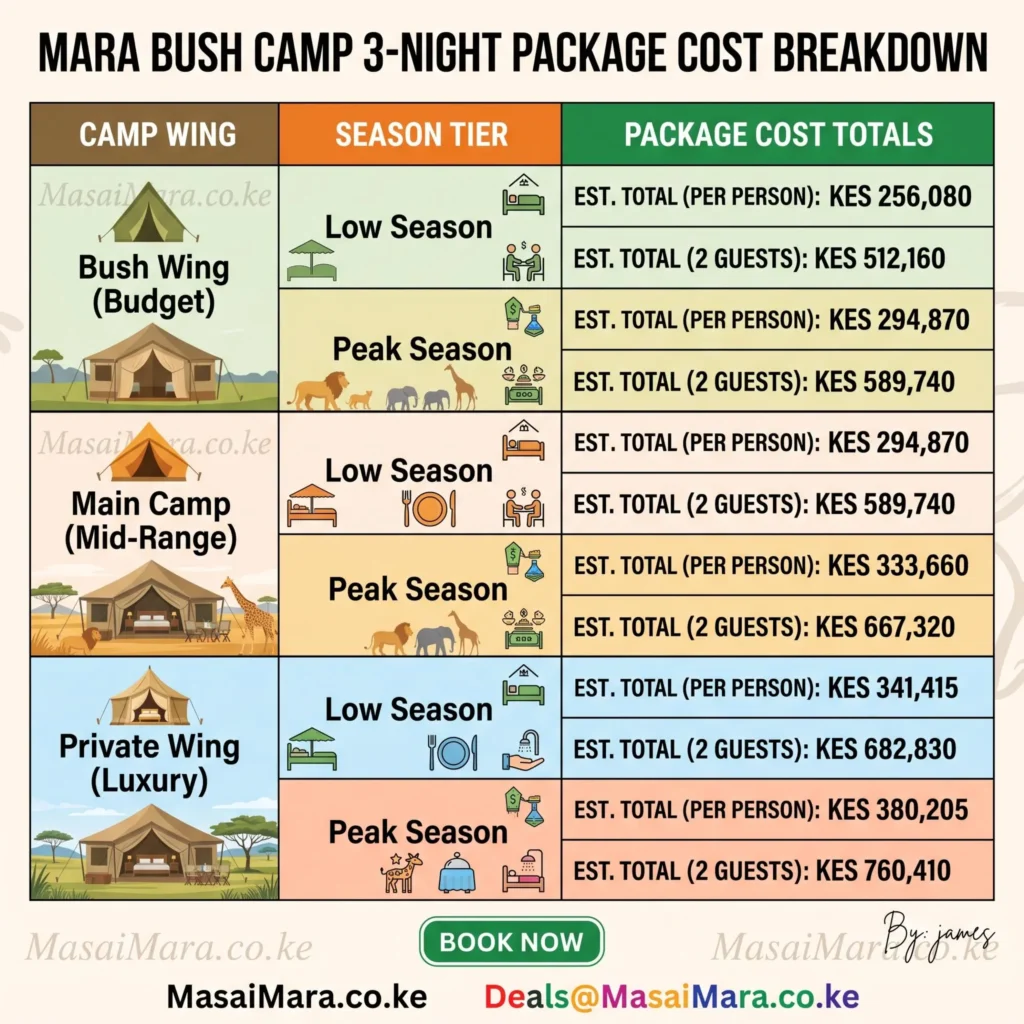
Mara Bush Camp 3-Night Package Cost Breakdown
Calculating your total safari cost requires looking past the room rate to include mandatory local fees, park entry permits, and domestic flights. This overview breaks down the realistic 3-night package totals for two adult guests across all three camp wings:
Camp Wing | Season Tier | Est. Total (Per Person) | Est. Total (2 Guests) |
Bush Wing (Budget) | Low Season Peak Season | KES 256,080 KES 294,870 | KES 512,160 KES 589,740 |
Main Camp (Mid-Range) | Low Season Peak Season | KES 294,870 KES 333,660 | KES 589,740 KES 667,320 |
Private Wing (Luxury) | Low Season Peak Season | KES 341,415 KES 380,205 | KES 682,830 KES 760,410 |
People Who Shape Your Stay
I’ve spent enough time at this camp to know which names keep appearing in conversation — not just management, but the ground-level staff who determine whether a stay feels transactional or personal.
Leeky works restaurant service. He memorizes dietary restrictions and off-menu requests after a single conversation. One family I guided had a child who would only eat mango at breakfast — by day two, Leeky had fresh mango puree waiting without being asked. If you have complex food needs, seek him out on arrival.
Mapi is a senior Maasai askari. Request him specifically for your evening tent escort. He tracks nocturnal wildlife while he walks — genet cats in the tree canopy, fresh paw prints in the mud, the eyes of a bushbaby catching torchlight. Standard escorts get you safely to your tent. Mapi turns the walk into a night drive on foot.
Sancha guides drives in the camp’s open-sided vehicle. If photography matters to you, ask whether Sancha’s schedule aligns with your stay. The open configuration offers better shooting angles than standard Land Cruisers, especially for wide-angle savanna shots.
Chefs John and Paul run the kitchen. Meals lean toward European-Kenyan fusion — the fresh-baked dark bread at breakfast has become something of a signature. Dietary accommodations are handled well: sugar-free requests, specific allergies, children’s portions. They remember preferences from day one.
Melissa and Emmanuel manage the main camp operations. Emmanuel coordinates game drive schedules. Kenedy handles external logistics — if you hit confusion at regional checkpoints or run into overcharging from third-party operators, he’s the person who sorts it.
Nelson oversees all three wings. If you have a celebration, accessibility need, or non-standard request, email the camp directly and mention his name.
The staff assignment system works differently here than at many camps. Rather than rotating randomly, specific people get assigned to you by department for your entire stay. Your room attendant, your waiter, your game drive greeter — they stay consistent. It creates a different rhythm. By day two, they know your patterns.
Evening Rhythms
After the 4 PM game drive returns around 6:30, the camp settles into a loose social hour. The bar opens. Board games and puzzles are stacked in the lounge. Some evenings feature campfire conversations — nothing structured, just guests and guides sharing stories. Other nights, especially around holidays or when the camp is at capacity, there’s Maasai dancing or celebration cakes for birthdays and anniversaries.
Dinner runs from 7:30 onward. Indoor and outdoor seating. Buffet-style on busy nights, plated service otherwise.
The Maasai escort walks you back to your tent afterward. The camp is unfenced. Hippos graze on land after dark, and the paths wind close to where they feed. The askari carry torches and rungu but no firearms — they read animal behavior, adjust routes, keep you clear of anything active. First-time safari guests sometimes find this unnerving. By the second night, most find it exhilarating.
What to Bring (and What to Leave)
US dollars printed after 2013. Kenyan banks reject older US bills due to counterfeiting concerns from that era. If you plan to tip in dollars, buy beadwork from the gift shop, or book add-on activities with cash, check your wallet before you travel. Crisp, post-2013 series only. Staff literally cannot convert older notes.
Earplugs if you sleep light. The hippo grunts are loudest between 9 PM and 1 AM. Some guests call it the best sleep soundtrack of their lives. Others can’t get past the volume. Pack silicone earplugs and see which camp you fall into.
Light waterproof shoes for wet season. March through May, the roads turn to mud. Staff meet returning game drives with umbrellas and can provide rainboots — ask the camp manager whether they have your size before you depart.
Leave the hairdryer. As noted above, the solar system can’t handle them. Request the camp’s low-wattage option if you must.
The custom-made bathroom amenities are worth using intentionally. The soaps and body washes are formulated with lemon and thyme essential oils — natural mosquito deterrents. Shower in the afternoon, let the scent linger, and you’ll need less chemical repellent before the evening drive.
Common Questions
Can I see river crossings from camp?
No. The camp sits on the Olare Orok River, a seasonal tributary. The major wildebeest crossings happen on the main Mara River, about 20 minutes’ drive away. During migration season (July-October), guides prioritize early departures to reach crossing points before the crowds.
Is it safe if the camp is unfenced?
Wildlife avoids lit, occupied areas. The Maasai guards know animal behavior intimately and patrol all pathways after dark. I’ve never heard of a safety incident at this camp. That said, the rule is absolute: don’t leave your tent unescorted after nightfall. If you need the bathroom at 3 AM, use the en-suite.
Is Bush Wing worth the lower price?
If your priority is time on game drives and you’ll only be in the tent for sleeping and showers, absolutely. The mattress quality, food, and guiding are identical across wings. You’re paying less for square footage, not experience. Solo travelers and photographers extending their Mara time often do best in Bush Wing.
Does the camp suit solo travelers?
Unusually well, actually. Multiple guests traveling alone have mentioned that staff check in more frequently, conversations at meals feel less isolated, and the assigned-by-department service model means you build genuine rapport quickly. If you’re nervous about safari solo, this is a good starting point.
Is WiFi available?
Yes. Signal is strongest in the lounge and bar area. Tent connectivity is patchy. Good enough for email and messaging. Not reliable for video calls or uploads.
Optional Extras
Activity | Approximate Cost | Notes |
Hot air balloon | KES 75,735 | 6 AM departure, bush breakfast included |
Bush dinner | KES 7,760/person | Private riverside setup |
Maasai village visit | KES 3,880/person | 1 hour, cultural focus |
Private vehicle upgrade | KES 45,295/day | Exclusive use, Sancha recommended |
Night game drive | KES 12,930/person | Conservancy access required |
Foot massage | Variable | Book through reception |
Packed picnic breakfast | Included if requested | Customize menu day before |
Ask about sunrise breakfast drives — you take a packed meal, eat it under an acacia tree while the light changes, and return mid-morning instead of coming back to camp for a formal breakfast. One of the standout experiences here, often overlooked.
Best Timing
January through March — Dry season rates. Short grass means predators are easier to spot and prey concentrates near water. Fewer vehicles at sightings. No migration herds, but resident wildlife is excellent.
April and May — Rainy months. Some camps close. Roads can challenge even 4x4s. If weather doesn’t bother you, rates drop further and the landscape turns intensely green. Ask whether the camp provides rainboots your size before booking.
July through October — Great Migration crosses into Kenya. Peak season rates apply. River crossings happen on unpredictable schedules. Book six months ahead minimum.
November and December — Short rains, shoulder rates. Lush landscape for photography. Good value before the January dry season arrives.
Comparison With Similar Camps
Camp | River | Tents | Entry Rate (KES/pppn) | Standout |
Mara Bush Camp | Olare Orok | 12+4+12 | 36,230 | Three price tiers, photo lounge |
Talek | 17 | 32,350 | Community walks, eco focus | |
Mara | 12 | 82,785 | Crossing views from tent | |
Talek | 30 | 51,750 | Pool, family-friendly | |
None (escarpment) | 30 | 168,600 | Rift Valley views |
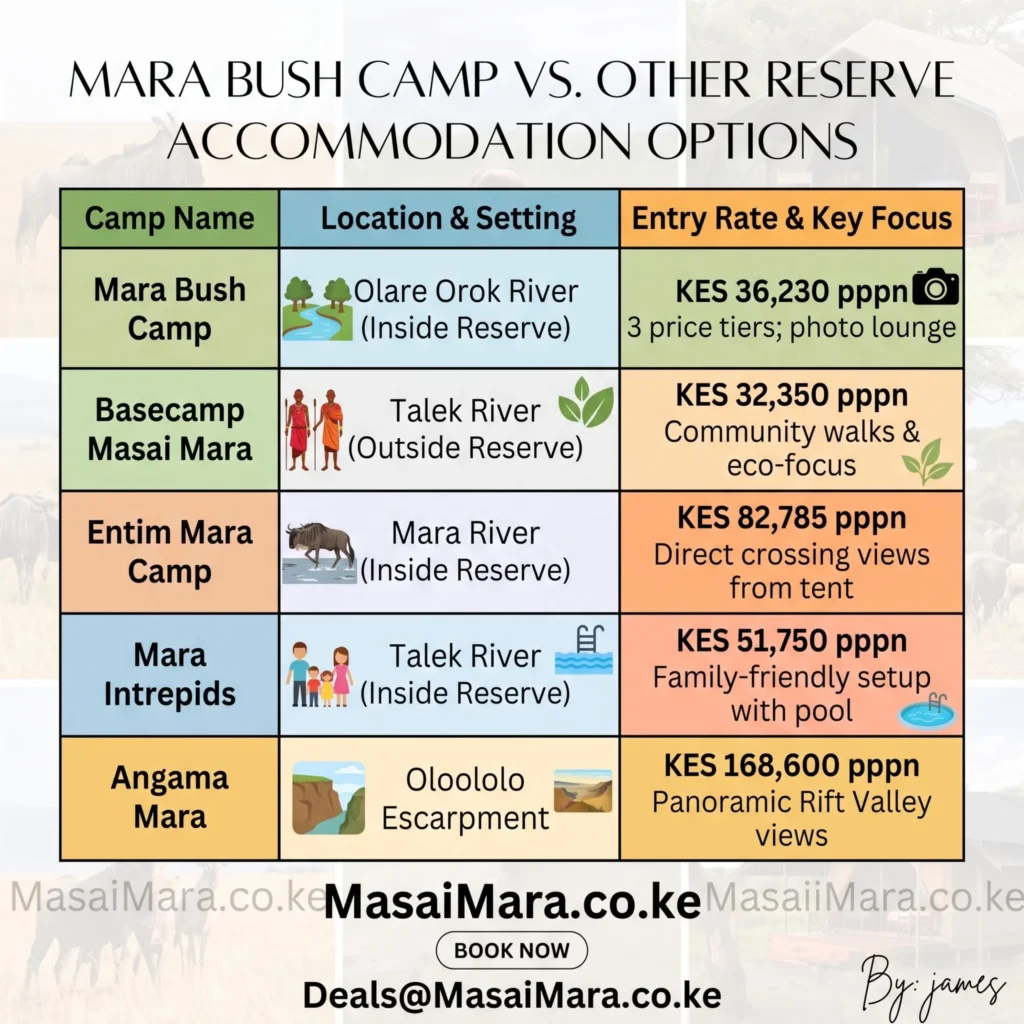
Mara Bush Camp vs. Other Reserve Accommodation Options
Deciding where to stay inside the Masai Mara depends on river location, camp scale, and pricing. Compare Mara Bush Camp with other prominent safari options across the reserve:
Camp Name | Location & Setting | Entry Rate & Key Focus |
Mara Bush Camp | Olare Orok River (Inside Reserve) | KES 36,230 pppn 3 price tiers; photo lounge |
Basecamp Masai Mara | Talek River (Outside Reserve) | KES 32,350 pppn Community walks & eco-focus |
Entim Mara Camp | Mara River (Inside Reserve) | KES 82,785 pppn Direct crossing views from tent |
Mara Intrepids | Talek River (Inside Reserve) | KES 51,750 pppn Family-friendly setup with pool |
Angama Mara | Oloololo Escarpment | KES 168,600 pppn Panoramic Rift Valley views |
Getting There
By air: Daily scheduled flights on Safarilink and AirKenya depart Nairobi Wilson Airport for Ol Kiombo Airstrip. Flight time 45-50 minutes. Camp transfers included — Emmanuel or another staff member meets arriving flights.
By road: 6-7 hours from Nairobi via Narok. The final stretch from Narok town is unpaved and rough, worse after rain. Masaimara.co.ke can arrange 4×4 transfers with experienced drivers who know which detours to take when the main track floods.
Book Your Stay
Ready to experience Mara Bush Camp? Whether you need the budget flexibility of Bush Wing or the seclusion of Private Wing, we’ll build a package that fits.
Related Reading
- Masai Mara Park Fees 2026
- Best Time to Visit Masai Mara
- Luxury Safari Masai Mara
- Affordable Masai Mara Safari
- Masai Mara Flying Packages
- Animals in Masai Mara
Official Sources
Edited by Cecilia Wambui, Tourism and Hospitality Management. Exchange rate: USD 1 = KES 129.30. Prices valid 2026/2027 season.
Welcome to Masaimara.co.ke
Thank you for visiting us! We're excited to help you plan an unforgettable safari adventure across Kenya.