
Basecamp Masai Mara safari vehicle with tourists watching the lioness walk across the plains.
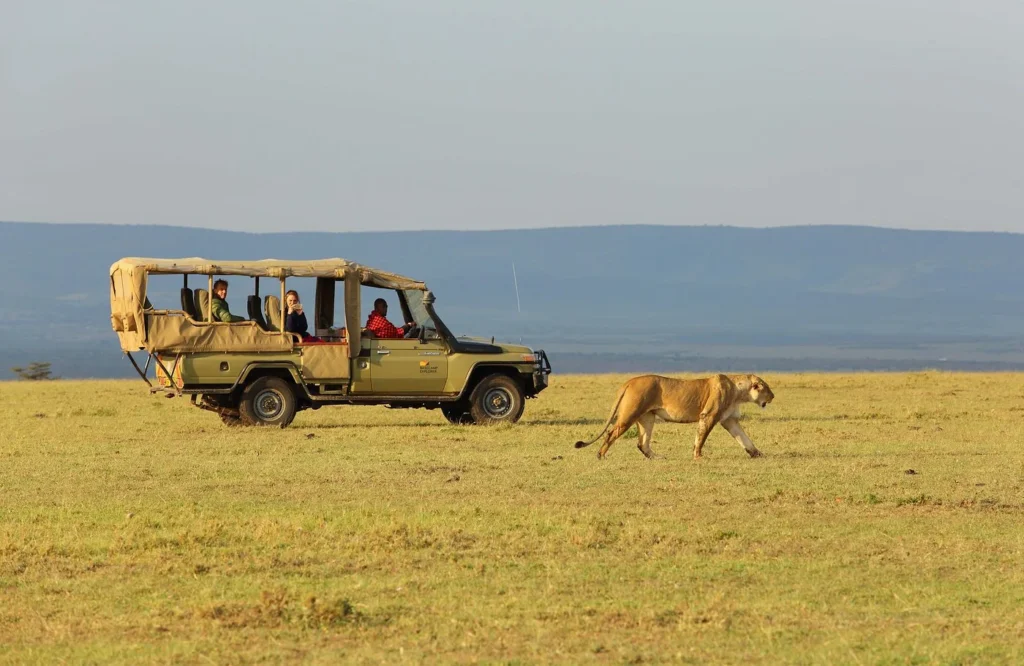
Basecamp Masai Mara is a Gold Eco-Rated tented camp on the Talek River, bordering the Masai Mara National Reserve. Seventeen tents — 15 river view, 1 honeymoon, 2 family. Full-board rates start at USD 130 per person per night in low season. Park fees (USD 100-200 per night) are separate. The camp runs on solar power, uses bio-flush toilets, and is managed with the local Maasai community. A suspension bridge provides direct access to the reserve — when the river allows.
What This Guide Covers
The outdoor shower at Basecamp Masai Mara faces the Talek River. You stand there, water running, watching vervet monkeys swing through branches overhead. What the brochures skip: there’s also a fully enclosed indoor shower in every tent. When morning rain hits or wind picks up, you’re not forced to brave the elements — you have options.
I’ve guided clients through Basecamp’s territory for over a decade now. The camp sits on ancestral land leased directly from the local Talek family. Understanding this changes how you experience the place. You’re stepping onto a family’s generational land, and the staff — many of whom have worked here for more than ten years — are your hosts, not service workers filling shifts.
Seventeen tents on wooden platforms along the Talek River. A private suspension bridge crosses directly into the Masai Mara National Reserve. Gold Eco-Rating from Ecotourism Kenya.
What’s Included
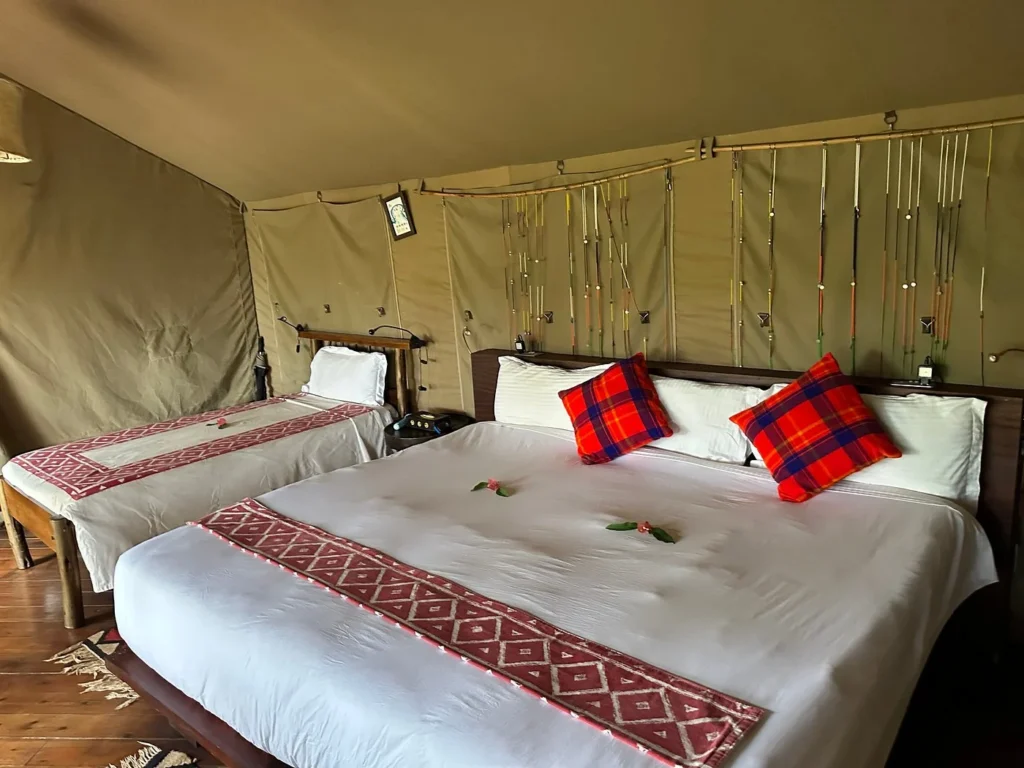
Full-board package at Basecamp Masai Mara covers:
Covered: Accommodation, all meals, mineral water, garden and platform dining, in-tent WiFi, tea and coffee service, Young Explorers Club activities (pre-book), community project visits including Enjoolata Awareness Centre, organic garden tour, tree planting in the nursery, fireside storytelling, VAT and taxes.
Not covered: Park fees (USD 100-200 per adult per night depending on season), drinks (except mineral water), game drives, airstrip transfers (USD 50 per person each way), balloon safari (USD 585), Maasai village visit (USD 30), private vehicle (USD 350/day), tips, late departure fees.
The full-board rate covers accommodation and meals. Game drives are charged separately unless you book a ground package that bundles them. I always confirm exactly what’s included before sending clients.
Packages
4-day/3-night safari from Nairobi. Per person, two travelers sharing. Non-resident rates in USD.
Season | Full-Board + Drives | Park Fees | Total/Person |
Low (Mar-May, Nov) | USD 750 | USD 300 | USD 1,050 |
Mid (Jan-Feb, Jun, Oct, Dec) | USD 900 | USD 300 | USD 1,200 |
Peak (Jul-Sep, Dec 20-Jan 2) | USD 1,200 | USD 600 | USD 1,800 |
Includes: 3 nights full-board, shared game drives, all meals, mineral water, community visits Excludes: Airstrip transfers (USD 50/person each way), balloon safari (USD 585), drinks, tips, private vehicle (USD 350/day)
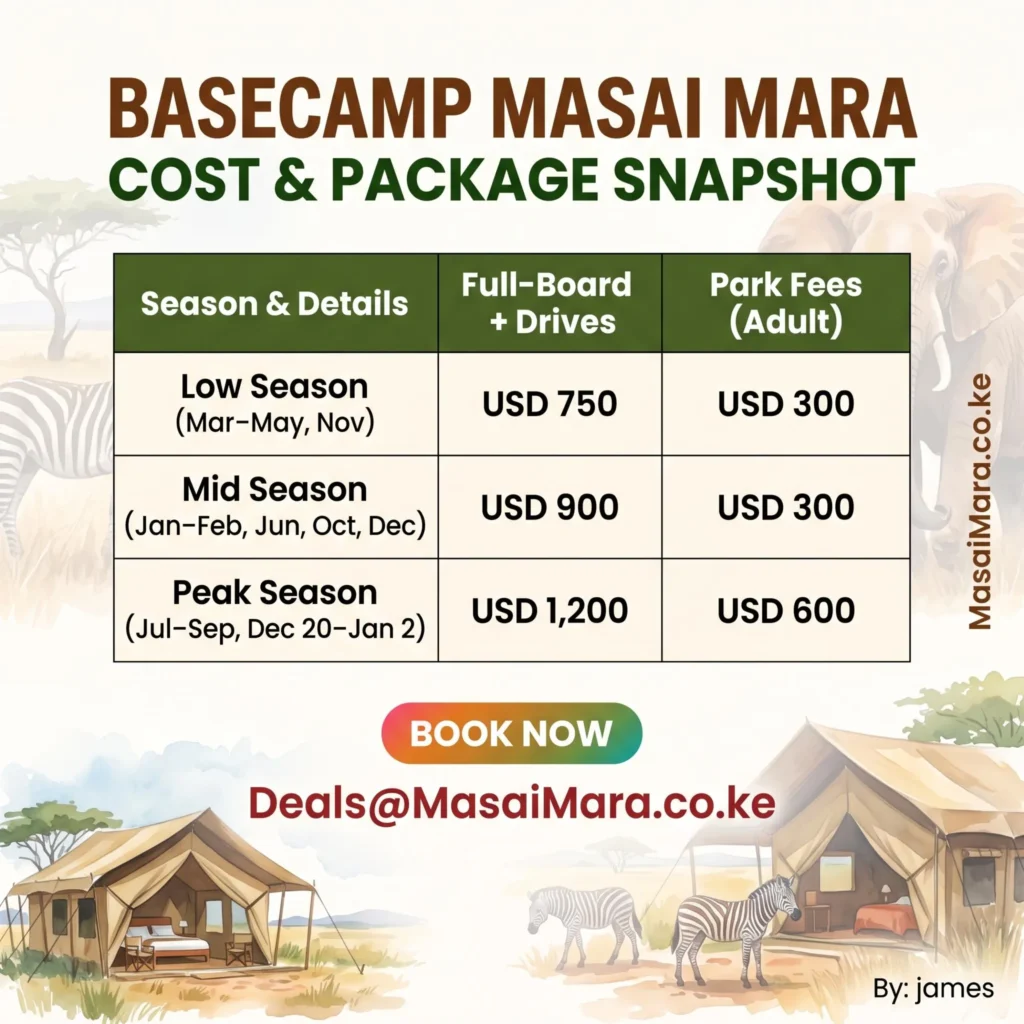
Basecamp Masai Mara Cost & Package Snapshot
Understanding your true safari budget requires looking beyond the nightly bed rate. Because park fees, transfers, and seasonal shifts impact your total spend, this breakdown outlines the realistic costs of a 4-day, 3-night safari at Basecamp Masai Mara so you can budget accurately.
Season & Details | Full-Board + Drives | Park Fees (Adult) | Total Est. Per Person |
Low Season (Mar–May, Nov) | USD 750 | USD 300 | USD 1,050 |
Mid Season (Jan–Feb, Jun, Oct, Dec) | USD 900 | USD 300 | USD 1,200 |
Peak Season (Jul–Sep, Dec 20–Jan 2) |
When the Bridge Closes
The suspension bridge over the Talek River is Basecamp’s signature feature — direct pedestrian access into the reserve. But during heavy rains, the Talek can flash-flood, rendering the bridge temporarily unusable.
When this happens, your guide pivots to the backup plan: a bumpy 20-30 minute 4×4 detour through the actual backroads of Talek Village to access the main reserve gate. It’s not advertised, but it’s routine. If you’re visiting in April-May or November, factor this possibility into your expectations.
Tent Booking Strategy
When booking, explicitly request a tent further away from the main lodge and kitchen. The camp is small and intimacy is prioritized, but tents situated too close to the communal hub will hear kitchen staff prepping early morning coffee baskets around 5 AM.
If you’re a light sleeper, pack earplugs. Wildlife sounds and rain on canvas at night — hippos grunting, hyenas calling, elephants moving along the opposite bank — are part of the experience. Most guests love it. Some underestimate how much sound carries.
The dual-shower setup
Every tent has both an enclosed indoor shower and the famous open-air outdoor one. The outdoor shower faces the river and gets photographed constantly. But on cold mornings or during sudden downpours, you’re not stuck — the indoor option exists.
Hot water comes from solar panels. Run the tap four to five minutes before it heats fully. On overcast days or very early mornings, it takes longer.
The Walking Safari Reality
The guided walking safaris departing from camp are conducted without firearms. This catches some travelers off guard.
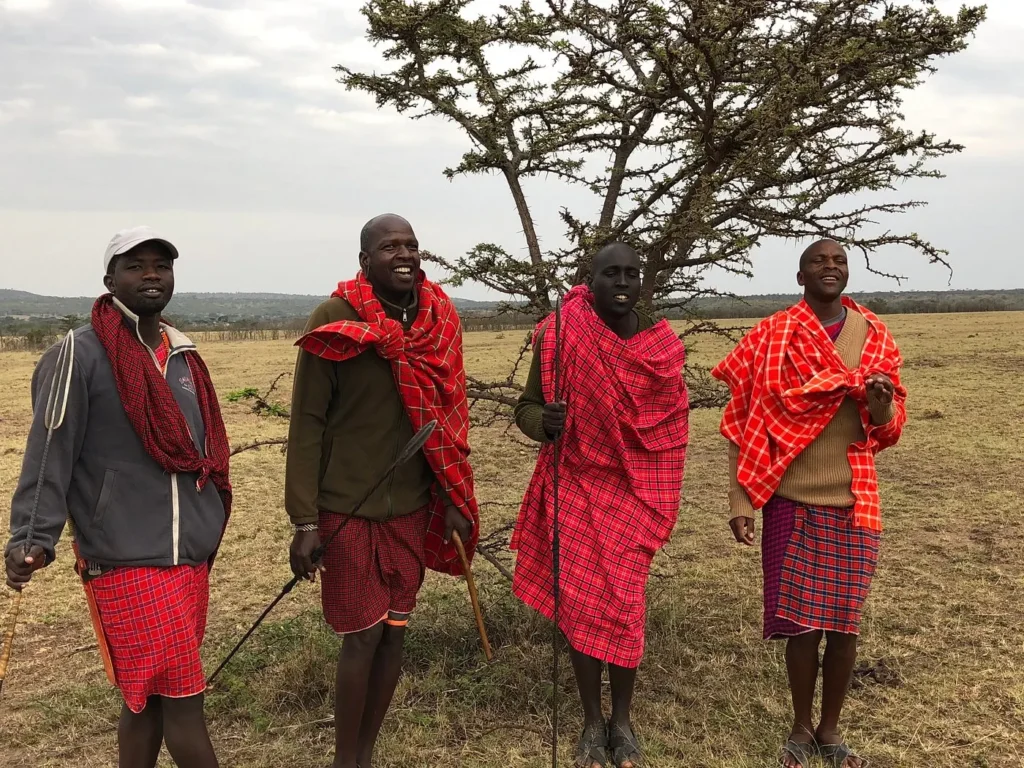
The Maasai guides rely entirely on their tracking skills, wind-direction reading, and deep understanding of animal behavior. They’ve grown up in this landscape. If the idea of walking near big game without a rifle nearby makes you nervous, skip the walk and stick to the vehicle drives.
I’ve done these walks many times. The guides read terrain and animal behavior in ways that make firearms unnecessary — but you have to trust their expertise completely.
The Migration Bar and the Silent Code
The two-story communal lounge and Migration Bar uses traditional Kilgoris grass thatch roofing, which naturally repels the Mara’s intense midday heat. The flooring is “crazy paving” — a puzzle-like layout of hand-cut local stone that’s distinctive to Kenyan masonry.
There’s an unwritten house rule here: phones must be kept completely on silent and out of sight in the dining and lounge areas. The camp aims for an old-school safari atmosphere where guests actually talk to one another over drinks rather than scrolling. I appreciate this, though it surprises first-timers.
The Food Situation
Lunch and dinner typically offer two starter options and two main courses. Not the extensive buffets of large lodges, but solid quality with fresh ingredients. Breakfast includes hot items and packed lunch boxes for full-day drives.
If you have dietary restrictions, flag them early — the kitchen handles requests well when given notice. Over the years, I’ve sent families, solo travelers, and pregnant clients to Basecamp. The staff adjusts pacing and meals for comfort needs when you communicate ahead.
The camp sells a cookbook — a niche detail, but it tells you food is more of a strength than many summaries suggest. Toiletries are also higher quality than typical mid-range camps: body wash, shampoo, conditioner, room freshener. You can pack lighter.
Activities Most Summaries Skip
Beyond standard game drives, Basecamp offers:
- Talek market visit — browse the local market in town
- Cultural walk through Talek town — guided walk through the community
- Bird walks — 300+ species in the surrounding tropical forest
- Nature forest walks — focus on tracks, plants, small creatures
- Fireside storytelling — evening sessions at camp
- Tree planting — participate in the nursery that’s planted 200,000+ trees
The camp’s water project supplies clean drinking water to nearly 2,000 local families. This isn’t marketing — it’s operational community integration that shapes how the property functions.
The Staff
Staff Member(s) | Role & Key Specialty |
John | Standout Guide: Advanced tracking expertise; famously trailed the Rongai pride to position guests for a live hunt. |
Shahdara | Safari Guide: Exceptional with families and children; known for being patient, energetic, and highly knowledgeable. |
Brian | Camp Host: Dedicated to hospitality; specializes in remembering returning guests and their personal preferences. |
Tonkei | Camp Manager: The operational anchor who manages the day-to-day camp environment. |
Sylvia, Freddie, Brenn, & Lepo | Support Team: Essential core staff members who are repeatedly highlighted by loyal, returning visitors. |
I’ve worked alongside many of these guides over the years. A few names worth knowing:
John: Standout guide. On one trip, he tracked the Rongai pride and positioned clients to witness a hunt. That kind of wildlife-reading takes years to develop.
Shahdara: Excellent with kids. Patient, energetic, deep knowledge.
Brian: Host who remembers returning guests and their preferences.
Tonkei: Manager. Runs the operation day-to-day.
Sylvia, Freddie, Brenn, Lepo: Support staff repeatedly mentioned by guests who return.
Many staff come from the nearby community and have worked here over a decade. This isn’t coincidental — it’s why repeat visitors remember names.
The Koiyaki connection
If you chat with your guide at the evening campfire, ask about the Koiyaki Guiding School. Basecamp is a primary partner of this institution, which is famous in East Africa for training and graduating a significant percentage of the Mara’s top female safari guides. The quality of guiding here comes from this pipeline.
Rainy Season Gear
The camp provides raincoats and umbrellas — ask for them before a drive or a wet walk between areas. Useful detail for April-May and November visits.
Barack and Michelle
The Obamas stayed in Tent #9 in 2006, before his presidency. It’s called the Obama Tent now. Same rate as other tents, just subject to availability if you want to request it specifically.
The Bio-Flush Toilets
Part of the eco-credentials. They work, but the mechanism is different from conventional plumbing. If you’ve never used composting-style facilities, expect an adjustment. The camp prioritizes low environmental impact over conventional luxury.
Who This Camp Suits
Travelers who want eco-credentials backed by actual practice. Families with kids. Budget-conscious visitors who don’t need ultra-luxury. Anyone interested in Maasai culture and community integration. First-time safari visitors looking for accessible pricing.
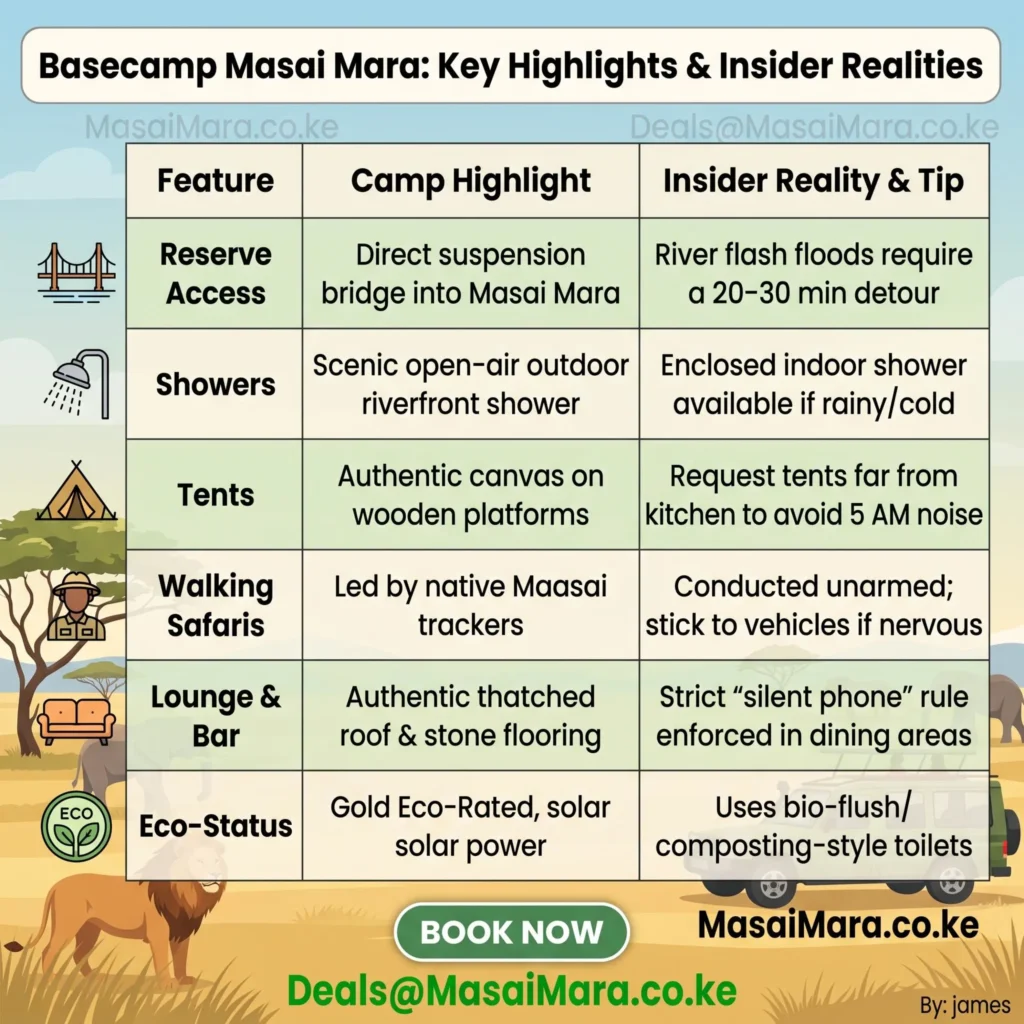
Basecamp Masai Mara: Key Highlights & Insider Realities
Balancing eco-sustainability with mid-range safari comfort comes with unique tradeoffs. To help you set proper expectations before arrival, this quick-reference guide breaks down Basecamp Masai Mara’s standout highlights alongside the operational realities you should prepare for.
Feature | Camp Highlight | Insider Reality & Tip |
Reserve Access | Direct suspension bridge into Masai Mara | River flash floods require a 20–30 min detour |
Showers | Scenic open-air outdoor riverfront shower | Enclosed indoor shower available if rainy/cold |
Tents | Authentic canvas on wooden platforms | Request tents far from kitchen to avoid 5 AM noise |
Walking Safaris | Led by native Maasai trackers | Conducted unarmed; stick to vehicles if nervous |
Lounge & Bar | Authentic thatched roof & stone flooring | Strict “silent phone” rule enforced in dining areas |
Eco-Status | Gold Eco-Rated, solar power | Uses bio-flush/composting-style toilets |
Who Should Look Elsewhere
Travelers expecting luxury lodge standards. Anyone uncomfortable with composting toilets. Guests who need private vehicles for every drive. Visitors who prioritize extensive food menus.
How Basecamp Compares
Camp | Location | Eco-Rating | Price Level |
Basecamp Masai Mara | Talek River (outside reserve) | Gold | Budget-Mid |
Inside Reserve | – | Mid-Luxury | |
Inside Reserve | Gold | Luxury | |
Inside Reserve | Gold | Premium |
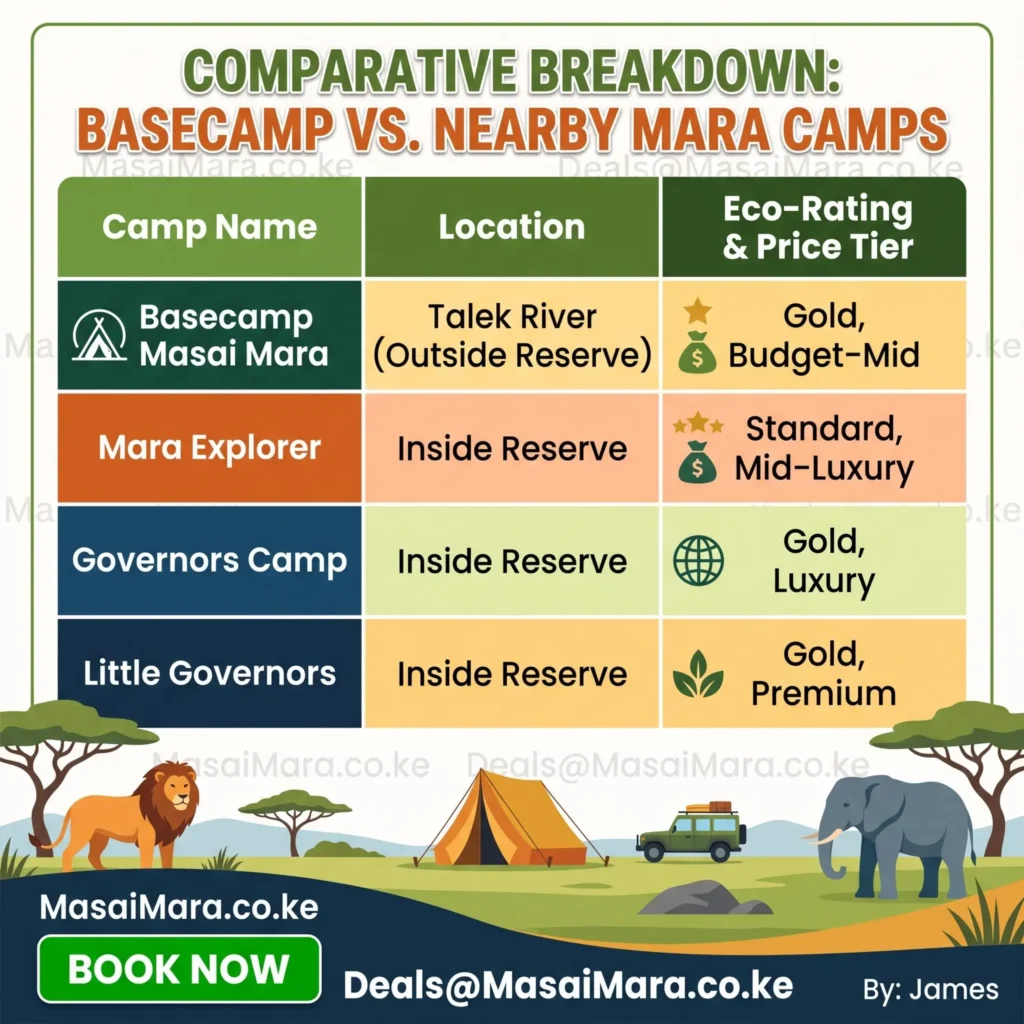
Comparative Breakdown: Basecamp vs. Nearby Mara Camps
Choosing the right Mara accommodation depends on your preferred location, budget, and desired luxury level. Compare Basecamp Masai Mara against other popular nearby options to see how it stacks up on pricing, eco-ratings, and location.
Camp Name | Location | Eco-Rating | Price Tier |
Basecamp Masai Mara | Talek River (Outside Reserve) | Gold | Budget–Mid |
Mara Explorer | Inside Reserve | Standard | Mid–Luxury |
Governors Camp | Inside Reserve | Gold | Luxury |
Little Governors | Inside Reserve | Gold | Premium |
Common Questions
Is Basecamp Masai Mara inside the reserve? No — it’s on private land on the Talek River, bordering the reserve. A suspension bridge provides direct access when river levels allow.
Are game drives included? Depends on your package. Full-board rates cover meals only. Ground packages include drives. Confirm before booking.
What happens if the river floods? The bridge closes temporarily. Guides use a 20-30 minute 4×4 detour through Talek Village to reach the reserve gate.
Is the walking safari safe without a rifle? The Maasai guides rely on tracking skills and animal behavior knowledge rather than firearms. If this makes you uncomfortable, stick to vehicle drives.
How far is Basecamp from Nairobi? 5.5-6 hours by road via Narok. Alternatively, fly to Ol Kiombo Airstrip (45 minutes), then transfer.
Related
- Masai Mara Safari from Nairobi
- Cost of Masai Mara Safari
- Masai Mara Park Fees
- Best Lodges in Masai Mara
- Mara Explorer Camp
Sources
Edited by Cecilia Wambui, Tourism and Hospitality Management. Prices valid 2026/2027.
Welcome to Masaimara.co.ke
Thank you for visiting us! We're excited to help you plan an unforgettable safari adventure across Kenya.