
2 Day Masai Mara Safari From Nairobi (2027 Prices)
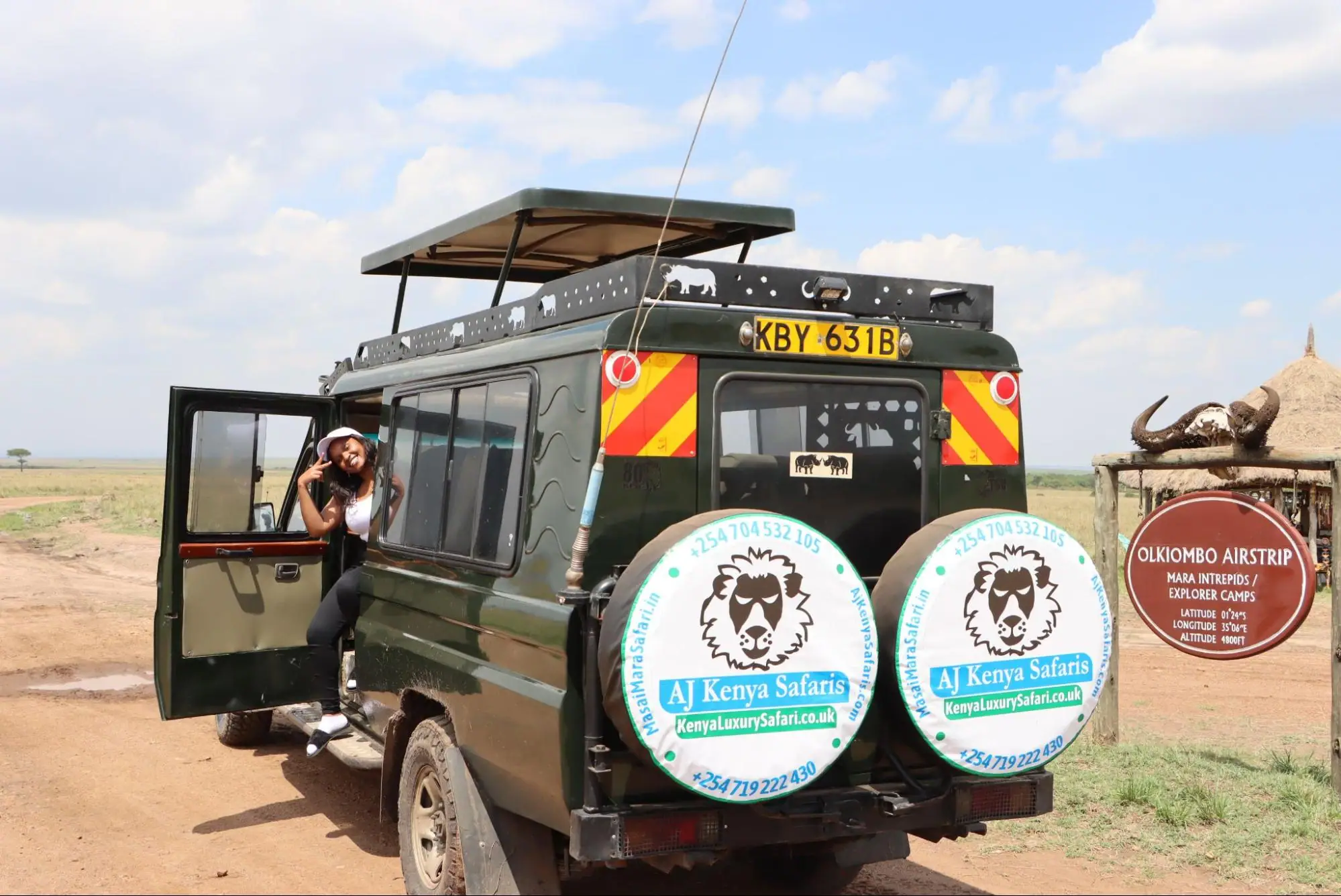
2 Days Masai Mara Safari | Written by David Njunge, TRA Licensed Safari Guide (10+ years)
2 days Masai Mara safari prices for 2027 start at KES 54,500 for Kenyan citizens, KES 62,000 for residents and USD 815 for visitors, by road with one night on full board. Flying roughly doubles your game-drive time. Both versions pay two reserve days, so Sunday morning is a full drive.
Nairobi office workers. They book this trip more than anyone else.
They have a Saturday and a Sunday, no leave to spare, and a strong wish to be somewhere without traffic for one night. So the brief is simple. Get to the Mara, sleep there, and spend as much of the two days on game drives as the clock allows.
We run it two ways. The flying version puts you on the plains on Saturday morning and keeps you there until the afternoon plane on Sunday. The road version leaves Nairobi at six, reaches camp in time for lunch and stays in the reserve until about half past eleven on Sunday before the drive home.
Both versions pay for a second day in the reserve, and that is the part most people miss. Each Mara ticket is good for a single day, six in the morning to six at night. On a 2-day trip that buys only one ticket, the rule for the second morning is that you drive out by ten with the roof shut, so there is no game drive at all. We buy the second day. Your Sunday morning goes on looking for cats.
What’s Covered in the Price
Both versions include:
- Your own 4×4 Land Cruiser, pop-up roof and all, for both days, with a TRA-licensed guide who stays with you throughout
- One night at the camp you choose, on full board
- Reserve entry for Saturday and for Sunday
- A packed lunch on Day 2, eaten out on the plains
- Bottled water in the vehicle
By road, also: pickup from your Nairobi home or hotel on Day 1 and the drop-off back there on Day 2.
Flying, also: return scheduled flights between Wilson Airport and the airstrip nearest your camp, with a 15 kg soft-bag allowance, and the road transfers to and from Wilson at both ends.
Not covered:
- Tips (guides usually receive about KES 3,000 a day, so around KES 6,000 for the weekend)
- Drinks other than water
- Travel insurance, and the Kenya eTA for visitors
- The supplements camps add over Easter, Christmas and New Year
- The add-ons below
Add-ons if you want them:
| Activity | Kenyans & Residents | Non-Residents |
|---|---|---|
| Hot air balloon flight | KES 58,000 | USD 500 |
| Maasai village visit | KES 1,000 | USD 20 |
| Bush breakfast | KES 5,000 | USD 60 |
A balloon flight costs you the Sunday game drive. Pickup is in the dark, the flight lasts about an hour, and breakfast after landing runs until around nine. On two days that is the best morning gone, so I suggest the balloon safari only to clients who are staying three days or more.
Park Entry Fees (2027)
Narok County sets these fees. Each ticket covers one calendar day, and this safari uses two of them, one per person per day.
| Guest | January to June | July to December |
|---|---|---|
| Visitor (non-resident), adult | USD 100 | USD 200 |
| Visitor (non-resident), child 9 to 17 | USD 50 | USD 50 |
| Kenya and East African resident, adult | KES 2,500 | KES 5,000 |
| Kenya and East African resident, child 9 to 17 | KES 1,000 | KES 2,000 |
| Kenyan citizen, adult | KES 1,500 | KES 3,000 |
| Kenyan citizen, child 9 to 17 | KES 300 | KES 500 |
Children aged eight and under enter free. On the Narok side you can pay at the gate by card or cash, or in advance at the KATO offices in Nairobi. We settle both days at the KATO office in Nairobi before you leave, so your guide shows the ranger a printed receipt at the barrier. The Mara Triangle, across the river, has its own online booking system for visitors entering on that side. Our Masai Mara park fees guide covers payment and ID rules in full.
The Gate Strategy Nobody Mentions
This one matters on the road version.
Almost every road safari comes in through Sekenani, because the tarmac from Narok runs right up to it. It is the obvious way in, and most drivers use it to leave as well, which means driving back over ground you covered the day before.
When your camp is on the Sekenani side, I spend Sunday morning working south toward Keekorok and then swing back to leave through Oloolaimutia Gate, a short way along the boundary. You never retrace Saturday’s tracks, and the country stays new right up to the barrier.
Sekenani is busiest in the late morning, when most of the road groups out of Nairobi arrive at once. Since we leave at six, we are close to that window, so I would sooner stop in Narok for an extra twenty minutes than sit in the line. With the fees paid ahead, the check at the barrier takes as long as it takes the ranger to count heads.
2027 Packages

Prices are per person, with two of you sharing a room and a private Land Cruiser. The camp sets the tier and the dates set the price. Each table shows the road and flying versions for all four tiers.
Every tier offers three camps, listed under Where You’ll Sleep, and the price is set by the most expensive of the three. Whichever one you pick, the figure in the table holds.
June shares a column with January to March, priced at the highest rate any of the tier’s camps charges across those months. None of the prices include the Easter, Christmas or New Year supplements that camps charge on those dates.
For Kenyan Citizens
| Tier | Jan to Mar & Jun | Apr & May | Jul to Oct & Late Dec | Nov to Mid-Dec |
|---|---|---|---|---|
| Budget, by road | KES 54,500 | KES 54,500 | KES 62,500 | KES 57,500 |
| Budget, flying | KES 132,500 | KES 132,500 | KES 140,500 | KES 135,500 |
| Mid-Range, by road | KES 65,500 | KES 62,000 | KES 85,500 | KES 70,500 |
| Mid-Range, flying | KES 143,500 | KES 140,000 | KES 163,500 | KES 148,500 |
| Luxury, by road | KES 108,000 | KES 75,500 | KES 116,000 | KES 85,000 |
| Luxury, flying | KES 186,000 | KES 153,500 | KES 194,000 | KES 163,000 |
| Luxury Plus, by road | KES 167,000 | KES 134,500 | KES 205,000 | KES 170,000 |
| Luxury Plus, flying | KES 245,000 | KES 212,500 | KES 283,000 | KES 248,000 |
For Non-Residents
| Tier | Jan to Mar & Jun | Apr & May | Jul to Oct & Late Dec | Nov to Mid-Dec |
|---|---|---|---|---|
| Budget, by road | USD 815 | USD 815 | USD 1,065 | USD 1,015 |
| Budget, flying | USD 1,415 | USD 1,415 | USD 1,665 | USD 1,615 |
| Mid-Range, by road | USD 860 | USD 835 | USD 1,205 | USD 1,075 |
| Mid-Range, flying | USD 1,460 | USD 1,435 | USD 1,805 | USD 1,675 |
| Luxury, by road | USD 1,190 | USD 1,000 | USD 1,440 | USD 1,250 |
| Luxury, flying | USD 1,790 | USD 1,600 | USD 2,040 | USD 1,850 |
| Luxury Plus, by road | USD 1,645 | USD 1,390 | USD 2,125 | USD 1,845 |
| Luxury Plus, flying | USD 2,245 | USD 1,990 | USD 2,725 | USD 2,445 |
For Kenya and East African Residents
| Tier | Jan to Mar & Jun | Apr & May | Jul to Oct & Late Dec | Nov to Mid-Dec |
|---|---|---|---|---|
| Budget, by road | KES 62,000 | KES 62,000 | KES 74,000 | KES 67,000 |
| Budget, flying | KES 140,000 | KES 140,000 | KES 152,000 | KES 145,000 |
| Mid-Range, by road | KES 73,000 | KES 69,500 | KES 97,000 | KES 80,000 |
| Mid-Range, flying | KES 151,000 | KES 147,500 | KES 175,000 | KES 158,000 |
| Luxury, by road | KES 115,500 | KES 83,000 | KES 127,500 | KES 94,500 |
| Luxury, flying | KES 193,500 | KES 161,000 | KES 205,500 | KES 172,500 |
| Luxury Plus, by road | KES 174,500 | KES 142,000 | KES 216,500 | KES 179,500 |
| Luxury Plus, flying | KES 252,500 | KES 220,000 | KES 294,500 | KES 257,500 |
Resident prices are for permit holders living in Kenya, Tanzania, Uganda, Rwanda or Burundi. Rangers ask to see the permit and a passport, and citizens show a national ID.
Both airlines, and some of the upper camps, sell to residents in US dollars. A few of the shilling figures above therefore move with the exchange rate, and your written quote fixes the exact amount.
Four to six of you filling one Land Cruiser pay noticeably less per person, since the vehicle and guide are shared more ways. On the road versions, four sharing saves roughly 8% a head on Luxury Plus and up to about 28% on Budget, and six sharing saves more. Flying, the drop is smaller, around 6% to 13% for four.
What the Two Days Look Like
Day 1: Getting There
By road:
We collect you at 6 AM, before Saturday traffic thickens on the Southern Bypass. Within about ninety minutes the road tips over the Mai Mahiu escarpment into the Rift Valley, and if the air is clear we pull in at the viewpoint. Narok is the halfway mark. Fuel, coffee, a stretch of the legs.
From Narok the tarmac runs to the Sekenani area. You reach camp around midday for lunch and a rest through the hottest hours.
At about three we go out for the afternoon drive and stay out until the reserve closes at six. If your camp is inside the reserve, the drive in from the gate already counts as your first game drive.
Flying:
Pickup is around 5:30 for the first Mara flight of the morning out of Wilson. Flight time is roughly an hour, longer if it stops at other airstrips on the way. Your guide is parked beside the airstrip.
You game-drive to camp and arrive for lunch, then head out again in the afternoon. By the time a road client is checking in, you have already had a full morning on the plains.
The night: hyenas whoop somewhere out in the dark after dinner. If the camp sits near water you hear hippos grunting, and now and then a lion roars far enough off that you can’t tell which direction.
Day 2: The Reason You Came
Breakfast is at six. You check out before the drive, bags in the back of the Land Cruiser, so there is no reason to come back to camp. By about quarter to seven you are on the plains.
The grass is soaking and the air is cold, cold enough for a fleece, and from June to August a warm jacket. The open roof adds wind chill. Mist lifts off the low ground as the sun comes up.
This is the hour a day trip never gets. Lions are often still on a kill from the night. Hyenas trot back toward their dens with full bellies. Cheetahs hunt early, before the heat pushes the gazelles into shade.
By road: you stay in the reserve until about 11:30, then leave and start for Nairobi. Lunch is the packed box, eaten under a tree before the gate or on the move. Expect to be home between about 5:30 and 6:30 PM, depending on Sunday traffic around Mai Mahiu.
Flying: there is no highway to beat, so the drive keeps going until about 2:30 PM, with lunch in the bush. The afternoon plane leaves around three and lands at Wilson roughly an hour later.
Location Secrets
Each camp puts a different stretch of the reserve within reach of a single morning.
Sekenani and Oloolaimutia side: all three budget camps, plus Sentrim, Mara Sopa and Mtito, are a few minutes from the eastern gates. Mornings go south over the open plains toward Keekorok, where the grass shortens early in the year and cheetahs show up well.
Talek and Ol Kiombo: Mara Major, Matira, Mara Maisha and Emboo all sit in or near the Talek country, the middle of the reserve. Lion prides hold the river here, and the plains toward Rhino Ridge are a short drive away.
The southern plains: from Sand River your mornings cover country near the border that few road vehicles out of Nairobi ever reach.
Musiara: Governors’ is the furthest camp from Sekenani, so it suits the flying version best. The marsh nearby is reliable elephant country.
Leave the radio off: your guide hears every sighting called in, and the temptation is to chase them all. Ask him to find your own. You trade some certainty for quieter sightings with fewer vehicles, and some of the best mornings I have had came from ignoring the radio completely.
Road vs Fly-In: The Honest Comparison

| Factor | By Road | Flying |
|---|---|---|
| Time travelling | 10 to 12 hours over the two days | About 2 hours in the air, plus Wilson check-in |
| Time on game drives | About 7 hours | About 13 hours |
| Starting price, citizens | KES 54,500 | KES 132,500 |
| Starting price, residents | KES 62,000 | KES 140,000 |
| Starting price, visitors | USD 815 | USD 1,415 |
| First game drive | About 3 PM on Day 1 | Straight from the airstrip on Day 1 |
| Leave the reserve | About 11:30 AM on Day 2 | About 2:30 PM on Day 2 |
| How tiring | Two long days on the road | Light |
| Rift Valley views | From the escarpment viewpoint | From the plane window on a clear day |
Flying nearly doubles your game-drive time. For Kenyan guests the price jump is steeper than for visitors, since the reserve fee is cheap in shillings and the flights are not.
There is a middle way. Fly in on Saturday and drive home on Sunday: you get the Saturday morning on the plains and pay for a single flight. Ask for it when you request a quote. For airlines, airstrips and fares, read Nairobi to Masai Mara flights.
Practical Survival Tips
The Dust Reality
Mara dust is fine and pale, and it gets into everything. The roof goes up and down all day. Keep your phone and camera in zip-lock bags between sightings. And never change a lens while the vehicle is moving or the roof is open.
Skip the Boxed Lunch
The Day 2 lunch comes in a box, because by midday you are either on the road or still out on the plains. On the flying version, if your morning drive passes Keekorok Lodge around lunchtime, we can swap the box for the lodge buffet. Say so when you book.
Safari Mouth
Dry air, sun and dust combine into cracked lips and a constant thirst. Carry lip balm, and drink water steadily through the day rather than in large amounts at stops. A spoonful of honey in your morning tea helps a scratchy throat.
Phone Signal Reality
Signal comes and goes in the reserve. Safaricom reaches the most places, but no network covers everything. Download offline maps in Nairobi, and warn anyone at home that you may go quiet for a few hours at a time.
Confirm Day 2 Game Drive Length
This is the question to ask any operator before you book: how many hours of game driving on Day 2? If the answer is a loop before 10 AM, the trip has bought one reserve ticket and you will be leaving with the roof down. Ours has two, so the Sunday drive runs until about 11:30 by road and about 2:30 PM when you fly.
Tipping Maasai Spotters
Spotters walk with guides in the conservancies, but on a reserve trip like this one your guide does the spotting himself. Hand him his tip yourself when he drops you on Sunday. Most camps keep a staff tip box at reception, and anything you leave there is shared among the kitchen and housekeeping teams.
Eco-Conscious Options
Emboo Camp, on the Talek River inside the reserve, has run solar-charged electric Land Cruisers since 2019. They are almost silent, so animals barely react when you pull up. Our own vehicles are diesel Land Cruisers, but Emboo is one of the Luxury Plus camps on this page, so you can sleep there and ride in one of theirs at camp.
Where You’ll Sleep
Budget: Oldarpoi, Olailepo, Masai Mara Manyatta
All three sit on the eastern edge of the reserve, close enough to a gate that you lose no time getting in. Oldarpoi has tents and cottages about ten minutes’ drive from Sekenani Gate along the Keekorok road. Olailepo Mara Camp is roughly 800 metres from Oloolaimutia Gate, with double and family tents. Masai Mara Manyatta Camp is a few metres from the same gate, looking over the Megurarra Hills, with simple tents and three meals a day from the camp kitchen.
Mid-Range: Sentrim, Mara Sopa, Mtito
Sentrim Mara is a large tented camp on the Ngama Hills, about 3 km from Sekenani Gate, with 44 tents, deluxe rooms, family houses and a pool. Mara Sopa Lodge stands on the eastern edge of the reserve beside Oloolaimutia Gate, a lodge rather than a tented camp. Mtito Safari Camp is a smaller riverside camp on the Sekenani side, with a pool, about twenty minutes from Keekorok airstrip.
Luxury: Mara Major, Matira, Mara Maisha
These three put you in the Talek country. Mara Major is a small riverside camp near Ol Kiombo airstrip, refurbished in 2024. Matira Bushcamp is inside the reserve, also reached through Ol Kiombo, and its rate already includes the county bed-night and community fees. Mara Maisha sits just outside Talek Gate, with a pool and two grades of tent.
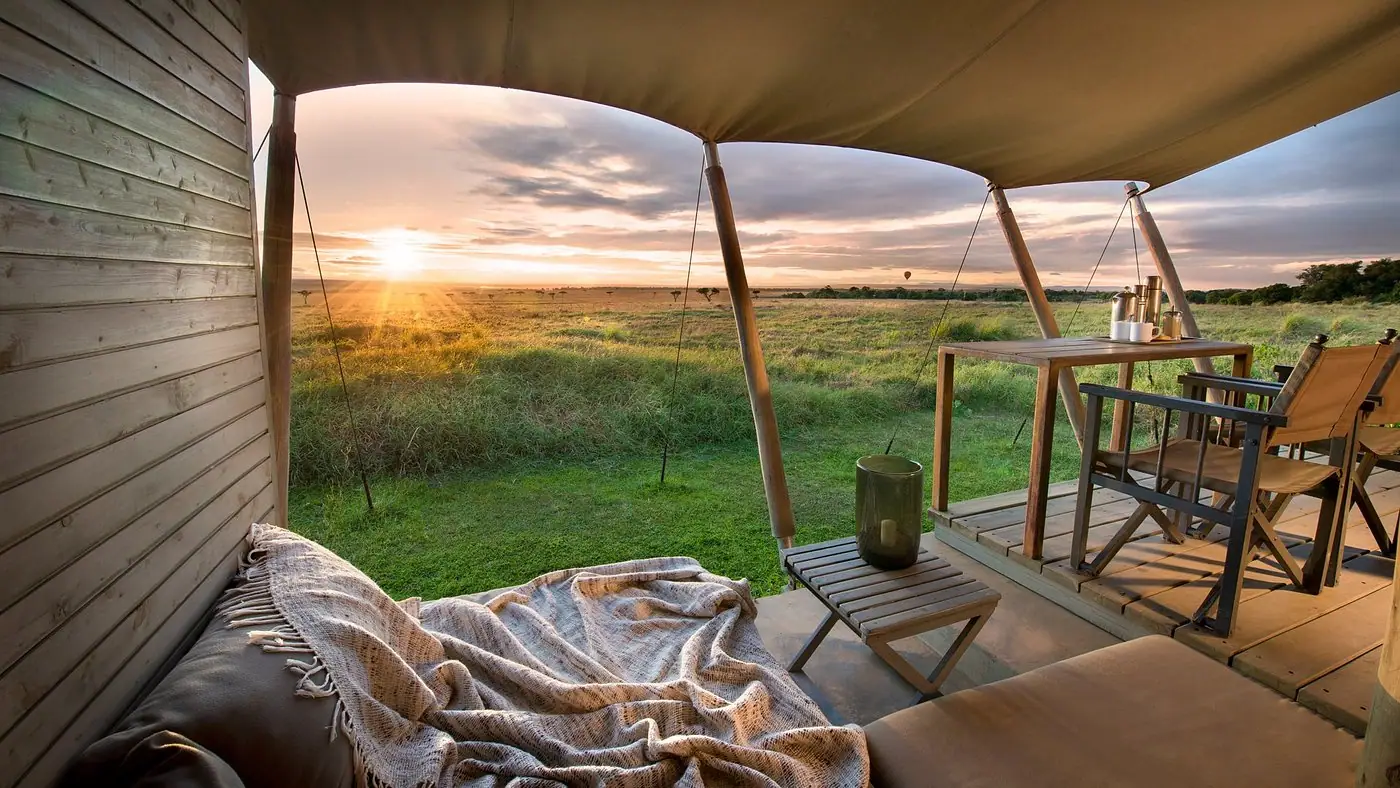
Luxury Plus: Sand River, Emboo, Governors’
Sand River Masai Mara is an Elewana camp of 16 tents in two campsites on the Sand River, deep in the south near the Tanzanian border, with Keekorok the nearest airstrip. In the migration months herds sometimes cross the river within sight of the tents. Emboo Camp is on a forested bend of the Talek River, with river-facing suites. Governors’ Camp, opened in 1972, lies in the forest along the Mara River near Musiara airstrip, in the north-west, and its rate covers drinks and the camp’s own game drives as well as meals.
Things That Go Wrong
Two days is tight. There is no spare day, so when something goes wrong you feel it.
The Card Machine Failure
The card terminals at the gates run on mobile data, and on a busy morning the network gives out. Cars then sit at the barrier while drivers phone their offices or look for cash. The Narok gates do take cash. The Mara Triangle takes none. We pay both days at the KATO office in Nairobi before you travel, so a dead machine at the gate doesn’t hold you up.
The Puncture Problem
The tracks are rough and sharp stones are everywhere. A flat tyre takes fifteen minutes to change. A soft spare can take half a drive. We check both spare wheels and the pressures before leaving Nairobi, and the first-day stop in Narok is a second chance to top up.
The Rain Wipeout
In April and May, and after heavy storms in November, the black cotton soil turns to grease. Some tracks close and the guide has to keep to the ridges, which are not always where the cats are. On a 2-day trip there is no extra day to make up for it. If heavy rain is forecast for your weekend, we would rather move your dates than send you out to watch zebras through the windscreen.
Who Should Skip This Trip
If you are flying in from overseas and have three or more days in Kenya, book longer. A 3-day Masai Mara safari or a 4-day one gives you room for weather, a slow morning or a breakdown.
If a river crossing is the reason you are coming, two days won’t do it. The herds may mass on the bank all afternoon and then drift off. People who stay a week sometimes miss one.
And if you don’t want to get up early, think again about this trip. The Sunday dawn drive is what you are paying for.
Why Not 3 Days Instead?
Three days is better. You get two dawn drives instead of one, a spare half-day if something goes wrong, and better odds on leopards and cheetahs.
It also means two nights away and, for most people in Nairobi, a day of leave. The two-day safari fits into a weekend: out on Saturday, back on Sunday, at your desk on Monday. Before deciding, read how many days to spend in the Masai Mara, which works out what each extra day adds.
Two days suits:
- Nairobi residents who want a weekend away
- Business travellers with a free weekend between meetings
- First-timers testing whether they like safari before committing to a longer trip
- Repeat visitors who know the Mara and want a quick return
Best Timing
January to March. Short grass. A cheetah’s ears show from far off across the plains. Calving draws predators, the reserve fee is at its lower rate, and there are fewer vehicles. My pick for a weekend.
April and May. The long rains. Prices are at their lowest, especially at Sand River. If you come, fly, and accept that a wet morning can cut the drive short.
June. Long gold grass and cool mornings, still on the lower reserve fee.
July to October. The migration herds, the higher fee and the most vehicles. Tall grass makes cats harder to spot. Come for the herds and treat a crossing as luck.
November and December. Short rains, green plains and young animals everywhere. Good when the rain holds off.
Month by month, our best time for a Masai Mara visit page goes deeper.
Frequently Asked Questions
How much does a 2 days Masai Mara safari cost?
By road it costs Kenyan citizens KES 54,500 to KES 205,000, residents KES 62,000 to KES 216,500 and visitors USD 815 to USD 2,125. Flying both ways raises that to KES 132,500 to KES 283,000 for citizens, KES 140,000 to KES 294,500 for residents and USD 1,415 to USD 2,725 for visitors. Prices are per person, two sharing, and depend on the camp and the dates.
Is 2 days enough time?
It is enough for lions, elephants, zebras and one proper dawn drive, as long as the trip pays for a second reserve day. It is not enough to count on the Big Five or a river crossing.
What’s the difference between 2 days and a day trip?
A day trip has no dawn drive, because you are still travelling when the predators are most active. Two days gives you a night in the bush and a full Sunday morning on the plains.
Can I see the wildebeest crossing in 2 days?
Wildebeest are in the Mara all year, and the big herds are there from July to October. Crossings are unpredictable, though. Herds can wait at the bank all day and turn back, so two days is not a realistic plan for seeing one.
What should I pack?
Neutral colours, layers for a cold dawn, a camera with a zoom, a power bank and a dust cover for electronics. If you fly, pack everything into one soft bag.
Can I fly one way and drive the other?
Yes. Flying in on Saturday and driving back on Sunday keeps the Saturday morning on the plains, and you pay for only one flight. We price it on request.
Ready to Plan Your 2-Day Safari?
Send us your dates, how many of you are travelling, whether you are citizens, residents or visitors, and the tier you like. We will check the camp and the flights and send a written quote within 24 hours.
Related Trips
- 1 Day Masai Mara Safari
- 3 Days Masai Mara Safari
- 4 Days Masai Mara Safari
- Budget Masai Mara Safari
- Masai Mara Flying Packages
- How Many Days in Masai Mara
- Masai Mara Park Fees
How We Put This Guide Together
Prices are built from each camp’s 2027 rate sheet or its latest published rates, the 2027 reserve fees, scheduled airline fares and our own vehicle costs. Each tier is priced on the dearest of its three camps, so changing camp within a tier never changes your quote. Where a camp publishes a resident rate, the shilling prices use it, not a converted dollar rate.
We earn commission on bookings and do not own any of the camps. Camp choices come from what our guides and clients tell us after each stay.
About the Experts Behind This Safari
Written by: David Njunge, TRA-Licensed Safari Guide (10+ years of on-the-ground experience in the Masai Mara).
Edited by: Cecilia Wambui, Lead Travel Consultant & Logistics Expert.
Rates last updated: 23 November 2026 (for the 2027 season).
Welcome to Masaimara.co.ke
Thank you for visiting us! We're excited to help you plan an unforgettable safari adventure across Kenya.