
Mara Expedition Camp: The Vehicle Permit Limit, the No-Phone Rule, and What Actually Happens at Lunch
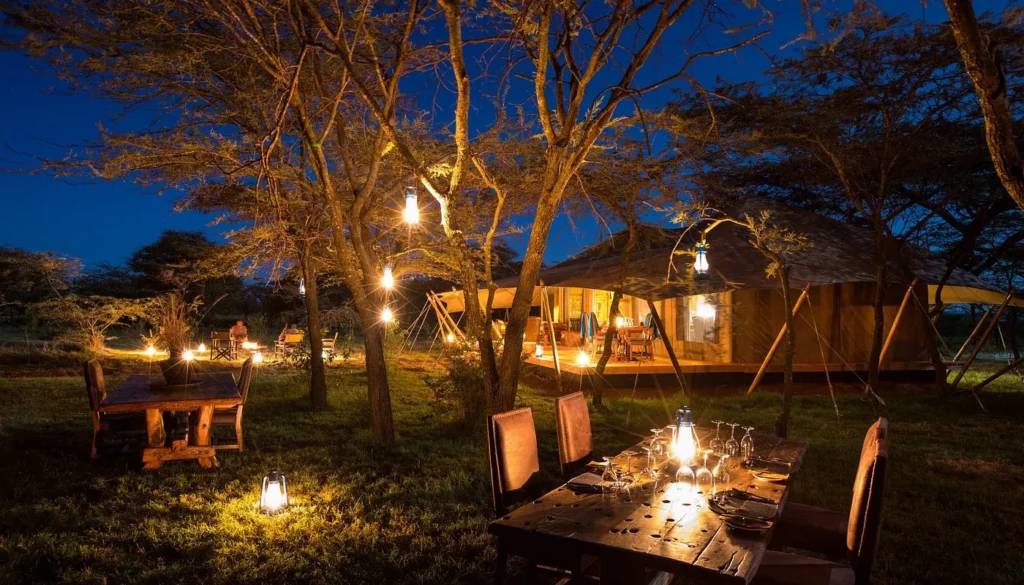
When I first saw the swimming pool at Mara Expedition Camp, I assumed someone was playing a joke. It sits on the back of a World War II truck. You climb a wooden staircase up the side, reach a small decking platform, and there’s the pool — too small for laps but with views across the tree canopy that make you forget where you are.
The camp does a lot of things you won’t find advertised. Free Canon camera lenses. Outdoor canvas bathtubs filled by hand on your veranda. A strict no-screens policy in the lounge. And a vehicle permit limitation for Mara North that changes how you should plan your drives.
Six tents under African ebony trees, lit by lanterns and candles at night. Flights from Wilson included with a 2-night minimum stay.
What This Guide Covers
Mara Expedition Camp At a Glance (Quick Facts)
Before exploring vehicle permits, camera kit perks, and custom dining options, review this quick reference breakdown of core specifications, pricing, and inclusions for Mara Expedition Camp.
Camp Feature | Specification & Details |
Location | Bordering Masai Mara Reserve & Mara North Conservancy (Ntiakitiak Riverfront) |
Capacity | 6 Canvas Tents (5 standard double tents & 1 two-bedroom family tent) |
Nightly Rates | USD 1,330 – 1,830 per night approx. (Full board, drinks & flights included) |
Key Perks | Free Canon DSLR kit loaner & return flights from Wilson (2-night min.) |
Rule & Policy | Strict no-screens policy in communal areas; USD 100/night conservation fee |
What’s Included
Included in the Rate | Out-of-Pocket Expenses |
Full Board: All meals, laundry, and premium drinks. | Conservation Levy: Mandatory USD 100 per night. |
Transport: Game drives and return Wilson flights. | Official Fees: Mara park fees and Kenya eTA. |
Photo Gear: Free Canon DSLR kit loaner and USB. | Extras: Staff tips, spa, balloon, and village visits. |
The rate covers more than most camps, including a few things marketing materials skip over entirely.
Covered: Accommodation, game drives in Masai Mara Reserve and Mara North Conservancy, all meals, laundry, return Ol Kiombo airstrip transfers, all drinks including premium spirits and champagne, return flights from Wilson Airport (2-night minimum), complimentary Canon DSLR with 100-400mm lens (first-come, one per tent), USB stick with your photos before checkout.
Not covered: Kenya eTA (USD 34), Great Plains Foundation conservation levy (USD 100/night — mandatory), park fees, hot air balloon (USD 585), spa treatments, Maasai cultural visits (USD 30/person), tips (USD 15-20/day).
The conservation levy adds up. For a 3-night stay, that’s USD 300 per person on top of the nightly rate.
The Vehicle Permit Catch
Marketing says you get “unlimited game drives in both the National Reserve and Mara North Conservancy.” Technically accurate. Operationally misleading.
Mara Expedition Camp holds only six vehicle permits per day for Mara North Conservancy. The camp has to share these across all guests. On a typical 3-night stay, you’ll likely get one morning drive inside Mara North. The rest of your tracking happens in the busier National Reserve.
This isn’t a complaint — the reserve has excellent game viewing, especially during migration. But if you booked specifically for Mara North’s lower vehicle density, adjust your expectations. Ask at check-in which days you’re allocated for Mara North drives.
The Naming Thing
You’ll notice Great Plains Conservation calls their budget-tier properties the “Explorer Collection” in Botswana. In Kenya, this camp is strictly called Mara Expedition Camp — never Mara Explorer.
Heritage Hotels already owns the trademark for Mara Explorer Camp, which operates separately inside the reserve. Great Plains altered their branding to avoid a legal dispute. If you’re researching camps online and getting confused between the two, they’re completely different properties run by different companies.
Packages
4-day/3-night flying safari from Nairobi. Per person, two travelers sharing.
Season | Price/Person | |
Low (Apr-Jun, Nov-Dec) | USD 3,990 | |
Peak (Jul-Oct) | USD 5,490 |
Stay 4, Pay 3 promotion available during low season windows. Ask when booking.
The Free Camera Kit
You don’t need to haul heavy lenses across the Atlantic.
The camp keeps Canon DSLR bodies paired with 100-400mm telephoto lenses on hand. They’re loaned out completely free on a first-come basis — one set per tent. Before checkout, staff download all your high-resolution wildlife photos onto a complimentary Great Plains USB stick.
On my last visit, a guest from New Zealand had packed only a smartphone, assuming she’d regret it. By Day 2 she was shooting frame-filling lion portraits with the loaner Canon. Ask at check-in if you want to reserve a kit for the next morning’s drive.
The No-Screen Rule
Cellphones, tablets, and laptops are explicitly banned from the main lounge, dining tents, bar, and safari vehicles.
It preserves the old-world expedition atmosphere — lanterns, conversation, no glowing rectangles. Keep your devices zipped away until you’re back in your tent, or expect a gentle correction from Dee or whoever’s managing that day.
I’ve watched guests initially annoyed by this end up grateful by Day 2. You actually notice the bush babies calling in the trees when nobody’s scrolling.
What Actually Happens at Lunch
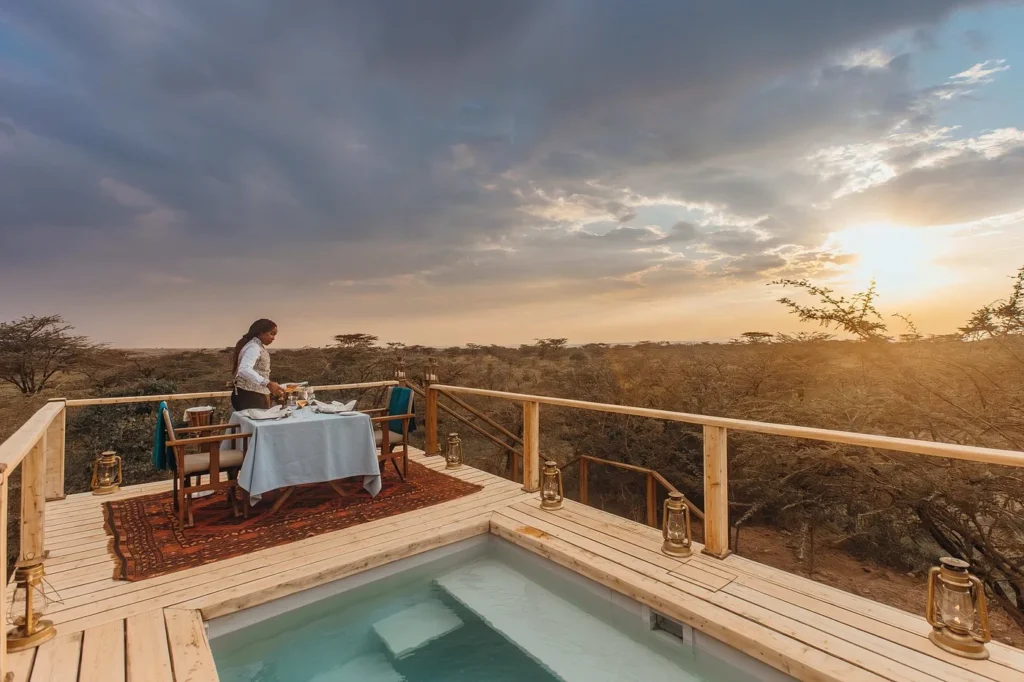
Dinner follows a structured three-course menu. Lunch doesn’t.
Under the ebony trees, there’s no printed menu at all. The chef — Andrew on my visits — walks physically to your table and asks what you feel like eating. They make it from scratch based on whatever fresh ingredients came in on the supply run.
For families with picky children or guests with dietary restrictions, this is exceptional. You’re not locked into a set kitchen rotation. I watched a kid request “just pasta with butter and cheese” and watched Andrew deliver exactly that alongside the adults’ more elaborate plates.
If you want to stay out longer during migration, ask for a picnic lunch instead of returning to camp. Photography-focused guests and full-day crossing watchers should request this at breakfast.
The Outdoor Bathtub
The bucket shower inside the tent is standard. The outdoor canvas bathtub on your veranda is not advertised.
Ask your room steward — Julius, Nelson, whoever’s assigned — and they’ll set up a portable vintage canvas tub on your wooden deck. Hand-poured piping hot water. You soak on the edge of the Ntiakitiak River listening to hippos honk downstream.
I didn’t know this existed until my second stay. Request it the morning of your last full day so staff have time to set everything up before your afternoon drive.
The Tents
Five standard double tents and one two-bedroom family tent. All tents follow the same colonial-era expedition design — high ceilings, soft cotton linens, antique pieces. The bathroom includes a camp shower that pulls water from a brass bucket.
Tent Selection
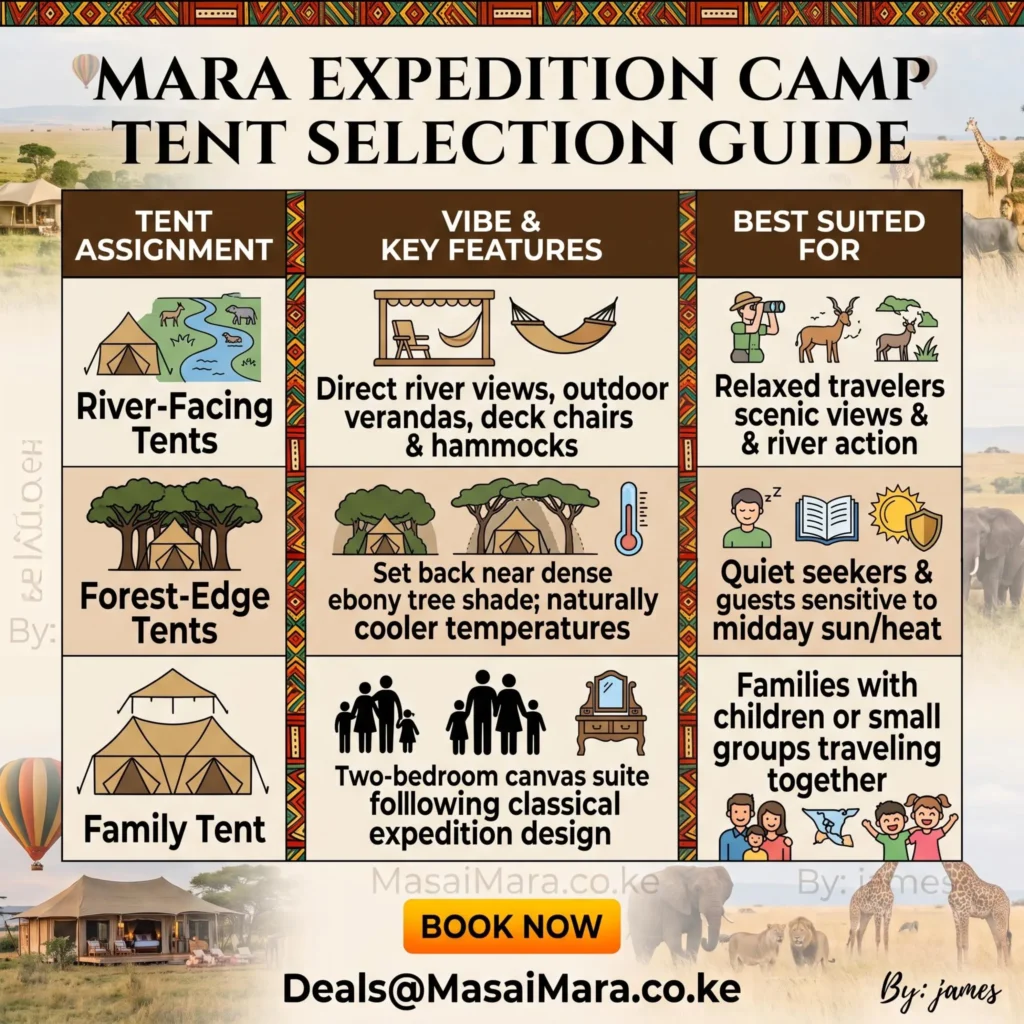
Mara Expedition Camp Tent Selection Guide
Choosing the ideal tent depends on whether you prioritize open riverfront views or the shade and cool breeze of the riverine forest canopy. Use this guide to request your ideal setup.
Tent Assignment | Vibe & Key Features | Best Suited For |
River-Facing Tents | Direct river views, outdoor verandas, deck chairs & hammocks | Relaxed travelers seeking scenic views & river action |
Forest-Edge Tents | Set back near dense ebony tree shade; naturally cooler temperatures | Quiet seekers & guests sensitive to midday sun/heat |
Family Tent | Two-bedroom canvas suite following classical expedition design | Families with children or small groups traveling together |
Some tents face the river directly with hammocks and deck chairs. Others sit closer to the shaded forest edge. If you value quiet camp time between drives, ask for a river-facing tent with the best outlook. If you prefer shade and cooler temperatures, request one near the riverine forest.
The camp sits on private land and is unfenced — wildlife moves through freely. Maasai escorts walk guests between tents after dark. If you feel unsure, you can request an escort anytime, not just at night.
Resident Leopards
The riverbank edges around camp are known locally for resident leopards. The big cats wander the Ntiakitiak River corridors at dawn and dusk. Spend time along the riverine edges during those hours — the sightings happen when you’re patient.
The Riverside Lounge
Separate from the main lounge, there’s a relaxation spot by the Ntiakitiak River with a day bed and director’s chairs. It doesn’t show up in most descriptions. If you want a quiet reading spot between drives, ask where the riverside seating is.
The camp also has a small library with shelves in the main area — bring a book or browse what’s there. Midday breaks run long here. The schedule is flexible rather than rigid; guests can shape drive times around sightings, light conditions, or children’s routines.
The Shop
There’s a small on-site shop selling mainly beaded jewelry. For a more comprehensive selection, the shop at Mara Plains — their flagship property five minutes away — has additional options.
The Staff
Staff Member | Role & Specialty |
Dee | Camp Manager: Runs daily operations with a strong, visible presence. |
Clifford | Safari Guide: Offers intimate, deep knowledge of the reserve. |
Duncan | Safari Guide: Specializes in conservation-focused ecosystem tracking. |
Nancy | Safari Guide: Exceptional wildlife spotter (famous for early cheetah sightings). |
Wilson | Safari Guide: Highly rated and frequently praised by past guests. |
Julius | Room Steward: Coordinates morning tea and in-bed hot water bottles. |
Nelson | Houseman: Hand-pours and manages the signature outdoor canvas bathtubs. |
Moses | Waiter: Remembers and customizes personalized drink preferences. |
Andrew | Chef: Handles the interactive, completely customized “no-menu” lunches. |
Amos | Field Support: Delivers surprise sundowner drinks during game drives. |
Dan | Night Escort: Accompanies guests safely between tents after dark. |
Dee: Camp manager. Runs the operation with visible presence.
Clifford: Guide. Knows the reserve intimately.
Duncan: Guide. Conservation-focused in how he explains the ecosystem.
Nancy: Exceptional spotter — found a cheetah family before anyone saw movement.
Wilson: Another guide frequently mentioned by guests.
Julius: Room steward. Hot water bottles in beds, early morning tea.
Nelson: Houseman. Handles the outdoor bathtub setup.
Moses: Waiter. Remembers drink preferences.
Andrew: Chef. The no-menu lunch conversations happen with him.
Amos: Brings surprise sundowners on drives.
Dan: Nighttime escort.
What Can Go Wrong
The conservation levy: USD 100 per person per night. Not included in advertised rates. For a couple staying 3 nights, that’s USD 600 extra.
Flights with minimum stay: Wilson flights require 2-night minimum. One-night stays pay separately.
The permit limitation: Six vehicle permits per day for Mara North. Don’t assume every drive goes there.
No heating: Early drives in July can be cold. Pack warm layers.
When to Visit
July-October: Main Serengeti migration. Crossing sites accessible. Peak rates.
April-June, November-December: Green season migration from Loita Plains — 50,000 additional wildebeest and 100,000 zebras. Lower rates. Fewer vehicles.
Mara Expedition vs Mara Plains: Is the Upgrade Worth It?
Mara Plains is Great Plains’ flagship Kenya property, five minutes away by vehicle. Both access the same conservancies. The differences:
Factor | Mara Expedition | Mara Plains |
Tents | 6 | 7 |
Design | Expedition-era canvas | Ultra-luxury suites |
Price | ~USD 1,200-1,800/night | ~USD 2,200-3,500/night |
Pool | WWII truck conversion | Traditional plunge pool |
Atmosphere | Intimate, adventurous | Refined, exclusive |
If budget allows and you want the most polished experience, Mara Plains delivers. If you want excellent guiding, the same wildlife, and a more adventurous feel at lower cost, Mara Expedition makes sense.
How Mara Expedition Compares
Camp | Tents | Location | Flights Included | Price Level |
Mara Expedition | 6 | Private land / Mara North | Yes (2-night min) | Mid-luxury |
10 | Inside Reserve | No | Mid-luxury | |
29 | Inside Reserve | No | Luxury | |
18 | Kichwa Tembo Concession | Varies | Premium |
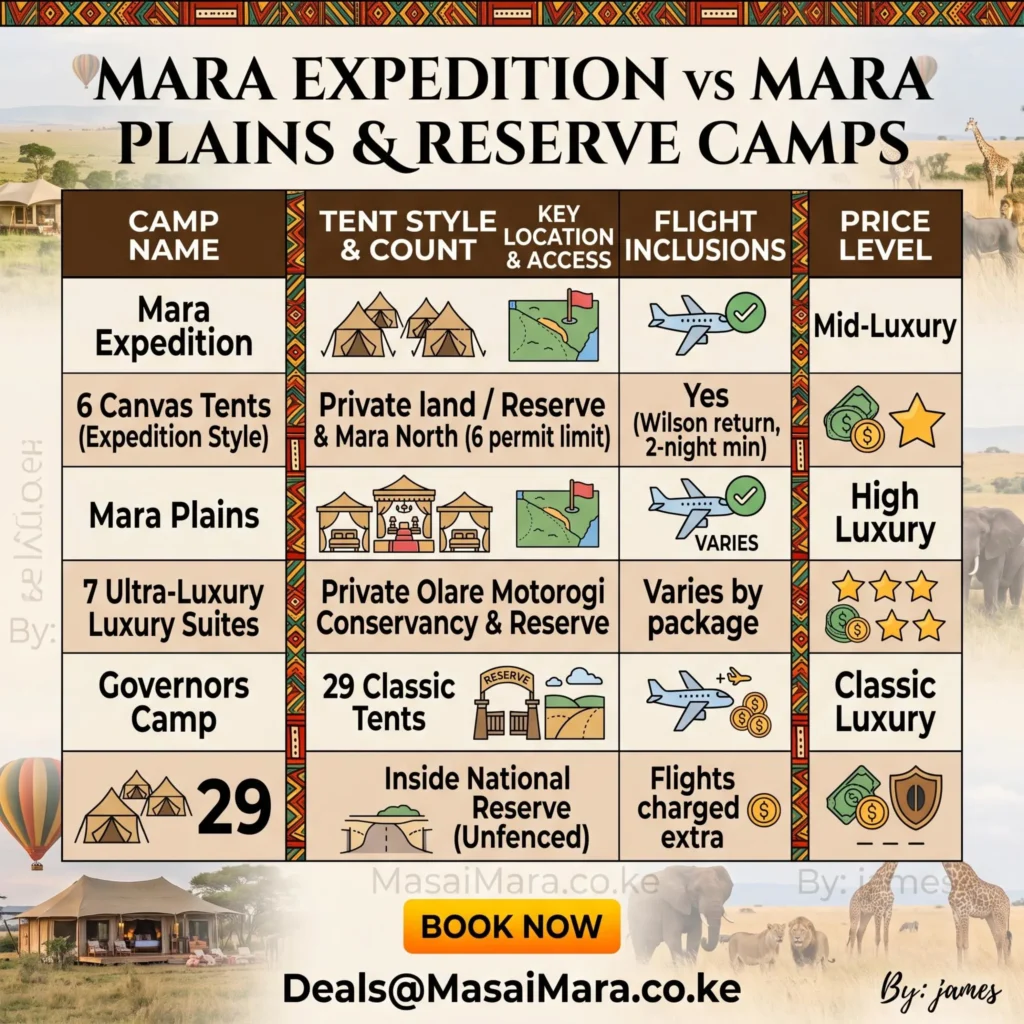
Mara Expedition vs Mara Plains & Reserve Camps
Great Plains Conservation operates both Mara Expedition and Mara Plains in this ecosystem. Compare access rules, tent styles, and price tiers to select the camp best matched to your travel style.
Camp Name | Tent Style & Count | Key Location & Access | Flight Inclusions | Price Level |
Mara Expedition | 6 Canvas Tents (Expedition Style) | Private land / Reserve & Mara North (6 permit limit) | Yes (Wilson return, 2-night min) | Mid-Luxury |
Mara Plains | 7 Ultra-Luxury Suites | Private Olare Motorogi Conservancy & Reserve | Varies by package | High Luxury |
Governors Camp | 29 Classic Tents | Inside National Reserve (Unfenced) | Flights charged extra | Classic Luxury |
Common Questions
Does Mara Expedition include flights? Yes — return flights from Wilson Airport are included with a 2-night minimum stay.
Is Mara Expedition inside the Masai Mara Reserve? No — it’s on private land bordering the reserve. You get drives in both the reserve and Mara North Conservancy, though Mara North access is limited to 6 permits per day.
Can I use my phone at camp? In your tent, yes. Screens are banned from communal areas and safari vehicles.
Is the Canon camera kit actually free? Yes — first-come, one per tent. They even download your photos to a USB stick before checkout.
Related
- Masai Mara Safari from Nairobi
- Mara North Conservancy
- Olare Motorogi Conservancy
- Mara Explorer Camp
- Best Lodges in Masai Mara
Sources
Edited by Cecilia Wambui, Tourism and Hospitality Management. Prices valid 2026/2027.
Welcome to Masaimara.co.ke
Thank you for visiting us! We're excited to help you plan an unforgettable safari adventure across Kenya.