
Fig Tree Camp Masai Mara: Tent Categories Explained, the Adventures Aloft Connection, and Staff Worth Requesting
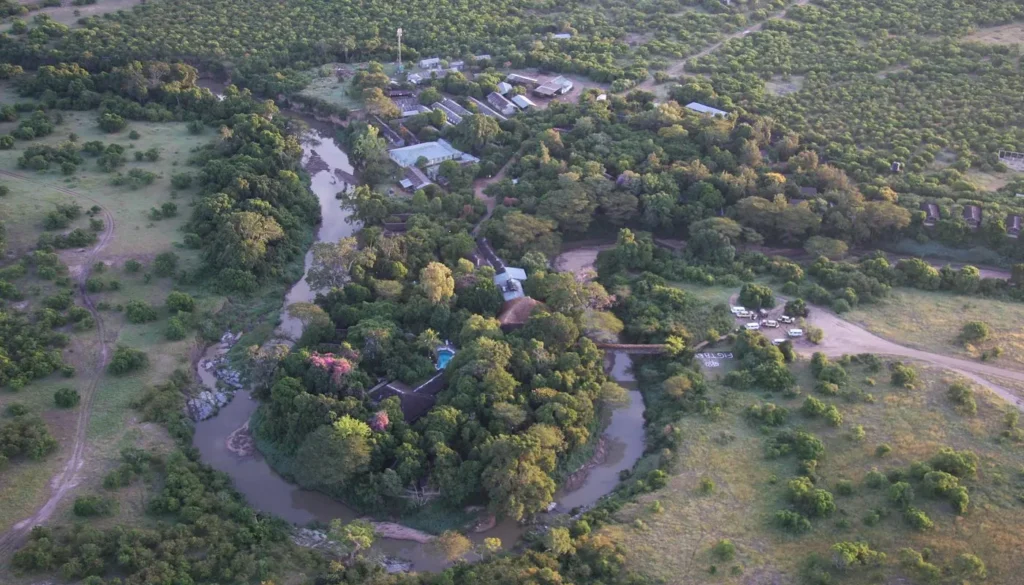
Fig Tree Camp occupies a crook in the Talek River, ten minutes from Ol Kiombo Airstrip and just two kilometers from Talek Gate. The camp sits on what feels like an island — surrounded by river bends and dense old-growth fig trees that somehow make 80 tents disappear into the foliage. Hippos live in the pool directly below the safari tents. You’ll hear them grunting through the night, and by morning the smell of damp riverbank grass mixes with wood smoke drifting from the kitchen.
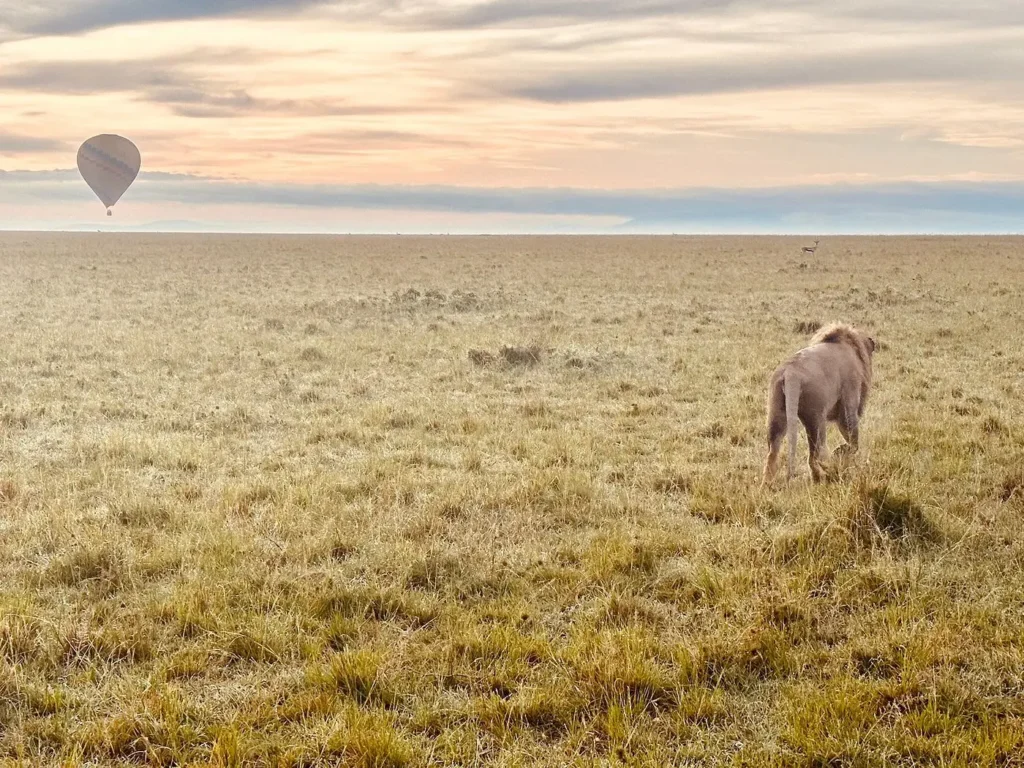
Adventures Aloft balloon safaris launch daily from inside the camp. That’s the detail most people don’t know — you don’t need early-morning transfers to a distant launch site. The inflation happens right there, and your champagne breakfast happens on the Mara plains an hour later.
What This Guide Covers
Full-Board Details
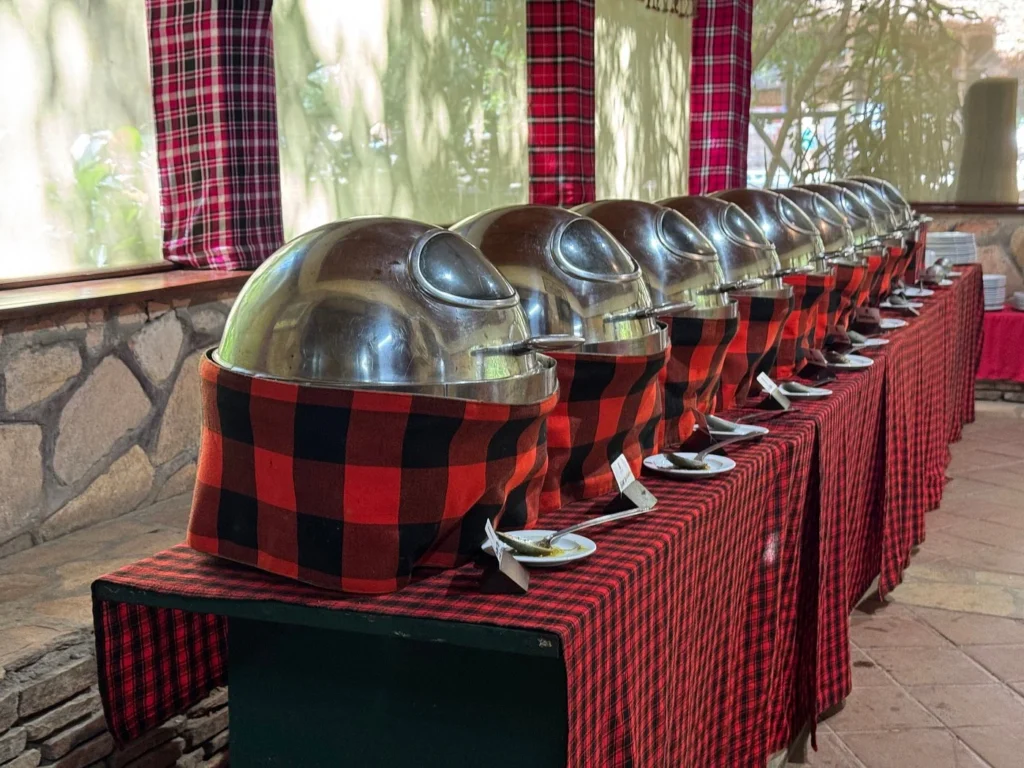
Your rate covers accommodation, three meals daily (buffet breakfast, packed or served lunch, buffet dinner), filtered water, swimming pool access, evening Maasai cultural performances, and free parking. The treehouse coffee deck stays open between meals.
Not covered: Masai Mara park fees — non-residents pay USD 100/day (KES 12,930) from January to June, and USD 200/day (KES 25,860) from July to December. Game drives are charged separately unless your tour operator bundles them. Hot air balloon safaris cost USD 450-550 (KES 58,185-71,115) per person. Spa treatments, laundry, drinks beyond water, and the curio shop are extra.
Pay your park fees at kwspay.ecitizen.go.ke — not the old portal.
Tent Categories Explained
The camp runs three accommodation types, and choosing wrong can shape your entire experience. I’ve seen guests disappointed because nobody explained the difference before they booked.
Safari Tents (38 units)
Canvas walls, thatched roof, raised wooden platform overlooking the Talek River. Each tent has one double and one single bed, en-suite bathroom with hot shower (when available — more on that below), private balcony with safari chairs, mosquito netting, parquet floors, and a small desk.
The river-facing tents are what you want. That hippo pool sits directly below. One guest told me she watched a leopard in the bushes at 6am without leaving her veranda. Elephants sometimes graze on the opposite bank.
Rates (full-board, per person sharing):
Season | Per Night |
Low (Apr-May) | USD 193 (KES 24,955) |
Shoulder (Jan-Mar, Jun, Nov-Dec) | USD 230 (KES 29,739) |
Peak Migration (Jul-Oct) | USD 314 (KES 40,600) |
Christmas/New Year | USD 400 (KES 51,720) |
Garden Chalets (32 units)
Stone-and-thatch construction instead of canvas. Solidly built, with double and single beds, same bathroom setup as the tents. These sit further from the river, facing the bush rather than the hippo pool. They’re bigger inside, and some guests prefer them because they stay cooler during midday heat.
No river sounds at night though. You hear bush sounds instead — hyenas, occasionally lions if a pride is moving through. Different atmosphere entirely.
Rates: Same as Safari Tents.
Ngaboli Tents (10 units)
Presidential-level accommodation on a private wing with unobstructed views over the Mara plains. Four-poster beds, his-and-hers vanity, deeper bathtub, larger balcony, better furniture throughout. The camp uses these for honeymoon couples and VIP guests.
The Ngaboli wing has its own dedicated staff. You’re further from the main dining area but closer to wildlife that wanders through the camp’s edges.
Rates (full-board, per person sharing, including supplement):
Season | Per Night |
Low | USD 248 (KES 32,066) |
Shoulder | USD 285 (KES 36,851) |
Peak | USD 370 (KES 47,841) |
Christmas/New Year | USD 455 (KES 58,832) |
Ngaboli tent supplement: approximately USD 55 (KES 7,112) per person per night above standard rates.
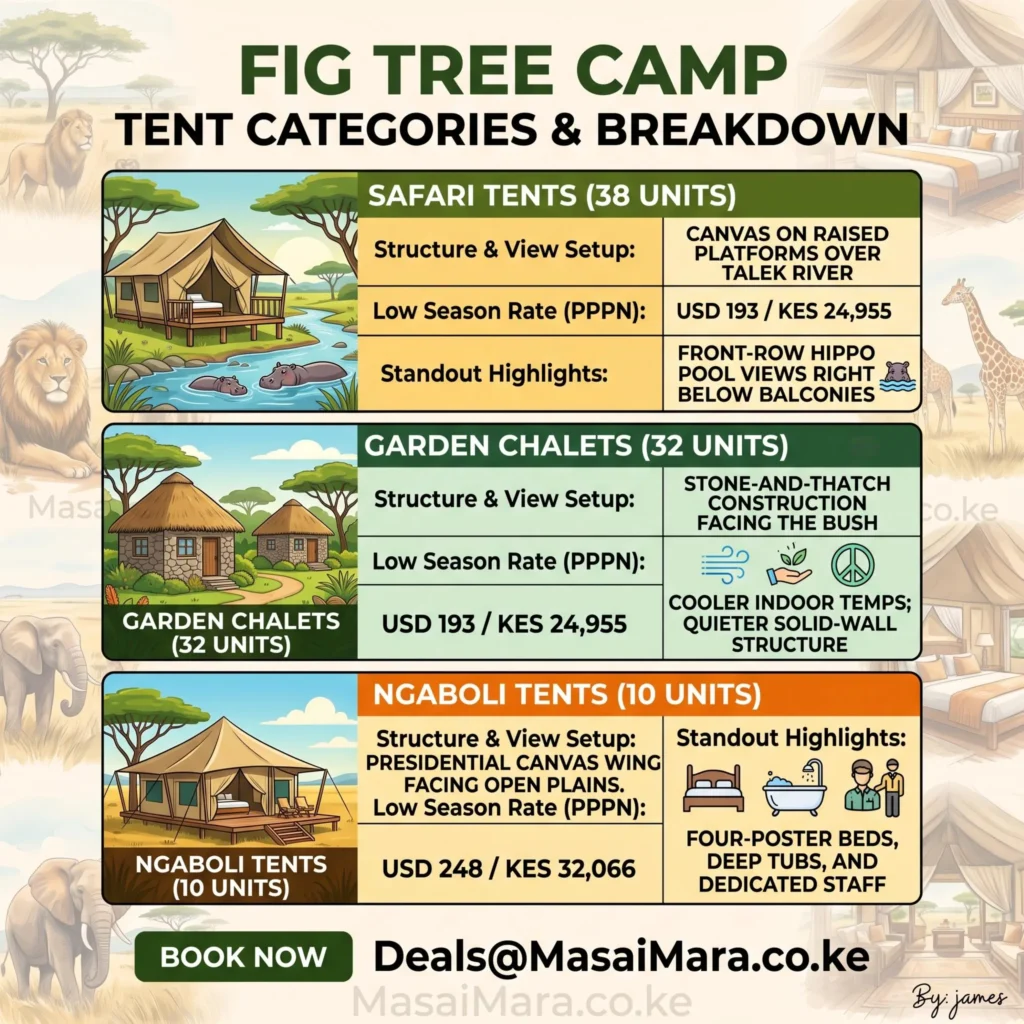
Fig Tree Camp Tent Categories & Breakdown
Choosing the right accommodation style at Fig Tree Camp directly impacts your river views, noise levels, and overall comfort. Use this breakdown to compare the property’s three distinct room categories:
Accommodation Category | Structure & View Setup | Low Season Rate (PPPN) | Standout Highlights |
Safari Tents (38 Units) | Canvas on raised platforms over Talek River | USD 193 / KES 24,955 | Front-row hippo pool views right below balconies |
Garden Chalets (32 Units) | Stone-and-thatch construction facing the bush | USD 193 / KES 24,955 | Cooler indoor temps; quieter solid-wall structure |
Ngaboli Tents (10 Units) | Presidential canvas wing facing open plains | USD 248 / KES 32,066 | Four-poster beds, deep tubs, and dedicated staff |
3-Night Packages
Fig Tree Camp sits approximately five hours from Nairobi by road, or fifty minutes by air to Ol Kiombo Airstrip. Here’s what a typical 3-night stay costs, built for two people traveling together.
Budget: Safari Tent + Road Transfer
Item | Per Person |
Road transfer Nairobi-Fig Tree-Nairobi | USD 190 (KES 24,567) |
3 nights accommodation (low season) | USD 579 (KES 74,865) |
Park fees 3 days (Jan-Jun) | USD 300 (KES 38,790) |
Game drives 3 days | USD 570 (KES 73,701) |
Low Season Total | USD 1,639 (KES 211,923) |
Peak season (Jul-Oct) pushes this to approximately USD 2,502 (KES 323,509) per person due to higher accommodation and park fees.
Mid-Range: Safari Tent + Flying
Item | Per Person |
Return flights Wilson-Ol Kiombo | USD 700 (KES 90,510) |
3 nights accommodation (shoulder) | USD 690 (KES 89,217) |
Park fees 3 days (Jan-Jun) | USD 300 (KES 38,790) |
Game drives 3 days | USD 570 (KES 73,701) |
Shoulder Season Total | USD 2,260 (KES 292,218) |
Luxury: Ngaboli Tent + Flying + Balloon
Item | Per Person |
Return flights Wilson-Ol Kiombo | USD 700 (KES 90,510) |
3 nights Ngaboli tent (shoulder) | USD 855 (KES 110,552) |
Park fees 3 days (Jan-Jun) | USD 300 (KES 38,790) |
Game drives 3 days | USD 570 (KES 73,701) |
Hot air balloon safari | USD 505 (KES 65,297) |
Shoulder Season Total | USD 2,930 (KES 378,849) |
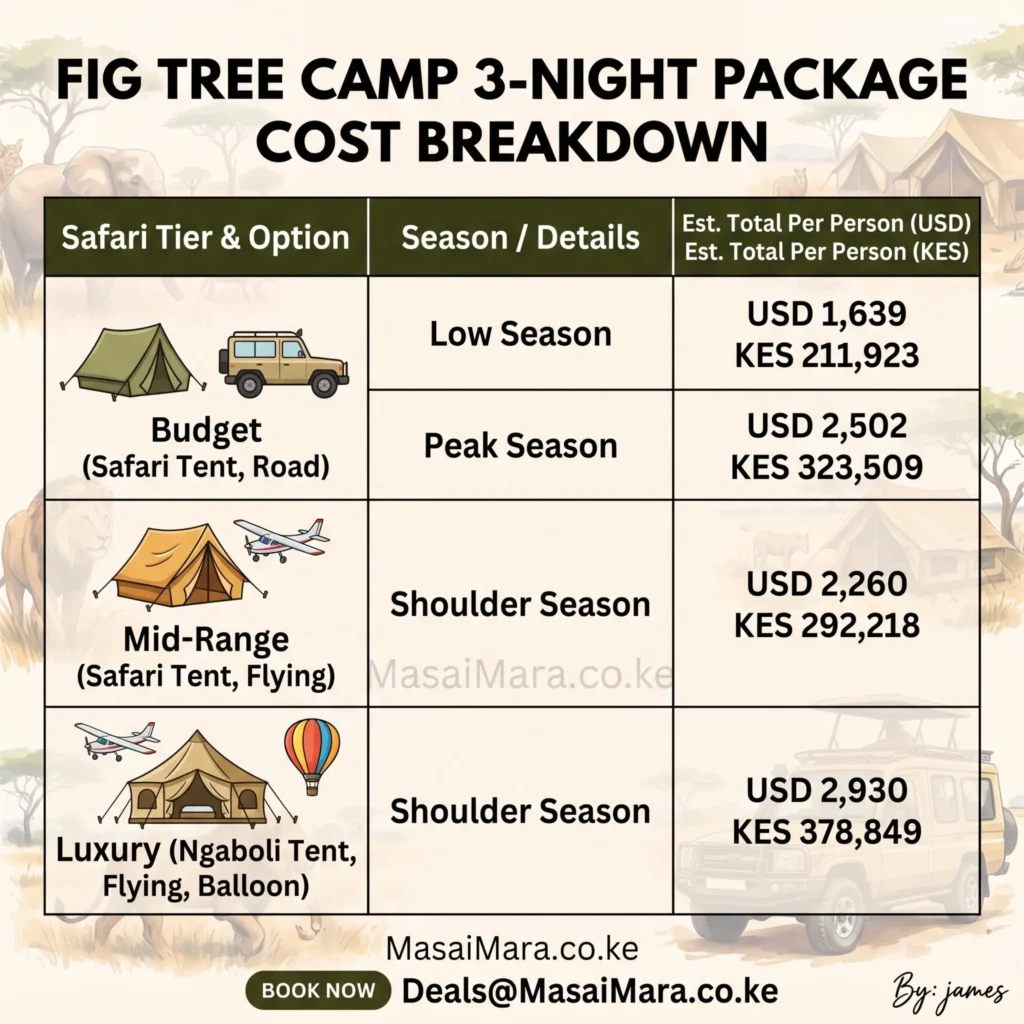
Fig Tree Camp 3-Night Package Cost Breakdown
Estimating your actual safari budget requires factoring in transport type, daily reserve entry permits, and seasonal rate shifts. This breakdown outlines total costs for a 3-night stay at Fig Tree Camp across three typical booking levels:
Safari Tier & Option | Season / Details | Est. Total Per Person (USD) | Est. Total Per Person (KES) |
Budget (Safari Tent, Road) | Low Season
Peak Season | USD 1,639
USD 2,502 | KES 211,923
KES 323,509 |
Mid-Range (Safari Tent, Flying) | Shoulder Season | USD 2,260 | KES 292,218 |
Luxury (Ngaboli Tent, Flying, Balloon) | Shoulder Season | USD 2,930 | KES 378,849 |
The 2024 Flood and Recovery
Heavy rains in April-May 2024 devastated the Mara. The Talek River overflowed, and Fig Tree Camp took a direct hit. The entry bridge washed away. Several riverfront tents were damaged or destroyed. The main dining hall lost walls. Property worth millions of shillings — beds, documents, kitchen equipment — got swept downstream.
Guests who visited in early 2025 found the camp rebuilding. Some noted food being served under tree canopy instead of the main hall. A few tent sites remained under repair.
By late 2025, the rehabilitation was largely complete. The bridge has been replaced with a stronger structure. Reviews from October 2025 onward describe the tents as “virtually new” — renovated interiors, fresh furniture, updated bathrooms. The open-air restaurant and bar have reopened.
If you’re booking in 2026, you’re getting post-flood renovations. Tents that would’ve aged over years got completely rebuilt. That’s the silver lining.
Adventures Aloft Balloon Safari
Adventures Aloft — one of the original Mara balloon operators — launches daily from inside the camp grounds. Captain Hatem and Captain Richard fly most mornings.
You wake around 5:00 AM. The balloon crew picks you up from reception and takes you to the launch site within the camp perimeter. You watch the balloon inflate as the sun rises over the plains. By 6:15-6:30 AM, you’re airborne. The flight lasts about an hour, covering 15-25 kilometers depending on wind.
After landing somewhere in the reserve, ground crew set up a champagne breakfast on the plains — full hot meal, open bar, butler service. A chase vehicle brings you back to camp by late morning.
Current rates:
Option | Cost |
Balloon safari + bush breakfast | USD 505-550 (KES 65,297-71,115) |
Video/photo package | USD 60 (KES 7,758) |
Resident rate (Kenyan ID) | KES 55,000-60,000 |
Booking in advance matters during peak migration (July-October). The balloons carry a maximum of 16 passengers, and only a few flights launch each morning across the entire reserve.
Electricity and WiFi Limitations
The camp runs on solar and generator power, not mains electricity.
Power schedule: Electricity typically cuts off between midnight and 6:00 AM, and sometimes during afternoon hours. Hot water follows a similar schedule — available during peak use times (mornings and evenings) but not 24 hours. One reviewer noted asking staff to “extend the hot water time” when their evening shower ran cold.
WiFi: Available only in common areas — the dining hall, reception, and bar. Don’t expect connectivity in your tent. The signal gets unreliable during storms. One guest described trying to get online during a thunderstorm and finding it “especially challenging” since the WiFi zone is outdoors.
Charge your phone and camera batteries during morning and evening power windows. Bring a headlamp for middle-of-night bathroom trips.
The Monkey Problem
I’m including this because nobody mentions it prominently enough.
Vervet monkeys roam the camp freely. Clever, aggressive when they spot food, quick. If you leave your tent unzipped while at breakfast, they’ll be inside your luggage before you finish your coffee. One review mentioned them “ravaging” belongings.
Zip your tent completely whenever you leave. Don’t leave snacks visible. If monkeys are on your veranda when you return, don’t try to shoo them — wait, or call staff.
This isn’t a reason to avoid the camp. It’s just part of staying somewhere unfenced in the African bush.
Camp Facilities
The swimming pool overlooks the river, surrounded by loungers. The pool bar serves cocktails and beer during midday heat between game drives — that’s where most guests end up.
Two bars operate: the main one near the pool, and a second connected to the dining area.
The tree house coffee deck is built around one of the old fig trees, elevated above camp. Good spot for watching giraffes and zebra pass while nursing afternoon coffee.
Spa and massage services are available on request — basic services rather than a full wellness center. Conference facilities work for groups. A video room shows wildlife documentaries. The curio shop sells standard safari souvenirs and Maasai crafts. An on-site clinic with resident nurse handles basic medical needs.
Staff Worth Requesting
Sheila works front-of-house and appears repeatedly in reviews for being attentive with special requests. Hiram guides safari drives — recent guests describe him working hard to find wildlife, worth requesting if you’re serious about game viewing. Jonathan handles birders and photographers well.
Julius spots for the guides, locating wildlife to improve game drive success. Dominic drives — multiple guests mention him as outstanding. Paul manages guest relations and follows up on concerns.
Mary, Stella, and Sharon work dining and hospitality. One guest wrote about wishing she could remember their waiter’s name because “he was brilliant.” Sammy, James, Benson, and Sadera round out the service team — James and Benson specifically mentioned for family stays.
Honest Assessment
The camp has operated for decades. The location on the Talek River — with hippos directly below riverside tents — delivers wildlife viewing without leaving your room. Adventures Aloft launching from on-site means balloon safaris require zero pre-dawn transfers. The central reserve location provides quick access to the Mara River crossings during migration.
Families appreciate the structure: pool, activities, predictable meal times, enough guests that kids have playmates. First-timers like the balance of “tented camp” romance with actual solid infrastructure — flushing toilets, hot showers (usually), staff everywhere.
The downsides are real though. WiFi only in common areas frustrates anyone who needs connectivity. Power and hot water schedules require planning around infrastructure rather than personal convenience. The camp’s size (80 rooms) means less intimacy than smaller 10-15 tent operations — during peak season, you’re sharing the dining room with lots of other guests.
Garden chalets don’t offer the river experience that makes riverside tents special. The monkeys require vigilance.
Some reviewers note food as “OK” rather than exceptional — “neither particularly good nor bad.” Others describe it as excellent. This probably depends on expectations and which chef is working that week.
Common Questions
How far is Fig Tree Camp from Nairobi? About 240 kilometers, approximately five hours by road via Narok. By air, 50 minutes from Wilson Airport to Ol Kiombo Airstrip, plus 10 minutes by road to camp.
Does the camp have WiFi? Only in common areas. No WiFi in tents. Signal can be unreliable during bad weather.
Is there power 24 hours? No. The camp runs on solar and generator. Expect power cuts during late night/early morning and sometimes afternoons.
Can children stay at Fig Tree Camp? Yes. Children under 2 staying with parents are free. Children 3-12 pay 50% of adult rates.
What’s the best tent category? River-facing safari tents for the hippo pool view. Ngaboli tents for honeymoons. Garden chalets if you prefer solid walls and cooler temperatures.
Is the camp fenced? No. Wildlife moves through freely. Zip your tent and follow staff guidance.
Optional Add-Ons
Activity | Cost |
Hot air balloon + bush breakfast | USD 505 (KES 65,297) |
Night game drive | USD 45 (KES 5,819) |
Game walk (guided) | USD 45 (KES 5,819) |
Sundowner | USD 55 (KES 7,112) |
Bush dinner | USD 60 (KES 7,758) |
Bush breakfast | USD 50 (KES 6,465) |
Champagne picnic lunch | USD 25 (KES 3,233) |
Maasai village visit | USD 30 (KES 3,879) |
Half-day private vehicle | USD 350 (KES 45,255) |
Full-day private vehicle | USD 400 (KES 51,720) |
Airstrip transfer (per person) | USD 50 (KES 6,465) |
Getting There
By air: Fly from Wilson Airport (Nairobi) to Ol Kiombo Airstrip — approximately 50 minutes. The camp arranges transfers for USD 50 (KES 6,465) per person. Keekorok Airstrip is another option, about 24 kilometers away. Flying packages through Masaimara.co.ke include flights, transfers, and accommodation.
By road: Five to six hours from Nairobi via Narok. The road is paved until the final stretch into the reserve. Conditions deteriorate during heavy rains (April-May, November).
The camp sits inside the Masai Mara National Reserve, entering via Talek Gate. Pay park fees at the gate or online before arrival.
Similar Camps
Camp | Location | Rooms | Entry Rate |
Fig Tree Camp | Inside reserve, Talek River | 80 | USD 193 (KES 24,955) |
Talek River | 30 | USD 400 (KES 51,720) | |
Inside reserve | 74 | USD 200 (KES 25,860) | |
Inside reserve | 75 | USD 172 (KES 22,240) | |
Talek River | 17 | USD 150 (KES 19,395) |
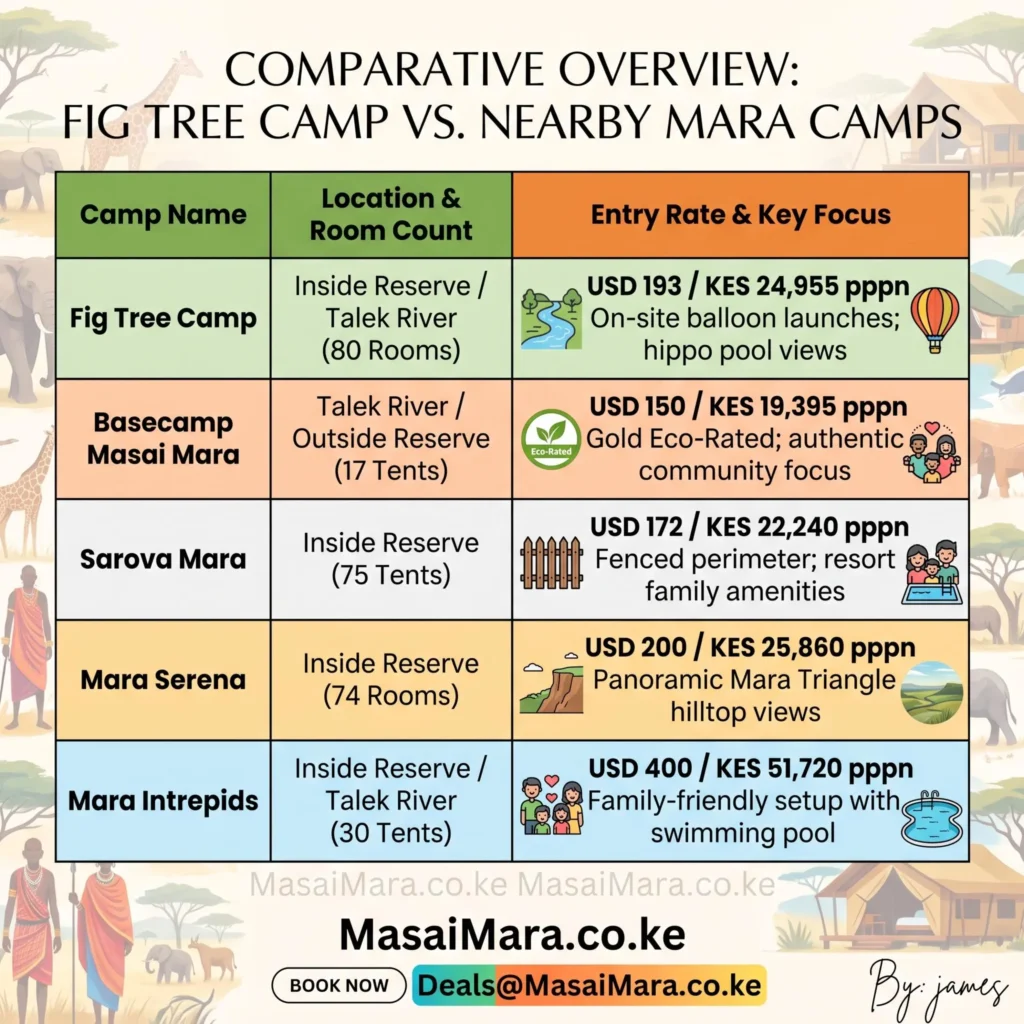
Comparative Overview: Fig Tree Camp vs. Nearby Mara Camps
Evaluating accommodation options inside the Masai Mara comes down to river placement, room counts, and starting rates. Compare Fig Tree Camp against alternative regional options:
Camp Name | Location & Room Count | Entry Rate & Key Focus |
Fig Tree Camp | Inside Reserve / Talek River (80 Rooms) | USD 193 / KES 24,955 pppn On-site balloon launches; hippo pool views |
Basecamp Masai Mara | Talek River / Outside Reserve (17 Tents) | USD 150 / KES 19,395 pppn Gold Eco-Rated; authentic community focus |
Sarova Mara | Inside Reserve (75 Tents) | USD 172 / KES 22,240 pppn Fenced perimeter; resort family amenities |
Mara Serena | Inside Reserve (74 Rooms) | USD 200 / KES 25,860 pppn Panoramic Mara Triangle hilltop views |
Mara Intrepids | Inside Reserve / Talek River (30 Tents) | USD 400 / KES 51,720 pppn Family-friendly setup with swimming pool |
Plan Your Stay
Ready to book Fig Tree Camp? We handle the power schedule, tent selection, balloon timing, and park fee logistics that most booking sites skip.
Related Reading
- Best Time to Visit Masai Mara
- Wildebeest Migration Kenya
- Animals in Masai Mara
- Nairobi to Masai Mara
- Masai Mara Camps
- Affordable Masai Mara Safari
Official Sources
Edited by Cecilia Wambui, Tourism and Hospitality Management. Prices valid 2026/2027 season.
Welcome to Masaimara.co.ke
Thank you for visiting us! We're excited to help you plan an unforgettable safari adventure across Kenya.