
Masai Mara Size: Square Kilometres, Sector Names & What It Actually Feels Like
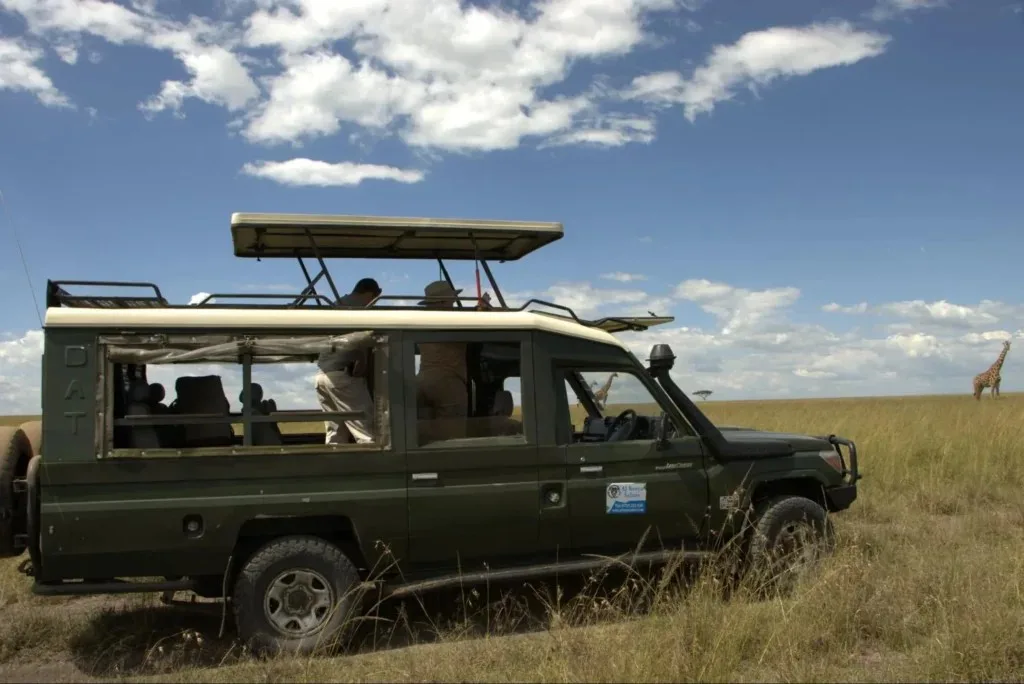
The Masai Mara National Reserve covers 1,510 square kilometres. That’s the official number.
It wasn’t always this size. The reserve was originally 1,821 km² when gazetted. In 1974 and 1976, specific sections were returned to Maasai communities, which is why the borders look jagged on a map. They follow historical grazing agreements, not natural landmarks.
Add the surrounding conservancies, and the protected ecosystem stretches to roughly 4,000 km². Cross into Tanzania’s Serengeti, and you’re looking at 25,000+ km² of continuous wildlife territory.
What This Guide Covers
The Shrunken History
Sector / Region | Governing Body | Official Size (km²) |
Main Reserve | Narok County Council | ~1,000 km² |
Mara Triangle | Mara Conservancy | ~510 km² |
Mara North | Private Conservancy | 300 km² |
Olare Motorogi | Private Conservancy | 350 km² |
Naboisho | Private Conservancy | 500 km² |
Ol Kinyei | Private Conservancy | 180 km² |
The reserve lost over 300 km² between 1974 and 1976. Land was returned to Maasai communities under grazing agreements negotiated during the transition from colonial to independent management.
This matters because the borders don’t make logical sense if you’re looking at a map. They’re political, not geographical.
Current breakdown:
- Main Reserve: ~1,000 km² (Narok County Council)
- Mara Triangle: ~510 km² (Mara Conservancy)
- Private Conservancies: ~2,000 km² combined
Conservancy | Size |
300 km² | |
Olare Motorogi | 350 km² |
Naboisho | 500 km² |
Ol Kinyei | 180 km² |
What the Size Actually Feels Like
Numbers are abstract. Here’s what I mean.
Last August, I was sitting near the Talek River. We’d been alone for an hour — just us, a herd of topi, and the smell of wild sage drying in the afternoon heat. Then a radio call came through about a leopard. Within ten minutes, fifteen Land Cruisers materialised from nowhere.
That’s the paradox. The Mara feels infinite until it suddenly feels very small.
The dust here has a specific orange tint that never quite washes out of your socks. During dry season, it coats everything — your camera, your teeth, the inside of your nostrils. At night, you hear hippos “laughing” outside your tent at 3 AM. Not the theatrical roar from documentaries. More like someone gargling gravel.
Sector Names Guides Actually Use
Sector / Named Plain | Field Personality & Tracking Reality |
Paradise Plain | Flat stretch in the Musiara sector where short grass makes it the cheetah capital for high-speed hunts. |
Rhino Ridge | A volcanic formation serving as a natural balcony to scan the Central Plains when sightings are slow. |
The Meta Plains | Hidden corner on the eastern Sekenani side ignored by big tour groups; best for solo sightings. |
Lookout Hill | The highest point in the reserve; provides an aerial view of the migration away from river congestion. |
Enkoikuaatet | A natural salt lick located near the reserve centre that acts as a primary hub for elephant herds. |
We don’t navigate by “north” and “south.” We use named plains with different wildlife personalities.
Paradise Plain: The Cheetah Capital. A specific flat stretch in the Musiara sector where grazers keep the grass short. Best spot in the entire 1,510 km² for a high-speed hunt. If your guide doesn’t know this name, they’re not from around here.
Rhino Ridge: A volcanic formation that acts as a natural balcony. We go there to “glass” (scan with binoculars) the Central Plains when sightings are slow.
The Meta Plains: A hidden corner on the eastern Sekenani side. Big tour groups ignore it because it’s “out of the way.” That’s exactly why it’s the best place for solo sightings.
Lookout Hill: The highest point in the reserve. Most tourists crowd the riverbanks for crossings. We take guests to Lookout Hill for an aerial view of the migration without the dust and vehicle congestion at the water.
Enkoikuaatet: The natural salt lick near the reserve centre. If elephants are scarce, they’re here. Nature’s facility, not the park’s.
The Bed-Count Secret
Understanding the Mara’s size is partly about understanding where the beds are.
There are roughly 5,000 beds south of the Mara River. That’s the “crowded” side — Sekenani, Talek, most of the famous lodges.
North of the river? About 500 beds.
The north is geographically smaller, but it feels ten times larger because you rarely see another vehicle. If you want the Mara to feel like the wilderness it’s supposed to be, stay north. Governors’ Camp, Mara Serena, camps in that sector.
Driving Times
The size affects how much ground you can cover. These are realistic times — not the optimistic estimates in marketing brochures.
Route | Distance | Time |
Sekenani Gate to Mara River | ~35 km | 1.5-2.5 hours |
Talek Gate to Musiara Marsh | ~25 km | 1-2 hours |
Sekenani to Mara Triangle | ~50 km | 2-3 hours |
Full reserve circuit | 100+ km | Full day |
If you’re staying in the main reserve and want to visit the Mara Triangle, you need to cross the river. One bridge. Sometimes flooded. Plan accordingly.
The Park Fee Trap
Regulation / Fee Element | Official 2026 Rule & Practical Impact |
January–June Rate | USD 100 per day for non-resident adults. |
July–December Rate | USD 200 per day for non-resident adults. |
Permit Validity | Operates strictly on a calendar-day basis, not a 24-hour cycle. Evening entries pay a full day. |
10 AM Exit Rule | You must exit by 10 AM on your final morning or risk an automatic charge for a second full day. |
Triangle Strategy | If deep in the Mara Triangle (~50 km away), you must start driving out by 7 AM to beat the 10 AM cutoff. |
This catches people every year.
Masai Mara park fees work on a calendar-day basis, not 24-hour cycles. If you enter at 4 PM for an evening drive, you’ve paid for a full day. If you stay past 10 AM the next morning, you might get charged for a second full day.
The 10 AM exit rule: To avoid the “size tax,” you need to exit by 10 AM on your final morning. If you’re deep in the Mara Triangle — 50 km from the nearest gate — you need to start driving at 7 AM.
I’ve had guests lose USD 200 because they wanted “one more hour” at the river. The rangers at the gate don’t negotiate.
Current fees (2026):
- USD 100/day (January-June)
- USD 200/day (July-December)
The Closed Gate Nobody Mentions
Most maps still show the Sand River Gate as an entry point. It’s been closed to international tourists for years. Now it’s just a ranger post.
But you can drive to the Sand River and look across into Tanzania. No fence. Just a riverbed. You’re standing at the border of two countries looking at 25,000 km² of protected land. Step across the riverbed and you’re technically an illegal immigrant.
The Radio Politics of Size
The Mara is “sized” by radio.
Guides use VHF frequencies to share sightings. But not all channels are equal. Guides from top-tier camps often use private channels to share “gold” sightings — leopard, rhino, the good stuff. By the time freelance drivers hear about it on the general channel, fifteen vehicles are already there.
If your guide seems to “just know” where the leopard is, they’re probably on a private channel. If they’re always arriving after the crowd, they’re not.
My Honest Take on Gates
Everyone tells you to enter through Sekenani because it’s the main gate. Honestly? It’s a circus during peak season. Sellers approaching your vehicle. Congestion. A queue of minibuses.
If you want the Mara to feel like Africa rather than a theme park, drive the extra distance to Oloololo or Talek. Less traffic. More dramatic entry.

The Shrinking Ecosystem
The official size is 1,510 km². But the effective wildlife dispersal area is shrinking.
Research shows wildebeest now avoid buildings by up to 6 km. New developments, lodges, fencing — they compress the usable habitat. The conservancies (Naboisho, Olare Motorogi) are becoming wildlife islands rather than corridors.
Twenty years ago, animals moved freely across a much larger range. Today, the “usable” size of the Mara for the migration is probably 30% smaller than the maps suggest.
The Maa Naming Trick
If a place name starts with “Ol” (Olare, Oloololo, Ol Kinyei), it’s masculine in the Maa language. If it starts with “En” (Enkorok), it’s feminine. Guides use these prefixes to describe whether the landscape feels “harsh” or “soft.”
Next time you’re driving through and your guide says “Oloololo,” you’ll know you’re heading somewhere rugged.
Planning Around the Size
Two days: You’ll see one area well. Probably wherever your lodge is located. No time to explore properly.
Three days: Enough to cover the main reserve. Maybe a morning in the Triangle if you’re willing to drive early.
Four days: Now you can split: two days main reserve, two days conservancy. Or main reserve plus serious time in the Triangle.
Trip Length | What You’ll Cover |
2 days | One sector only |
3 days | Main reserve properly |
4+ days | Reserve + conservancy or Triangle |
Questions People Ask
How big is Masai Mara in square miles? 583 square miles (reserve only). With conservancies, roughly 1,544 square miles.
Is Masai Mara bigger than Serengeti? No. The Serengeti (14,763 km²) is nearly ten times larger. But they’re part of the same ecosystem — the border is a human line.
How long to drive across Masai Mara? Sekenani to the Triangle: 2-3 hours. A full circuit takes a full day.
Can you see the whole Mara in one day? You can drive through it. You won’t see it properly. Two days minimum.
Related Pages
- Where is Masai Mara Located
- Masai Mara Facts
- Park Fees 2026
- Safari from Nairobi
- History of Masai Mara
- Weather Guide
Sources
Written by David Njunge, TRA-Licensed Safari Guide | Edited by Cecilia Wambui, Tourism and Hospitality Management | March 2026
Welcome to Masaimara.co.ke
Thank you for visiting us! We're excited to help you plan an unforgettable safari adventure across Kenya.