
Mara Plains Camp: The Honest 2026 Guide
Mara Plains Camp sits on the Ntiakitiak River inside the Olare Motorogi Conservancy, with seven tented suites and one family suite. To reach the camp you cross a narrow suspension bridge over the river, with hippos sitting in the water directly below, and that walk sets the tone for everything that follows.
The conservancy is one of the most wildlife-dense areas in the Mara, known for big-cat sightings and strict vehicle limits that keep the roads quiet. Mara Plains is one of only five camps allowed to operate inside it.
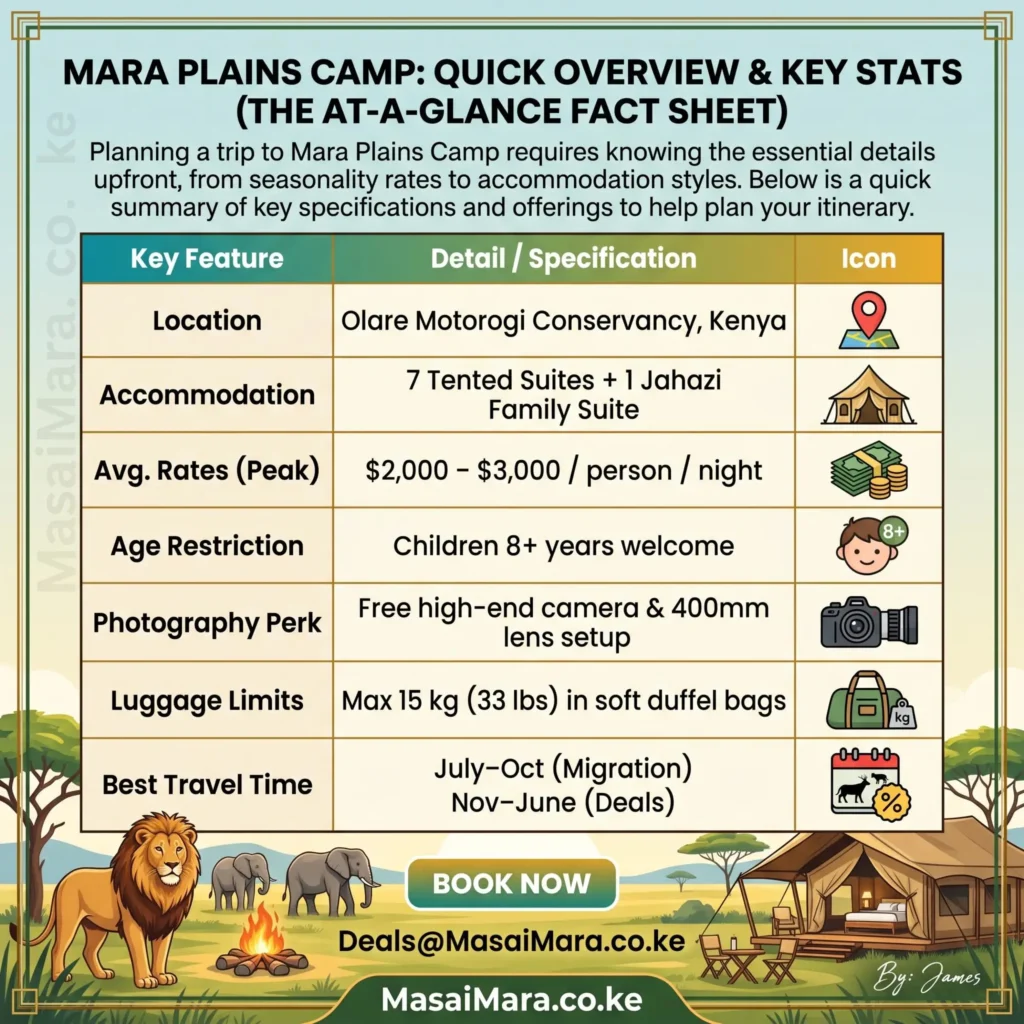
Quick Overview & Key Stats (The At-a-Glance Fact Sheet)
Planning a trip to Mara Plains Camp requires knowing the essential details upfront, from seasonality rates to accommodation styles. Below is a quick summary of key specifications and offerings at the camp to help you plan your itinerary.
Key Feature | Detail / Specification |
Location | Olare Motorogi Conservancy, Kenya |
Accommodation | 7 Tented Suites + 1 Jahazi Family Suite |
Avg. Rates (Peak) | $2,000 – $3,000 / person / night |
Age Restriction | Children 8+ years welcome |
Photography Perk | Free high-end camera & 400mm lens setup |
Luggage Limits | Max 15 kg (33 lbs) in soft duffel bags |
Best Travel Time | July–Oct (Migration) | Nov–June (Deals) |
Flying into Olare Orok
Flights from Nairobi’s Wilson Airport take 45 to 60 minutes and land at Olare Orok or a nearby strip. The transfer to camp passes through active wildlife country, so keep lenses ready from the moment the wheels touch down. Flying in saves a full day in each direction, but everything needs to fit in a soft duffel bag because hard cases don’t fit and the weight limit is 15 kg.
The road from Nairobi takes 5 to 6 hours if the schedule allows a day for the drive.
Copper, Canvas, and the Jahazi Suite
The seven suites have old wood floors, canvas walls, copper bathtubs, and rain showers. The style is vintage safari rather than modern minimal, and the tents feel more like a beautifully furnished home that happens to be in the bush.
Every tent faces the river, and from bed you can see giraffes browsing the acacia on the opposite bank while zebras graze right outside. The hippo family in the river below is audible from all seven tents, louder at night when everything else goes quiet.
The Jahazi Suite is the family option: two ensuite bedrooms with a shared living and dining space between them and a huge private deck. “Jahazi” is Swahili for a traditional sailing dhow. It books out fast during peak season, so request it early.
Why the Guides Here Are Different
At most camps, the guide drives you to the animal, but here the guides position the vehicle for the light. They choose the angle based on where the sun is, what the background looks like, and how the animal is likely to move. For guests who care about photography, this is the difference between a good sighting and a great image, and for guests who don’t, it still means better viewing because the guide is thinking about the scene, not just the proximity.
Ask about guide quality at booking and request the best one available. The stronger guides here read animal behaviour well, know where the big cats are on any given morning, and understand how to approach without disturbing a scene.
The camp also lends guests a quality camera with a long telephoto lens for every drive, and the photos are yours to keep, which is something no other camp in the Mara offers. For guests who don’t own a 400mm lens, it changes the photography completely.
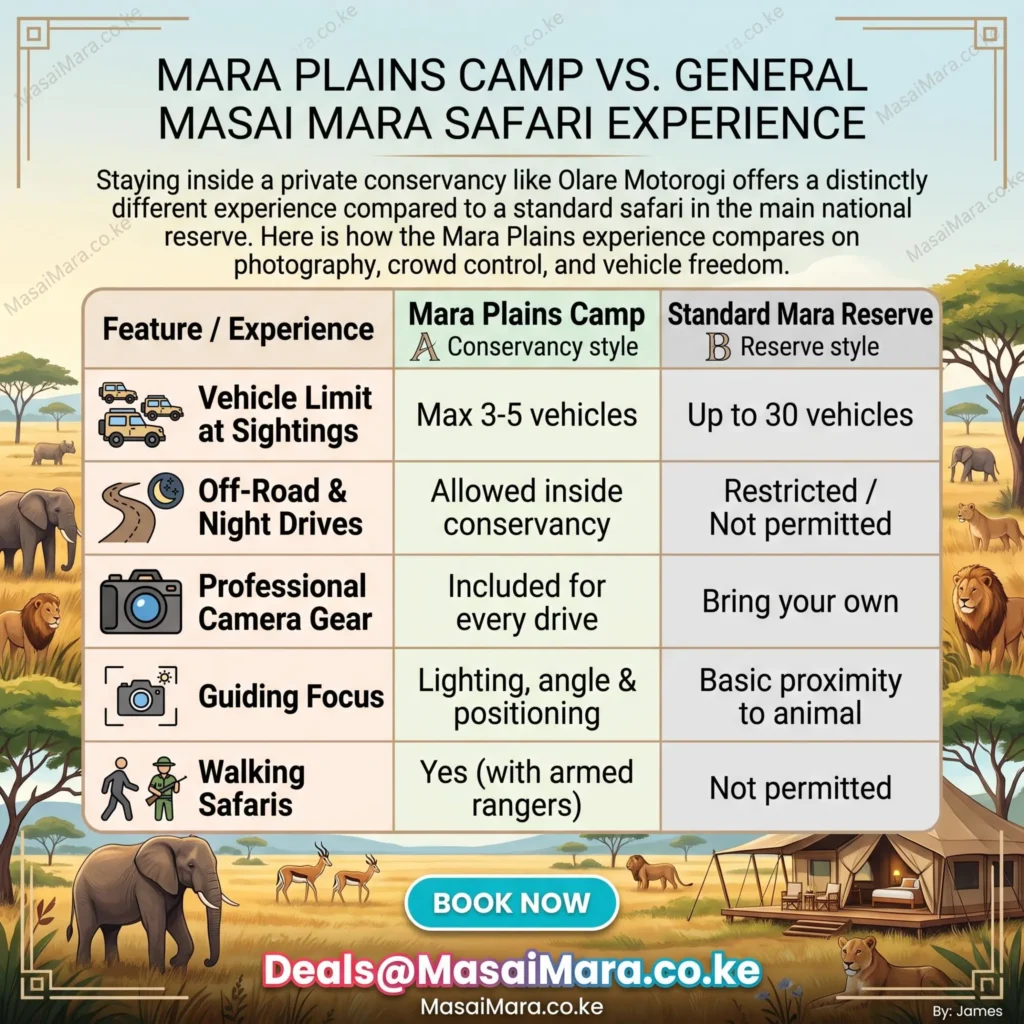
Mara Plains Camp vs. General Masai Mara Safari Experience
Staying inside a private conservancy like Olare Motorogi offers a distinctly different experience compared to a standard safari in the main national reserve. Here is how the Mara Plains experience compares on photography, crowd control, and vehicle freedom.
Feature / Experience | Mara Plains Camp | Standard Mara Reserve |
Vehicle Limit at Sightings | Max 3–5 vehicles | Up to 30 vehicles |
Off-Road & Night Drives | Allowed inside conservancy | Restricted / Not permitted |
Professional Camera Gear | Included for every drive | Bring your own |
Guiding Focus | Lighting, angle & positioning | Basic proximity to animal |
Walking Safaris | Yes (with armed rangers) | Not permitted |
Big Cats, Off-Road, and the Double Fee
The conservancy allows off-road driving, night drives, and walking safaris that the national reserve doesn’t. Vehicle limits at sightings mean three to five vehicles at a lion, not thirty.
Lions, cheetahs, and leopards are all resident, and because the conservancy sits in the migration path, the herds move through from July to October on their way to the Mara River crossings. Visiting the reserve for those crossings costs 100-200 per day on top of the conservancy fee already in the camp rate. That double charge catches guests off guard, so budget for it before arriving.
The walks go out in the early morning with armed Maasai rangers, and on foot the perspective changes completely. You notice things the vehicle drives past: tracks in the mud, dung beetle activity, the alarm calls that tell you something bigger is nearby.
The Fire Pit and What Happens After Dark
The fire pit is where the camp comes together after dark. Deep chairs around open flames, the sound of the river behind you, sundowner drinks before dinner and conversation that runs long after the plates are cleared.
The camp runs entirely on solar power, and WiFi is available but at bush-camp level rather than hotel level. The food changes daily, with multi-course dinners prepared by a chef who works with what’s available and makes it feel effortless, so guests staying three or four nights never eat the same thing twice.
Before You Book Mara Plains
Children under 8 are not allowed, which keeps the atmosphere quiet and allows the walking safaris and night drives to run without restrictions.
Three nights is the minimum for a good experience because two nights means rushing through the drives without time for a walk, a bush breakfast, or a slow morning on the deck watching the hippos. “Stay 4, pay 3” deals run during shoulder season (November to December and January to June), which is a significant saving at this price level. Peak migration months book out well in advance, and at this level expect $2,000 to $3,000 per person per night all-inclusive during peak season, with lower rates and free-night promotions outside July to October.
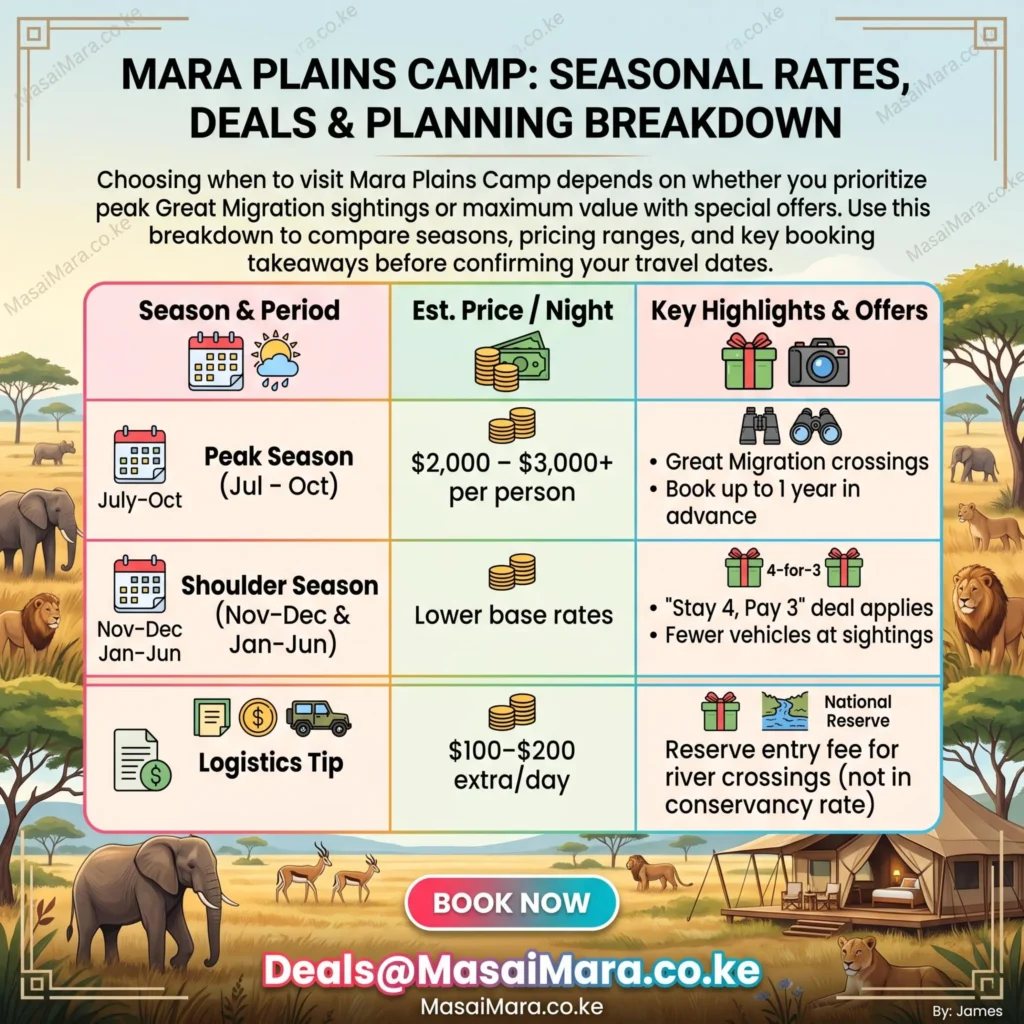
Seasonal Rates, Deals & Planning Breakdown
Choosing when to visit Mara Plains Camp depends on whether you prioritize peak Great Migration sightings or maximum value with special offers. Use this breakdown to compare seasons, pricing ranges, and key booking takeaways before confirming your travel dates.
Season & Period | Est. Price / Night | Key Highlights & Offers |
Peak Season
(Jul – Oct) | $2,000 – $3,000+ per person | • Great Migration crossings
• Book up to 1 year in advance |
Shoulder Season
(Nov–Dec & Jan–Jun) | Lower base rates | • “Stay 4, Pay 3” deal applies
• Fewer vehicles at sightings |
Logistics Tip | $100–$200 extra/day | Reserve entry fee for river crossings (not in conservancy rate) |
Questions Guests Ask
How does it compare to other Olare Motorogi camps?
It’s the smallest and the most photography-focused camp in the conservancy. The wildlife is the same across all five camps because the animals move freely between them, so the difference comes down to the camp experience rather than the sightings.
Is it good for honeymoons?
Yes. The camp’s size and setting make it romantic without being performative. The Jahazi Suite works for couples who want extra space, though the standard tents are already generous.
How do I start planning?
Send us your dates and we’ll tell you whether Mara Plains has availability. I wouldn’t do fewer than three nights here because two feels like you just arrived and you’re already packing. If the river crossings matter, we’d add a reserve day trip or pair it with a second camp inside the reserve. Start a booking if dates are fixed, or just tell us what matters most and we’ll shape the trip around it.
This guide was authored by David Njunge, a TRA-licensed safari guide with over 10 years of experience, and edited by Cecilia Wambui, a travel consultant with a degree in Tourism and Hospitality Management.
Last Updated: June 2026
Related Reading:
Welcome to Masaimara.co.ke
Thank you for visiting us! We're excited to help you plan an unforgettable safari adventure across Kenya.