
The 2026 Guide to a Nairobi National Park Day Trip
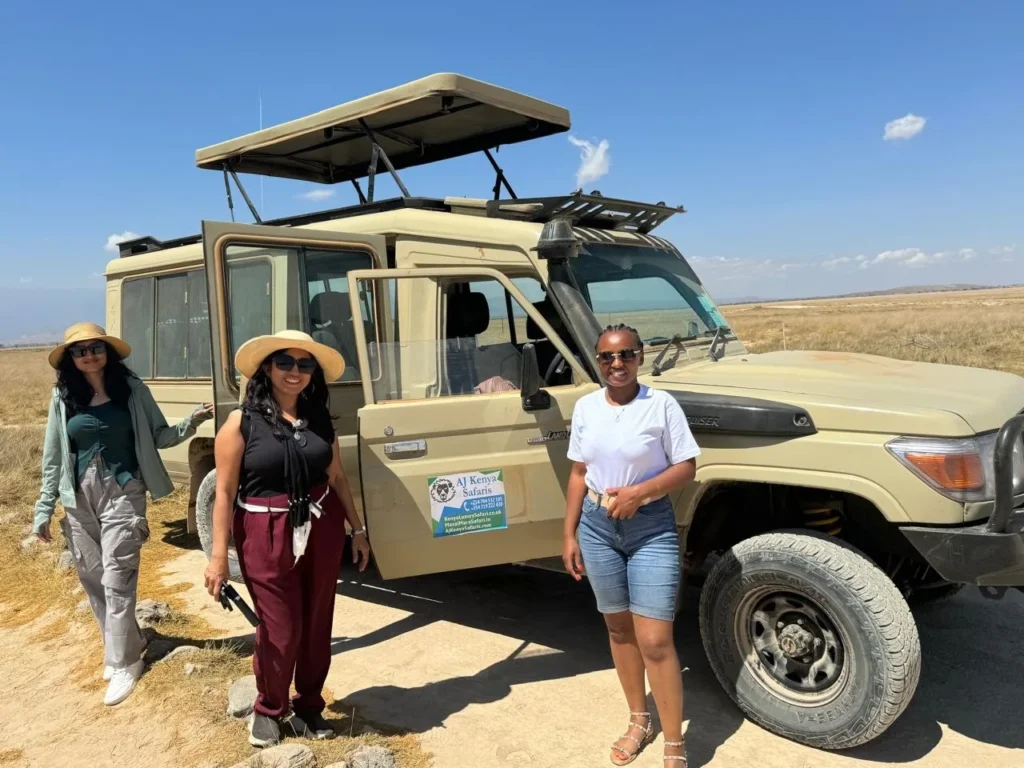
A Nairobi National Park Day Trip is the only place on earth where you can photograph wild Black Rhinos against a backdrop of city skyscrapers. For the 2026/2027 season, a private 4×4 Land Cruiser safari costs approximately KES 38,500 ($290) per person for non-residents in the regular season and KES 68,000 ($515) during peak months. To see lions and leopards, you must enter by 6:00 AM. All park fees must now be paid via the official eCitizen portal before arrival.
2026/2027 Nairobi National Park Day Trip Costs
The 2026 season has brought changes to KWS park fees. The eCitizen platform is now the only way to pay, and cash is strictly forbidden at the gates. Below are the all-inclusive rates for two people traveling together in a private 4×4 Safari Land Cruiser.
Table 1: Rates for Kenyan Citizens (KES)
Package Tier | Includes | Regular Price | Peak Price |
Budget | Game Drive + Water | KES 29,400 | KES 58,000 |
Mid-Range | Drive + Lunch | KES 34,000 | KES 63,500 |
Combo | Drive + Sheldrick | KES 42,000 | KES 71,200 |
Book Now | 2026/2027 |
Table 2: Rates for Non-Residents (KES & USD)
Package Tier | Includes | Total (KES) | Total (USD) |
Budget | Game Drive Only | KES 38,500 | $290 |
Mid-Range | Drive + Lunch | KES 43,500 | $330 |
Peak Season | July-Oct | KES 68,000 | $515 |
Luxury Combo | Drive + Sheldrick | KES 52,000 | $395 |
Book Now | 2026/2027 |
What is Covered in the Price?
- Vehicle: Private 4×4 Safari Land Cruiser with a pop-up roof.
- The Guide: Professional TRA-licensed guide.
- Park Fees: All 2026 entry fees for Nairobi NP paid via eCitizen.
- Extras: Bottled water and hotel pick-up/drop-off.
- Excluded: Sheldrick donation (KES 1,500), tips (KES 2,500+), alcoholic drinks, and Kenya eTA.
I’ve been a licensed safari guide for ten years, and I’ll be honest: most people treat a Nairobi National Park Day Trip as a “filler” activity while waiting for a flight. That’s their first mistake. I’ve seen more action in this 117-square-kilometer park in four hours than I’ve seen in three days in the Mara. But you have to know where the “ghosts” live.
If you show up at 10:00 AM in a sedan taxi, you’re going to see a lot of tall grass and a few distant zebras. If you want the real experience—the kind where a collared lioness walks so close to your door you can hear her breathing—you need to follow the 2026 rules.
Before we get into the grit of the tracks, you can get a custom safari quote below here to check vehicle availability for your specific dates.
The Bomas Construction Trap (May 2026 Warning)
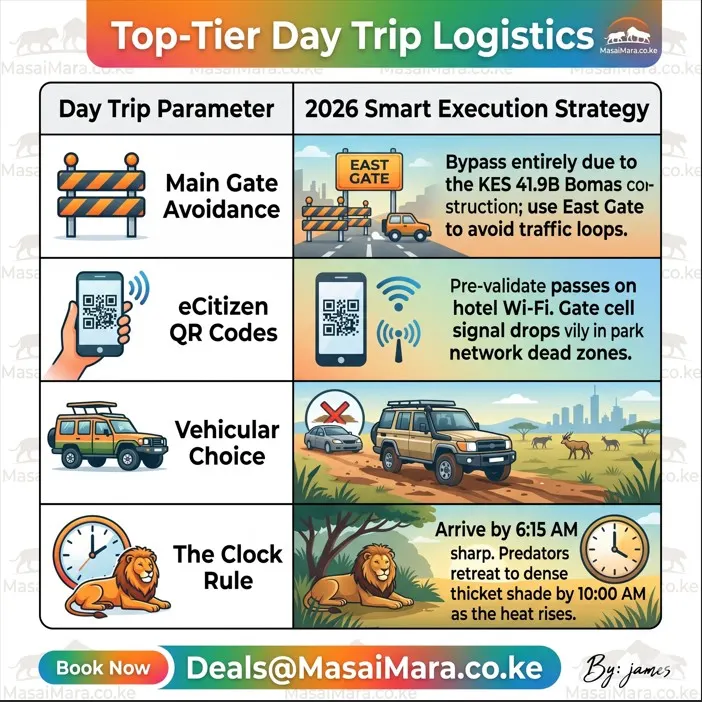
This matters right now. A KES 41.9 billion construction project is ripping into the Bomas International Convention Centre boundary near the Main Gate. They’re cutting 76 acres off the park to build a 1,300-car parking structure and a pedestrian overpass.
What this means for your day trip: the Main Gate area is currently a zone of dust, heavy machinery, and matatu gridlock. Avoid the Main Gate entirely in 2026. Use the East Gate (Mombasa Road entrance) instead. You’ll save 30–40 minutes of construction traffic and start your safari in the quiet Athi Basin rather than a building site.
The “Junction 10” & Leopard Circuit Secrets
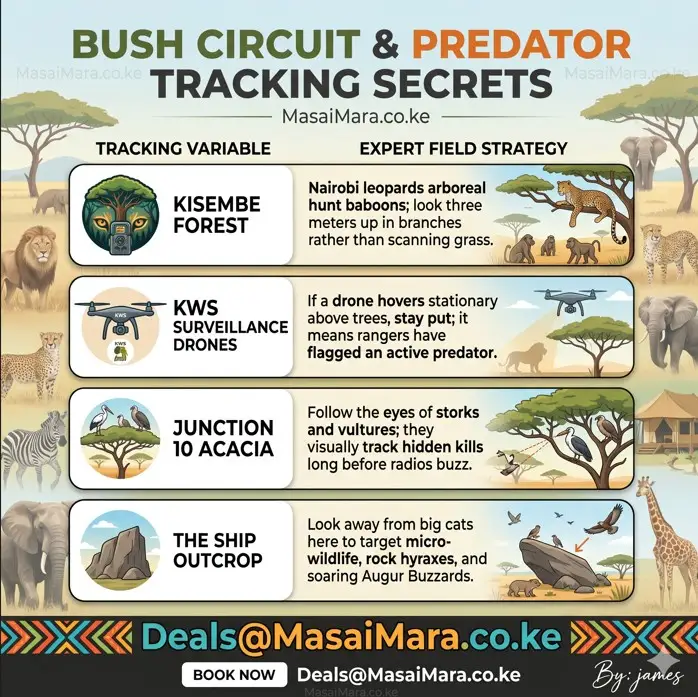
Tracking Variable | Expert Field Strategy |
Kisembe Forest | Nairobi leopards arboreal hunt baboons; look three meters up in branches rather than scanning grass. |
KWS Surveillance Drones | If a drone hovers stationary above trees, stay put; it means rangers have flagged an active predator. |
Junction 10 Acacia | Follow the eyes of storks and vultures; they visually track hidden kills long before radios buzz. |
“The Ship” Outcrop | Look away from big cats here to target micro-wildlife, rock hyraxes, and soaring Augur Buzzards. |
Most drivers stick to the “Eland Hollow” because the plains are wide and animals are easy to spot. But if you want the “trophy” sightings, you need to ask your guide for the Kisembe Forest.
The Kisembe Forest Leopard Circuit
Leopards are the “ghosts” of Nairobi. While leopards in Masai Mara are often found in yellow-fever trees, Nairobi leopards spend more time up in the trees because they hunt the park’s baboon population. In the Kisembe Forest, don’t look into the grass—look up. I’ve found leopards sleeping on branches just three meters above the track.
Here’s the other thing about Kisembe: KWS now uses surveillance drones for rhino monitoring in this area. If you hear a high-pitched buzz — like a giant mosquito — don’t swat at the air. It’s likely a KWS drone. And if you see one hovering stationary above the treeline, stay put. It usually means the rangers have flagged a predator or a poaching threat in the thickets nearby. Good sightings tend to follow.
The “Junction 10” Vulture Tree
If the big cats are being elusive, I always head to Junction 10. There is a specific dead acacia tree near the dam that serves as a permanent apartment complex for White-backed Vultures and Marabou Storks.
The tell: If you see all the vultures looking in one specific direction, don’t waste time on the tree. They’ve spotted a kill before the park radio has even buzzed. Follow their eyes.
The “Ship” Rock Formation
Deep in the Athi Basin near the southern boundary, there’s a geological landmark guides call “The Ship.” It’s a massive rock outcrop that looks exactly like a ship’s prow rising from the grass. Most tourists ignore rocks when they’re scanning for cats, but this is where the smaller, rarer micro-wildlife lives — Augur Buzzards circling overhead, Rock Hyraxes sunning on the ledges. If you’re into bird watching, this spot is gold.
14 Things Your Guide Won’t Tell You
I’ve run these tracks for a decade. Here’s the stuff that catches people off guard.
- The Animal Orphanage is a Zoo: Right at the main gate, there’s an orphanage. It’s depressing. The animals are in cages. Skip it and spend that hour on the game drive instead.
- The Three-Gate Choice: Don’t just go to the Main Gate — especially not in 2026 with the Bomas construction. If you’re staying on Mombasa Road, use the East Gate. It drops you directly into the Athi Basin—the best spot for the skyline wildlife shots without the 6:00 AM traffic.
- Ranger Mid-Drive Checks: KWS rangers patrol inside the park. They will stop us to verify tickets. Make sure your guide has the eCitizen receipt ready on his phone, or you’ll lose 20 minutes in a “ticket debate.”
- The Nile Crocodiles: Nobody expects them 20 minutes from the CBD. They hang out near the river bridges. They aren’t as big as the ones you’ll see on a Mara River crossing, but they are there.
- The Serval Cat Trophy: NNP is actually one of the best places to see the Serval cat. Your best chance is in the first 45 minutes after the gate opens at 6:00 AM.
- Bring Your Own Toilet Paper: The outhouses at the picnic sites are basic. I carry a “safari kit” for my guests, but check that your guide has tissue and sanitizer.
- The Kingfisher Picnic Site: Best spot to stretch your legs. It overlooks a dam where you can watch birds while you eat.
- The Sedan Mistake: You can enter in a taxi, but you shouldn’t. You sit too low. You’ll see nothing but grass. The 4×4 Land Cruiser is the difference between a “drive” and a “safari.”
- The May Mud: Nairobi’s “black cotton” soil turns into a swamp in May. The dip near Hyaena Dam is especially bad right now — even Land Cruisers get stuck in the silt. Ask your guide to take the Athi River Circuit instead. It’s rockier and drains faster, so you won’t spend your day trip waiting for a KWS recovery tractor.
- Road-Walking Lions: Lions here are habituated to tarmac. They will walk right past your door. Don’t panic. Keep your hands inside the vehicle.
- Nairobi Tented Camp: You can actually stay inside the park overnight. It’s the cheapest way to get both a sunset and a dawn game drive without booking a 3 days Masai Mara safari.
- The $80 Shock: Many operators don’t disclose the non-resident fee until you reach the gate. It’s expensive, but there’s no way around it.
- Dung Beetles: Ask your guide to stop for them. Watching them roll buffalo dung is oddly hypnotic and great for kids.
- The 6:00 PM Sharp Rule: The gate staff are not lenient. If we aren’t heading to the exit by 5:15 PM, we’ll be escorted out by a ranger vehicle.
The eCitizen QR Trap
This catches more people than anything else on the list. By 2026, KWS runs a strict “No QR, No Entry” policy. Having a screenshot of your payment isn’t enough. The QR code has to be “validated” — meaning it needs to ping back to the Nairobi server. The cell signal at the East Gate and the Maasai Lodge Gate is notoriously spotty.
Validate your pass while you’re still at your hotel, on their Wi-Fi. A grayed-out QR code in the park’s dead zones will leave you stuck at the gate while the lions are active. Your guide should handle this, but if you’re self-driving, do it yourself the night before.
The Sunday Walking Trap & Facility Secrets
If your Nairobi National Park Day Trip falls on a Sunday, listen closely. Most online guides suggest the Hippo Pools Nature Trail. On Sundays, ranger availability is often low, and the trail can be closed without notice.
The fix: Go to the Mokoiyet Viewpoint. You can walk on the cliff edge safely without an escort, and the view of the river below is better anyway.
The Impala Observation Point
This is the highest point in the park. Because of the elevation, it’s the only spot with a consistent 5G signal and a steady breeze. If you need to make a quick work call, check email, or upload a video during your lunch break, this is the place. You also get a full 360-degree view up here that the Nagolomon Dam (which sits in a valley) can’t match.
The “Clubhouse” Secret
Forget the dusty picnic tables. There is a KWS Clubhouse near the main gate. Most tourists think it’s private, but it’s open to you. It has clean flush toilets and serves hot Nyama Choma (roasted meat). Much better way to end your morning than eating a dry sandwich while a monkey tries to steal your fruit.
Photography: The “Award Winner” Shot
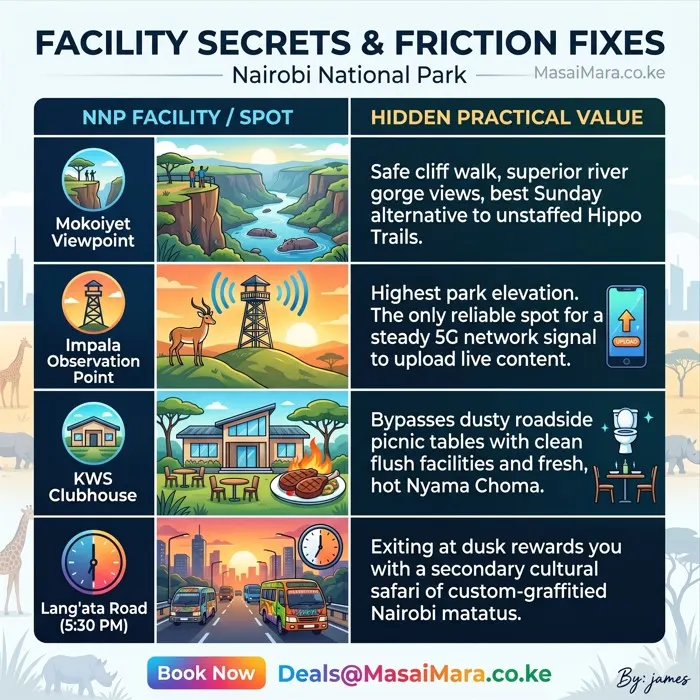
NNP Facility / Spot | Hidden Practical Value |
Mokoiyet Viewpoint | Best Sunday alternative to unstaffed Hippo Trails; safe cliff walk with superior river gorge views. |
Impala Observation Point | Highest park elevation. The only reliable spot for a steady 5G network signal to upload live content. |
KWS Clubhouse | Bypasses dusty roadside picnic tables with clean flush facilities and fresh, hot Nyama Choma. |
Lang’ata Road (5:30 PM) | Exiting at dusk rewards you with a secondary cultural safari of custom-graffitied Nairobi matatus. |
Everyone wants the rhinos in Masai Mara feel, but in Nairobi, it’s about the skyline.
The Nagolomon Dam Shot: Head here at 7:30 AM. If a rhino or a giraffe comes to drink, the water is usually still enough to get a perfect double-reflection of the animal and the Upper Hill skyscrapers.
The May Highlight: May is ostrich mating season. Look for the Somali Ostrich males—their shins turn a bright, flushing pink. It’s a color you only see this time of year.
Failure Story: The 8:00 AM Layover
I once had a client who landed at JKIA at 7:00 AM and wanted a day trip. By the time he cleared customs and got to the gate, it was 8:30 AM. He insisted on a sedan to save money.
The grass was high, and the sun was already baking the plains. The lions had moved into the deep shade of the thickets. He saw a few hartebeests and a lot of grass. He left disappointed, thinking the park was a “hype.”
The truth: You can’t cheat the clock. If you aren’t at the gate by 6:15 AM, you’ve already missed the best 50% of the day.
The Matatu Exit
If you do exit via the Main Gate around 5:30 PM, you’ll get an unexpected bonus. That’s when the Bomas matatus — Nairobi’s custom mini-buses — are out in full force on Lang’ata Road. In 2026, these things are basically rolling art galleries: LED screens, custom graffiti, speakers blasting Gengetone. The safari doesn’t end at the gate. The matatu art on Lang’ata Road is the loudest welcome back to civilization you’ll ever get.
Frequently Asked Questions
What is the best time for a Nairobi National Park Day Trip?
Enter at 6:00 AM sharp. Predator activity drops after 10:00 AM. Check our best time to visit Masai Mara guide for broader seasonal advice, but for Nairobi, dawn is king.
Are there elephants in Nairobi National Park?
No. There hasn’t been a wild elephant in the park for decades. You can see orphans at the Sheldrick Trust, but for wild herds, you need a 4 days Masai Mara Nairobi National Park safari.
How much is the park entry fee in 2026?
$43–$100 for non-residents depending on season. You must pay via the eCitizen portal. Full breakdown on our Masai Mara park fee page (which also covers KWS-managed parks like NNP).
Can I do this trip on a layover?
Yes, if your layover is at least 8 hours. The park is only 20 minutes from the airport via the East Gate, but you must account for Nairobi’s traffic. Read our Masai Mara travel tips for more on navigating Kenya logistics.
Is Nairobi National Park safe?
Yes. KWS rangers patrol throughout, and the park has CCTV at all gates. More on safari safety in our Masai Mara safety guide.
What should I pack?
Layers (it’s 12°C at dawn, 28°C by noon), a power bank, binoculars (8×42 is the sweet spot), and your own toilet paper. Full checklist on our Masai Mara packing list.
Can I self-drive inside the park?
You can, but it’s not a great idea for a day trip. You won’t have radio/WhatsApp access to sightings, and the tracks are unmarked. Read our self-drive Masai Mara page — the same principles apply to NNP.
Final Advice from David
I love this park because it’s a survivor. If you only have one day in Kenya, don’t feel like you’ve “missed out” because you couldn’t go to the Mara. A good Nairobi National Park Day Trip can be just as wild. Just bring layers — the park is cold at 6:00 AM — and don’t forget a power bank for your phone.
If you realize you want more, we can always pivot to a Masai Mara and Nairobi National Park Safari combo or a 3 days Masai Mara Nairobi National Park safari.
Ready to track rhinos? Fill out our safari booking form at Masaimara.co.ke and we’ll handle the eCitizen headache for you.
This guide was edited by Cecilia Wambui, a seasoned travel consultant with a degree in Tourism and Hospitality Management, and written by David Njunge, a TRA-licensed guide with over 10 years in the field. All information is current for the 2026/2027 season.
Related Reading:
- Masai Mara and Nairobi National Park Safari (Hub Page)
- 3 Days Masai Mara Nairobi National Park Safari
- 4 Days Masai Mara Nairobi National Park Safari
- Masai Mara Safari from Nairobi
- 1 Day Masai Mara Safari
- 2 Days Masai Mara Safari
- Masai Mara and Amboseli Safari
- How to Get to Masai Mara
- Kenya eTA Guide
- First Time Safari Masai Mara
- Official KWS Park Fee Portal
Welcome to Masaimara.co.ke
Thank you for visiting us! We're excited to help you plan an unforgettable safari adventure across Kenya.