
Mara Ngenche Safari Camp: The Honest 2027 Guide
Mara Ngenche sits at the one spot in the reserve where the Mara River and the Talek River join. Five tents face one river, five face the other, and the confluence itself is right in front of the dining area. No other camp in the Mara has this position.
Fly In, Don’t Drive
The camp is deep inside the reserve, and the last stretch of track to reach it is bumpy, unmarked, and slow. During the rains it gets worse. Several guests who drove in have said they wish they’d flown. Flights from Nairobi’s Wilson Airport take 45 to 60 minutes, and flying in saves a full day in each direction. Pack everything in a soft duffel because hard cases don’t fit and the weight limit is 15 kg.
The road from Nairobi takes 5 to 6 hours to the reserve boundary, then another rough stretch through the park to the camp. If you do drive, treat the last hour as a game drive because the route passes through active wildlife country.
Where You Sleep and What You Hear
Each tent sits inside its own boma, a low traditional Maasai enclosure that gives it a private garden and a sense of separation from the neighbours. Inside, there’s a four-poster king bed or two queens, a large bathtub, and an outdoor shower open to the sky with the river audible behind the canvas. The style is old-world safari with modern African touches, and the tents are large enough that the bed, the bath, and the sitting area all feel like separate rooms.
Every tent has its own plunge pool facing the river. The water isn’t heated, so after a cold dawn drive it takes some nerve, but after a hot midday drive it’s exactly what you need. Watching hippos surface while you’re sitting in the pool is one of those things that sounds exaggerated until it happens.
There’s also a hammock on each veranda. It sounds like a small thing, but it’s the detail that sticks with people. The between-drive hours disappear in that hammock.
The camp is unfenced. Lions, hippos, baboons, and hyenas move through the grounds at night, and you’re not allowed to leave the tent after 6 PM without an armed escort walking you to dinner. The first night is unsettling because everything sounds close. By the third night the sounds become familiar and most people sleep through them.
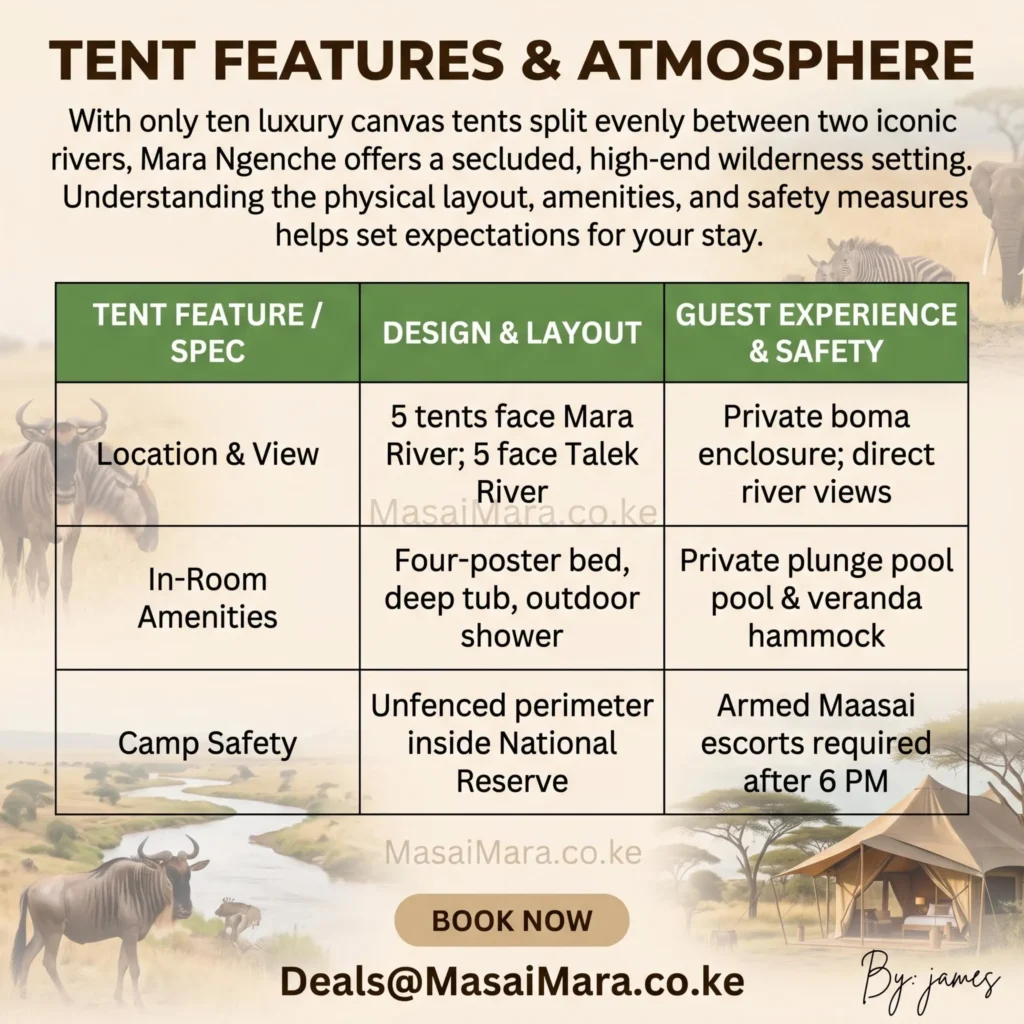
Tent Features & Atmosphere
With only ten luxury canvas tents split evenly between two iconic rivers, Mara Ngenche offers a secluded, high-end wilderness setting. Understanding the physical layout, amenities, and safety measures helps set expectations for your stay.
Tent Feature / Spec | Design & Layout | Guest Experience & Safety |
Location & View | 5 tents face Mara River; 5 face Talek River | Private boma enclosure; direct river views |
In-Room Amenities | Four-poster bed, deep tub, outdoor shower | Private plunge pool & veranda hammock |
Camp Safety | Unfenced perimeter inside National Reserve | Armed Maasai escorts required after 6 PM |
Your Guide Stays With You the Whole Trip
Unlike camps that rotate guides daily, Ngenche assigns one dedicated guide to each group for the entire stay. That matters because by the second morning the guide already knows what you want to see, how long you like to sit at a sighting, and whether you care more about photography or just watching. The drives get better each day because the guide is building on what happened the day before.
The vehicles are open-sided 4WD with a maximum of six guests, and the game drives head into some of the richest territory in the reserve. Being on the Mara River inside the park means the migration crossings are minutes away during July to October. Outside migration season, the confluence draws resident wildlife year-round because the deep-water pools never dry out.
The camp also offers bush breakfasts set up in the field so the morning drive can run longer without doubling back. On a three-night stay, doing this at least once is worth it because the best animal activity happens in those extra early hours.
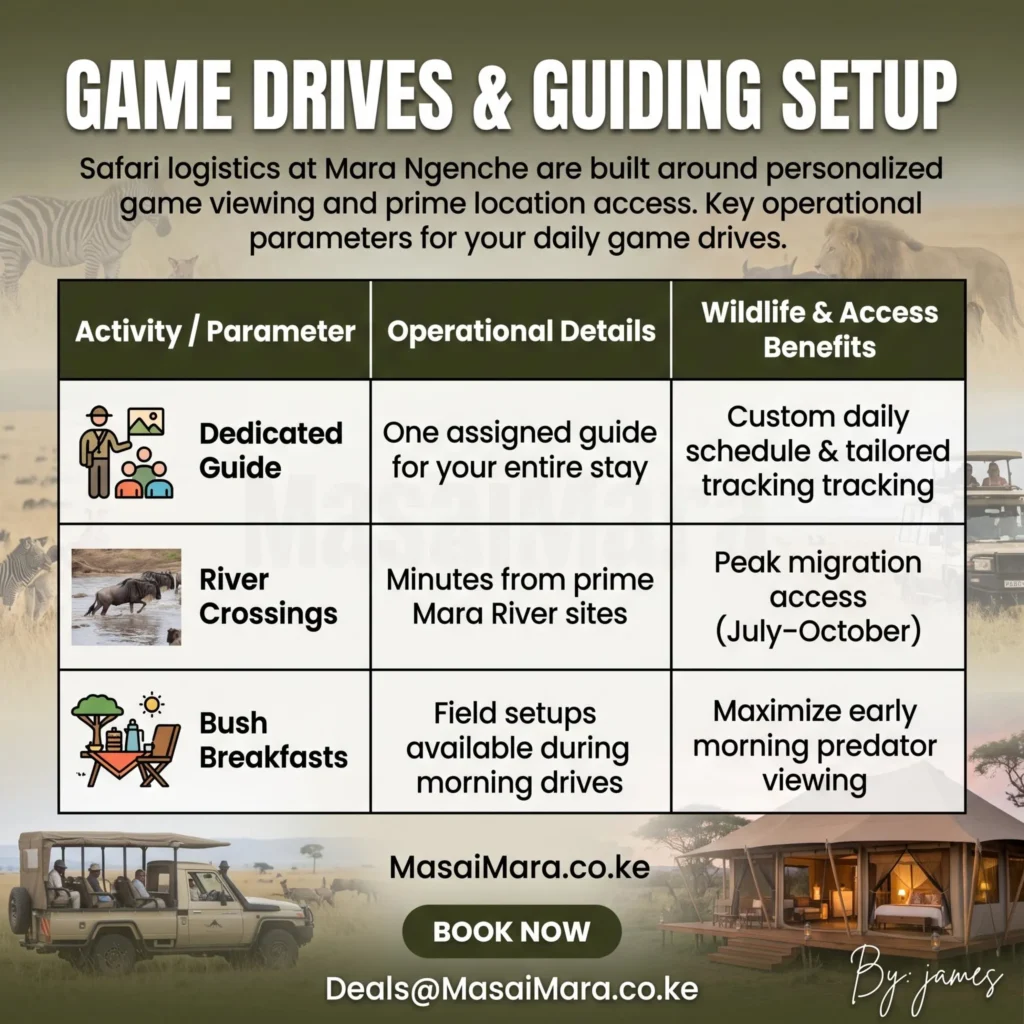
Game Drives & Guiding Setup
Safari logistics at Mara Ngenche are built around personalized game viewing and prime location access. The table below highlights key operational parameters for your daily game drives.
Activity / Parameter | Operational Details | Wildlife & Access Benefits |
Dedicated Guide | One assigned guide for your entire stay | Custom daily schedule & tailored tracking |
River Crossings | Minutes from prime Mara River sites | Peak migration access (July–October) |
Bush Breakfasts | Field setups available during morning drives | Maximize early morning predator viewing |
Hippos at Breakfast and Four Courses at Dinner
Breakfast and lunch are served outside under the trees, with the confluence in front of you. The hippo pool is always busy and the crocodiles sit on the sandbank like they’re part of the furniture. The sounds are loud, especially the hippos, and you get used to eating with a soundtrack.
Dinner is different. Four courses, candlelit, served in the mess tent. It’s more formal than the daytime meals and the food is good across the board. For a honeymoon or anniversary, private dining on the veranda or under the stars can be arranged if you ask in the morning.
What to Know Before Booking
The camp is inside the national reserve, not a conservancy. That means no night drives, no walking safaris, and no off-road driving. What it gives you instead is the river confluence, the crossing access, and no double fee for entering the reserve from a conservancy.
Three nights is the right length. Two nights works but the rhythm of the camp rewards a slower pace: one long morning drive with bush breakfast, one afternoon by the pool, one evening watching the sunset from the hammock while hippos grunt below. The seasonal calendar helps with choosing dates, and peak migration months fill early.
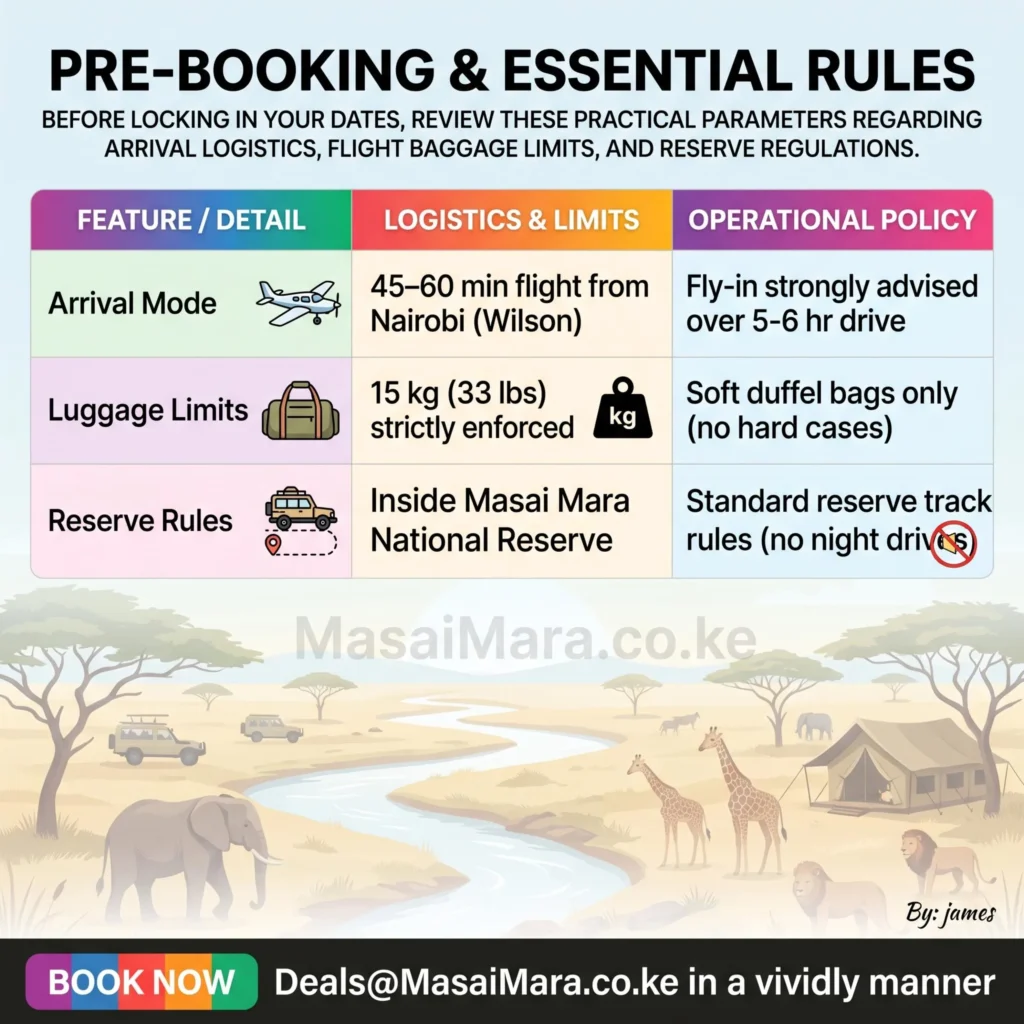
Pre-Booking & Essential Rules
Before locking in your dates, review these practical parameters regarding arrival logistics, flight baggage limits, and reserve regulations.
Feature / Detail | Logistics & Limits | Operational Policy |
Arrival Mode | 45–60 min flight from Nairobi (Wilson) | Fly-in strongly advised over 5-6 hr drive |
Luggage Limits | 15 kg (33 lbs) strictly enforced | Soft duffel bags only (no hard cases) |
Reserve Rules | Inside Masai Mara National Reserve | Standard reserve track rules (no night drives) |
Questions Guests Ask
Is it good for honeymooners?
One of the best in the reserve. The camp doesn’t try to be romantic. It just is, because of the size, the privacy, and the river. Ask about the private dinner under the stars when you book.
How does it compare to camps on the conservancies?
The wildlife viewing is different, not better or worse. The water here draws animals year-round in a way that open grassland doesn’t, so you see concentrated activity even in the quieter months. The reserve restrictions described above are the trade-off. For guests who want both, a split-stay with two nights here and two in a conservancy covers everything.
How do I start planning?
Send us your dates and we’ll check Ngenche’s availability. With only ten tents, it fills faster than the larger camps, especially during August and September. Start a booking if dates are fixed, or tell us what matters most and we’ll build the trip from there.
This guide was authored by David Njunge, a TRA-licensed safari guide with over 10 years of experience, and edited by Cecilia Wambui, a travel consultant with a degree in Tourism and Hospitality Management.
Related Reading:
Welcome to Masaimara.co.ke
Thank you for visiting us! We're excited to help you plan an unforgettable safari adventure across Kenya.